Where Can I Buy Piadina?
Where to buy piadina in Ravenna: bakeries, market counters, street kiosks and supermarkets in the historic centre, plus how to carry the Romagna flatbread home.
Piadina is the everyday flatbread of Romagna, and in Ravenna, the inland Po-plain city in Emilia-Romagna whose historic centre sits about 8 km from the Adriatic resorts, it is sold in more kinds of shop than almost any other local food. The Ravenna Travel Guide food pages describe it as a round, unleavened bread cooked quickly on a hot surface and folded around cold cuts, cheese or vegetables, and that description points to where you buy it: anywhere a hot plate, a cheese counter or a bread shelf exists. This page sets out the practical options, from the panificio that cooks piadina in front of you to the vacuum-packed versions that survive a journey home.
Where Can I Buy Piadina?
In Ravenna you buy piadina at four kinds of place: a panificio or casalinga bakery that cooks it fresh through the day, a salumeria or cheese counter that sells it filled as a ready lunch, a street kiosk or market stall in and around the historic centre, and finally any supermarket, which stocks packaged piadina from Romagna producers. The first two give you the bread warm and soft, the third gives you speed, and the fourth gives you something you can carry home. Bakeries cluster in the streets inside the old centre and in the residential quarters beyond Piazza del Popolo.
The distinction that matters is fresh against packaged. A piadina cooked on the spot is soft, pliable and meant to be eaten within the hour, while the supermarket version is a shelf product designed to last for weeks and be reheated in a dry pan. Both are legitimately piadina; the piadina romagnola guide covers how the traditional terracotta-combed bread differs from the industrial kind. If your question is literally "where can I buy piadina?", the answer below the centre's mosaic monuments is nearly always a two-minute walk: bakeries and kiosks sit along the main pedestrian streets and around the covered market area, and the railway station is a short walk from the historic centre, so you can buy one on arrival.
Timing matters more than location. Bakeries bake in the morning and again before the lunch hour, and a piadina bought at 11:00 is a different object from one at 16:00. Kiosks keep longer hours, roughly aligning with the working day, and supermarkets are open all day except the standard Italian closing patterns. Hours change with the season, so a quick look at the shop door before planning a route saves a wasted trip.
What Is Piadina And Why Does Ravenna Sell It Everywhere?
Piadina is the flatbread of Romagna, the territory between Ravenna and the coast, made from flour, water, salt and a fat such as olive oil or lard, rolled thin and cooked for a short time on a very hot surface, and in Ravenna it functions as street food, lunch and souvenir at once. It is not a restaurant dish that needs a table: it is folded, wrapped in paper and eaten while walking, which is why it is sold from counters and kiosks rather than only from kitchens. The word itself and its origins are covered on the page what does piadina mean in Italian, which explains the Romagna dialect root.
Curious to try making it yourself? Book a piadina cooking class here.
The bread travels with fillings that are also local products. Squacquerone, a soft, fresh cheese, prosciutto crudo, rucola and grilled vegetables are the classic combinations, and the shops that sell piadina usually stock the fillings too, so a cheese counter often assembles the whole thing in one motion. Regional food pages on this site, including the answer to what is Ravenna famous for, place piadina alongside cappelletti and Romagna wines as the everyday food layer beneath the city's mosaic monuments.
Why everywhere? Because piadina is cheap food in the literal sense of the word: it is fast, it needs no cutlery, and it fits the rhythm of a city whose sights, from Dante's tomb to the UNESCO churches, are all inside a compact, walkable centre. A visitor walking the things to do in Ravenna route will pass several piadina sellers without ever planning to. Food prices vary by shop and season; the posted list on the counter or the shelf label is the figure that counts.
Which Bakeries And Kiosks In Ravenna Sell Fresh Piadina?
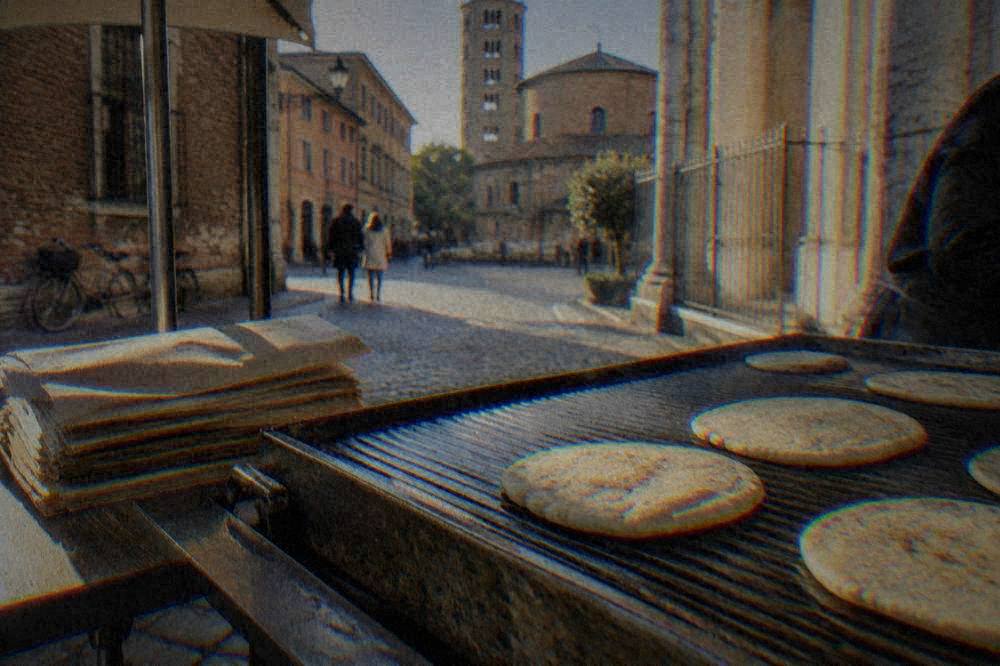
Look for the words piadineria, panificio, casalinga or forno above the door: in Ravenna these are the shops that cook piadina during the day, and the reliable signal is the hot plate itself, a flat or ridged cooking surface near the window with rounds of dough waiting beside it. A piadineria specialises in filled piadina as a takeaway lunch; a panificio is a general bakery that also cooks piadina in batches; a casalinga, meaning home-style, bakery advertises the thin traditional Romagna version rather than the thicker, softer style made for sandwiches. No individual shop is named on this page, but every one of these categories exists within the historic centre.
The market is the other fresh source. Ravenna's covered market area and the surrounding streets hold cheese and cured-meat counters that sell piadina as a filled roll to order, and the coastal town of Marina di Ravenna runs a market on the sea-side square on Wednesdays and Saturdays through the winter season, per the municipal page for that market. Markets are where the casalinga style is easiest to find, because the bakers who supply them tend to make the thin, quickly cooked version.
| Where | What you get | Signs of the traditional style |
|---|---|---|
| Piadineria kiosk | Piadina cooked and filled to order, eaten standing or walking | Dough rounds visible, hot plate in view, menu of fillings on the wall |
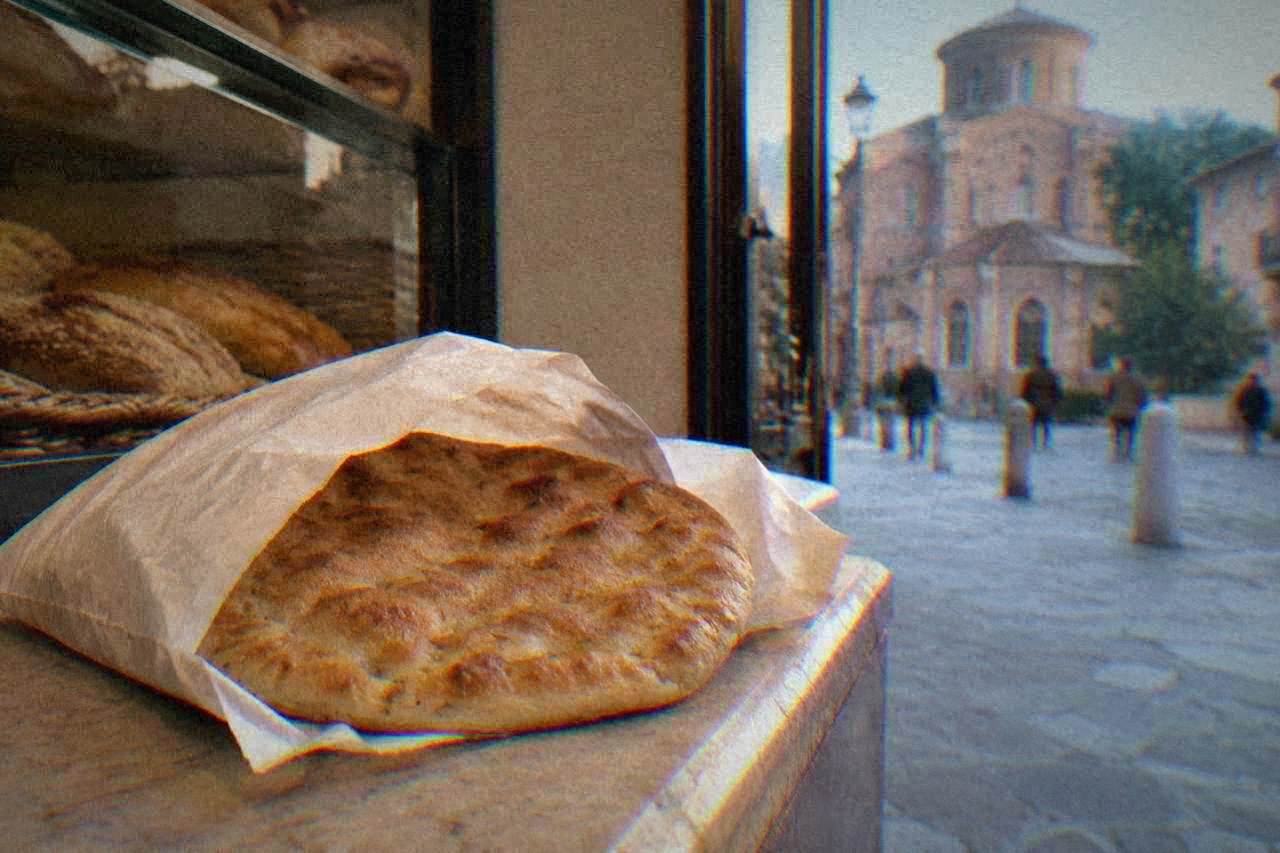
| Panificio (bakery) | Batches of plain piadina sold by weight or by piece, filled on request | Baked through the morning, sold in paper sleeves |
| Casalinga bakery | The thin Romagna style, often lard-based, cooked on a combed plate | The words casalinga or romagnola on the sign, translucent thin edges |
| Market cheese counter | Filled piadina assembled while you wait, plus the fillings sold separately | Squacquerone and prosciutto crudo cut to order |
| Supermarket | Packaged piadina in packs of several rounds, brands of the Romagna area | Vacuum or modified-atmosphere packs, long shelf life, reheats at home |
A word on judging quality without inside knowledge: the traditional product bends without cracking, shows faint char spots from the plate and lists flour, water, salt and fat among its first ingredients. A packaged pack that lists a long run of additives is still edible and still sold across Romagna, but it is a different experience from the plate-cooked version. Reading the label is a check any visitor can make.
If you would rather have the food explained than work it out alone, a guided option exists: the food-focused walking tour with tastings, listed below, pairs Ravenna's mosaics with stops at local producers, and the operator's live listing carries the current details. The Check availability link shows dates and inclusions.
Can You Buy Piadina In A Ravenna Supermarket?
Yes: every supermarket in Ravenna, from the small convenience shops in the centre to the larger stores on the ring roads, stocks packaged piadina, usually in packs of several rounds, produced by Romagna brands and displayed in the bread aisle. This is the version designed to travel: sealed, dated and reheatable in a dry pan at home. It answers a different question from the one a kiosk answers, because you are buying the bread itself, not a filled lunch, and you can also buy jars of the typical fillings, such as squacquerone in sealed cups, from the chilled shelves beside it.
The supermarket route has one real advantage for a visitor: it is the only piadina purchase that survives the trip home. The regional trains that connect Ravenna with Bologna, Rimini and the rest of Emilia-Romagna take a flat journey of roughly an hour to an hour and twenty minutes toward Bologna, so a pack bought on the last morning is still in good condition at the destination. The pages on how do I get to Ravenna by train cover the routes.
Two honest caveats. First, the sealed pack needs reheating to approach the texture of a fresh one: a hot, dry pan for a short time per side is the standard method, printed on most packs. Second, supermarket rounds are a uniform diameter and thickness, which is exactly what makes them stackable and shelf-stable, but the casalinga version from a bakery is thinner and less regular. Choosing between them is choosing between convenience and freshness, not between right and wrong.
Can You Take Piadina Home From Ravenna?
Yes, and the practical method is the sealed supermarket pack, or a vacuum-packed round bought directly from a bakery, both of which travel for days without refrigeration until opened, while a fresh piadina is a same-day object that goes stiff and dry within hours. If you are flying, note that a filled piadina containing meat or cheese falls under the rules on animal products in luggage, so the safe souvenir is the plain bread plus any sealed, labelled fillings. Bakery staff will usually vacuum-seal rounds on request; ask at the counter.
The souvenir angle works in both directions. Ravenna's shops sell the tools as well as the bread: the ridged terracotta or aluminium plate for cooking, called a testo, appears in kitchenware and gift shops around the centre, and a pack of piadina with a testo makes a coherent gift. Cheese bought at a market counter should be asked for in travel-ready form; the vendor will know which of the fresh cheeses lasts and which does not, and asking is a check any visitor can make at the moment of purchase.
For visitors with a free afternoon rather than a departure, the same question turns into where to eat piadina rather than how to carry it, and the answer loops back to the kiosks and market counters above. Some travellers book a private walking tour, such as the Best of Ravenna private tour, to cover the monuments and the food streets in one guided pass; the tour's own listing holds the current schedule. Others simply walk, buy, and eat standing in Piazza del Popolo.
Common Questions About Buying Piadina In Ravenna
Where can I buy piadina?
In Ravenna, at a piadineria kiosk, a panificio or casalinga bakery, a market cheese counter, or any supermarket, with the first three selling it fresh-cooked and the supermarket selling sealed packs of Romagna-produced rounds.
Is piadina eaten warm or cold?
Traditionally warm, straight off the hot plate, and folded around a filling. Packaged piadina is reheated in a hot, dry pan for a short time per side.
How long does a fresh piadina keep?
A fresh piadina is best within hours of cooking; it goes stiff as it cools.
Do I need to order in advance at a bakery?
For one or two filled piadina, no; they are made to order at the counter. For larger quantities, such as vacuum-sealed rounds to take home, asking a day ahead gives the bakery time to prepare them.
Can I buy piadina with the traditional fillings together?
Yes.
The short version: in Ravenna, piadina is never more than a street or two away, and the choice between a hot round from a bakery plate and a sealed pack from a shelf is simply a choice between eating now and eating at home.