Piadina Romagnola
Piadina romagnola is the flatbread of Emilia-Romagna, and in Ravenna it is the everyday food of the street: dough rolled thin, cooked fast on a hot plate, folded around cheese and cured meat. This guide explains what it is, how the local version differs, and where it sits in a day around the mosaic monuments.
Short answer
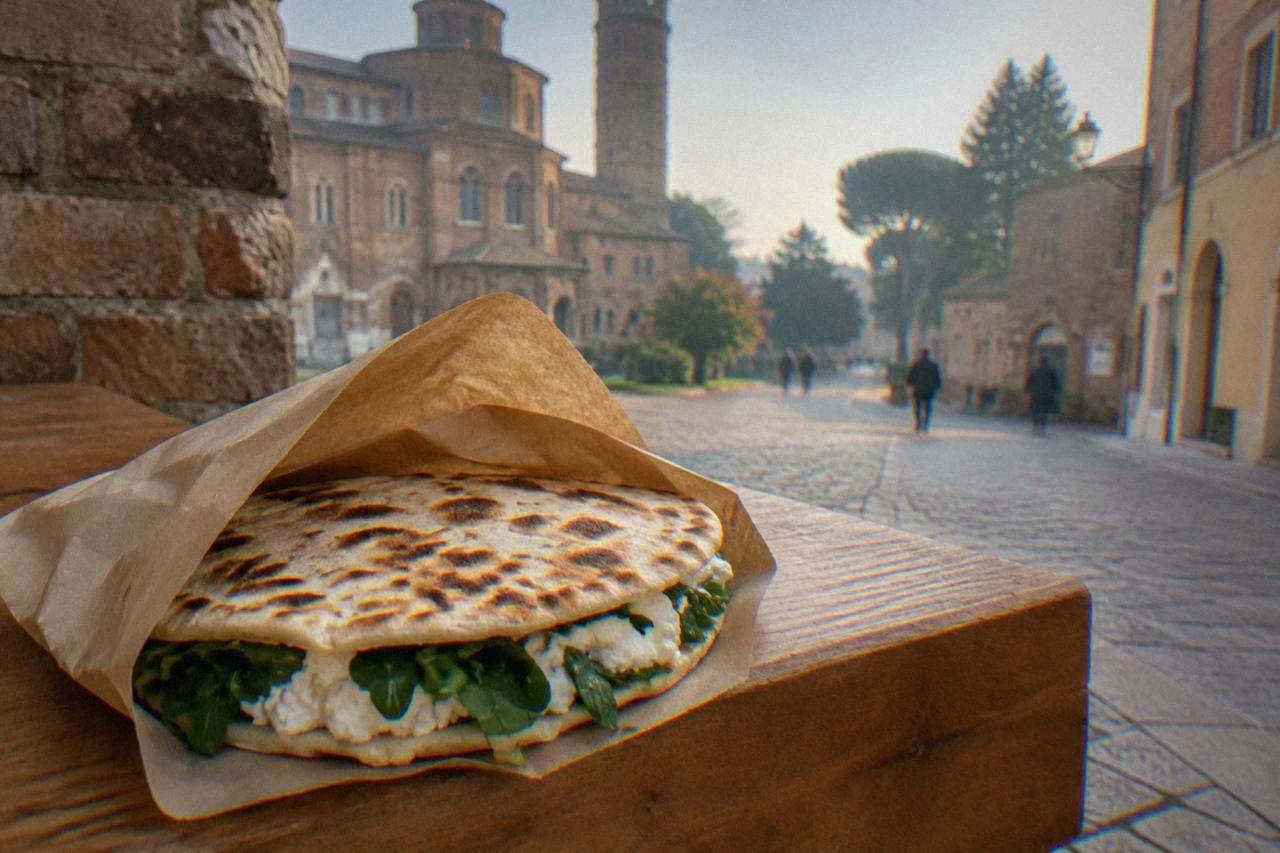
Piadina romagnola is an unleavened flatbread made from flour, lard or olive oil, salt and water, cooked on a terracotta or metal plate and folded around squacquerone cheese and cured meats. In Ravenna it is the standard quick lunch, sold in bakeries, market stalls and piadinerie across the historic centre.
Piadina romagnola is the everyday flatbread of Emilia-Romagna, and Ravenna, the inland Po-valley city about 8 km from the Adriatic coast, eats it the way other Italian cities eat pizza by the slice: standing, walking, and often twice a day. It is a round of unleavened dough, rolled flat, cooked in minutes on a hot plate, then folded around squacquerone, a soft fresh cheese, and cured pork. The Visit Ravenna food pages list it among the signature products of the Romagna territory, alongside cappelletti and the wines of the hills. For visitors threading the eight UNESCO Early Christian monuments, it is also the most practical meal in the city, because a piadina needs no table, no booking and no long midday stop. This guide from the Ravenna Travel Guide editorial desk covers what piadina is, what goes into it, how the Ravenna version differs from the Rimini one, and how to fit it around the mosaics.
What Is Piadina Romagnola?
Piadina romagnola is an unleavened Italian flatbread made from flour, water, salt and fat, traditionally lard, rolled into a thin disc, cooked quickly on a very hot terracotta or metal plate and eaten warm, usually folded in half around a soft cheese such as squacquerone and sliced cured meats. It belongs to Emilia-Romagna, and Ravenna sits squarely inside that tradition. No yeast and no oven are involved, which is what separates it from bread and from pizza.
The name is a diminutive of "piada", a Romagna dialect word for a flat loaf, and the dish has its own answer page on this site: what piadina means in Italian covers the etymology in detail. What matters for a visitor is the format. A piadineria, the shop that sells it, works like a sandwich bar: you choose the bread, you choose the filling, the cook warms the disc on a plate, adds the filling, folds it and wraps it in paper. Nothing about the transaction takes long.
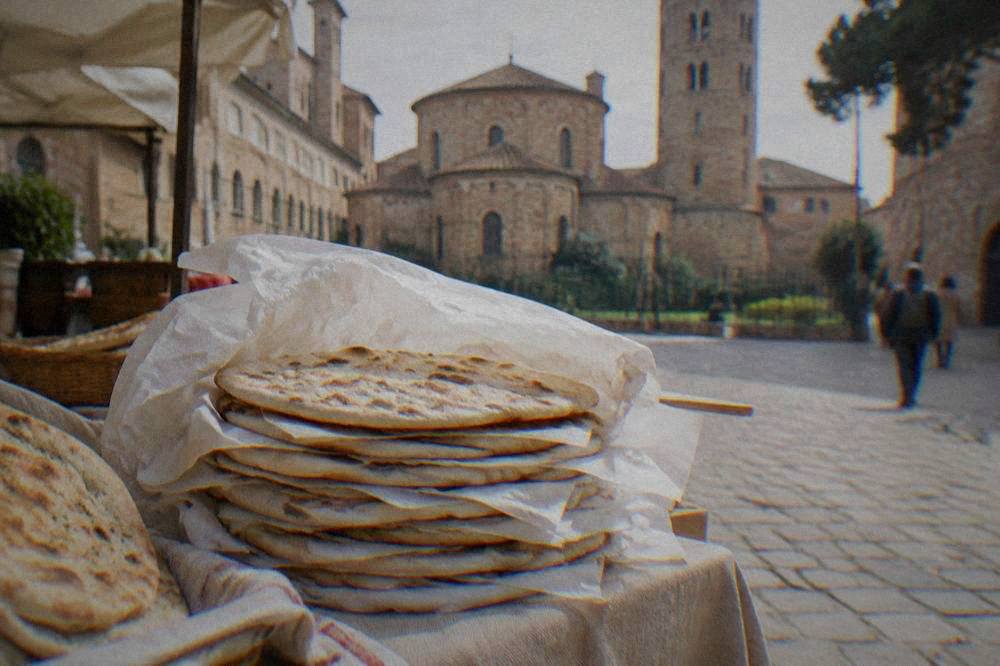
The bread itself is soft and pliable when fresh, with pale blisters where the plate caught it. It should bend without cracking. A piadina that snaps is a piadina made hours ago or made with the wrong fat, and any counter in Ravenna will cook a fresh one to order.
Because it is street food rather than restaurant food, it slots neatly into a sightseeing day. The mosaic monuments of Ravenna are scattered across a compact historic centre, the Ravenna Mosaici ticket is valid one week with one admission per monument, and a piadina between San Vitale and Sant'Apollinare Nuovo costs nothing in time. The fuller sightseeing picture is on the things to do in Ravenna page.
Where Does Piadina Romagnola Come From?
Piadina romagnola is a rural bread of the Romagna plain, the eastern half of Emilia-Romagna between Ravenna and the coast, cooked by farming families on a terracotta plate called a testo because it needed no oven, no yeast and no waiting. The towns of the region, Ravenna, Forlì, Cesena and Rimini, each developed a slightly different thickness and fat, and the bread is now recognised across Italy as the signature food of the whole territory.
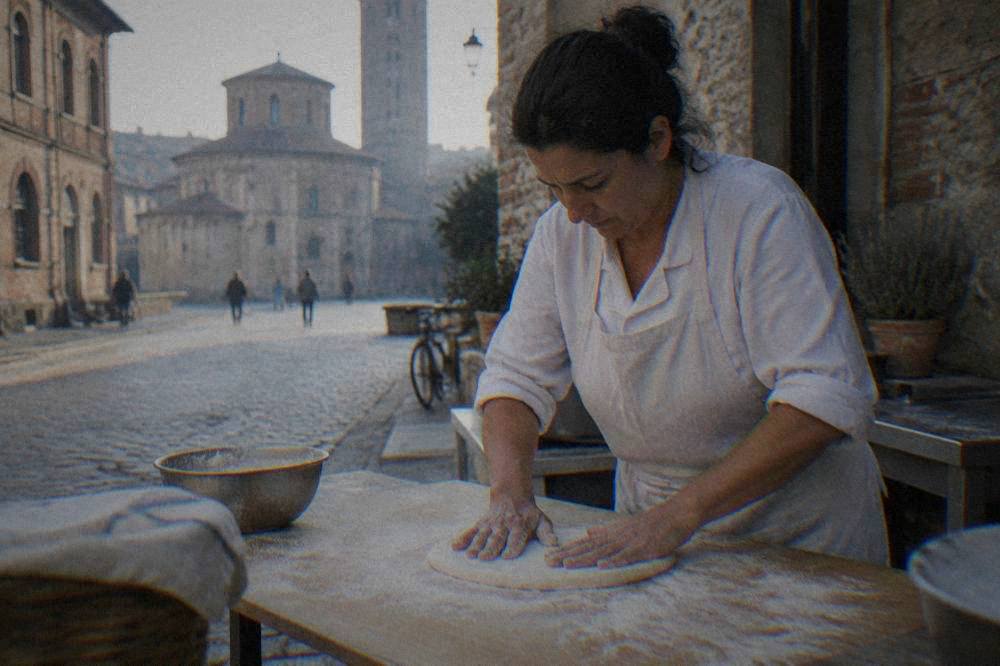
The logic of the recipe is the logic of poverty cooking. Ovens were expensive and communal; a hot plate over a fire was not. Flour, water, salt and a fat, lard where pigs were raised, olive oil where they were not, produced a bread in minutes. The older spelling "piada" still appears on shop signs, and the dialect name for the cooking plate, "tezzo" or "testo", survives in kitchenware shops across Romagna.
Ravenna's position matters to the story. The city sits on the flat Po plain, inland from the beach resorts of Marina di Ravenna and Punta Marina, with farmland rather than sea in every direction from the walls. That agricultural hinterland, grain fields, pig farms and dairy herds, is exactly the economy that produces flatbread, cured pork and fresh cheese in one basket. The Romagna coast then added the tourist version, and today the beach towns and the city both sell the same bread in different settings, as the Ravenna and the coast pages describe for the shoreline generally.
Two practical notes for visitors. First, piadina is not the same product everywhere in Emilia-Romagna: the section below on variants explains the thickness divide. Second, the bread is protected as a traditional speciality across the region, which means the label guarantees the traditional recipe, not one single shape.
What Goes Into A Traditional Piadina?
A traditional piadina romagnola contains four things: soft wheat flour, water, salt and a fat, either lard or olive oil, worked into a dough, rested, rolled into discs and cooked dry on a hot plate for a few minutes until it blisters. There is no yeast, no milk and no sugar in the classic recipe. The fat is the defining choice: lard gives the soft, layered Romagna texture, oil gives a crisper, leaner disc.
| Ingredient | Role in the dough | Traditional note |
|---|---|---|
| Soft wheat flour | The structure of the bread | Finely milled "00" or plain flour |
| Water | Binds the dough | Warm, added gradually |
| Salt | Seasoning | Coarse salt dissolved in the water |
| Lard | Fat, softness and flavour | The Romagna countryside default |
| Olive oil | Alternative fat | Used where lard was not available |
The cooking surface matters as much as the dough. A terracotta plate over a flame is the old method; a flat cast-iron or steel pan does the same job in a modern kitchen. The plate is dry, very hot, and the disc is turned once or twice, pricked with a fork where it bubbles. The result should be cooked through but pale, spotted with light brown.
Baking powder appears in many modern home recipes to make the disc puff slightly, and no shop in Romagna will treat that as heresy. But the texture a visitor should look for is foldable softness, not puff. The Ravenna food guide covers the rest of the local table, cappelletti, Romagna wines and the cured meats that end up inside the bread.
The classic filling is where the region shows its hand:
| Classic filling | What it is | How it is used |
|---|---|---|
| Squacquerone | A very soft, mild fresh cheese of Romagna | Spread on the warm disc so it melts slightly |
| Prosciutto crudo | Raw cured ham, sliced paper thin | Laid over the cheese |
| Salami or mortadella | Other cured pork, sliced thin | Common alternatives to ham |
| Rucola and squacquerone | Rocket plus the fresh cheese | The standard meat-free option |
| Nutella | Sweet hazelnut spread | The children's and dessert version |
For travellers arriving from Bologna for the day, the pairing of mosaics and food can run on one itinerary. A guided excursion covers the monuments with entry arranged, and the late afternoon is free for the centre's food shops; the Bologna to Ravenna page covers the direct regional train, about 84 km, with the journey taking about 1 hour to 1 hour 20 minutes.
How Does The Ravenna Piadina Differ From The Rimini One?
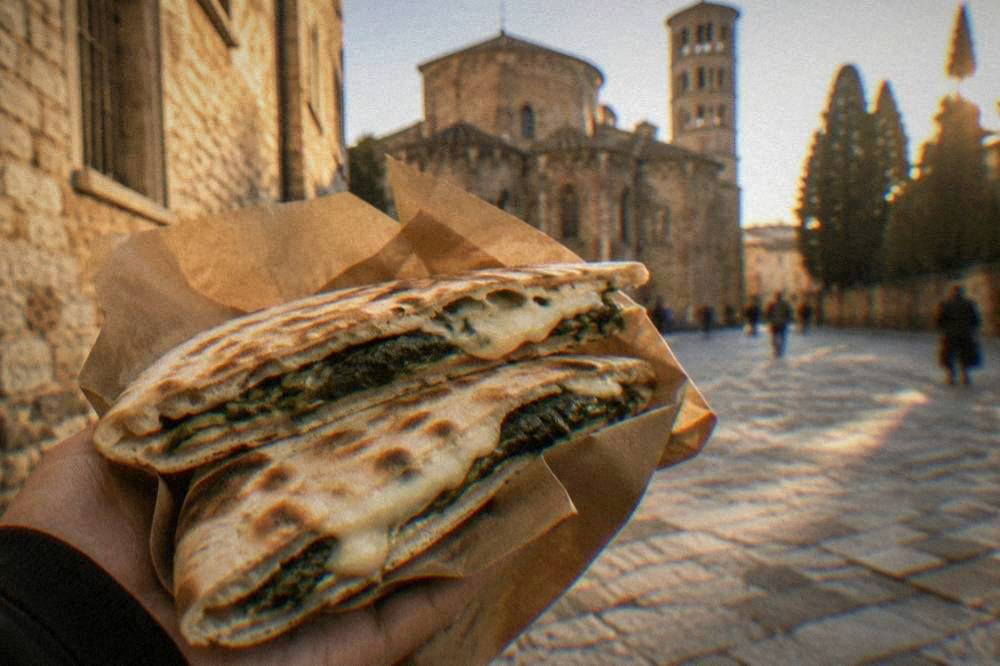
The piadina of Ravenna and the inland Romagna towns is thick, around half a centimetre or more, soft and cake-like, made with lard, while the piadina of Rimini and the southern coast is rolled paper thin, more pliable and slightly crisper, so the same basic recipe splits into a thick inland version and a thin coastal one within about 50 km of each other. Ravenna, despite its inland centre, eats close to the thick tradition.
| Variant | Thickness | Fat | Character |
|---|---|---|---|
| Rimini and southern coast | Very thin | Often oil or less lard | Pliable, almost wrap-like |
| Ravenna and inland Romagna | Thick | Lard | Soft, white, cake-like crumb |
| Cesena and Forlì area | Thick, between the two cities | Lard | Soft, the classic market version |
The divide is a running joke inside Emilia-Romagna, and any counter in Ravenna will have an opinion on it. The practical consequence for a visitor is fillings: a thin Rimini disc rolls like a wrap and suits salad and vegetables, while a thick Ravenna disc opens like a pocket and holds the melting squacquerone better. Both are the same dish in law and in the dialect name.
Ordering is simple. The counter lists fillings; you name the bread and the filling, "una piadina con squacquerone e crudo" is the canonical order; and you pay by the piece. Prices are posted at the counter, so check the board rather than assuming. The Ravenna restaurants page covers the sit-down alternatives for the evening.
Where Can You Eat Piadina In Ravenna?
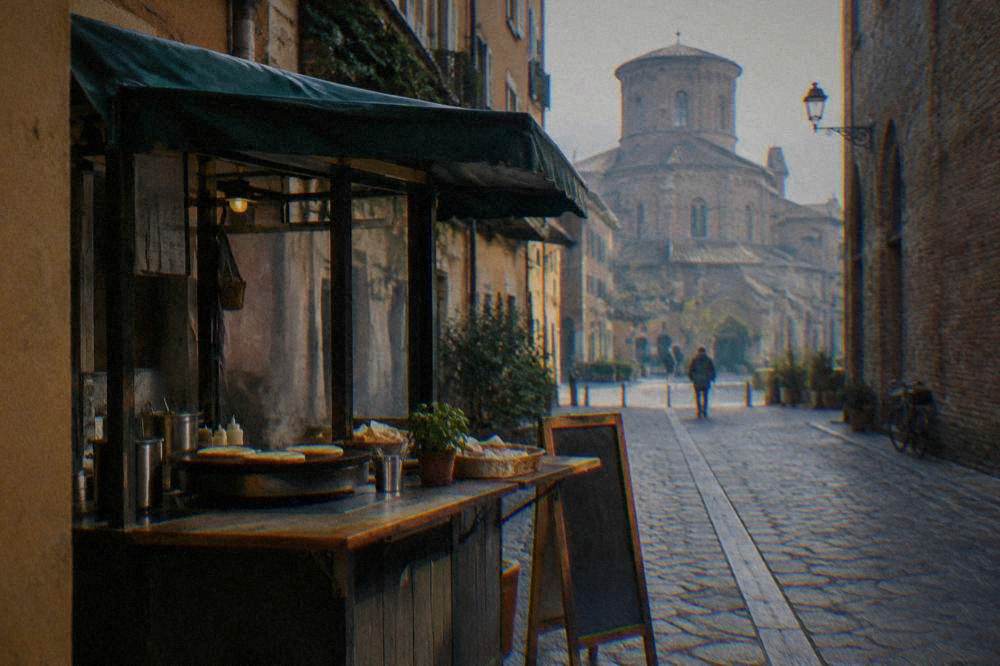
Piadina in Ravenna is sold at dedicated piadinerie, at bakery counters, at market stalls and from kiosks around the historic centre, with the densest cluster inside the streets between Piazza del Popolo and the railway station, and the standard order is filled to take away in paper, eaten standing or on a bench. The bread is cooked to order at any counter worth stopping at.
The visitor pattern writes itself. The historic centre is small and walkable, the station a short walk from it, and the mosaic circuit described on the Ravenna mosaics page can be broken anywhere for a piadina. The Visit Ravenna pages for the food shops list the kiosks and bakeries of the centre as part of the local food tradition, and the answer page on where to buy piadina collects the practical detail.
A few rules of thumb, all checkable on the spot:
| Check at the counter | What it tells you |
|---|---|
| Discs cooked to order | The bread arrives warm and foldable |
| Squacquerone on the board | The shop is serving the Romagna classic |
| Prices posted visibly | You know the figure before you order |
| Locals queued at lunch | The product turns over fast |
Beyond the centre, the beach resorts of Marina di Ravenna, Punta Marina and Lido di Classe run the same bread in a summer register, with kiosks along the shore. The coast is 8 km or more from the centre and needs the Start Romagna bus, a bike or a car, as the Ravenna beaches page explains. In autumn and winter, a sand barrier is built along parts of that coast until spring, so the beach kiosks are a warm-season proposition in any case.
Can You Make Piadina Romagnola At Home?
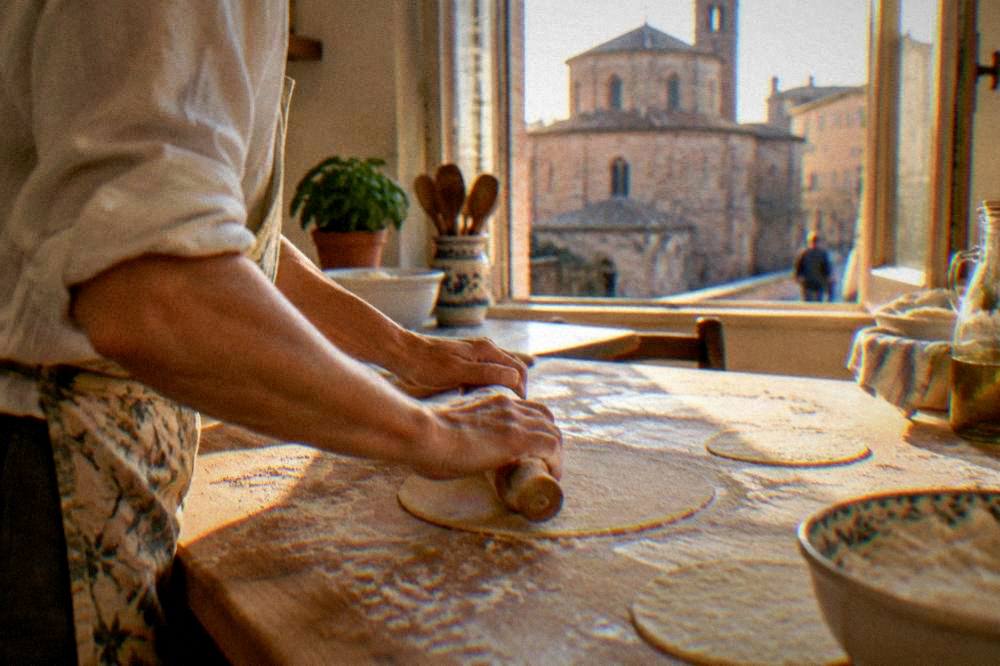
Yes: piadina is one of the simplest Italian breads to make at home, since the dough is only flour, water, salt and fat, it needs no yeast and no proving, and the discs cook in a few minutes on a dry, very hot pan. The common home shortcuts are baking powder for a slight lift and olive oil in place of lard, both accepted in modern Romagna kitchens.
The method, as the traditional recipe runs:
- Dissolve coarse salt in warm water.
- Rub the lard, or pour the oil, into the flour until sandy.
- Add the water gradually and form a soft dough.
- Knead briefly, rest the dough under a bowl.
- Roll discs a few millimetres thick for a thin version, thicker for the Ravenna style.
- Prick, then cook on a dry, very hot plate, turning as it blisters.
The failure modes are all fixable. Dough that cracks when rolled is too dry, so add water a spoon at a time. Discs that turn rigid have been rolled too thick and undercooked, or cooled stacked on top of each other while steaming. A cloth over the finished stack keeps them soft.
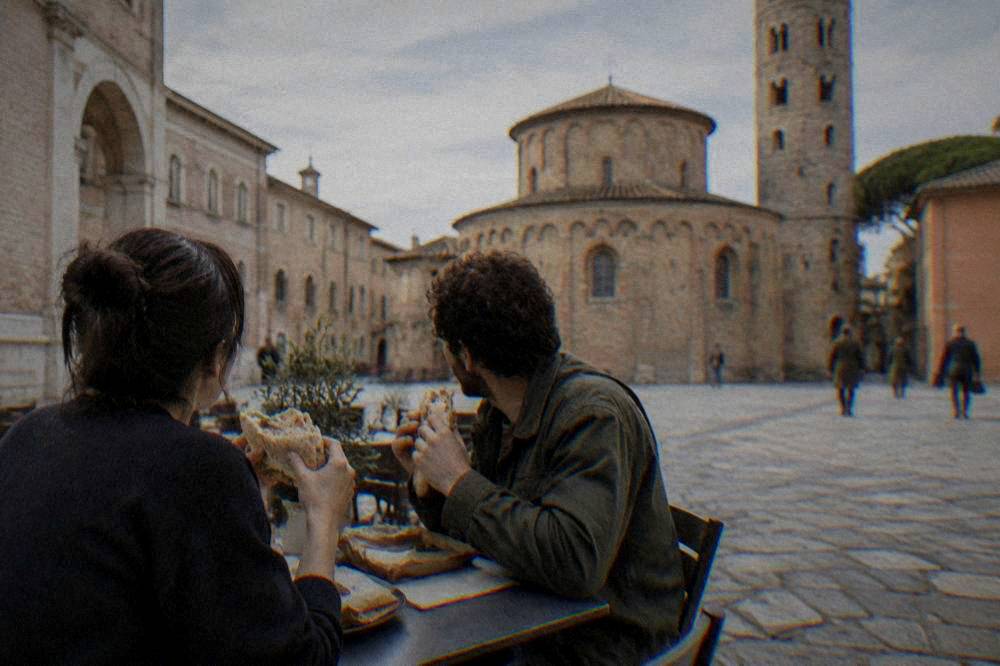
Travellers who want the guided version can take a cooking class in the city: a piadina class runs among the food experiences on the roster, alongside gelato and home-cooking sessions, and the pairing of a class with a mosaic walk is the fullest food-and-art day available. The class listings carry their own prices and times at booking.
Keen to try rolling your own? Book a piadina cooking class here.
How Does Piadina Fit Into A Day Of Mosaics In Ravenna?
Piadina fits a Ravenna sightseeing day as the midday stop that costs no time: the centre's piadinerie sit within a short walk of every UNESCO monument, the bread is served in paper within minutes of ordering, and because the combined mosaic ticket is valid one week with one admission per monument, splitting the monuments around a long lunch is easy. The only planning point is that counters close in the late afternoon.
A sample shape, using the monument set listed on the Ravenna UNESCO sites page: San Vitale and the Mausoleum of Galla Placidia in the morning, a piadina at a nearby counter at midday, then Sant'Apollinare Nuovo and the Archiepiscopal Chapel in the afternoon, with Dante's tomb, free to enter, at any point in between. Galla Placidia and the Neonian Baptistery use timed entry with a stay of a few minutes each, so they slot into gaps rather than filling hours. The ticketing rules are laid out on the Ravenna combo ticket page, with reduced fares starting at EUR 9.50 for the two-monument version.
Guided walks compress the same circuit. A food-and-mosaics walking tour with tastings pairs the monuments with local products in one itinerary, which suits visitors who want the food explained rather than merely eaten.
Day-trippers from Bologna can have both cities in one move. A guided excursion from Bologna covers the monuments in a fixed programme, and the return train in the evening leaves room for a piadina near the station before boarding.
What Else Should You Know About Eating In Ravenna?
Eating in Ravenna runs on ordinary Italian rules: a cover charge, the coperto, is legal when printed on the menu, tipping is not obligatory, and a piadina from a counter carries no coperto at all, which is part of its appeal. Service at piadinerie is continuous through the lunch hours, and the counters that serve tourists in the centre also serve the offices around Piazza del Popolo, so the midday queue is a reliable signal.
The wider table is described on this site elsewhere: cappelletti, the filled pasta of Romagna, and the Sangiovese-based wines of the hills have their own pages. What piadina adds is the portable option. A family with children, a visitor on a tight mosaic schedule, or anyone killing time between a timed entry at Galla Placidia and a slot at San Vitale can eat well in five minutes for the price posted on the board.
Two seasonal notes close the practical picture. Cruise passengers calling at Porto Corsini, about 15 km from the centre with a shuttle of about 30 minutes, are the one visitor group for whom a piadina near the monuments is genuinely the fastest lunch, and the Ravenna cruise port page covers the timings. And in the colder months the counters stay open while the beach kiosks close, so the city is the year-round address for the bread.
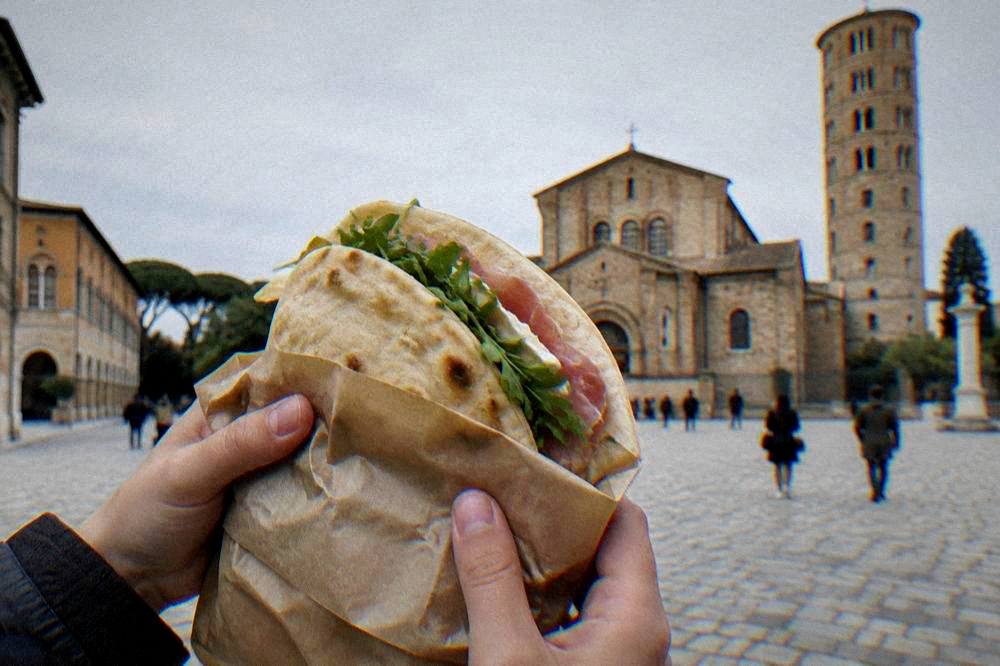
Common Questions About Piadina Romagnola
What is piadina romagnola made of?
Flour, water, salt and a fat, traditionally lard, with olive oil as the common alternative. There is no yeast in the classic recipe, and the discs are cooked dry on a very hot plate rather than baked.
Is piadina the same as a wrap?
No. A wrap is a folded flat tortilla, while piadina is a cooked Italian flatbread with its own texture and tradition: soft and thick around Ravenna and inland Romagna, very thin towards Rimini, and classically filled with squacquerone and cured ham rather than salad.
What is squacquerone?
Squacquerone is a very soft, mild, fresh cheese of Romagna that barely holds its shape at room temperature. Spread on a warm piadina it softens further, which is why it is the classic filling alongside prosciutto crudo.
Where can I buy piadina in Ravenna?
At the piadinerie, bakeries and kiosks of the historic centre, between Piazza del Popolo and the station, all cooking to order. The dedicated answer page on where to buy piadina collects the practical detail, and prices are posted at each counter.
Is piadina vegetarian?
The traditional dough contains lard, so the classic bread is not vegetarian. Many counters offer an olive-oil dough, and shops will say which fat they use if asked; the rocket and squacquerone filling is the standard meat-free choice.
How is the Ravenna piadina different from the Rimini one?
The Ravenna and inland version is thick, soft and lard-based, while the Rimini and coastal version is rolled very thin and more pliable. Both are the same dish, piadina romagnola, and both are served folded around fillings.
Piadina romagnola is the food that keeps a Ravenna day moving: cooked in minutes, folded around the cheese and ham of the same farmland that built the city's wealth, and sold within a short walk of every mosaic monument in the centre. Order it warm, eat it standing, and let the timed entries at the baptisteries work around it rather than the other way round.