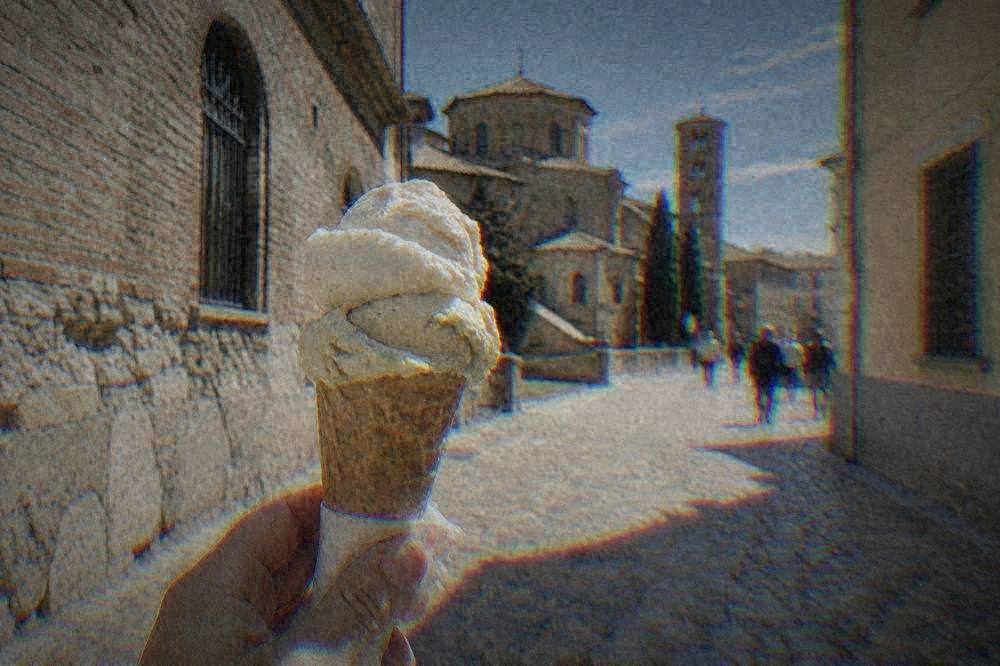
What Is Cappelletti Made Of?
Cappelletti are the signature stuffed pasta of Ravenna and Romagna: a thin egg-pasta wrapper around a cheese and meat filling, served in capon broth. What goes into them and how they differ from tortellini.
Ravenna, the inland Po-valley city in Emilia-Romagna whose mosaic monuments fill the UNESCO list, keeps a second, edible claim to fame on its tables: cappelletti, the small ring-shaped stuffed pasta that Romagna households have rolled, filled and folded for generations. The name means "little hats", and the shape does look like a hat with a gathered crown. On menus across the city and in the surrounding towns of Romagna, cappelletti in brodo, cappelletti in broth, is the Sunday dish and the Christmas dish alike, and it is one of the items the Ravenna Travel Guide food pages return to again and again.
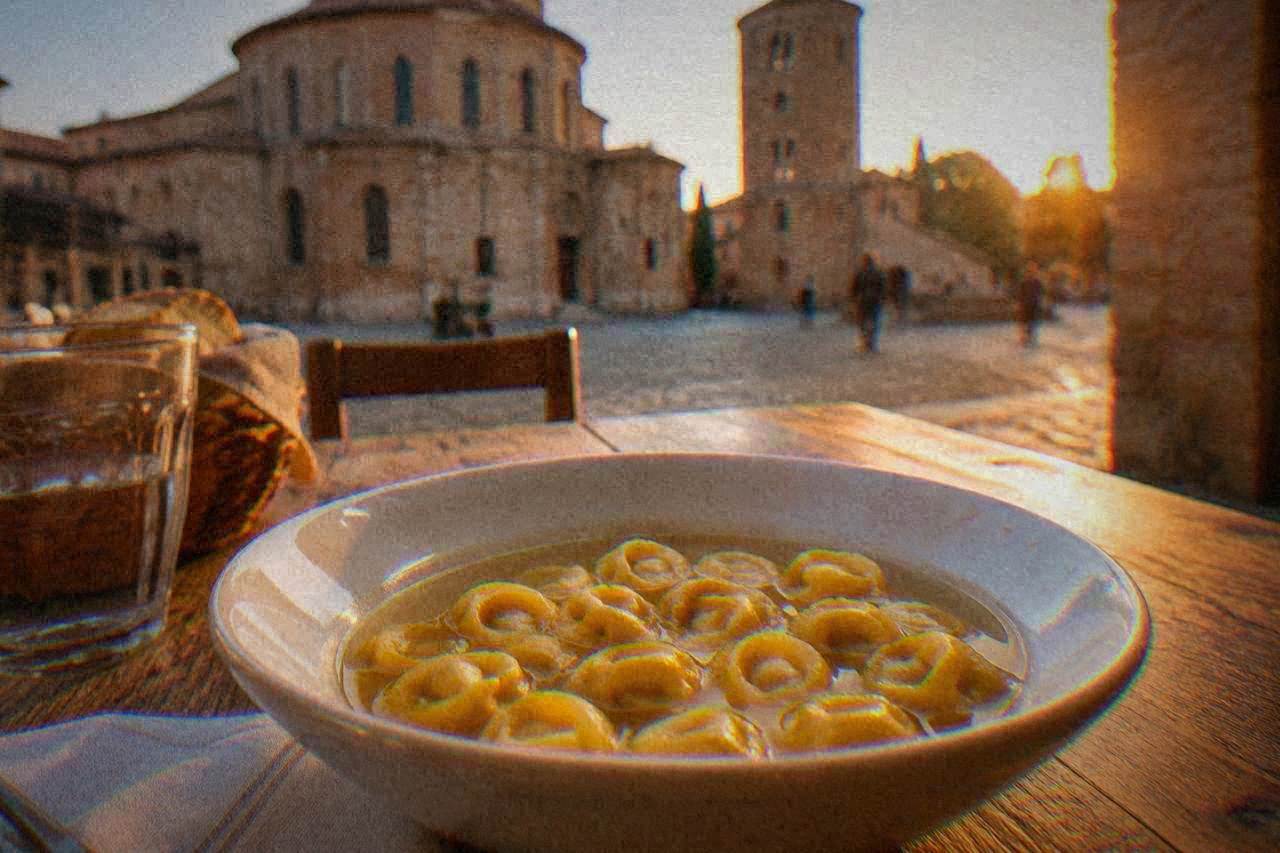
What Is Cappelletti Made Of?
Cappelletti are made of two elements: a thin sheet of egg pasta, flour and eggs with a pinch of salt, and a savoury filling that the traditional Romagna recipe builds from mixed cheeses, a soft one and a hard aged one, plus egg, nutmeg and often lean capon meat. The pasta is cut into small discs, each disc is folded around a dab of filling, the edges are pressed shut, and the parcel is wrapped around a finger into the little hat shape before cooking in capon broth.
Every family recipe in Romagna varies the proportions, and that variation is part of the point. The constants are the structure: a pasta wrapper that must be rolled thin enough to cook quickly and stay tender, and a filling that must be dense enough to hold together when the parcel is bent into shape. The filling is not a chunky ragu. It is a smooth, spiced mixture, closer in texture to a quenelle, flavoured above all by nutmeg and by the cheeses.
The cheese element matters more than visitors expect. Romagna's dairy tradition runs through its fresh and aged cheeses, and the classic cappelletto filling leans on a soft, mild cheese balanced by an aged, sharper one, so the finished parcel tastes savoury without any sauce. Lemon zest appears in some versions, and grated Parmigiano Reggiano is a common finishing cheese across Emilia-Romagna cooking. A pinch of salt and a dusting of nutmeg complete the mixture; the spices are measured, never loud.
The broth is the third ingredient, technically outside the pasta but inseparable from the dish as Ravenna serves it. A clear capon broth is the classic medium, and the cappelletti are cooked directly in it and eaten with a spoon, broth and all. The alternative service, asciutti, drained and dressed with a sauce or butter, exists in Romagna but is the exception rather than the traditional form.
How Are Cappelletti Different From Tortellini?
Cappelletti and tortellini are close cousins, and the short answer is geography and filling. Tortellini belong to Bologna and Modena, where the filling is a cooked mixture of meats, prosciutto, mortadella and loin, while cappelletti belong to Romagna, where the filling leans on cheeses and egg with, in many recipes, little or no meat at all. The shapes are similar rings, but the cappelletto is typically a bit smaller and closed with a different fold.
The rivalry is friendly but real. In Bologna the tortellino is defended by guild-written recipes; across Romagna the cappelletto is defended by grandmothers. A visitor eating in Ravenna will be served cappelletti, and asking for tortellini in brodo in a Romagna trattoria is a reliable way to start a conversation about where exactly the border of the recipe runs.
| Feature | Cappelletti (Romagna and Ravenna) | Tortellini (Bologna and Modena) |
|---|---|---|
| Home territory | Romagna, the eastern part of Emilia-Romagna | Bologna and Modena, the western part |
| Filling base | Cheese and egg, with capon or white meat in some recipes | Cooked meats: loin, prosciutto, mortadella, Parmigiano |
| Classic service | In capon broth | In capon or hen broth |
| Typical size | Small, often the smallest of the region's stuffed shapes | Slightly larger ring |
| Shape closure | Disc folded in half, wrapped into a hat | Square folded and joined corner to corner around a finger |
The distinction is worth knowing before ordering, because the two dishes look nearly identical on the plate and the difference is entirely inside the pasta. A cheese-filled cappelletto in broth tastes delicate and gently spiced, with nutmeg doing quiet work; a meat-filled tortellino tastes richer and more savoury. Both are winter dishes at heart, and both anchor the festive tables of their respective provinces.
There is a practical reason the two pastas stay in their lanes. The cheese filling of the cappelletto is lighter and needs the support of a spoonful of broth in every bite; the heavier meat filling of the tortellino stands up on its own more readily. That single difference shapes how each city eats its own pasta, and it explains why menus in Ravenna almost always list the broth service first.
For travellers planning a food-focused visit, the pairing that keeps coming up on the itineraries is a morning with the mosaics and a long lunch with the pasta. The guided walks below combine the monument visits with a local's route through the centre.
Where Do Cappelletti Fit In Ravenna Food Culture?
Cappelletti are the festive dish of Romagna home cooking, the pasta that appears at Christmas lunch, at weddings and at Sunday family tables, and Ravenna treats them as part of its local identity rather than as restaurant food invented for tourists. They sit alongside tagliatelle, passatelli and piadina in the regional repertoire, and the city's food pages present them as one of the signature dishes visitors should seek out.
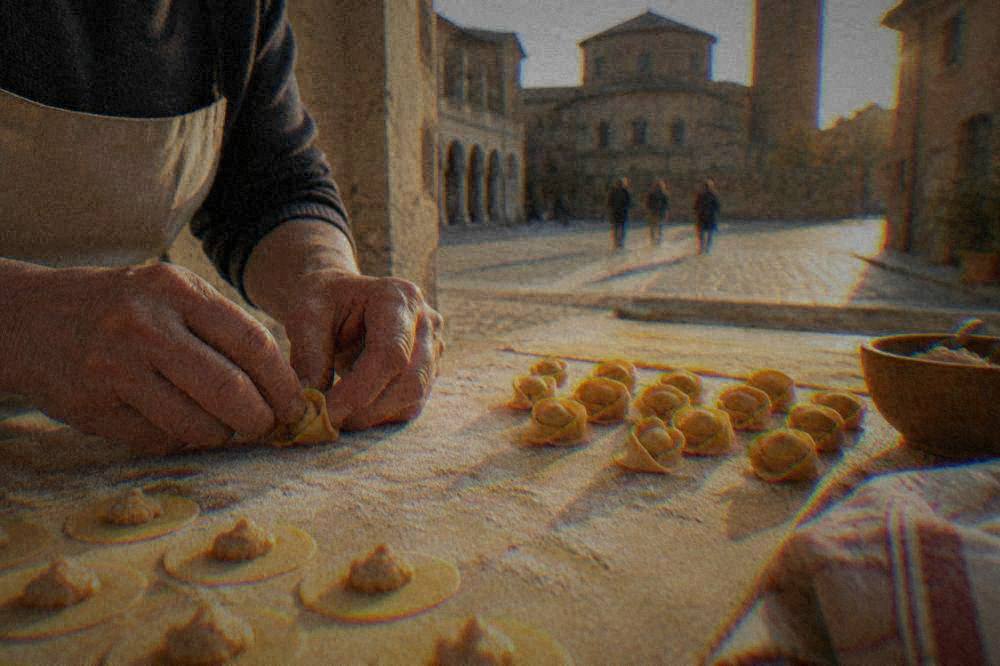
The dish is labour-intensive by design. Rolling the pasta, mixing the filling, folding each little hat by hand: these are hours of work, which is exactly why cappelletti became the food of occasions. In the countryside around Ravenna, the tradition of gathering to fold cappelletti in batches, many hands around one table, is part of what the dish means. Restaurants in the historic centre do serve them year round, and hand-made rather than factory-folded is the detail worth asking about.
The context is Ravenna's broader food identity, which the what food is Ravenna famous for page sets out in full: the flatbread called piadina, the cured meats and fresh cheeses of Romagna, the cappelletti and the crespelle. For a deeper look at this pasta in particular, the cappelletti of Romagna guide covers the dish's regional variations, and the Ravenna food tours and cooking classes guide lists the experiences where visitors learn to fold the shape themselves.
Nothing about the dish is locked to a season, but the tradition points at cold months. A bowl of cappelletti in capon broth is cold-weather food, and Ravenna's winter, with January means around 5.1 C in the climate table's modelled 1991 to 2020 normals, is exactly when a bowl of broth earns its place. Visitors arriving for the November theatre season or the Christmas period will find the dish everywhere.
A cooking class is one way to understand the filling from the inside, and the featured walk below suits a day that pairs the UNESCO monuments with the city's kitchen culture.
Can You Make Cappelletti At Home?
Yes, and the recipe needs no specialist equipment: the pasta is flour and eggs worked into a stiff dough, rested, then rolled thin; the filling is cheeses, egg, nutmeg and, in the meat version, finely chopped cooked capon; and the shaping needs only a round cutter and ten minutes of practice per dozen. The difficulty is not the ingredients, it is the folding, where the disc must be sealed tightly enough that the filling survives the broth.
Home cooks outside Italy can substitute within reason. The soft cheese of the Romagna filling can be approximated with a whole-milk ricotta pressed dry, and the aged element with a sharp grating cheese. The capon broth can be replaced with a good clear chicken broth, though the flavour will be lighter than the Romagna original. What does not substitute well is the pasta: fresh egg pasta, rolled thin, is the whole architecture of the dish, and dried factory pasta will not fold into the hat shape.
The folding sequence, in the traditional method, runs: cut a disc, place a small ball of filling just below centre, fold the disc into a half-moon and press the edge closed, then bend the two corners down toward each other and overlap them around a finger. Each finished cappelletto should sit upright like a small hat. Cooked in simmering broth for a few minutes, they float when done.
Ready to roll and fold them yourself? Book a traditional home cooking class here.
| Element | What To Use | What To Watch For |
|---|---|---|
| Pasta | Type 00 flour and fresh eggs, worked stiff and rested | Roll thin; thick pasta ruins the ratio of wrapper to filling |
| Soft cheese | A whole-milk fresh cheese, pressed dry if wet | Excess moisture splits the filling in the broth |
| Aged cheese | A sharp grating cheese, finely grated | Adds the savoury depth the filling depends on |
| Spice | Nutmeg, a pinch of salt, lemon zest in some recipes | Nutmeg should be present but never dominant |
| Broth | Clear capon broth, or a well-skimmed chicken broth | Simmer gently; a rolling boil breaks the parcels open |
Cooking classes in Ravenna teach exactly this sequence, and the Ravenna mosaic tours and food-experience pages both show how a half-day in a kitchen fits alongside the monument visits. The classes are small-scale, hands-on and, in the listings, reliably run by local cooks rather than by instructors imported for the tourist season. A class ends with eating what was folded, which is the part every visitor remembers.
Common Questions About Cappelletti In Ravenna
What is cappelletti made of?
Cappelletti are made of a thin egg-pasta dough, flour and eggs, wrapped around a filling of mixed cheeses, egg and nutmeg, often with finely chopped capon or white meat, and served classically in capon broth.
Is cappelletti the same as tortellini?
No. Tortellini, from Bologna and Modena, are filled with cooked meats; cappelletti, from Romagna, are filled mainly with cheese and egg, and the two shapes are folded differently.
Do cappelletti contain meat?
Some recipes do, usually lean capon or white meat finely worked into the cheese filling, while others are cheese-only. Ask in the restaurant if the distinction matters to you.
How are cappelletti served in Ravenna?
Classically in capon broth, cooked directly in it and served as a first course with a spoon. A drained, sauce-dressed service exists but is not the traditional form.
Where can I try cappelletti in Ravenna?
Trattorias across the historic centre serve them year round; asking whether the pasta is folded by hand that day is the simplest way to find the traditional version. A cooking class is the other route, folding them yourself.
A final note on pairing the dish with the rest of a Ravenna day: the historic centre is compact and walkable, the mosaic monuments cluster within it, and a long cappelletti lunch sits comfortably between a morning at San Vitale and an afternoon at Dante's tomb. Eat them the way Romagna does, in broth, with a spoon, unhurried.
The walks below cover the city's monuments with local guides and are the natural companion to a food-focused day in Ravenna.