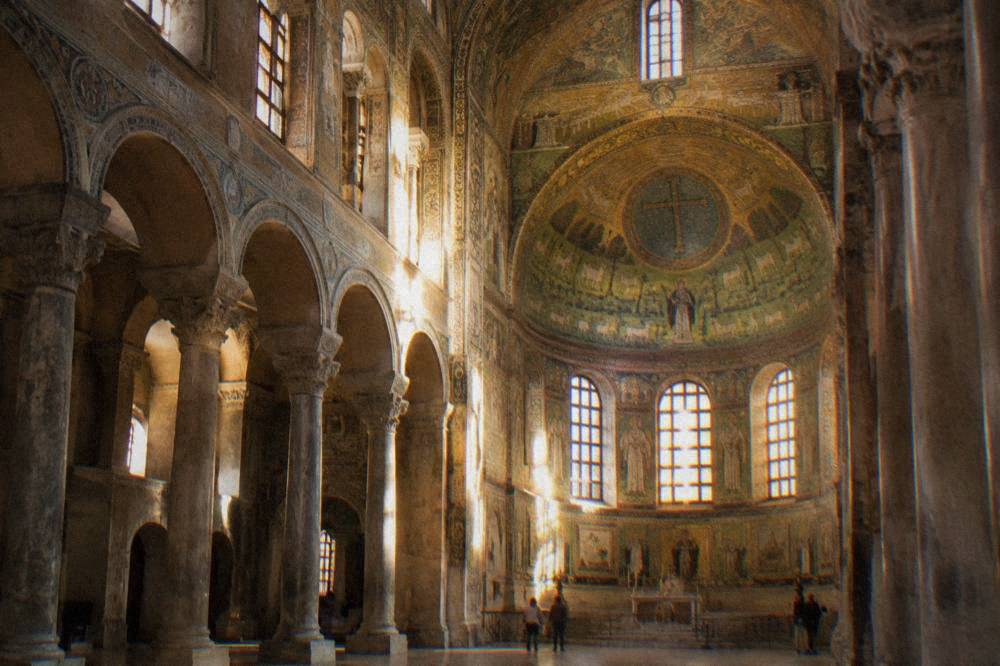
What Is The Mausoleum Of Galla Placidia?
The Mausoleum of Galla Placidia in Ravenna is a small domed chapel lined with early Christian mosaics, one of the city's eight UNESCO monuments. Here is what it is, what you see, and how to visit.
The Mausoleum of Galla Placidia is a small domed burial chapel in the centre of Ravenna, the inland city in Emilia-Romagna whose eight Early Christian monuments were inscribed together on the UNESCO World Heritage list in 1996. Despite the name, the connection to Galla Placidia herself is part of a long tradition rather than a documented fact, and the building's interior is what carries its reputation: gold-ground glass mosaics on a blue night-sky ceiling, arranged in a cross-shaped plan that a visitor can cross in under a minute. The UNESCO listing names it first among the eight monuments, ahead of San Vitale, which stands literally next door. This page lays out what the building is, what the mosaics depict, and how a visit is organised, in the order a reader planning a trip needs it.
What Is The Mausoleum Of Galla Placidia?
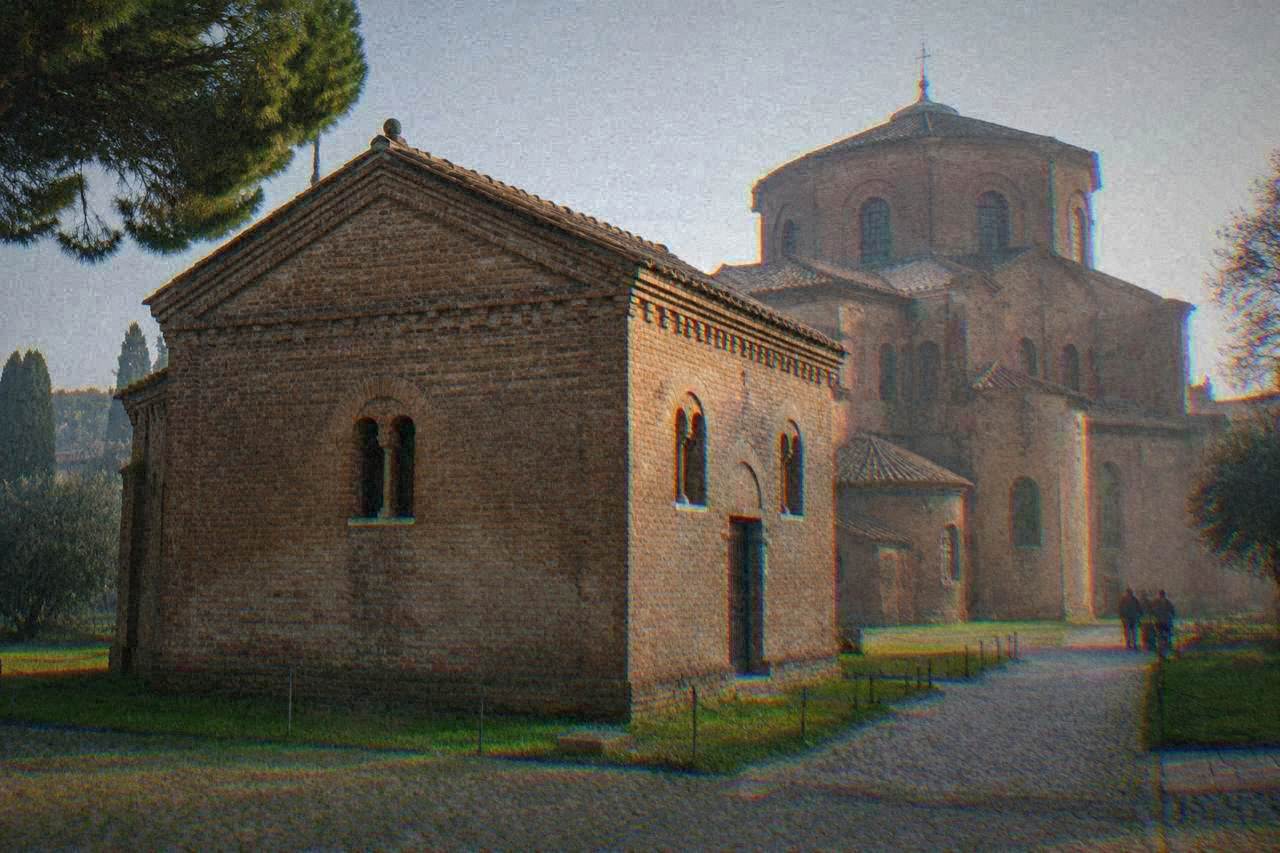
The Mausoleum of Galla Placidia is a cross-shaped brick chapel with a domed central vault, built as an imperial burial structure and lined with early Christian mosaics, standing in the courtyard next to the Basilica of San Vitale in Ravenna. UNESCO counts it among the city's eight Early Christian monuments, and its mosaic ceiling is the reason it appears on the list. The association with Galla Placidia comes from later tradition rather than surviving documentation.
The exterior is deliberately plain: bare brick, low walls, a squat tower over the crossing. Nothing about the outside prepares a first-time viewer for the interior, and that contrast is part of why the building is written about so often. Inside, every surface above dado level is covered in mosaic, gold-ground glass tesserae set against deep blue, so the small space reads as much larger than its footprint.
The name is a convenience of centuries of local tradition. Galla Placidia is one of the few people whose names the verified heritage record for Ravenna carries, alongside Dante and Theodoric, and the mausoleum has been linked to her for so long that the name has stuck in every guide and official listing. No inscription in the building confirms who was buried there, and the sources this site reports do not claim one. For the practical visitor the question of naming matters less than the scheduling: this is one of the two monuments in the Ravenna Mosaici circuit with a mandatory booked entry time and a stay of only a few minutes, which shapes how a day in the city is planned.
Readers who want the longer historical treatment of the question of why the building exists have a dedicated page, why the Mausoleum of Galla Placidia was built, and the monument also has its own attraction page with visiting detail, the Mausoleum of Galla Placidia guide.
What Can You See Inside The Mausoleum In Ravenna?
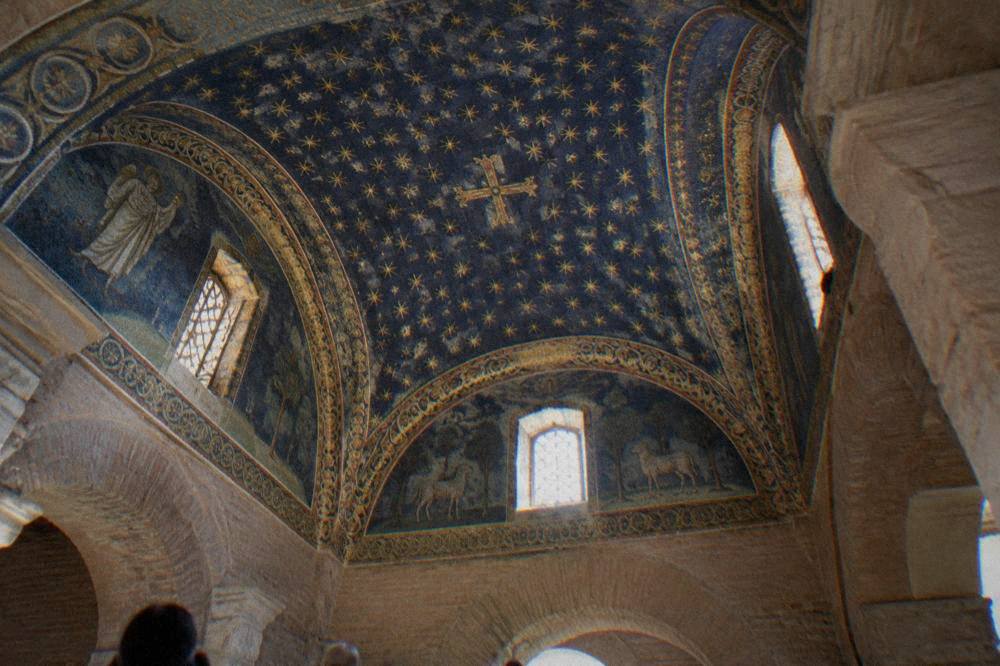
The interior shows a barrel-vaulted cross plan with mosaic decoration on every upper surface: a blue star field across the central dome, figure scenes in the four arms, and decorative bands and panels of vines, geometric patterns and animals filling the spaces between them. The best-known image is the young shepherd with a sheep across his shoulders in the entrance arm. The mosaics are glass, largely gold and blue-ground, and are the building's entire claim to fame.
The central vault is the moment people remember. A field of gold stars on deep blue spreads across the dome, with a central cross motif and paired apostle figures at the base of the design. In the arms of the cross, lunettes and vaults carry narrative scenes: the shepherd, a pair of deer at a fountain, figures with books and scrolls, and seated personifications. Below them, marble sarcophagi stand along the walls, plain and heavy, which is the visible reminder that this was built as a burial space.
Two practical points shape any visit. First, the space is small and the entry system reflects that: the Ravenna Mosaici terms page states that Galla Placidia requires a mandatory booked entry time and that stays are short, a few minutes in practice. Second, the lighting is low and deliberate, and photography without flash is the norm. The building sits in the same complex as San Vitale, so the standard pattern is to book a slot for Galla Placidia, then spend the rest of the hour in the far larger basilica next door, where the mosaics of the sanctuary and choir fill a space you can walk around at length. Visitors weighing the whole set of monuments against limited time can start from what Ravenna is famous for to see how the pieces fit together.
For travellers who prefer a guide over self-direction, these walks and private tours cover the mausoleum as part of a route through the UNESCO buildings.
How Do You Visit The Mausoleum, And What Does The Ticket Cover?
The Mausoleum of Galla Placidia is part of the Ravenna Mosaici combined ticket system: it is included in the 4-monument and 5-monument itineraries, with reduced fares from EUR 11.50 and EUR 13.50 respectively, and it cannot be visited on the 2-monument itinerary. Entry times must be booked per monument, the ticket is valid for one week with one admission per monument, and stays inside are short.
Want to see these mosaics in person? Book a monument entry ticket here.
The structure of the combined ticket determines what you can see. The 2-monument itinerary covers Sant'Apollinare Nuovo and San Vitale only. The 4-monument itinerary adds Galla Placidia and the Neonian Baptistery, the two monuments with timed entry and brief stays. The 5-monument itinerary adds the Archiepiscopal Museum and the Chapel of St Andrew. Reduced fares apply to students, non-accredited journalists and paying groups over 20, and free entry applies to children aged 0 to 10, residents of Ravenna, ICOM members, licensed guides, and visitors with a disability plus one companion. Full-price figures sit on the official Ravenna Mosaici page, which is where a reader should confirm them before travelling.
| Itinerary | Monuments covered | Reduced fare | Notes |
|---|---|---|---|
| 2 monuments | Sant'Apollinare Nuovo, San Vitale | from EUR 9.50 | Does not include Galla Placidia |
| 4 monuments | Adds Galla Placidia, Neonian Baptistery | from EUR 11.50 | Timed entry at Galla Placidia and the Neonian Baptistery |
| 5 monuments | Adds Archiepiscopal Museum, Chapel of St Andrew | from EUR 13.50 | One week validity, one admission per monument |
Opening hours run in two seasons. From 8 March to 2 November 2026 the monument is open 9:00 to 19:00, with last admission 30 minutes before closing. From 3 November 2026 to 6 March 2027 hours are 10:00 to 17:00, with last admission 15 minutes before closing. The monument closes on 25 December and 1 January. One-off changes do happen, so the official page is the place to check the day before a visit.
| Season | Dates | Hours | Last admission |
|---|---|---|---|
| Summer | 8 March to 2 November 2026 | 9:00 to 19:00 | 18:45 |
| Winter | 3 November 2026 to 6 March 2027 | 10:00 to 17:00 | 16:45 |
A question worth asking before booking: is a guided walk the right format for this monument? A guide can point out the scenes and explain the iconography, which helps in a space where you only stand for a few minutes, but the timed-entry rule applies regardless of whether you arrive with a group or alone.
Should You Take A Guided Tour Of The Ravenna Mosaics?
A guided tour is worthwhile if you want the imagery explained rather than just seen, because the mosaics are dense with symbols that are easy to miss in a short stay, and several tours bundle the monument entries so you do not have to manage the booking system yourself. Independent visiting works well if you prefer to move at your own pace and book your own entry slots.
The paired options below cover both formats. The audio walk lets you carry the commentary yourself and linger where you want, while the private tours put a live guide in front of the mosaics and handle the route between them.
How Does The Mausoleum Fit Into Ravenna's Eight UNESCO Monuments?
The Mausoleum of Galla Placidia is one of eight monuments in Ravenna inscribed together on the UNESCO World Heritage list in 1996, a set that also includes the Neonian Baptistery, the Arian Baptistery, Sant'Apollinare Nuovo, the Archiepiscopal Chapel, the Mausoleum of Theodoric, San Vitale and Sant'Apollinare in Classe. It is one of five covered by the Ravenna Mosaici combined ticket.
The eight are scattered rather than clustered. Five sit in or near the historic centre within a walkable radius: Galla Placidia and San Vitale share one complex, the Neonian Baptistery and the cathedral area are a few streets away, and Sant'Apollinare Nuovo and the Archiepiscopal complex sit on the street that runs through the old city. The Mausoleum of Theodoric stands at the edge of town and is ticketed separately, and Sant'Apollinare in Classe is in the Classe area outside the centre, near the Classis Ravenna museum. A full count of the set, with what each one holds, is on the page listing the eight UNESCO sites in Ravenna.
This geography is the single biggest planning factor. A first day in Ravenna comfortably covers the central cluster, with Galla Placidia and San Vitale as the anchor stop, and a second half-day covers Theodoric's mausoleum and the trip out to Classe. Readers deciding how much time to set aside can compare itineraries on how many days you need in Ravenna. The Theodoric mausoleum, a very different building, a two-storey stone drum rather than a brick chapel, is described on the Mausoleum of Theodoric page.
One contrast worth carrying into a visit: the two mausolea represent two different worlds of building, one brick and mosaic-lined, the other cut stone and austere, and seeing both in one trip makes the range of what Ravenna holds obvious in a way no single monument can.
Common Questions About The Mausoleum Of Galla Plavidia In Ravenna
The questions below cover the practical points that come up around a visit: whether the name reflects who is actually buried there, how long the timed stay lasts, whether photography is possible, how the ticket works, and how the monument relates to San Vitale next door. Each answer repeats what the official pages and the UNESCO listing state, with no figures beyond those.
What is the Mausoleum of Galla Placidia?
A small cross-shaped brick burial chapel in central Ravenna, lined with early Christian gold-ground glass mosaics, listed by UNESCO as one of the city's eight Early Christian monuments. The link to Galla Placidia is traditional rather than documented, and no inscription in the building confirms the burial.
Who is buried in the Mausoleum of Galla Placidia?
Three plain marble sarcophagi stand inside, but the surviving record does not name their occupants with certainty, and the association with Galla Placidia and her family comes from centuries of local tradition. The official listing keeps the traditional name without asserting the burials as documented fact.
How long can you stay inside the mausoleum?
The Ravenna Mosaici terms require a booked entry time for Galla Placidia, and stays inside are short, a few minutes in practice, because the space is very small. The neighbouring Basilica of San Vitale has no such limit and is where a visit naturally slows down.
Can you photograph the mosaics inside?
Yes, photography without flash is the standard rule at the Ravenna Mosaici monuments, and the low interior lighting of the mausoleum rewards steady hands. Tripods and flash are not part of normal visiting practice; confirm any special equipment with staff at the door.
Is the Mausoleum of Galla Placidia included in the combined ticket?
Yes, in the 4-monument and 5-monument itineraries, with reduced fares from EUR 11.50 and EUR 13.50, but not in the 2-monument itinerary. The ticket is valid one week, allows one admission per monument, and an entry time must be booked for each monument visited.
When is the Mausoleum of Galla Placidia open?
From 8 March to 2 November 2026 it is open 9:00 to 19:00, and from 3 November 2026 to 6 March 2027 it is open 10:00 to 17:00, closed 25 December and 1 January. Check the official Ravenna Mosaici page before a visit for one-off changes.
For the wider picture of the city the mausoleum sits in, the editorial desk's overview at Ravenna Travel Guide collects the monuments, the itineraries and the practical pages in one place. The mausoleum itself rewards exactly the preparation described above: a booked slot, a combined ticket that includes it, and the few minutes inside treated as the concentrated highlight they are.