Why Was The Mausoleum Of Galla Placidia Built?
Why the Mausoleum of Galla Placidia in Ravenna was built, what its mosaics show, how the UNESCO listing describes it, and how to visit with a timed combo ticket.
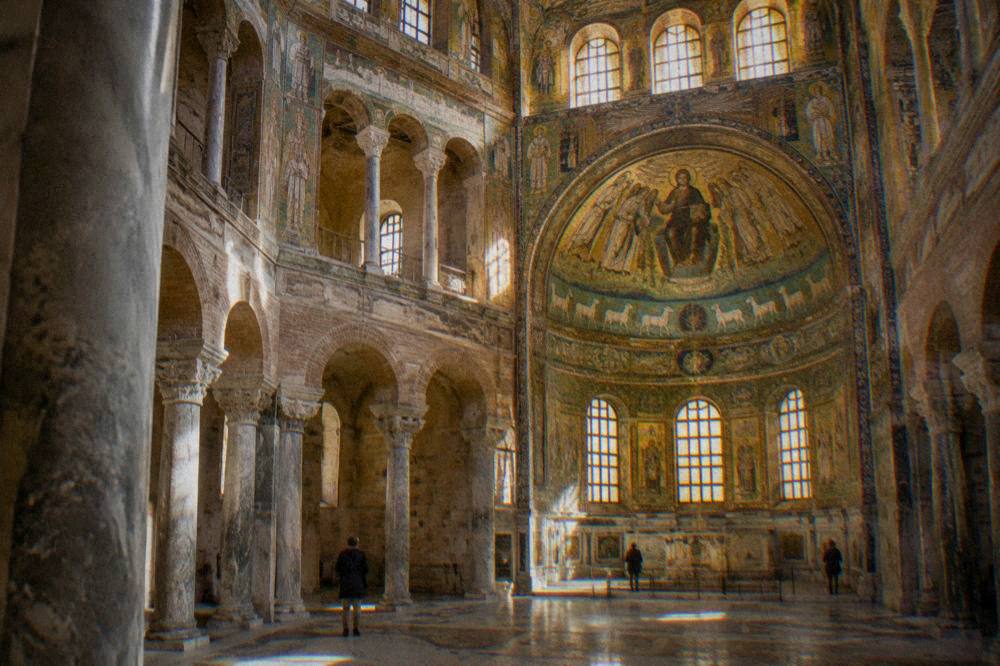
Ravenna, an inland Po-valley city in Emilia-Romagna about 8 km from the Adriatic coast, holds eight Early Christian monuments inscribed together on the UNESCO World Heritage list in 1996, and the Mausoleum of Galla Placidia is the smallest and one of the most visited of them. Its plain brick exterior stands in the shadow of the Basilica of San Vitale, and its interior carries some of the gold-ground glass mosaic the city is known for. The question of why it was built is really a question about what a mausoleum was doing at the heart of a late imperial capital, and the answer sits partly in the building's own name.
Why Was The Mausoleum Of Galla Placidia Built?
The Mausoleum of Galla Placidia was built as a burial structure, and its own name records the tradition that links it to Galla Placidia, a member of the imperial family whose court was established at Ravenna. The UNESCO listing places it among the eight Early Christian monuments of the city, and its form, a small cruciform chapel under a dome, is the form of a burial chapel rather than a parish church.
That is about as far as the primary sources printed on this site go, and it is further than many guides bother to reach. The UNESCO listing names the monument a mausoleum and groups it with the Neonian Baptistery, Sant'Apollinare Nuovo, the Arian Baptistery, the Archiepiscopal Chapel, the Mausoleum of Theodoric, San Vitale and Sant'Apollinare in Classe. It uses the wording "Byzantine mosaics" and "Early Christian" for the group. What the listing does not do, and what this page therefore does not do either, is give a construction year, an architect or a biography of Galla Placidia. For the court background, the companion page on why Ravenna became a capital carries that story.
The traditional reading, repeated in the monument's own presentation, is that the chapel served as a resting place for Galla Placidia and members of her family. Scholars have long debated how literally to take that attribution, and the debate itself is part of the monument's interest: a building whose function as a mausoleum is not in doubt, while the identity of its intended occupants rests on tradition rather than an inscription. What is not in doubt is the category of the building. A cruciform plan, a barrel-vaulted cross of arms and a dome on pendentives, marks it as a chapel built for burial and memorial, attached to the basilica complex beside it.
What Does The Mausoleum Of Galla Placidia Look Like Inside?
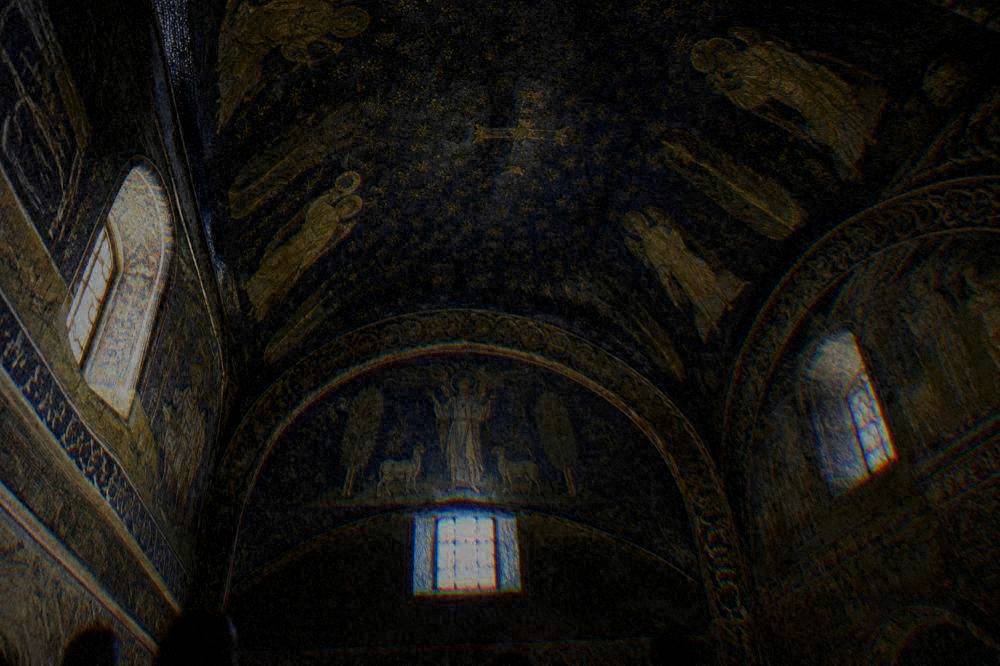
Inside, the mausoleum is a single small space entirely lined with mosaic on a blue and gold ground, with a vault of stars over the crossing dome and figural panels in the lunettes above each window. The Ravenna Mosaici and Visit Ravenna pages both describe the interior as mosaic decoration across vaults and walls, which is why the monument is on the itinerary of every mosaics visitor despite its size.
The chamber is crossed in a few steps, and the timed entry system exists precisely because the space is small. Stays inside are short, the ticket terms say a few minutes, and the flow of visitors is managed by slot rather than by queue. The mosaics read as a programme rather than as decoration: a star-filled vault directly over the viewer, panels set above the windows, and ornamental bands running along the arches. Gold-ground glass tesserae, the material the UNESCO listing highlights across the eight monuments, carry the light from the small windows.
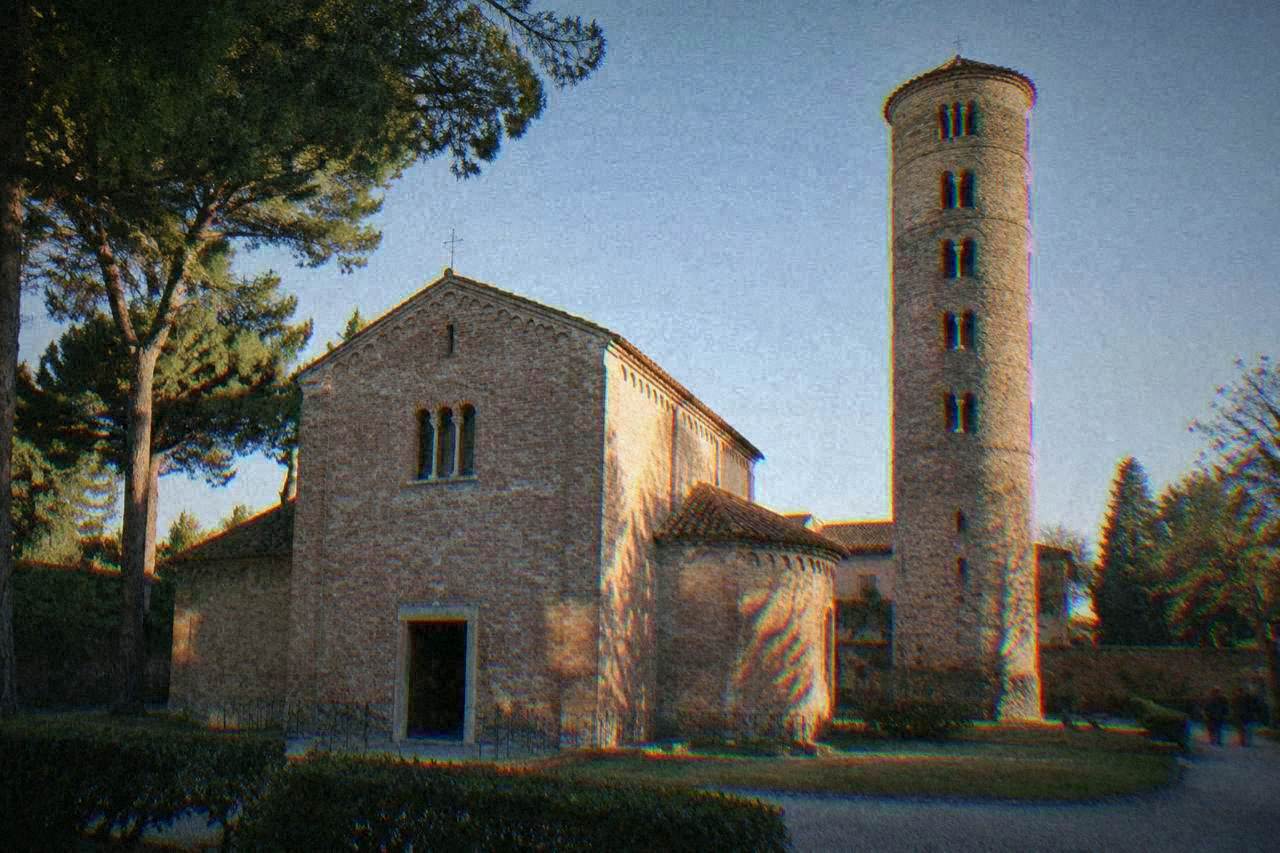
The exterior is the opposite register: bare brick, a low drum, a pitched roof over each arm. Nothing about the outside announces what the inside holds, which is a pattern repeated across Ravenna. The what is the Mausoleum of Galla Placidia page gives a fuller walk-through of the panels, and the attractions guide to the mausoleum covers the courtyard and the approach from San Vitale.
A practical note on reading the monument: because this site prints only what the official pages state, it does not attribute panels to named workshops or date the phases. The Visit Ravenna pages describe what is visible and leave interpretation to the guides who work in the buildings daily. Visitors who want that layer explained in the room itself can join a guided walk; the roster below carries three bookable options for Ravenna and the surrounding Romagna area.
How Do You Visit The Mausoleum Of Galla Placidia From Ravenna?
You visit the mausoleum with a Ravenna Mosaici combo ticket, from EUR 9.50 reduced, which covers two to five monuments over one week with one admission per monument, and an entry time must be booked for Galla Placidia itself. Summer hours run 9:00 to 19:00 to 2 November 2026, and winter hours 10:00 to 17:00 from 3 November 2026 to 6 March 2027, with last admission at 16:45 in winter.
The mausoleum sits inside the historic centre, a short walk from the railway station and next to San Vitale, so no transport is needed beyond your own feet. The combo structure matters for planning: the 2 monument ticket covers Sant'Apollinare Nuovo and San Vitale, the 4 monument ticket adds Galla Placidia and the Neonian Baptistery, and the 5 monument ticket adds the Archiepiscopal Museum and the Chapel of St Andrew. Reduced fares apply to students, non-accredited journalists and paying groups over 20, and children 0 to 10, residents of Ravenna, ICOM members, licensed guides, and visitors with a disability plus companion enter free. The full-price figures are shown on the official ticket page, and one-off changes are posted there too. The wider set of guides lives on Ravenna Travel Guide.
| Ticket | Monuments covered | Reduced price | Validity |
|---|---|---|---|
| 2 monument combo | Sant'Apollinare Nuovo, San Vitale | EUR 9.50 | 7 days, one admission per monument |
| 4 monument combo | Adds Galla Placidia, Neonian Baptistery | EUR 11.50 | 7 days, timed entry at Galla Placidia and the Neonian Baptistery |
| 5 monument combo | Adds Archiepiscopal Museum, Chapel of St Andrew | EUR 13.50 | 7 days, timed entry as above |
The timed entry at Galla Placidia and the Neonian Baptistery is the detail that reshapes a day. Both small chambers turn over visitors quickly, so the slot system keeps the interiors viewable rather than packed. Booking a slot for each monument on the ticket is required, and San Vitale admits in scheduled slots as well, so a morning in the centre runs naturally from one booked time to the next. Visitors building a first itinerary will find the eight UNESCO sites listed on one page the fastest way to see the whole set, and the one day in Ravenna page sequences the centre on foot.
Cruise passengers calling at Porto Corsini have a tighter version of the same decision. The terminal sits about 15 km from the centre and the Visit Ravenna shuttle runs about 30 minutes in season, so a monuments morning pairs with a coast or lagoon afternoon. One option in the roster below covers that pattern directly.
Where Does The Mausoleum Sit Among Ravenna's Other Monuments?
The mausoleum belongs to a set of eight monuments inscribed by UNESCO in 1996 as the Early Christian monuments of Ravenna, and within that set it is the building that shows the burial function most plainly, alongside the Mausoleum of Theodoric, the other mausoleum of the group. Everything else on the list is a baptistery, a basilica or a chapel, which makes the two mausoleums the clearest statements of why this architecture was built at all.
The comparison is instructive on the ground. Theodoric's mausoleum, on the Visit Ravenna page, is a two-storey stone drum outside the centre, ticketed at EUR 6 with a concession at EUR 5 and EUR 2 for ages 18 to 25, and combined with the Arian Baptistery and Theodoric's Palace at EUR 7. Galla Placidia is the opposite: an interior programme of mosaic in a chapel scaled for a family rather than a king. Reading the two against each other, which a single day in Ravenna allows, is the quickest way to understand what a late antique patron was commissioning. The companion piece on San Vitale and its builders and the page on when Sant'Apollinare Nuovo was built carry the same caution this page does: dates and attributions live on the official pages, and this site reports rather than fills gaps.
| Monument | Function in the UNESCO group | Where it stands |
|---|---|---|
| Mausoleum of Galla Placidia | Burial chapel with mosaic vaults | Historic centre, beside San Vitale |
| Mausoleum of Theodoric | Two-storey burial monument | Outside the centre, off Via delle Romagne |
| Neonian Baptistery | Baptistery with dome mosaic | Historic centre |
| Arian Baptistery | Baptistery of the second court | Historic centre |
| Archiepiscopal Chapel | Palace chapel | Historic centre, in the Archiepiscopal Museum |
| Sant'Apollinare Nuovo | Processional basilica | Historic centre |
| San Vitale | Imperial basilica | Historic centre |
| Sant'Apollinare in Classe | Basilica | Classe, outside the centre |
Beyond the eight, the city's museum layer tells the afterlife of the mosaics. Classis Ravenna, in the Classe area near Sant'Apollinare in Classe, holds the collection of the former TAMO museum, which closed in 2023, and its own ticket runs EUR 8 full and EUR 6 reduced. The MAR art museum, at EUR 8 full and EUR 6 reduced, stages contemporary exhibitions against that backdrop. None of these are among the eight UNESCO monuments, and keeping the two lists separate is the single most useful piece of Ravenna bookkeeping.
For visitors pairing the monuments with a longer day in the region, the Venice shore excursion below is the roster's headline option from Ravenna, and it can be checked alongside a mosaics morning on the same call.
Common Questions About The Mausoleum Of Galla Placidia
Why was the Mausoleum of Galla Placidia built?
It was built as a burial chapel, and its name preserves the tradition connecting it to Galla Placidia, a member of the imperial family whose court was at Ravenna. The UNESCO listing includes it among the eight Early Christian monuments of the city.
Can you visit the Mausoleum of Galla Placidia without a guide?
Yes. The Ravenna Mosaici combo ticket admits you directly, from EUR 9.50 reduced for two monuments, and an entry time must be booked for the mausoleum because the interior is small and visits are short.
Is the Mausoleum of Galla Placidia open in winter?
Yes. Winter hours run 3 November 2026 to 6 March 2027, 10:00 to 17:00 with last admission at 16:45, closed 25 December and 1 January. The official page posts any one-off changes.
How long does a visit inside take?
The ticket terms describe a short timed stay of a few minutes, because the chamber is small. The surrounding complex with San Vitale and the Archiepiscopal Museum fills out a morning at a normal pace.
Is the mausoleum one of the UNESCO sites?
It is one of the eight monuments inscribed in 1996, alongside the Neonian Baptistery, Sant'Apollinare Nuovo, the Arian Baptistery, the Archiepiscopal Chapel, the Mausoleum of Theodoric, San Vitale and Sant'Apollinare in Classe.
Planning a visit around the mausoleum comes down to three official figures, the reduced combo fares, the timed entry and the seasonal hours, and all three sit on the Ravenna Mosaici page for confirmation before you travel.