What Are The 8 UNESCO Sites In Ravenna?
The eight UNESCO Early Christian monuments of Ravenna, named one by one, with ticket coverage, opening hours and how to see them on a single visit.
Ravenna, an inland city on the flat Po plain of Emilia-Romagna about 8 km from the Adriatic coast, holds one of the densest UNESCO listings in Italy: eight Early Christian monuments, inscribed together in 1996, all decorated with the gold-ground glass mosaics that give the city its identity. The listing text on the UNESCO page names them exactly, and this article walks through each one in visiting order, with the ticket structure, the hours and the practical details that the official Ravenna Mosaici page carries. Dante's tomb, which sits beside the Basilica of San Francesco in the same streets, is not one of the eight, and neither are the city's museums, a distinction that matters when planning a visit.
What Are The 8 UNESCO Sites In Ravenna?
The eight UNESCO sites in Ravenna are the Mausoleum of Galla Placidia, the Neonian Baptistery, the Basilica of Sant'Apollinare Nuovo, the Arian Baptistery, the Archiepiscopal Chapel, the Mausoleum of Theodoric, the Basilica of San Vitale and the Basilica of Sant'Apollinare in Classe. UNESCO inscribed them together in 1996 as the Early Christian Monuments of Ravenna, a single listing rather than eight separate ones.
To visit the UNESCO monuments in person, book a mosaic entry ticket here.
Seven of the eight stand in or beside the historic centre, close enough that the walk between them crosses quiet streets and covered passageways rather than long distances. The eighth, Sant'Apollinare in Classe, stands in the Classe area outside the centre, and reaching it needs a bus, a bike or a car. That split shapes every itinerary: the central seven fit into a single day of walking, while Classe is its own half-day trip. The full guide to the UNESCO sites covers each monument in depth, and the table below is the short version.
| Monument | Location | Ticket coverage |
|---|---|---|
| Mausoleum of Galla Placidia | Historic centre | 4 and 5 monument combos |
| Neonian Baptistery | Historic centre | 4 and 5 monument combos |
| Sant'Apollinare Nuovo | Historic centre | 2, 4 and 5 monument combos |
| Arian Baptistery | Historic centre | Not on the combo; EUR 3 individual, or the EUR 7 Theodoric combination |
| Archiepiscopal Chapel | Historic centre, inside the Archiepiscopal Museum | 5 monument combo |
| Mausoleum of Theodoric | North of the centre, its own site | EUR 6 individual, or the EUR 7 Theodoric combination |
| San Vitale | Historic centre | 2, 4 and 5 monument combos |
| Sant'Apollinare in Classe | Classe area, outside the centre | EUR 6 individual, EUR 2 reduced |
The distinction between the UNESCO eight and the rest of Ravenna's sights is worth holding onto. The Domus dei Tappeti di Pietra, the MAR, the Museo Nazionale, the Classis Ravenna museum and the Museo Dante are all part of a Ravenna visit, but none of them belongs to the UNESCO listing, and the ticketing treats them separately. The Basilica of San Francesco, where Dante's funeral monument sits in a side street, is a parish church rather than a ticketed monument.
How Much Do Ravenna Mosaics Tickets Cost, And What Do They Cover?
The Ravenna Mosaici combo ticket comes in three sizes, and reduced fares start at EUR 9.50 for the 2 monument version, EUR 11.50 for the 4 monument version and EUR 13.50 for the 5 monument version, per the official Ravenna Mosaici prices page. Each combo is valid for one week, allows one admission per monument, and requires an entry time to be booked for each monument individually.
The 2 monument ticket covers Sant'Apollinare Nuovo and San Vitale. The 4 monument version adds the Mausoleum of Galla Placidia and the Neonian Baptistery, and the 5 monument version adds the Archiepiscopal Museum with its Chapel of St Andrew. The reduced rate applies to students, non-accredited journalists and paying groups over 20; children aged 0 to 10, residents of Ravenna, ICOM members, licensed guides, and visitors with a disability plus one companion enter free. Galla Placidia and the Neonian Baptistery require a booked entry time and allow only a few minutes inside, and San Vitale admits visitors in slots, so the booking step is not optional.
Two things fall outside the combo. Sant'Apollinare in Classe, though it is on the UNESCO list, sells its own ticket at EUR 6 full and EUR 2 reduced. The Mausoleum of Theodoric, also on the list, charges EUR 6 with a concession at EUR 5 and EUR 2 for ages 18 to 25, and a EUR 7 combination adds the Arian Baptistery and Theodoric's Palace. The full, non-reduced combo prices sit on the official page, which is the place to check before buying. For the booking mechanics, how to purchase tickets for the five UNESCO sites walks through the process step by step.
A guided option changes the arithmetic, because several walks bundle entry. The Check availability link beside the Audio and Written Guide tour page shows the current from-price for a self-guided format that suits readers who would rather move at their own pace than join a group.
When Are The Eight Monuments Open, And When Do They Close?
The Ravenna Mosaici sites keep summer hours of 9:00 to 19:00 from 8 March to 2 November 2026, then winter hours of 10:00 to 17:00 from 3 November 2026 to 6 March 2027, and they close on 25 December and 1 January. Last admission falls 30 minutes before closing at most sites, and slightly later at Galla Placidia and the Neonian Baptistery.
The Mausoleum of Theodoric opens every day 8:30 to 17:30. Sant'Apollinare in Classe runs Monday to Saturday 8:30 to 19:00 and Sunday from 13:30, a Sunday schedule that catches out visitors who arrive in Classe in the morning. Dante's tomb, though not on the UNESCO list, is nearby, free to enter, and open 10:00 to 18:00 from November to March and 10:00 to 19:00 from April to October. The state museums and monuments are free on the first Sunday of the month, which makes that day both the cheapest and the busiest time to visit. More of these guides are collected on Ravenna Travel Guide.
| Site | Hours | Days closed |
|---|---|---|
| Ravenna Mosaici sites, 8 Mar to 2 Nov 2026 | 9:00 to 19:00 | 25 Dec, 1 Jan |
| Ravenna Mosaici sites, 3 Nov 2026 to 6 Mar 2027 | 10:00 to 17:00 | 25 Dec, 1 Jan |
| Mausoleum of Theodoric | 8:30 to 17:30 daily | 25 Dec, 1 Jan |
| Sant'Apollinare in Classe | Mon to Sat 8:30 to 19:00, Sun 13:30 to 19:00 | 25 Dec, 1 Jan |
| Dante's tomb | Nov to Mar 10:00 to 18:00, Apr to Oct 10:00 to 19:00 | 25 Dec |
Hours can shift for special occasions. Each October the Notte d'Oro opens monuments for free evening access across the historic centre, and each autumn the Ravenna Festival's trilogy brings opera to the Teatro Alighieri, with the "Mozart 1791" programme running 13 to 17 November 2026. Neither changes the standard ticket, but both add reasons to be in the city after the mosaics close.
Should you take a guided walk, or go alone with tickets? A guide adds the layer the mosaics do not explain on their own: the figures, the inscriptions and the design logic that a casual glance misses. For readers weighing it, what Ravenna is famous for sets out what the mosaics mean, and the solo option below covers a self-guided format with an audio and written guide prepared by a local.
What Do You Actually See Inside Each Of The Eight?
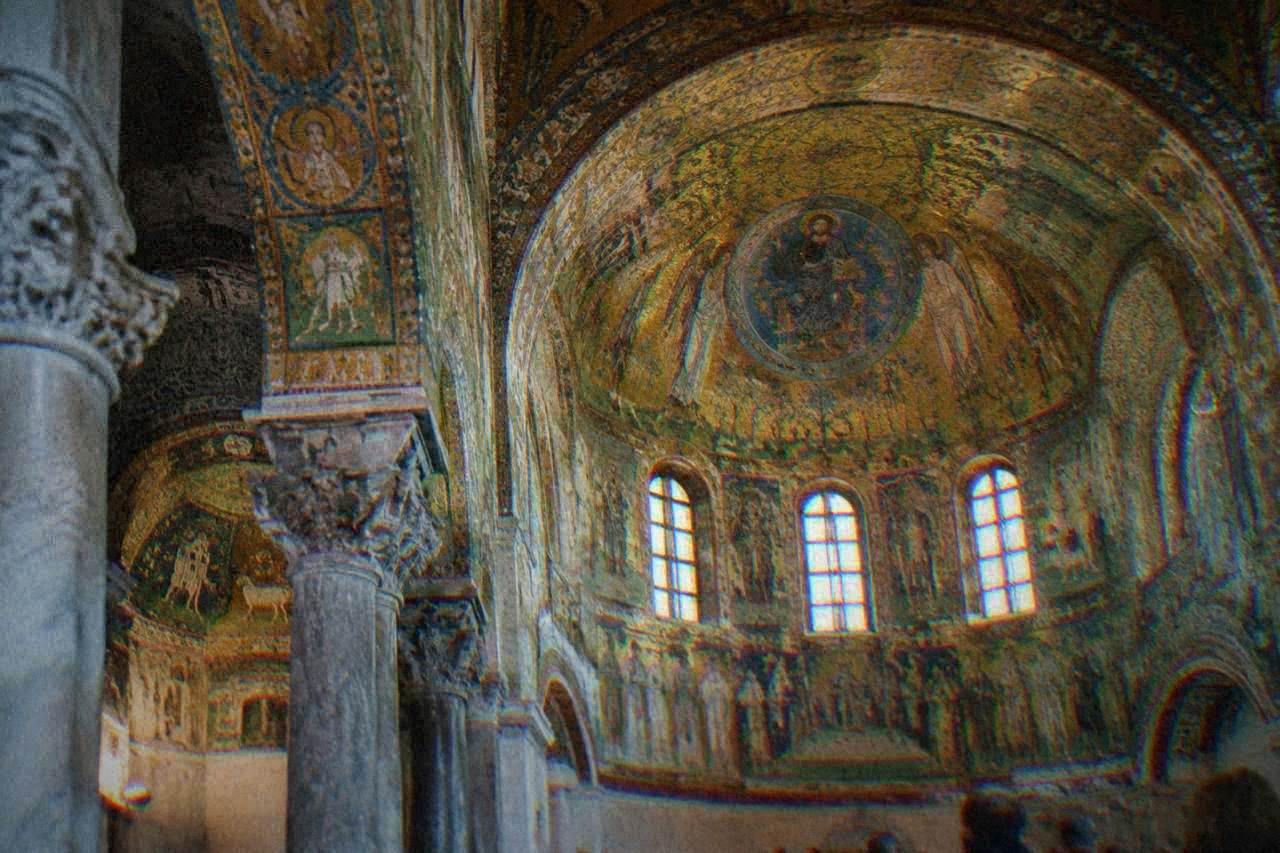
San Vitale shows a domed octagon covered in gold-ground mosaic, including the imperial panels of Justinian and Theodora, and beside it the Mausoleum of Galla Placidia holds a blue-starred vault that the UNESCO listing names among the list's highlights. The Neonian and Arian baptisteries each centre on a mosaic dome over a immersion font, and the two Sant'Apollinare basilicas carry long processional friezes along their nave walls.
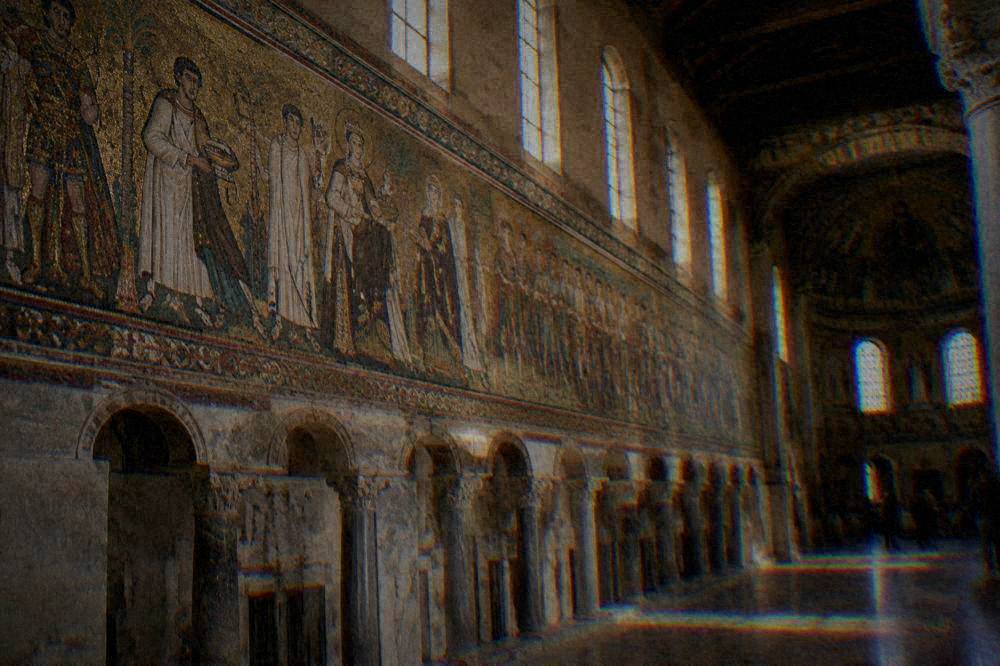
The pairing of San Vitale and Galla Placidia is the core of a visit, and the two stand in the same complex, a few steps apart. The Archiepiscopal Chapel, reached through the Archiepiscopal Museum, is the smallest of the eight and holds a chapel interior decorated in mosaic and marbles. Sant'Apollinare Nuovo lines its nave with two processions, one of virgins and one of martyrs, moving toward the apse past a sequence of scenes. The Arian Baptistery, small and quietly lit, is a separate building a short walk east, and its dome mirrors the scheme of the Neonian Baptistery in a different hand.
Across town, the Mausoleum of Theodoric is built of great blocks of stone rather than brick, with a monolithic dome on top, and it stands apart from the others both in material and in mood. Sant'Apollinare in Classe, the furthest of the eight, rewards the trip with a green landscape mosaic in its apse, a depiction of the Transfiguration in which sheep and trees stand in for the figures, and one of the most serene interiors in the whole listing. A visit that skips Classe sees seven eighths of the UNESCO inscription and misses the part that many consider its gentlest.
Can You See All Eight UNESCO Sites In Ravenna In One Day?
Yes, all eight UNESCO monuments can be seen in one day in Ravenna, because the central seven sit within walking distance of each other and Sant'Apollinare in Classe is a short bus or car ride away, but the day needs booked entry times for Galla Placidia and the Neonian Baptistery and a deliberate slot for Classe. One full day is the realistic minimum, and two days make the visit comfortable.
The practical sequence most itineraries follow is San Vitale and Galla Placidia first, then the Neonian Baptistery and the Archiepiscopal Museum, then Sant'Apollinare Nuovo, then the Arian Baptistery and the Mausoleum of Theodoric, with Classe either early or late in the day. The timed entries at Galla Placidia and the Neonian Baptistery, and the slot admissions at San Vitale, are the fixed points the rest of the plan hangs on. Readers weighing a longer stay can compare how many days are needed in Ravenna or follow the one day in Ravenna itinerary.
Common Questions About The UNESCO Sites In Ravenna
What are the 8 UNESCO sites in Ravenna?
The Mausoleum of Galla Placidia, the Neonian Baptistery, Sant'Apollinare Nuovo, the Arian Baptistery, the Archiepiscopal Chapel, the Mausoleum of Theodoric, San Vitale and Sant'Apollinare in Classe, inscribed together as the Early Christian Monuments of Ravenna in 1996.
Is Dante's tomb one of the UNESCO sites?
No. Dante's tomb is free to visit and central, but it is not part of the eight monument listing. The listing covers the Early Christian mosaic monuments named by UNESCO.
Does one ticket cover all eight monuments?
No single ticket covers all eight. The Ravenna Mosaici combo covers five of them at most, with reduced fares from EUR 9.50, while the Mausoleum of Theodoric, the Arian Baptistery and Sant'Apollinare in Classe sell their own tickets.
Which UNESCO site is furthest from the centre?
Sant'Apollinare in Classe, in the Classe area outside the centre. It is reached by Start Romagna bus, bike or car, and it opens Monday to Saturday 8:30 to 19:00 and Sunday from 13:30.
Do the monuments close in winter?
They stay open. From 3 November 2026 to 6 March 2027 the Ravenna Mosaici sites run 10:00 to 17:00 daily, closing only on 25 December and 1 January, and the shorter hours mean an earlier start for a full eight site day.
Taken together, the eight monuments read as one continuous programme of mosaic art spread across a walkable city and one outlying basilica, and a week long ticket window means a two day visit can split them without buying twice.