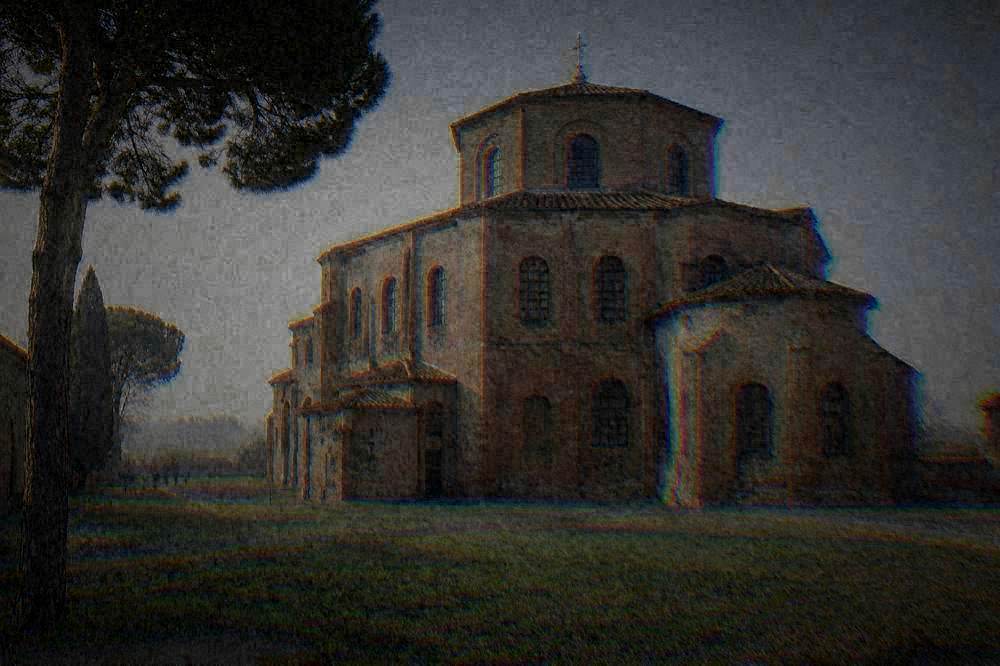
What Not To Miss In Ravenna?
The essential Ravenna sights, from the eight UNESCO mosaic monuments to Dante's tomb, the wetlands and the coast, with hours and ticket facts from the official pages.
Ravenna, a flat Po-valley city in Emilia-Romagna about 8 km from the Adriatic coast, concentrates its fame into a small walkable centre: eight UNESCO Early Christian monuments lined with Byzantine mosaics, the tomb of Dante Alighieri, and a food tradition built on piadina and cappelletti. The municipal tourism pages, the Ravenna Mosaici ticket site and the UNESCO listing together describe everything a first visit can cover, and this page assembles it in one place. Nothing here is hidden or hard to reach; the monuments sit within a short walk of one another, the station is close to the centre, and the wetlands and beach resorts sit on the flat plain beyond it. For a fuller itinerary, the things to do in Ravenna overview covers the year-round options.
What Not To Miss In Ravenna?
The short list, drawn from the official listings, is the eight UNESCO monuments led by San Vitale and the Mausoleum of Galla Placidia, Dante's tomb, the mosaic collections of Classis Ravenna, and, beyond the centre, the Po Delta wetlands and the beach resorts of Marina di Ravenna and Punta Marina. UNESCO inscribed the eight Early Christian monuments as one World Heritage listing, and that mosaic core is what no other city in Italy can replicate. The food, the flat cycling and the coast then fill the days around it.
The UNESCO listing names the eight monuments explicitly: Mausoleum of Galla Placidia, Neonian Baptistery, Sant'Apollinare Nuovo, Arian Baptistery, Archiepiscopal Chapel, Mausoleum of Theodoric, San Vitale and Sant'Apollinare in Classe. A reader planning the trip around the listing will notice two practical splits immediately. Five of the eight lie inside the Ravenna Mosaici combined-ticket circuit, one sits at the far edge of the centre, and Sant'Apollinare in Classe stands in the Classe area outside town, next to the Classis Ravenna museum. The full list and what each monument holds is broken down in what are the 8 UNESCO sites in Ravenna.
The Ravenna Mosaici ticket page sets the frame for a visit: the combined ticket is valid one week, gives one admission per monument, and an entry time must be booked for each monument. Galla Placidia and the Neonian Baptistery take mandatory timed entry with short stays of a few minutes, and San Vitale admits in slots. Reduced fares on the combined ticket start at EUR 9.50 for two monuments, EUR 11.50 for four and EUR 13.50 for five; full prices sit on the official page. Reduced rates apply to students, non-accredited journalists and paying groups over 20, while children 0 to 10, Ravenna residents, ICOM members, licensed guides, and visitors with a disability plus companion enter free.
The Eight UNESCO Monuments And Their Mosaics
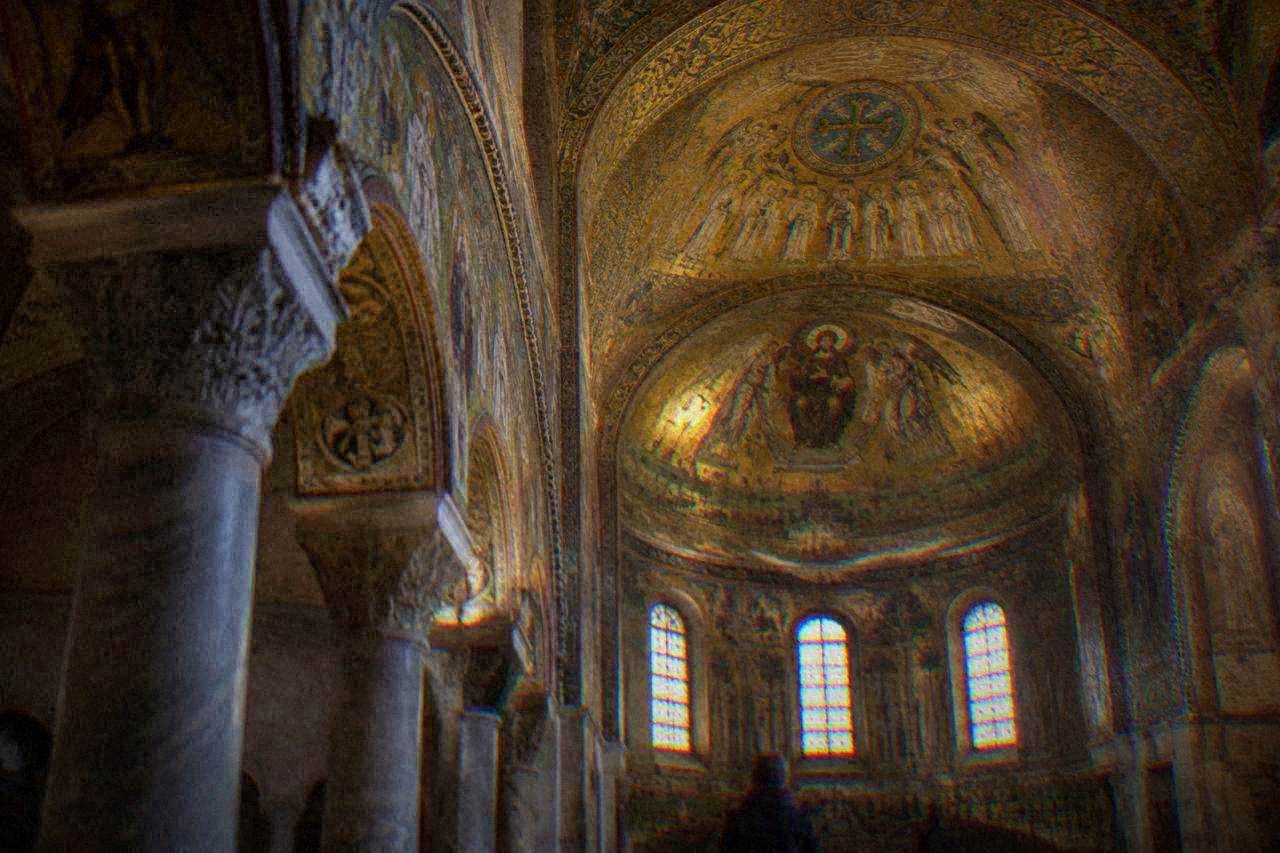
San Vitale is the monument the listings put first, a domed octagon whose sanctuary walls carry gold-ground glass mosaics, followed by the Mausoleum of Galla Placidia's star vault, the Neonian Baptistery's domed ceiling, and Sant'Apollinare in Classe's green mosaic apse. Together the eight monuments form one UNESCO World Heritage inscription. The Ravenna Mosaici page groups five under a combined ticket, and the remaining three sell separately.
The winter hours on the Ravenna Mosaici page run 10:00 to 17:00 daily from 3 November 2026 to 6 March 2027, with last admission 30 minutes before closing, except 15 minutes before at Galla Placidia and the Neonian Baptistery. Summer hours from 8 March to 2 November 2026 run to 19:00. All close on 25 December and 1 January.
| Monument | Ticket arrangement | What the listing describes |
|---|---|---|
| San Vitale | Ravenna Mosaici combined ticket | Domed octagonal basilica with gold-ground sanctuary mosaics, slot admission |
| Mausoleum of Galla Placidia | Combined ticket, mandatory timed entry | Small cruciform chapel, star-vault mosaic ceiling, short timed stay |
| Neonian Baptistery | Combined ticket, mandatory timed entry | Octagonal baptistery with a domed mosaic ceiling and apostle figures |
| Sant'Apollinare Nuovo | Combined ticket | Long basilica nave with processional mosaic bands on both walls |
| Archiepiscopal Chapel and Museum | Combined ticket, 5-monument tier | Chapel of St Andrew and the museum holding the Ivory Throne |
| Arian Baptistery | EUR 3 individual, or EUR 7 combined with Theodoric sites | Small domed baptistery near the Palace of Theodoric |
| Mausoleum of Theodoric | EUR 6, concession EUR 5, EUR 2 ages 18 to 25, or the EUR 7 combined | Massive stone drum and dome outside the centre, open 8:30 to 17:30 |
| Sant'Apollinare in Classe | EUR 6, EUR 2 reduced | Basilica in the Classe area, green paradise-mosaic apse, open Monday to Saturday 8:30 to 19:00 and Sunday 13:30 to 19:00 |
Guided walks compress the circuit and supply the reading a self-guided visit lacks. The mosaic-focused walks in the roster cover the monuments with a licensed guide, and private versions let a small group set its own pace.
Want a guide to tie the circuit together? Book a guided mosaic tour here.
Dante's Tomb, The Museums And The Historic Centre
Dante's tomb, free to enter and open 10:00 to 18:00 from November to March and to 19:00 from April to October, anchors the historic centre alongside Piazza del Popolo and the Museo Dante at EUR 5, reduced EUR 3.50. The Classis Ravenna museum, at EUR 8 full and EUR 6 reduced, holds the former TAMO collection after that museum closed in 2023. State museums and monuments are free on the first Sunday of the month.
Dante died and is buried in Ravenna, and the municipal page for the tomb gives the hours above, closing only on 25 December, with entry from 13:00 on 1 January. The story of how he came to rest here rather than Florence is told in why is Dante buried in Ravenna. Each September, on the second Sunday of the month, oil from the Tuscan hills is offered at the tomb, an annual ceremony the Comune page records.
The wider museum offer fills wet days and second days. MAR, the city art museum, charges EUR 8 full, EUR 6 reduced and EUR 3 for students, open Tuesday to Saturday 9:00 to 18:00 and Sunday afternoons, closed Mondays. The Museo Nazionale di Ravenna charges EUR 7 full and EUR 2 reduced and closes Mondays. The Domus dei Tappeti di Pietra, a buried decorated floor brought to light under the centre, keeps hours that vary by season, so the official page holds the current times. The historic centre itself, a compact grid of brick and quiet streets, takes a short walk to cross, and the one day in Ravenna guide sequences all of it for a single visit.
Should a guided day simplify the planning, a private discovery walk pairs the monuments with the centre's quieter corners.
The Wetlands: Punte Alberete, The Salt Pans And The Po Delta
The flat land north and south of Ravenna holds Punte Alberete, Valle Mandriole and the Pineta di San Vitale, a flooded forest and marsh complex the Po Delta park pages describe, plus the Cervia salt pans where flamingos are present all year. The Cervia salt pans visitor centre on Via Bova 61 opens weekends and holidays, and the park's Anello Dolce Salato is an approximately 4 km circuit. A guided birdwatching tour covers the same wetlands with a 40 species guarantee.
This is the Ravenna that the mosaic itineraries never show. The park pages list the Cà Vecchia visitor centre as the access point for Punte Alberete, a flooded forest where herons breed, and Valle Mandriole as the open marsh beside it. Further south, the Comacchio salt pans host a major flamingo colony, and the Cervia salt pans record flamingos in every season. Boat and walking excursions run in both areas through October, with winter schedules published separately, so the park and tourism pages hold the current dates.
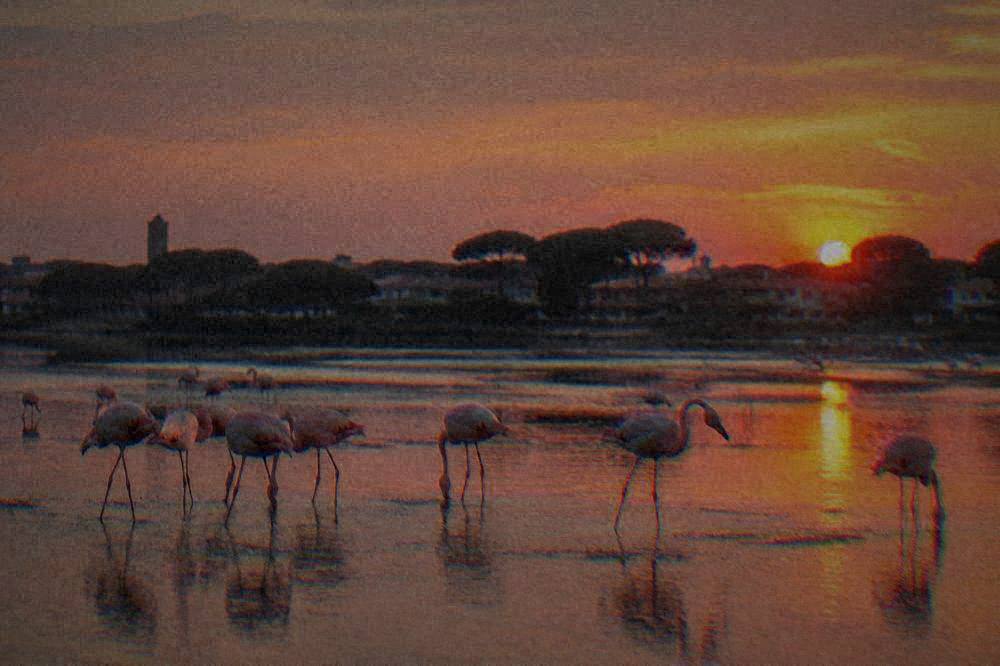
The operator's listing describes a guided excursion through these wetlands with a guarantee of 40 species, running with free cancellation up to 24 hours before. Full details and live availability sit on the birdwatching tour page, with Check availability on the operator's live listing.
The Coast: Marina Di Ravenna And The Lidos
The beach resorts are Marina di Ravenna, Punta Marina, Lido Adriano, Lido di Classe and Lido di Savio, strung along roughly 35 km of coast and reached from the station by Start Romagna bus, by bike or by car, never on foot from the centre. Ravenna is an inland city, so the beach is a deliberate trip. Winter reshapes the shore: a 25,000 cubic metre sand barrier is built each autumn at Punta Marina, Marina di Ravenna Sud and Lido di Savio and stays until spring 2027.
The Comune press release of 13 August 2026 sets out that autumn barrier project, built to protect the coast through the winter season and removed or renourished in spring. It is a working shoreline, and the winter market at Marina di Ravenna, on the sea side of Piazza Dora Markus, runs Wednesdays and Saturdays until 31 May, per the municipal notice. What the beaches offer across the seasons, and how to reach each lido, is laid out in does Ravenna have a beach.
A guided e-bike tour is one way to bridge city and flat countryside, since Ravenna sits on a plain where cycling infrastructure runs for kilometres without a climb. Details of the route and inclusions are on the operator's listing.
Food, Events And Days Beyond The City
Piadina, cappelletti and the Romagna wines define the table, the Ravenna Festival's autumn trilogy "Mozart 1791" runs 13 to 17 November 2026 at Teatro Alighieri, and Notte d'Oro each October opens the monuments free in the evening. Day trips by direct regional train reach Bologna, about 84 km away, in about 1 hour to 1 hour 20, and the coast, Comacchio and the Po Delta sit closer still.
The Visit Ravenna food pages describe piadina as the flatbread of the Romagna tradition and cappelletti as the filled pasta of the region's Sunday table; prices are posted at each restaurant, and a cover charge, the coperto, is legal when printed on the menu. The festival pages list the November trilogy programme at Teatro Alighieri, including La clemenza di Tito and the Requiem, and the municipal events calendar carries the concert seasons that run through winter into spring. For the wider regional picture, what are some good day trips I can take from Ravenna covers Bologna, Ferrara, Comacchio and more.
Cruise passengers with a single day face a tighter version of the same list. The Visit Ravenna shuttle runs between the centre and the Porto Corsini terminal, about 15 km away, in about 30 minutes, from 3 May to 26 October in the 2026 schedule. The cruise ship day guide sequences the monuments and the food stops for that window. Everything above folds back into one principle: the mosaics are the reason to come, and the flat green land around them is the reason to stay a second day, as Ravenna Travel Guide lays out across its monument pages and itineraries.
Common Questions About What Not To Miss In Ravenna
What not to miss in Ravenna?
Do not miss San Vitale, the Mausoleum of Galla Placidia and the Neonian Baptistery, the three most celebrated of the eight UNESCO monuments, plus Dante's tomb, which is free. Add Sant'Apollinare in Classe and, if time allows, the wetlands of Punte Alberete and the Po Delta park.
How many days does Ravenna need?
One long day covers the core monuments and Dante's tomb. Two days add Sant'Apollinare in Classe, the Classis Ravenna museum and a wetland or beach excursion at an unhurried pace.
Can the UNESCO monuments be seen on one ticket?
Five of them can. The Ravenna Mosaici combined ticket covers San Vitale, Sant'Apollinare Nuovo, Galla Placidia, the Neonian Baptistery and the Archiepiscopal Museum and Chapel, is valid one week, and requires a booked entry time per monument. Reduced fares start at EUR 9.50 for two monuments.
Is Ravenna on the coast?
No. Ravenna is an inland city on the flat Po plain, about 8 km from the sea. The beach resorts of Marina di Ravenna, Punta Marina, Lido Adriano, Lido di Classe and Lido di Savio are reached by Start Romagna bus, bike or car.
What food is Ravenna known for?
Piadina, the Romagna flatbread, and cappelletti, the region's filled pasta, lead the local table, with Romagna wines alongside. The Visit Ravenna food pages describe each dish, and prices are posted at individual restaurants.
When is the best time to visit Ravenna?
The monuments run summer hours to 2 November 2026 and winter hours from 3 November 2026, so spring through October offers the longest days. November is the wettest month at 78.3 mm in the modelled 1991 to 2020 climate normals, and July the driest at 38.1 mm.