Why Is Dante Buried In Ravenna?
Dante died and was buried in Ravenna, the city that exiled him from Florence and then refused to give him back. What the tomb, the museum and the annual oil offering show.
Dante Alighieri died in Ravenna and was buried there, and the city has held onto his remains ever since. He arrived as an exile, having been banished from his native Florence under a sentence that condemned him to death if he returned, and he stayed in Ravenna under the protection of a local ruler at the end of his life. Florence spent centuries asking for the body back. Ravenna never gave it up, and today the free tomb beside the Basilica of San Francesco is one of the two things, alongside the eight UNESCO-listed Early Christian monuments, that put this inland Emilia-Romagna city on the map for travellers.
Why Is Dante Buried In Ravenna?
Dante is buried in Ravenna because he died there in exile, having lived his final years in the city under local protection, and because Ravenna then declined for centuries to release the body to Florence. Florence banished him, and its later requests for the remains were refused. The tomb has stood beside the Basilica of San Francesco ever since, and the city treats it as one of its defining sights, listed by the municipality as free and open to all.
The exile is the heart of the story. Dante's native Florence condemned him in his absence, and the sentence meant he could not go home. He moved between Italian courts for years before settling in Ravenna, where a local lord received him and where he finished the final part of the Divine Comedy. He died in the city, and he was buried close to where he had lived.
Florence's later efforts to reclaim the poet came to nothing. The city that had banished him spent centuries negotiating for the remains, and Ravenna's answer was always no. The result is a paradox that still draws visitors: the father of the Italian language lies not in the Tuscan city he called home in his writing, but in a Romagna city that gave him shelter at the end. The story of the empty cenotaph Florence keeps for him is told further down this page.
For anyone planning a visit, the practical details are on the Ravenna Travel Guide site, including the one-day itinerary that pairs the tomb with the mosaics and the longer guide to what Ravenna is known for.
Where Exactly Is The Tomb Of Dante In Ravenna?
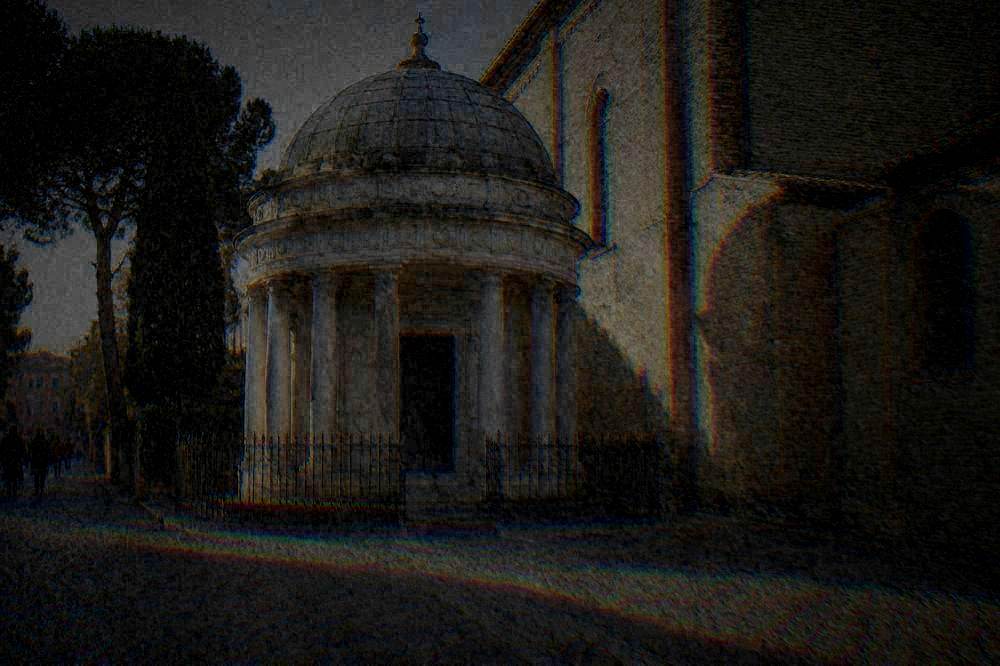
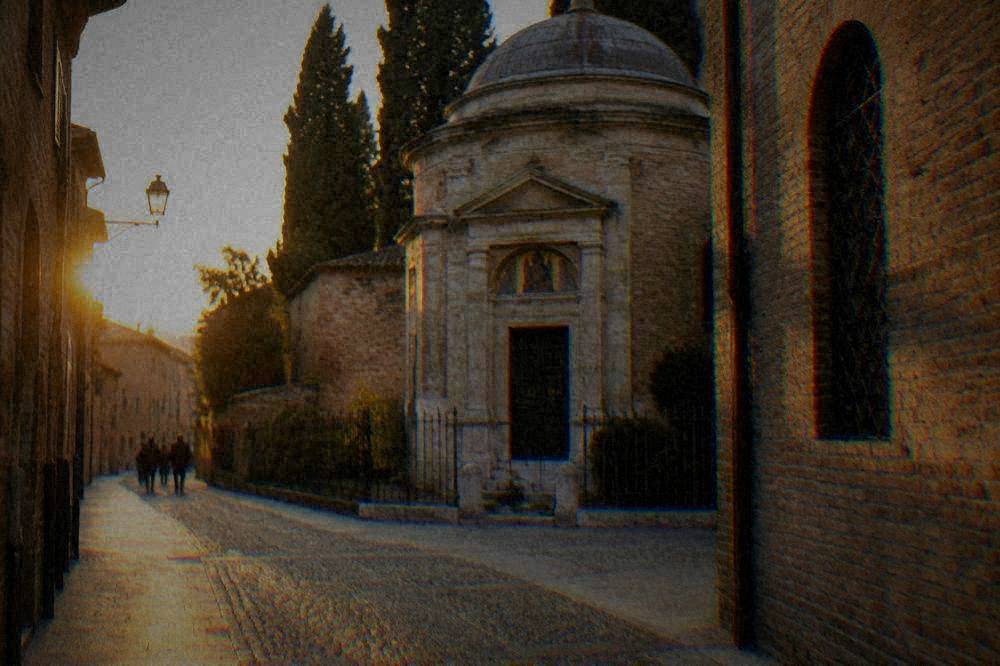
Dante's Tomb stands on Via Dante Alighieri in Ravenna's historic centre, beside the Basilica of San Francesco and a short walk from the Piazza del Popolo and the main mosaic monuments. The municipality's own page for the tomb lists it as free to enter, open daily, and closed only on 25 December. No ticket is needed and no queue system applies.
The tomb itself is a small brick-built structure raised slightly above street level, holding the poet's sarcophagus and topped by a lamp. The setting is quiet rather than grand: a narrow street in the old centre, with the basilica next door and the mosaic sites of San Vitale, Galla Placidia and the Neonian Baptistery within easy walking distance. The historic centre is compact and flat, so the tomb slots naturally into any walking route between the monuments.
The municipal page gives the hours plainly: from 1 November to 31 March the tomb is open 10:00 to 18:00 daily, and from 1 April to 31 October it stays open until 19:00, with 1 January opening from 13:00 and 25 December closed. Entry is free, which makes it one of the easiest stops on a Ravenna itinerary.
| Site | Entry | Hours | Closed |
|---|---|---|---|
| Dante's Tomb | Free | 10:00 to 18:00 (1 Nov to 31 Mar), 10:00 to 19:00 (1 Apr to 31 Oct) | 25 December |
| Museo Dante | EUR 5 full, EUR 3.50 reduced | Tuesday to Sunday 10:00 to 17:30 | Monday, 25 December |
| Basilica of San Francesco | Church, beside the tomb | Check locally at the basilica | Confirm on site |
A separate article on this site covers the question of where Dante is actually buried in more detail, and the full sight page is the Dante's Tomb attraction guide.
What Can You See At Dante's Tomb And The Museo Dante?
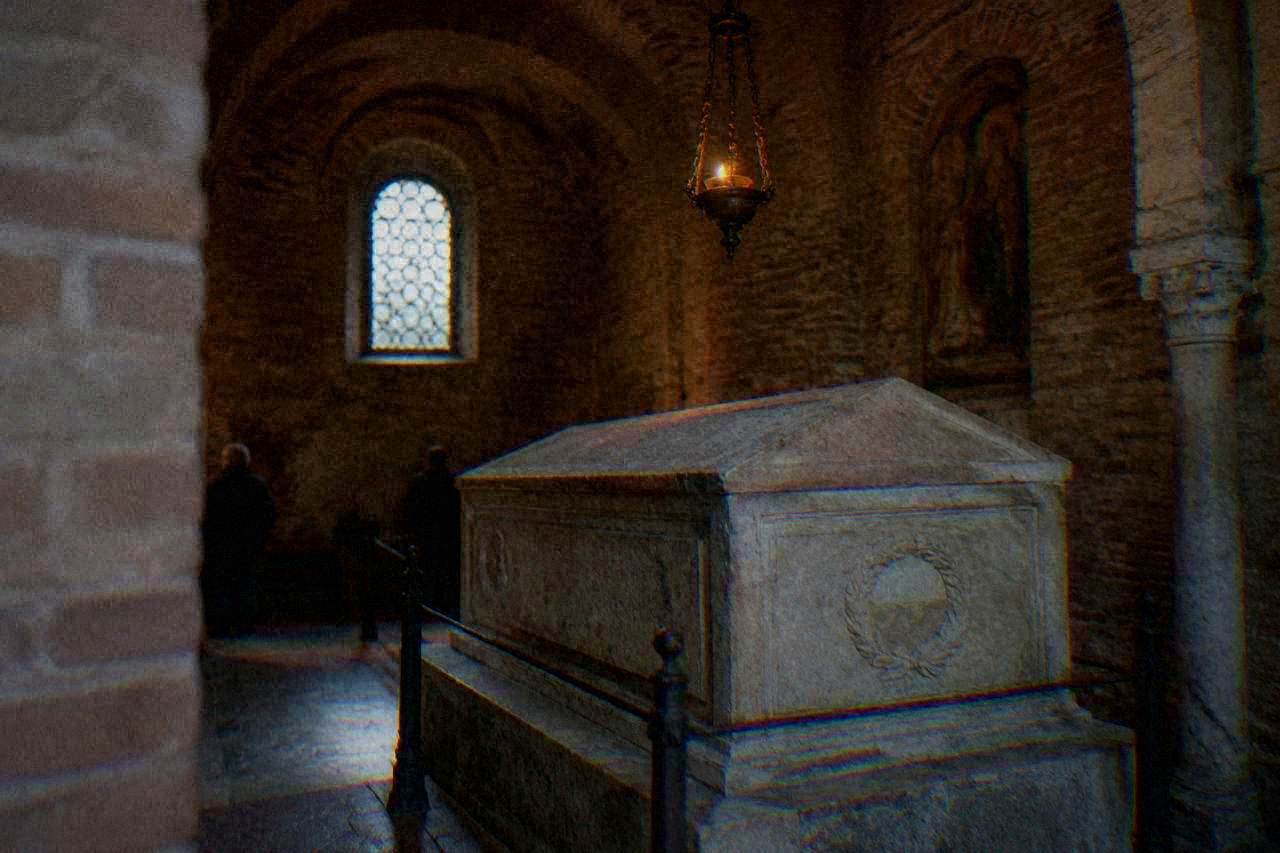
At the tomb you see the sarcophagus, the commemorative lamp and the inscriptions, in a small chapel-like space you can take in within minutes. The Museo Dante, a short distance away, holds items tied to the poet's Ravenna years. Its ticket page lists EUR 5 full and EUR 3.50 reduced, with a combined ticket that covers Casa Dante as well.
The tomb is deliberately modest. A stone sarcophagus, an eternal lamp burning above it, and the street named after the poet outside. Visitors come, pause, and move on, which is why it pairs so well with the basilica next door and with the nearby mosaic monuments that need timed entries.
The museum adds the context. The vivadante ticket page lists EUR 5 full and EUR 3.50 reduced for a combined Museo Dante and Casa Dante ticket, and the museum runs Tuesday to Sunday, closed Mondays and 25 December. Hours and access details can shift, so confirm at the museum desk or on the official page before a dedicated trip.
One detail deserves a place in any Dante itinerary: each September, on the second Sunday of the month, oil from the Tuscan hills is offered at the tomb. The offering, arranged with the Comune di Firenze, is Florence's own recurring gesture toward the poet it banished, a lamp of Tuscan oil burned at a grave in Romagna. Anyone in the city that weekend can witness it.
The basilica next door deserves a pause as well. The Basilica of San Francesco is a working church in the heart of the old centre, and its presence explains the tomb's location: burial beside a major church, in the quarter where the poet had lived, was the natural choice for the city that received him. Walking from the basilica to the tomb takes seconds, and the quiet of the street makes the contrast with the mosaic crowds a few blocks away feel deliberate.
What Was Dante's Life In Ravenna Like?
Dante lived in Ravenna in exile at the end of his life, hosted by a local lord whose court gathered poets and scholars, and he completed the final part of the Divine Comedy there. The city gave him what Florence had taken away: residence, standing and protection. He never returned to his birthplace, and Ravenna became his last and lasting home.
Ravenna at that time was a modest city with a monumental past, its early Christian churches and mosaics already centuries old. The court that hosted Dante assembled a circle of learned men, and the poet's sons were with him in the city. For a man who had spent years moving from one Italian court to another, the arrangement offered a stability he had not known since leaving Florence.
The work mattered as much as the shelter. The final cantos of the Divine Comedy were finished in Ravenna, which ties the city directly to the founding poem of Italian literature. That literary fact, more than any political detail, is what the modern visitor is walking through: a small brick tomb holding the man who finished that poem in this city.
The exile itself was never lifted in his lifetime. The Florence sentence stood, and Dante's answer to it runs through his writing, where the corruption of his native city is a recurring theme. Ravenna, by receiving and keeping him, ended up with the body and the pilgrimage site; Florence ended up with the empty cenotaph described below.
How Has Florence Tried To Bring Dante Back?
Florence has repeatedly asked for Dante's remains over the centuries, and Ravenna has refused every request, keeping the body beside the Basilica of San Francesco. Florence even built a cenotaph in Santa Croce that stands empty to this day. The annual oil offering each September is the closest the two cities come to a settlement.
The empty tomb in Florence is the physical reminder of the dispute. Santa Croce holds monuments to Italian greats, and a space was prepared for Dante there, but the poet never arrived. Ravenna's position has been constant: he died in their city, and he stays there.
The oil offering softens the argument without resolving it. Tuscan oil, delivered through the Comune di Firenze, keeps the lamp burning at the Ravenna tomb. It is a gesture of recognition from the city that exiled him, made annually at the grave it cannot have.
For travellers, the practical payoff is that everything Dante-related sits in one compact city. The tomb, the museum, the basilica and the UNESCO mosaic monuments cluster within the walkable historic centre, which is why the question of how many days to spend in Ravenna usually resolves to at least one full day, and two if the mosaics get the time they deserve. Readers weighing the city against its louder neighbour can start with Ravenna or Rimini.
| Dante Site In Ravenna | What You See | Practical Note |
|---|---|---|
| Dante's Tomb | Sarcophagus, lamp, inscriptions | Free entry, daily hours |
| Museo Dante and Casa Dante | Items tied to the poet's Ravenna years | EUR 5 full, EUR 3.50 reduced, closed Mondays |
| Basilica of San Francesco | The church beside the tomb | Check hours locally |
| The annual oil offering | Tuscan oil burned at the tomb lamp | Second Sunday of September |
Is Dante's Tomb Worth Including On A Ravenna Visit?
Yes, because the tomb is free, central, and quick to see, and because Dante is one of the two pillars of Ravenna's identity alongside the eight UNESCO Early Christian monuments. A visit costs nothing but minutes, and it sits on the walking route between the mosaic basilicas, so it fits into any itinerary without detour.
The pairing works in both directions. Travellers who come for the Byzantine mosaics, described in why Ravenna has so many mosaics, find the tomb a natural second thread through the city. Travellers who come for Dante find themselves beside some of the most celebrated mosaic interiors in the world, from San Vitale's gold-ground vaults to the starry ceiling of Galla Placidia.
Guided options deepen the story. A Dante-focused audio walk lets you hear the exile narrative on the streets where it happened, and private walking tours fold the tomb into a route that takes in the monuments around it: Check availability.
Common Questions About Dante In Ravenna
Why is Dante buried in Ravenna?
Dante died in Ravenna after spending his final years there in exile from Florence, and the city buried him beside the Basilica of San Francesco. Florence's later requests for the remains were refused, and the tomb remains in Ravenna today, free to visit.
Is Dante's Tomb free to enter?
Yes. The municipality's page for the tomb lists free entry, with daily hours of 10:00 to 18:00 in winter and 10:00 to 19:00 in summer, closed only on 25 December.
What does the Museo Dante cost?
The vivadante ticket page lists EUR 5 full and EUR 3.50 reduced for a combined ticket covering the museum and Casa Dante. The museum is open Tuesday to Sunday and closed Mondays and 25 December.
What is the oil offering at Dante's Tomb?
Each year on the second Sunday of September, oil from the Tuscan hills is offered at the tomb, arranged with the Comune di Firenze. It keeps a lamp burning at the grave as Florence's recurring gesture toward the poet it banished.
How far is Dante's Tomb from the Ravenna mosaics?
The tomb stands in the compact, walkable historic centre, a short walk from the Basilica of San Francesco and the main mosaic monuments such as San Vitale and the Mausoleum of Galla Placidia, so it fits easily into a walking itinerary.
Dante's tomb is the rare monument that costs nothing, takes minutes, and carries one of the strangest stories in Italian literature: a poet buried by the city that sheltered him, visited every year by oil from the city that sent him away. Pair it with the mosaics, and you have the whole of Ravenna in a single afternoon.