Palace Of Theodoric Ravenna
The Palace of Theodoric in Ravenna is a small archaeological site of brick foundations and floor mosaics, reached on a combined ticket with the Mausoleum of Theodoric and the Arian Baptistery.
Short answer
The Palace of Theodoric is a modest brick archaeological site in Ravenna's historic centre. A combined ticket at EUR 7 covers it with the Mausoleum of Theodoric and the Arian Baptistery, and the Visit Ravenna page for the Mausoleum lists the full details.
Ravenna keeps its Theodoric quarter on the quiet side of the historic centre, and the Palace of Theodoric is the smallest and strangest piece of it: a sunken floor of brick and marble fragments, a stretch of mosaic pavement and the outline of walls that belonged to a lost residence. The site sits inland in the flat Po plain of Emilia-Romagna, a short walk from the Basilica of Sant'Apollinare Nuovo, which was itself part of the same palace complex under another name. This page explains what the palace actually is, what the combined ticket costs, what you can see once inside and how to slot it into a visit built around the city's eight UNESCO Early Christian monuments.
What Is The Palace Of Theodoric In Ravenna?
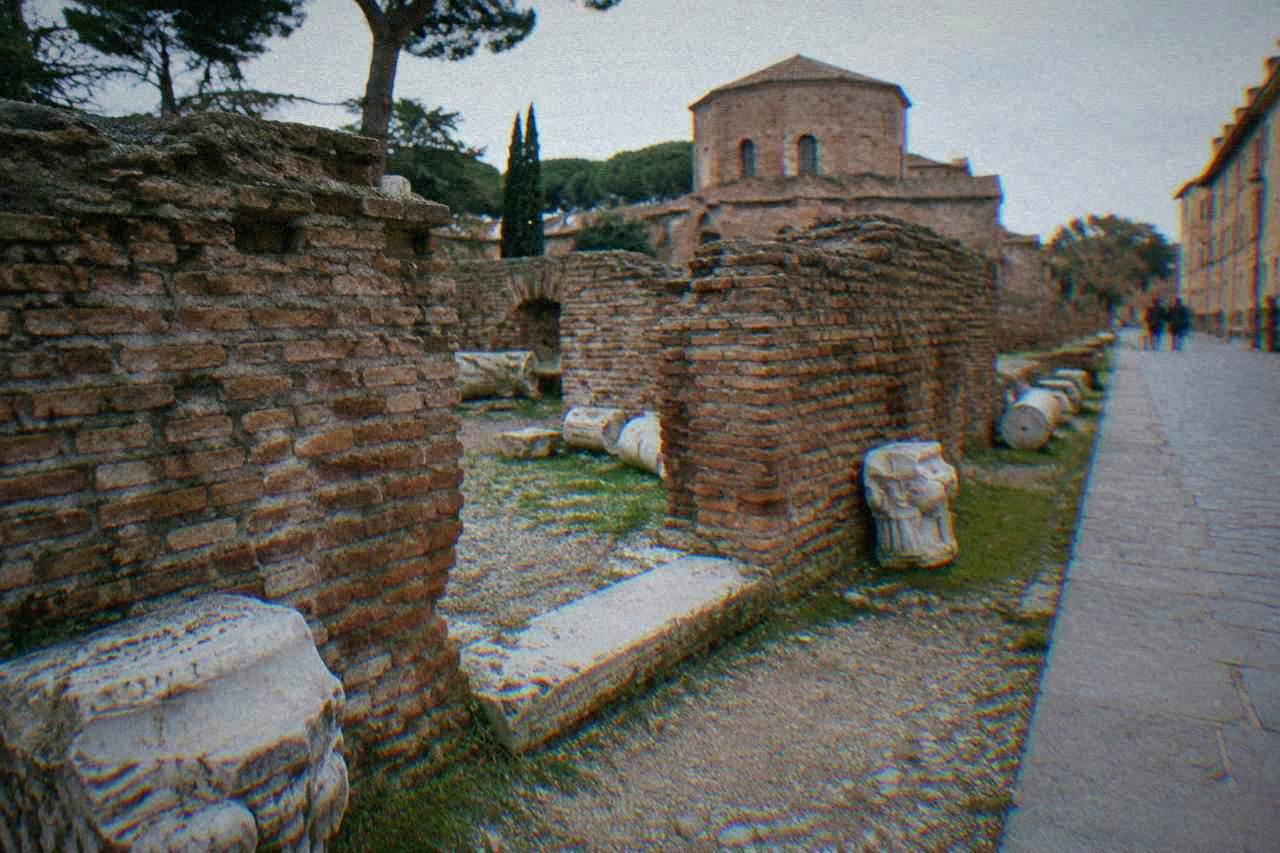
The Palace of Theodoric is a small archaeological site in Ravenna's historic centre, all that remains above ground of the residence associated with the Gothic king Theodoric, and it is visited today as a lowered walkway over brick foundations, reassembled floor mosaics and fragments of carved stone. It is not a standing palace. The name survives in the street level, where later building swallowed the structure, and excavations recovered only part of the ground floor. Visitors who arrive expecting halls and frescoes are the ones who leave disappointed, so it helps to go in knowing the scale: one excavated level, a few minutes to absorb, and a setting that explains why the neighbouring basilica and the Arian Baptistery sit where they do.
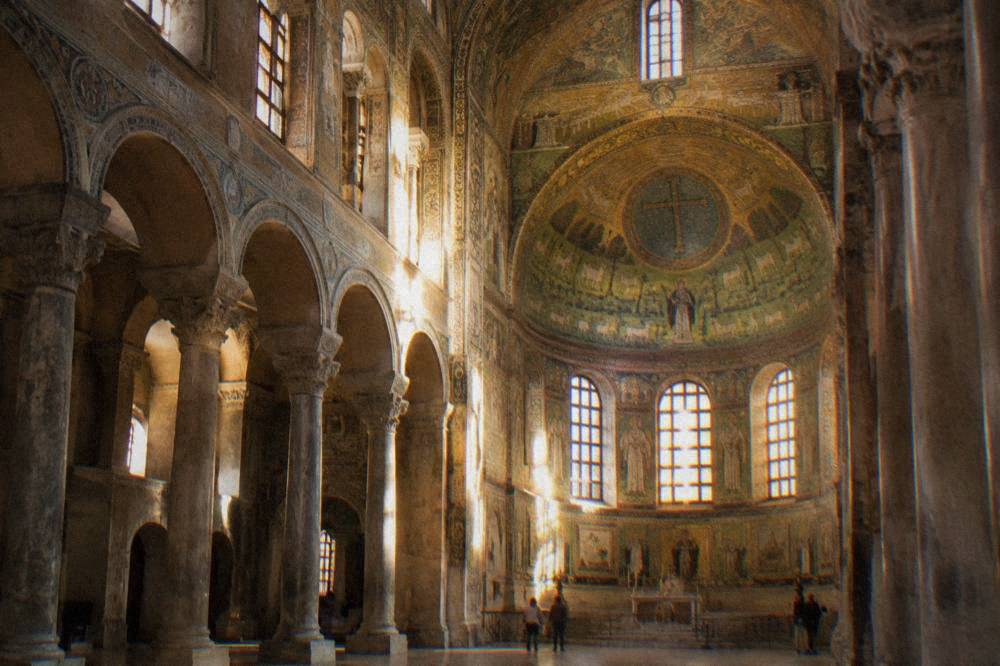
The palace belonged to a wider quarter. Theodoric's Ravenna grouped the royal residence, the Arian cathedral with its baptistery, and the basilica now called Sant'Apollinare Nuovo within walking distance of each other, and the pattern is still legible on a modern map. The site's own interpretive panels and the Visit Ravenna pages describe the surviving pavement, which includes figural and geometric mosaic floors that were lifted and re-laid during excavation. The site does not carry a separate entry in the UNESCO list under its own name: the eight inscribed monuments are the Mausoleum of Galla Placidia, the Neonian Baptistery, Sant'Apollinare Nuovo, the Arian Baptistery, the Archiepiscopal Chapel, the Mausoleum of Theodoric, San Vitale and Sant'Apollinare in Classe.
What the palace offers instead is context. Standing at street level and looking down into the excavation makes the vertical history of Ravenna tangible: the city has risen around and over its late antique layers, and this is one of the few places where you can see the drop between the Theodoric-era floor and today's pavement. Combine that with the mosaics inside Sant'Apollinare Nuovo, and the palace quarter starts to read as a coherent district rather than a scatter of monuments.
How Much Does A Palace Of Theodoric Ravenna Ticket Cost?
The Palace of Theodoric is sold on a combined ticket at EUR 7 that also covers the Mausoleum of Theodoric and the Arian Baptistery, according to the Visit Ravenna page for the Mausoleum. The Mausoleum alone is EUR 6, with a concession of EUR 5 and EUR 2 for ages 18 to 25, and the Arian Baptistery alone is EUR 3 with no reduced fare, per the cultura.gov.it listing. The combined ticket is therefore the only way to buy the palace on its own terms, and it is priced below the sum of the separate parts. The listing says the combination covers all three Theodoric-quarter sites in one purchase.
| Ticket | Price | What it covers | Source |
|---|---|---|---|
| Mausoleum of Theodoric, full | EUR 6 | Mausoleum only | Visit Ravenna page for the Mausoleum |
| Mausoleum, concession | EUR 5 | Mausoleum only | Visit Ravenna page for the Mausoleum |
| Mausoleum, ages 18 to 25 | EUR 2 | Mausoleum only | Visit Ravenna page for the Mausoleum |
| Arian Baptistery, full | EUR 3 | Baptistery only, no reduced fare | cultura.gov.it |
| Combined ticket | EUR 7 | Mausoleum, Arian Baptistery, Palace of Theodoric | Visit Ravenna page for the Mausoleum |
Two planning notes sit beside those figures. The state museums and monuments in Ravenna are reported to be free on the first Sunday of the month, so a visit landing on that date should check the official pages before buying anything. And the palace's opening arrangements vary with the season and with staffing: the RavennaAntica FAQ, which manages the site, says hours can change and advises checking official channels, so treat any timetable you see third-hand as provisional and confirm locally.
The Theodoric ticket is separate from the Ravenna Mosaici combo that covers the city-centre mosaic circuit, and the two should not be confused. The Ravenna Mosaici page lists reduced fares starting at EUR 9.50, with the tiers below; full prices are on that official page.
Adding the mosaic circuit to your Theodoric day. Book a mosaics entry ticket here.
| Ravenna Mosaici combo | Reduced fare | Monuments covered |
|---|---|---|
| 2 monuments | from EUR 9.50 | Sant'Apollinare Nuovo, San Vitale |
| 4 monuments | from EUR 11.50 | Adds Galla Placidia, Neonian Baptistery |
| 5 monuments | from EUR 13.50 | Adds Archiepiscopal Museum and Chapel of St Andrew |
A guided walk with admission included is one way to fold the mosaic circuit into a single morning, and the operator's live listing shows what each option covers.
What Can You See Inside The Palace Of Theodoric?
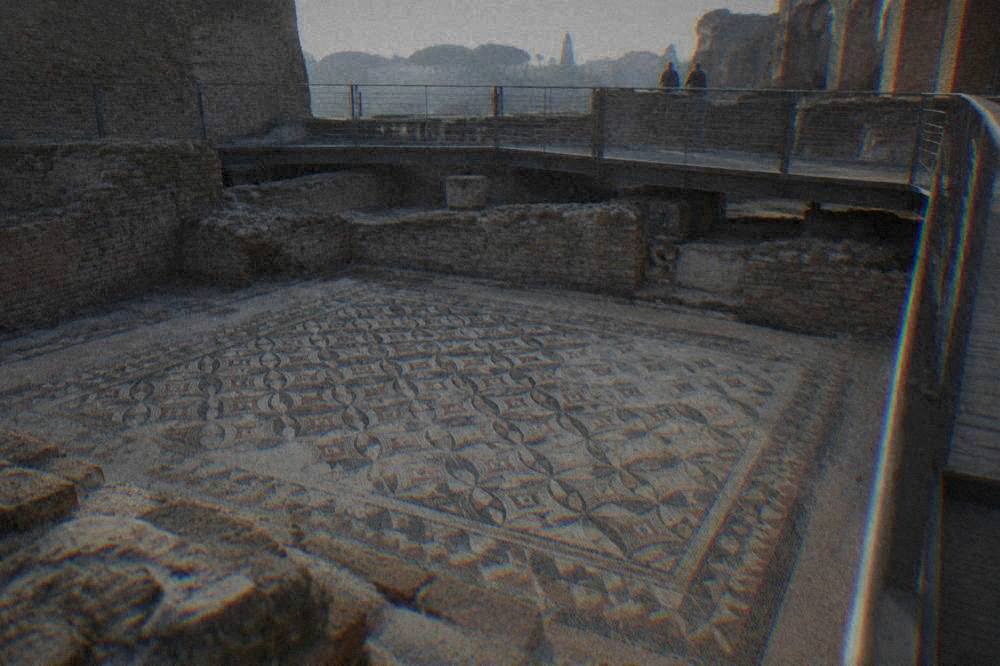
Inside the Palace of Theodoric you walk above and around an excavated late antique floor level: stretches of mosaic pavement with geometric and figural panels, brick wall footings, reused marble elements and an interpretive layout that keeps the visitor at street height looking down into the site. The mosaic floors are the reason to go. They are not the gold-ground vaults of the basilicas but flat work, patterns and figures set into the palace's ground-level rooms, and the contrast with the church mosaics is itself part of the story: domestic floor mosaic in the Gothic court, wall and vault mosaic in the churches.
The site is compact. There is no route, no circuit and no queue to plan around; you look, you read the panels, and you leave. That makes it a natural pairing with the Arian Baptistery, which is a single domed room a few streets away, and with the Mausoleum of Theodoric out toward the parkland of the city's south side. A morning built as Sant'Apollinare Nuovo, the palace, the baptistery and then the Mausoleum uses the combined ticket exactly as it was designed.
For orientation, the table below shows how the Theodoric-quarter sites compare in kind, without inventing opening details the official pages do not carry uniformly.
| Site | Type of visit | Ticket route |
|---|---|---|
| Palace of Theodoric | Lowered archaeological floor, a few minutes to view | Combined EUR 7 ticket |
| Arian Baptistery | Single domed room with ceiling mosaic | EUR 3 alone, or combined EUR 7 |
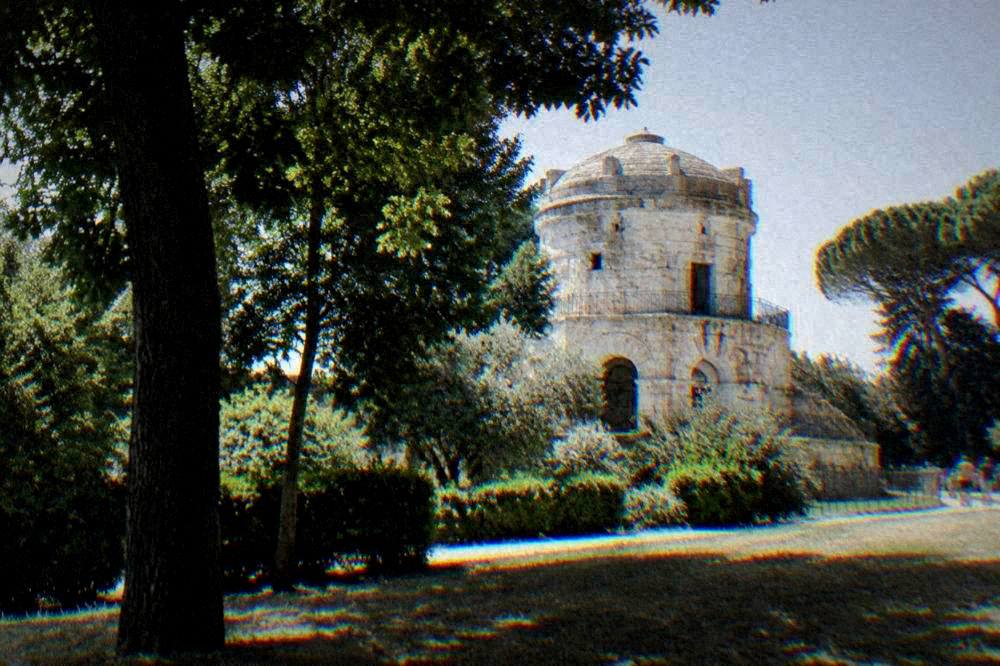
| Mausoleum of Theodoric | Free-standing two-storey monument in parkland | EUR 6 alone, or combined EUR 7 |
| Sant'Apollinare Nuovo | Basilica with narrative wall mosaics | Ravenna Mosaici combo |
Photography inside the palace is straightforward because you are shooting downward into a lit excavation, though flash is discouraged at Ravenna's monuments generally. Visitors with limited mobility should note the essential shape of the visit: the view is from street level, so the site is more accessible than a crypt, but confirm any specific access question with the staffed entrance on the day.
How Does The Palace Fit Into A Ravenna UNESCO Monuments Visit?
The Palace of Theodoric is not itself one of the eight UNESCO-inscribed monuments, but it anchors the Arian side of the list: the Arian Baptistery and the Mausoleum of Theodoric are both inscribed, and Sant'Apollinare Nuovo, also inscribed, stands at the head of the same palace quarter. UNESCO inscribed the Early Christian Monuments of Ravenna as a group in 1996. The palace gives you the residential frame around three of the eight, and it is the cheapest of the three-in-one tickets in the city.
| UNESCO monument | Where it sits | Relevant ticket |
|---|---|---|
| Mausoleum of Galla Placidia | Historic centre | Ravenna Mosaici 4 or 5 monument combo |
| Neonian Baptistery | Historic centre | Ravenna Mosaici 4 or 5 monument combo |
| Sant'Apollinare Nuovo | Palace quarter | Ravenna Mosaici combo |
| Arian Baptistery | Palace quarter | EUR 3, or combined EUR 7 |
| Archiepiscopal Chapel | Historic centre | Ravenna Mosaici 5 monument combo |
| Mausoleum of Theodoric | South of the centre | EUR 6, or combined EUR 7 |
| San Vitale | Historic centre | Ravenna Mosaici combo |
| Sant'Apollinare in Classe | Classe, outside the centre | EUR 6, EUR 2 reduced |
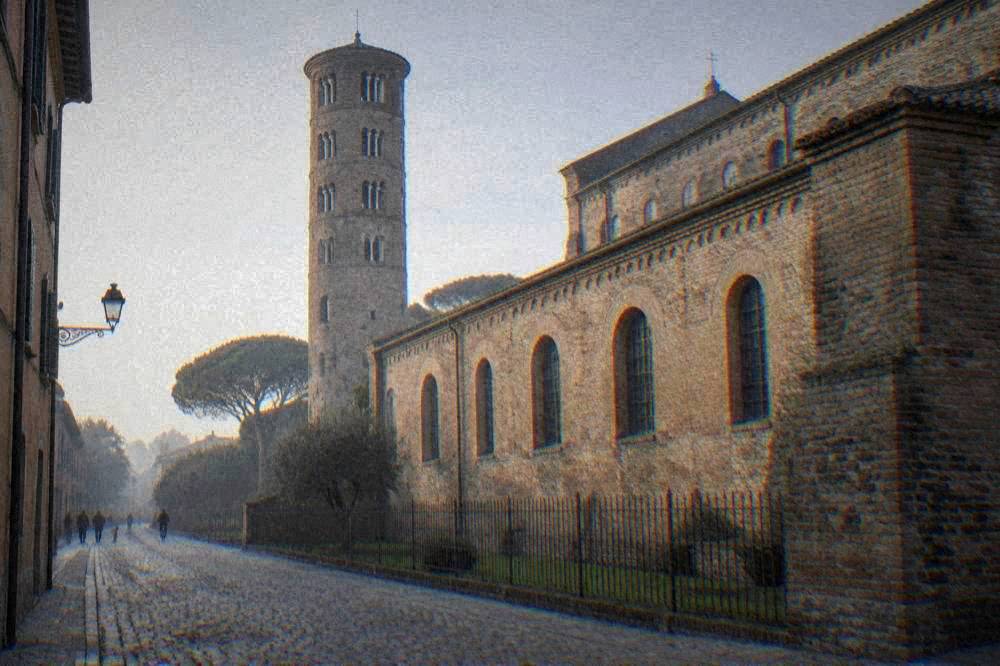
A one-day plan that keeps ticket logic simple looks like this: the Ravenna Mosaici combo for Sant'Apollinare Nuovo, San Vitale, Galla Placidia and the Neonian Baptistery in the morning, Dante's tomb, which is free, at midday, and the EUR 7 Theodoric combination in the afternoon. The Ravenna Mosaici ticket is valid for one week with one admission per monument, and an entry time must be booked for each monument on it, with Galla Placidia and the Neonian Baptistery on timed, brief visits of a few minutes. Those timed stays belong to the Mosaici circuit, not to the Theodoric sites, where entry runs on the ordinary gate arrangement.
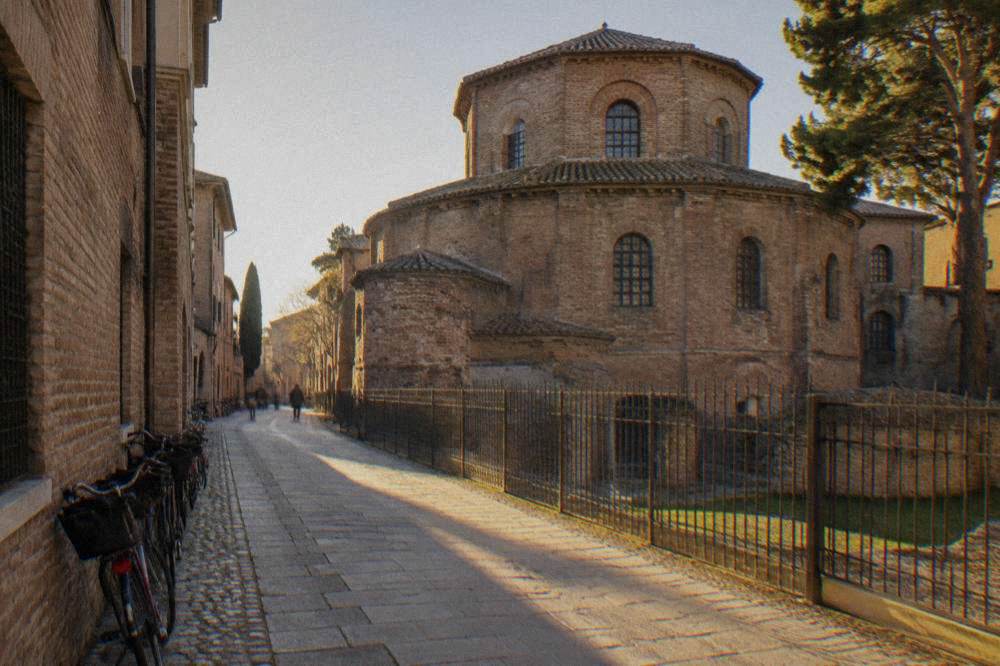
If the palace closes on the day you turn up, seasonal hours being the variable they are, the quarter still pays: Sant'Apollinare Nuovo's processional mosaics and the Arian Baptistery's dome deliver the court's religious art, and the Mausoleum of Theodoric, open daily 8:30 to 17:30 with last admission 30 minutes before closing, closed 25 December and 1 January per the Visit Ravenna page, is the quarter's most complete survivor.
What Is Near The Palace Of Theodoric?
The palace stands inside Ravenna's historic centre, a short walk from Sant'Apollinare Nuovo, the Arian Baptistery, Piazza del Popolo and the cluster around San Vitale and the Mausoleum of Galla Placidia, with the Mausoleum of Theodoric slightly further out to the south. Ravenna's centre is small and flat, and everything on the list below is reached on foot without planning a bus. The railway station also sits a short walk from the centre, which is why the city works as a late-morning arrival from Bologna on the direct regional train, about 84 km away.
| Nearby sight | Character | Distance in kind |
|---|---|---|
| Sant'Apollinare Nuovo | UNESCO basilica, wall mosaics | Same palace quarter, a short walk |
| Arian Baptistery | UNESCO domed baptistery | A few streets away |
| Piazza del Popolo | Main civic square, cafes, town hall | Short walk east |
| San Vitale and Galla Placidia | UNESCO pair, the city's headline mosaics | Short walk north |
| Dante's tomb | Free, small shrine on a quiet street | Between the two clusters |
| Mausoleum of Theodoric | UNESCO monument in parkland | Furthest of the set, still walkable |
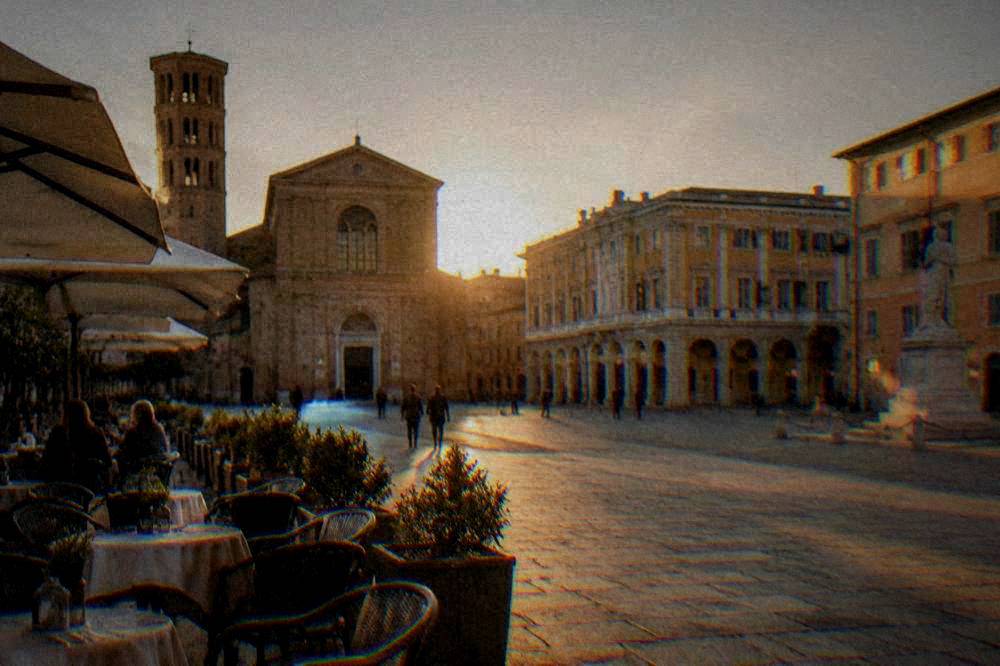
Piazza del Popolo makes the natural break: it is the city's living room, with the town hall on one side and cafes doing the mid-morning trade. From there the walk to the Ravenna Cathedral quarter, and onward to San Vitale and Galla Placidia, crosses the centre in one straight effort. Anyone building a longer stay around the city, rather than a single day, can spread the same list across two days and add the museums: the National Museum of Ravenna at EUR 7, EUR 2 reduced, the MAR at EUR 8, EUR 6 reduced and EUR 3 for students, and the Classis Ravenna museum out near Sant'Apollinare in Classe.
Is The Palace Of Theodoric Worth Visiting With A Guided Tour?
The palace is rarely the focus of a booked tour, because the guided products in Ravenna concentrate on the UNESCO mosaic interiors, so the practical answer is to take a guided walk for the mosaics and visit the palace independently on the EUR 7 combined ticket, using the tour's narrative to understand what the excavated floor represents. The city's guided options divide into shared mosaic walks, private walks with a local expert, and food-and-mosaic combinations. None of the standard itineraries includes the Theodoric palace, which reflects its size rather than its interest.
The related tour on this page, a highlights and mosaics guided walk with tickets included, covers the headline interiors with admission handled for you, and the operator's live listing shows the current details. For a deeper dive there is a private Byzantine mosaics focus walk, and for a fully tailored day a private walking tour with a local expert; both let you ask the guide about the palace quarter even though the site is not on the route. Check availability if that combined format suits your dates.
A private format has one advantage here that matters to Theodoric-minded visitors: the itinerary can bend. The standard mosaic walk runs to a fixed set of monuments because the timed entries are pre-booked, whereas a private guide can, on request, walk you past the palace site and the Arian quarter and put the palace floor into the sequence, even if entry is bought separately.
Tip-based walking tours run in Ravenna as they do across Italian cities, and the reader should confirm arrangements directly with the guide, since formats and meeting points change with the season. Whatever the format, the honest split of labour is this: the paid walk interprets the mosaics inside the inscribed churches, and the EUR 7 ticket plus the palace's own panels interpret the residence. For a fuller picture of the city's offer, the Ravenna Travel Guide homepage gathers the main sightseeing options in one place.
When Is The Best Time Of Year To Visit The Theodoric Sites?
The Theodoric-quarter sites are year-round visits, and the climate table shows why any month works: Ravenna's modelled 1991 to 2020 normals give a coldest month of January at 5.1 C mean and a warmest July at 25.2 C, with November the wettest month at 78.3 mm and July the driest at 38.1 mm. Winter visitors get the shorter monument hours but thinner crowds; summer visitors get long evenings and the full timetable. The Ravenna Mosaici circuit runs 9:00 to 19:00 in summer and 10:00 to 17:00 in winter, from 3 November 2026, and the Mausoleum of Theodoric holds 8:30 to 17:30 year-round apart from 25 December and 1 January.
| Month | Mean C | Precip mm |
|---|---|---|
| Jan | 5.1 | 43.8 |
| Feb | 5.8 | 56.4 |
| Mar | 9.4 | 54.9 |
| Apr | 13.1 | 66.0 |
| May | 17.9 | 58.2 |
| Jun | 22.6 | 45.6 |
| Jul | 25.2 | 38.1 |
| Aug | 25.0 | 44.7 |
| Sep | 20.3 | 57.9 |
| Oct | 15.7 | 66.0 |
| Nov | 10.6 | 78.3 |
| Dec | 6.1 | 63.7 |
Those figures are modelled ERA5 reanalysis means for 1991 to 2020, not a station record. What they imply for the Theodoric quarter specifically: the palace is partly an outdoor viewing experience, so a November downpour, the month the table puts at 78.3 mm, sends you fastest to the covered interiors of the Arian Baptistery and Sant'Apollinare Nuovo, while the Mausoleum's parkland setting suits the dry July and August weeks. Ravenna sits inland on the flat Po plain, about 8 km from the Adriatic resorts, so there is no sea influence on the centre's weather to plan around.
Autumn brings one more reason to time a visit: the Theodoric exhibitions of the current season. Alongside the Biblioteca Classense show noted above, the Museo Nazionale has announced an exhibition on Theodoric, gold and purple for 2027, so anyone with a serious interest in the Gothic court can pair the palace floor with the museum collections. A Mausoleum of Theodoric visit on the same ticket completes the set.
Common Questions About The Palace Of Theodoric In Ravenna
Is the Palace of Theodoric one of the eight UNESCO monuments in Ravenna?
No. The eight inscribed monuments are the Mausoleum of Galla Placidia, the Neonian Baptistery, Sant'Apollinare Nuovo, the Arian Baptistery, the Archiepiscopal Chapel, the Mausoleum of Theodoric, San Vitale and Sant'Apollinare in Classe. The palace belongs to the same quarter but is not on the list under its own name.
Can you buy a ticket for the Palace of Theodoric on its own?
The Visit Ravenna page for the Mausoleum lists the palace on a combined ticket at EUR 7 with the Mausoleum of Theodoric and the Arian Baptistery. Check the official pages for the current single-entry arrangement before you go.
Is the Palace of Theodoric worth seeing?
For visitors with an interest in the Theodoric quarter, yes: the excavated mosaic floors and lowered site give the residential context for the nearby basilica and baptistery. Visitors after grand interiors should weight their time toward San Vitale and the Ravenna Mosaici circuit first.
How long does a visit take?
The palace is a single excavated floor viewed from street level, so a visit is short. Plan the quarter as a sequence, Sant'Apollinare Nuovo, the palace, the Arian Baptistery, then the Mausoleum, with the combined ticket covering the last three.
When is the Palace of Theodoric open?
Hours vary by season and staffing, and the managing body advises checking official channels before a visit. The Mausoleum of Theodoric on the same ticket is listed daily 8:30 to 17:30, with last admission 30 minutes before closing, and closed 25 December and 1 January.
Where is the palace in relation to Ravenna's other sights?
It stands in the historic centre, a short walk from Sant'Apollinare Nuovo and the Arian Baptistery, with the Mausoleum of Theodoric slightly further out to the south. The whole Theodoric set is walkable without a bus.
The Palace of Theodoric asks little and gives a specific kind of reward: for the price of one combined ticket you stand above the floor level of a royal residence and read the city's layered history in a single glance downward. Pair it with the basilica and baptistery that grew up beside it, and the Theodoric quarter becomes the most coherent hour and a half in Ravenna.