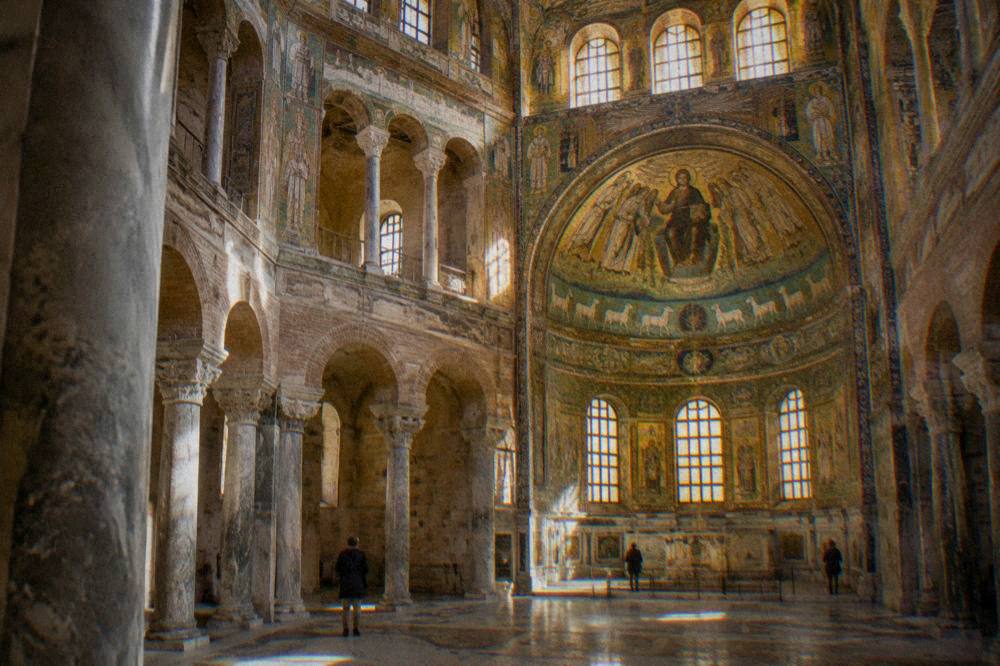
Basilica Of San Vitale
The Basilica of San Vitale is the mosaic church at the heart of Ravenna's UNESCO listing, an inland city in Emilia-Romagna whose eight Early Christian monuments hold the greatest concentration of Byzantine mosaics anywhere. This guide covers what the building holds, what tickets cost, when it opens and how a visit fits the wider city.
Short answer
San Vitale is one of the eight UNESCO Early Christian Monuments of Ravenna. A combo ticket from EUR 9.50 reduced covers it with Sant'Apollinare Nuovo, and the ticket is valid one week with one admission per monument and booked entry times.
The Basilica of San Vitale is the church against which every other mosaic monument in Ravenna is measured. Ravenna sits inland on the flat Po plain of Emilia-Romagna, about 8 km from the Adriatic coast, and its historic centre holds eight monuments inscribed together by UNESCO in 1996 as the Early Christian Monuments of Ravenna. San Vitale is one of them, and its apse and walls carry the gold-ground glass mosaics that give the city its reputation. This page from the Ravenna Travel Guide desk sets out what the basilica holds, what a ticket costs, when the doors are open, and how a visit fits alongside the other seven monuments.
What Is The Basilica Of San Vitale In Ravenna?
The Basilica of San Vitale is one of the eight monuments that make up the UNESCO Early Christian Monuments of Ravenna, inscribed in 1996, and it is the site where the city's gold-ground Byzantine mosaics are seen at their fullest. The UNESCO listing names it alongside the Mausoleum of Galla Placidia, the Neonian Baptistery, Sant'Apollinare Nuovo, the Arian Baptistery, the Archiepiscopal Chapel, the Mausoleum of Theodoric and Sant'Apollinare in Classe.
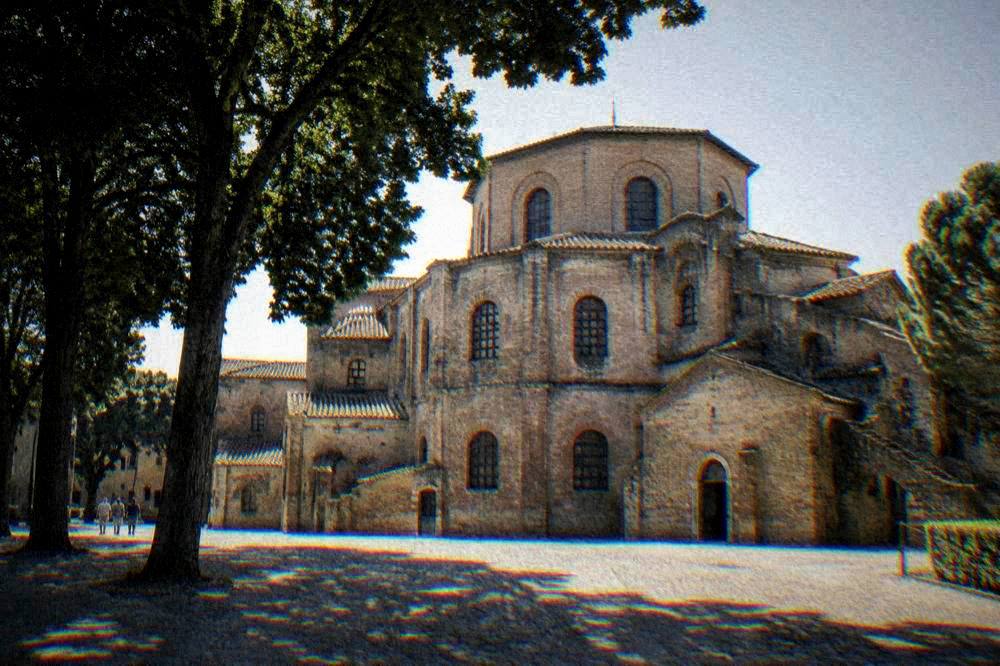
The building is octagonal, a brick drum rising over a central space ringed by galleries and an apse lined with mosaic. What a visitor sees is the product of that Early Christian and Byzantine tradition the UNESCO listing describes: glass tesserae set in gold ground, figures in court dress, and scenes rendered across the apse and the walls beside it. The site does not carry a construction date or a named architect, and any guide offering either is guessing. The church stands a short walk from the Mausoleum of Galla Placidia and the National Museum of Ravenna, which makes it the natural anchor of a mosaic walk through the centre.
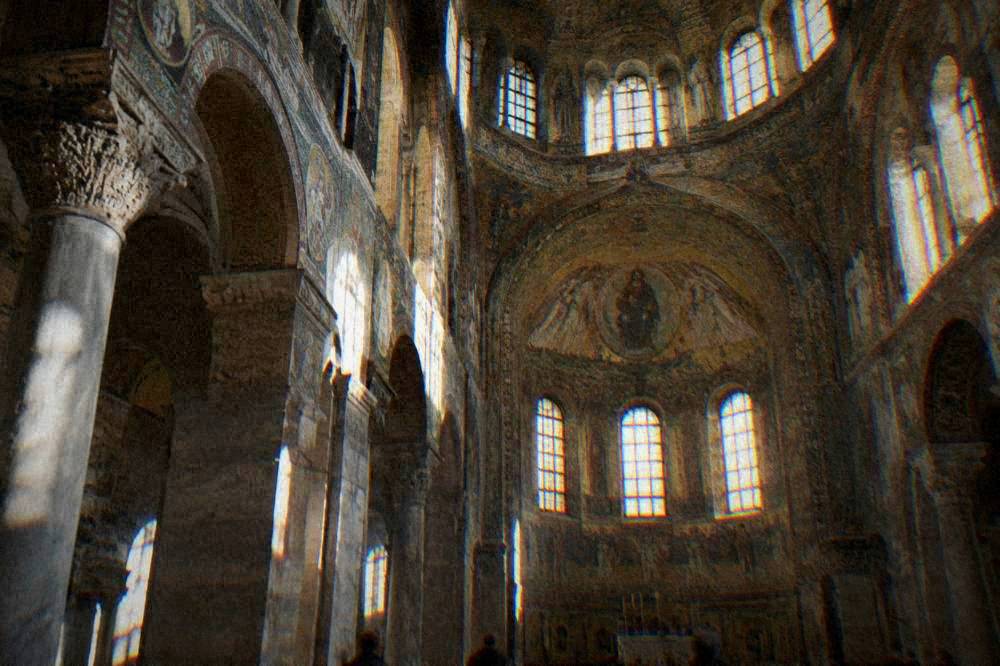
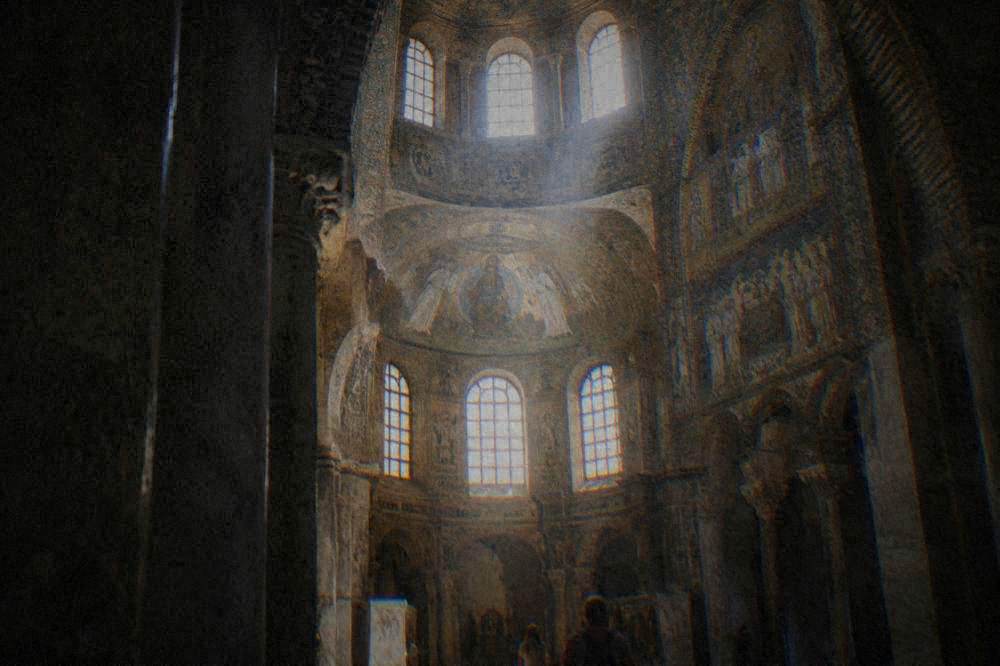
The octagonal plan changes how the interior is read. Unlike a long basilica with a nave axis, San Vitale wraps the visitor around a central space, so the mosaic programme reveals itself in stages as you circle the ambulatory and look up into the tiered vault. Light enters high in the drum, and the gold ground does the rest, bouncing that light down into the lower panels. This is the reason photographers spend longer here than at any other stop on the ticket, and the reason the admission slots in high season can run behind.
San Vitale sits in a compact cluster. The Mausoleum of Galla Placidia is next door and shares the same ticket system, the Neonian Baptistery is a few streets away near the cathedral, and the National Museum of Ravenna holds material from the same heritage in the streets around. The full picture of the eight monuments is laid out in the guide to Ravenna's UNESCO sites.
The eight monuments share one inscription, but they do not share one management. The table below shows how the listing divides, and it matters for ticket planning because the Ravenna Mosaici combo covers only its own group.
| UNESCO monument | Location | Ticket system |
|---|---|---|
| Basilica of San Vitale | Historic centre | Ravenna Mosaici combo |
| Mausoleum of Galla Placidia | Historic centre, beside San Vitale | Ravenna Mosaici combo |
| Neonian Baptistery | Historic centre, near the cathedral | Ravenna Mosaici combo |
| Sant'Apollinare Nuovo | Historic centre | Ravenna Mosaici combo |
| Archiepiscopal Chapel and Museum | Historic centre, near the cathedral | Ravenna Mosaici combo |
| Mausoleum of Theodoric | North of the centre | State ticket, individual or combined |
| Sant'Apollinare in Classe | Classe, outside the centre | State ticket, individual or combined |
| Arian Baptistery | Historic centre | State ticket, individual |
How Much Do Basilica Of San Vitale Tickets Cost?
San Vitale is covered by the Ravenna Mosaici combined ticket, and reduced fares start at EUR 9.50 for the two-monument version covering Sant'Apollinare Nuovo and San Vitale, EUR 11.50 for the four-monument version that adds the Mausoleum of Galla Placidia and the Neonian Baptistery, and EUR 13.50 for the five-monument version that adds the Archiepiscopal Museum and the Chapel of St Andrew. Full prices sit on the official Ravenna Mosaici page.
The reduced rate applies to students, non-accredited journalists and paying groups over 20. Entry is free for children aged 0 to 10, residents of Ravenna, ICOM members, licensed guides, and visitors with a disability plus one companion. The ticket is valid one week, with one admission per monument, and an entry time must be booked for each monument on the itinerary. Galla Placidia and the Neonian Baptistery operate mandatory timed entry with stays of a few minutes, and San Vitale admits visitors in slots. In practice this means a four-monument or five-monument ticket becomes a planned route rather than a spontaneous wander, and the timed entries shape the order in which the churches are seen.
It is worth being clear about what the one-week validity does and does not allow. One admission per monument means you cannot return for a second look at the apse two days later on the same ticket, so the advice is simple: give San Vitale the time it deserves on the day you enter it. If a second visit matters, perhaps for photography at a different hour, that second entry needs its own arrangement. The validity does help in a different way, spreading the circuit over two days so nobody has to rush the last church at closing time.
| Combo ticket | Monuments covered | Reduced fare | Notes |
|---|---|---|---|
| 2 monuments | Sant'Apollinare Nuovo, San Vitale | EUR 9.50 | The cheapest way into San Vitale |
| 4 monuments | Adds Mausoleum of Galla Placidia, Neonian Baptistery | EUR 11.50 | Timed entry at Galla Placidia and the Neonian Baptistery |
| 5 monuments | Adds Archiepiscopal Museum and Chapel of St Andrew | EUR 13.50 | The full Ravenna Mosaici circuit |
If you would rather not queue at the desk or deal with the booking system in Italian, entry tickets can be arranged in advance, and the listings below cover the three most-used options for San Vitale and the wider monument group.
Prefer to skip the ticket desk and sort entries from home? Book a mosaics entry ticket here.
The guided options bundle the ticket with a walk, which suits anyone who wants the mosaics explained rather than simply seen. For independent visitors the entry-tickets product is the lighter choice, and it can be checked against the official prices on the Ravenna Mosaici page before buying.
What Are The Opening Hours At San Vitale?
San Vitale follows the Ravenna Mosaici seasonal schedule: from 8 March to 2 November 2026 it opens 9:00 to 19:00 with last admission at 18:30, and from 3 November 2026 to 6 March 2027 it opens 10:00 to 17:00 with last admission at 16:30, closing only on 25 December and 1 January. The same seasonal switch applies to Sant'Apollinare Nuovo and the Archiepiscopal Museum.
The two timed monuments run on slightly different last-admission times in summer, 18:45 for Galla Placidia and the Neonian Baptistery, and 16:45 for both in winter, because the few-minute stays inside are tightly sequenced. San Vitale itself admits in slots throughout the day, so arriving without a booked time in high season can mean waiting for the next opening. The official Ravenna Mosaici page is the place to confirm one-off changes, and any visit planned around a specific date should check it the week before.
The seasonal switch has a practical consequence for itinerary building. Summer visitors get evening light in the apse and a longer day in which to spread the circuit; winter visitors get shorter hours but thinner crowds and a different quality to the gold, which reads deeper in low afternoon light. Either season works. What does not work is planning a winter arrival for late afternoon and expecting the full five-monument circuit, because a 16:30 last admission closes the door on the plan.
| Period | Hours | Last admission |
|---|---|---|
| 8 March to 2 November 2026 | 9:00 to 19:00 daily | 18:30 at San Vitale |
| 3 November 2026 to 6 March 2027 | 10:00 to 17:00 daily | 16:30 at San Vitale |
| 25 December and 1 January | Closed | Closed |
Should You Book A Timed Entry Or Arrive On Spec?
A booked entry time is part of how the Ravenna Mosaici system works for several monuments, and for San Vitale specifically the admissions are scheduled in slots, so a pre-booked time is the reliable choice in the summer season and on any weekend. Galla Placidia and the Neonian Baptistery require booked times outright, and any four-monument or five-monument ticket already forces the question.
Booking ahead removes the slot wait at the basilica door and locks the sequence of the day. The trade is a fixed schedule, which matters for cruise passengers and day trippers on a tight clock, and less so for anyone staying two or three nights. Visitors arriving from a ship can read the port-day planner at what to do in Ravenna from a cruise ship, which works through the timing question in detail.
What Can You See Inside The Basilica Of San Vitale?
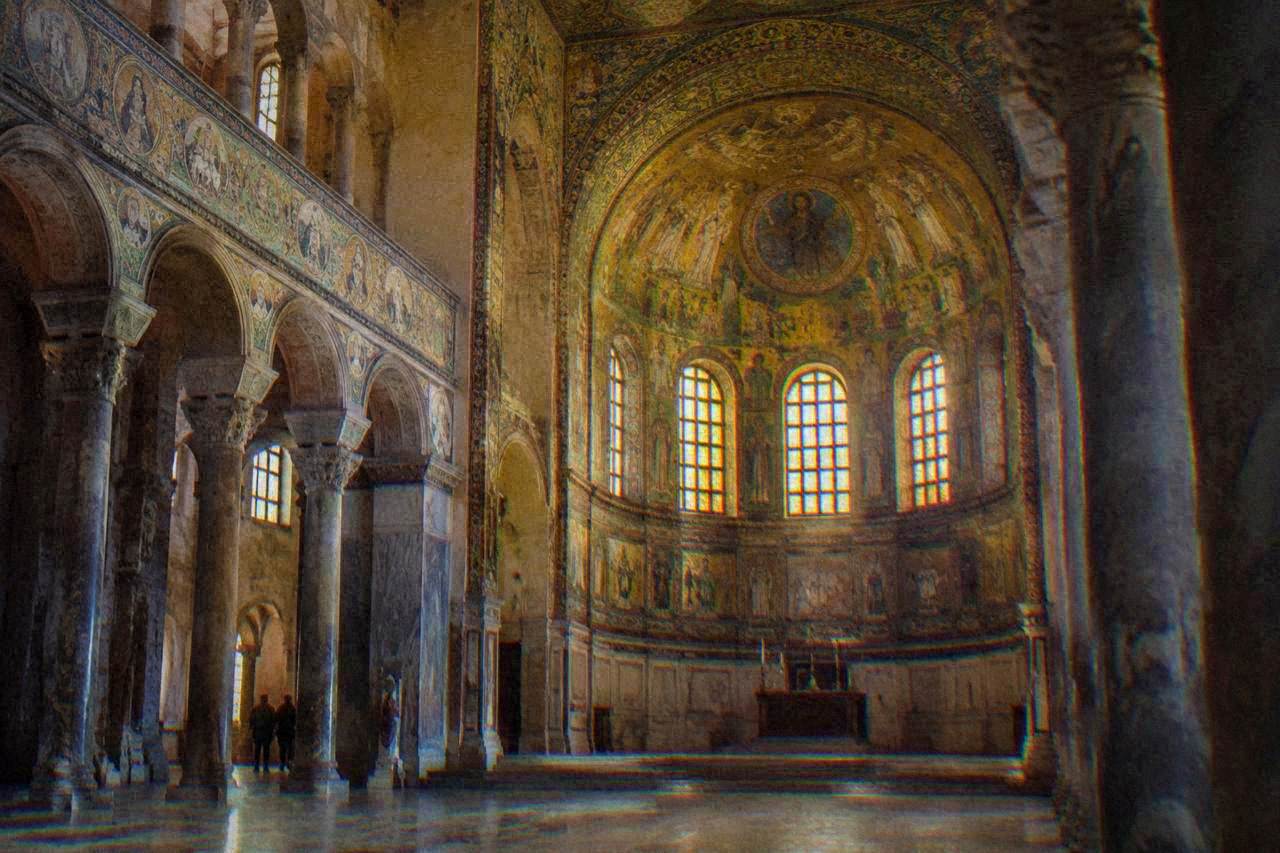
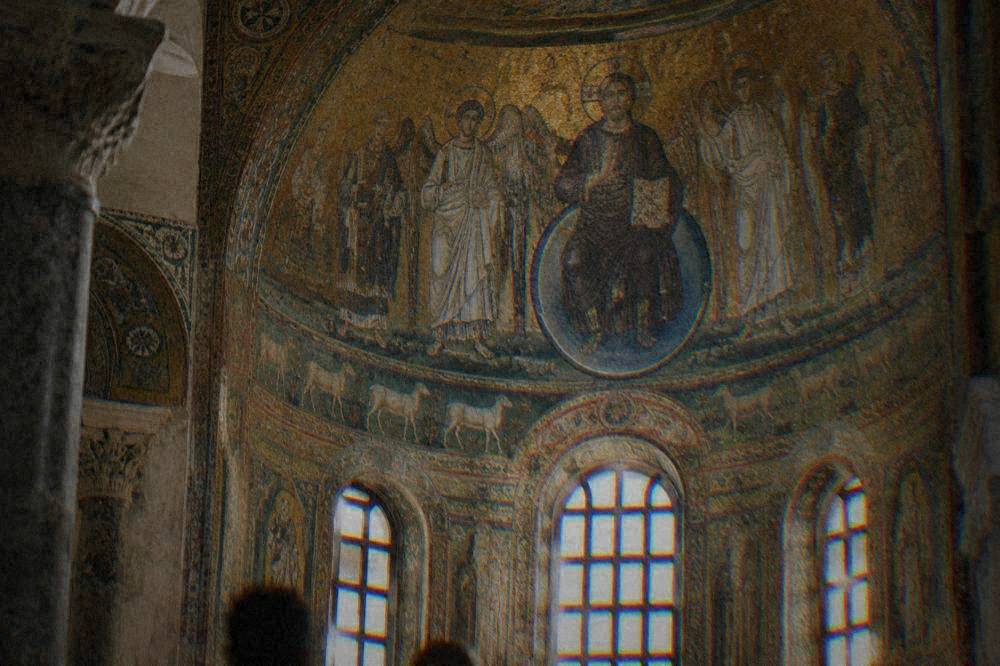
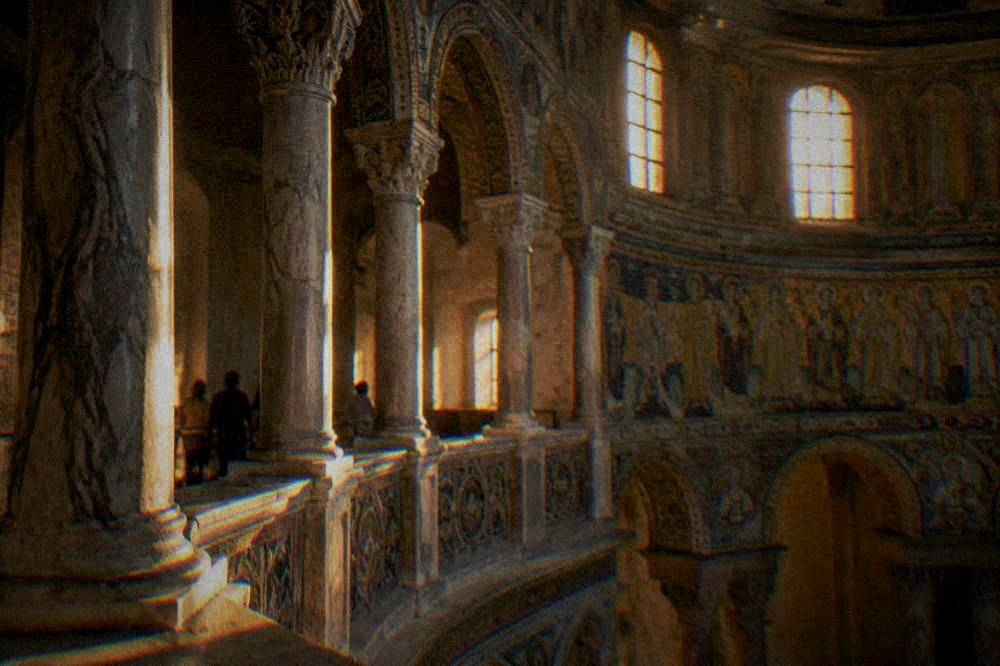
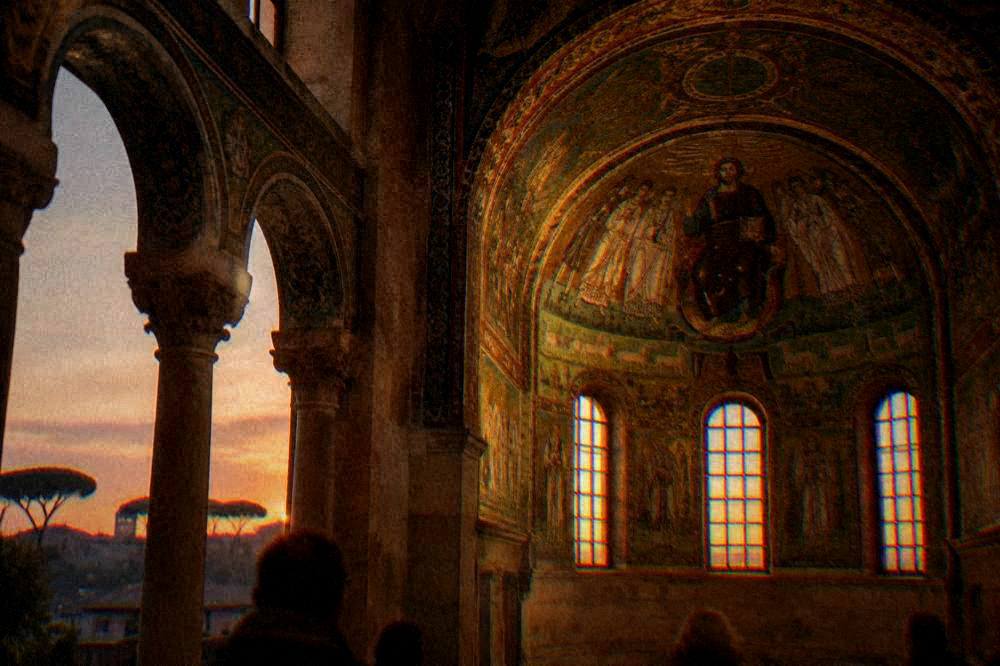
The interior of San Vitale is a single overwhelming ensemble: an octagonal space under a tiered vault, an apse filled with gold-ground mosaic showing figures in court dress, and walls and galleries carrying further mosaic panels and marble revetment. The basilica is the largest mosaic interior among the five Ravenna Mosaici monuments, and the apse composition is the image most associated with the city.
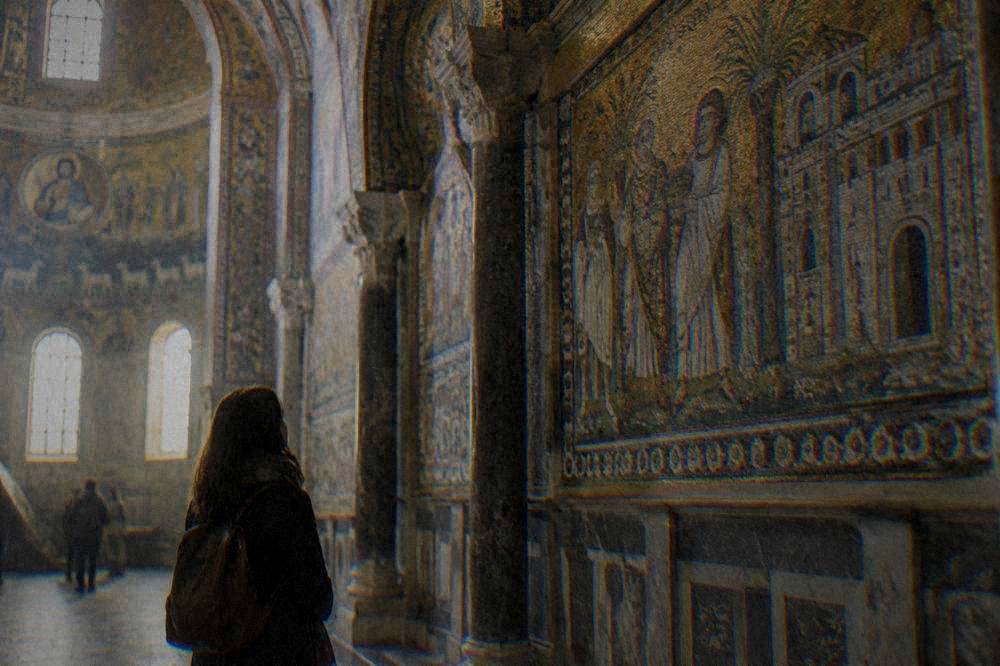
The mosaics reward slow looking. Gold tesserae are set at slight angles so the surface catches lamplight and changes through the day. The court figures stand in formal rows, flanked by architectural and landscape backdrops, and the lower walls carry marble facings that frame the mosaic fields. There is no single must-see panel so much as one continuous programme: the apse, the chancel walls, the arch above, and the vault, each with its own register. Visitors with a guide get the iconography; visitors without one still get the effect, which is the point at which many people decide how much of Ravenna's mosaic heritage they want to schedule.
A useful habit inside is to work from the outside in. Circle the ambulatory first, looking up into the gallery level and the clerestory, then let the apse arrive as the finale rather than the first thing you see. The composition is built to be read in that order, with the smaller panels preparing the eye for the density of the apse. Visitors who walk straight to the front and photograph it often report that the pictures flatten the gold, because the mosaic depends on movement and shifting light in a way a still image cannot carry.
| Interior feature | What the visitor sees |
|---|---|
| Apse mosaic | Gold-ground figures in court dress in a formal composition |
| Chancel walls | Panels with figures and landscape and architectural backdrops |
| Triumphal arch | Mosaic bands continuing the apse programme |
| Vault and clerestory | Tiered octagonal vault with light from high windows |
| Lower walls | Marble revetment framing the mosaic fields |
For anyone whose interest sharpens inside, a focused mosaic walk is one way to go deeper, and the listing below is the dedicated option. It can be placed alongside the independent visit or replace it, and availability is on the operator's live listing.
The wider context is worth having. The Archiepiscopal Chapel and the Arian Baptistery belong to the same heritage but different ticket systems, and the Basilica of Sant'Apollinare in Classe shows the same tradition in a very different setting outside the centre. Reading a page or two of background on why Ravenna has so many mosaics before a visit changes what the panels mean on the floor.
How Does San Vitale Fit Into A Day In Ravenna?
San Vitale works best as the anchor of a walking circuit through the historic centre: the basilica, the Mausoleum of Galla Placidia beside it, the National Museum in the same block, then the Neonian Baptistery and the cathedral a few streets on, and Sant'Apollinare Nuovo on the axis between the station and the centre. Everything in that list is a short walk from everything else, and the one-week ticket validity means the circuit can be split across two days without paying twice.
The split matters. A five-monument ticket with timed entries at two of the sites runs comfortably across a morning and an afternoon; compressing it into a few hours works, but the stays at Galla Placidia and the Neonian Baptistery are fixed and short while San Vitale rewards lingering. Visitors with one day only should follow the one day in Ravenna plan; those with a weekend have room for Dante's tomb, which is free, and the Classis Ravenna museum out at Classe, where the former TAMO collection now lives after that museum closed in 2023.
The geography of the city makes this easier than it sounds. Ravenna's historic centre is small and flat, the railway station is a short walk from it, and nothing in the core circuit requires a bus or a taxi. The only monuments that take planning are those outside the centre: Sant'Apollinare in Classe and the Classis Ravenna museum sit in the Classe area, reached by a short bus or taxi ride, and the Mausoleum of Theodoric sits north of the centre.
| Time budget | Realistic circuit | Notes |
|---|---|---|
| Half a day | San Vitale, Galla Placidia, Sant'Apollinare Nuovo | Two- or four-monument ticket |
| One day | All five Ravenna Mosaici monuments plus Dante's tomb | Timed entries book the sequence |
| Two days | Day one in the centre, day two at Classe and the coast | Sant'Apollinare in Classe sits outside the centre |
Food folds in easily. The piadina bakeries and cappelletti kitchens of the centre sit inside the same walking radius as the monuments, and a walk that mixes mosaics with tastings is one of the more popular ways to spend the afternoon. The listing below is that combination.
Should You Visit San Vitale With A Guide Or On Your Own?
San Vitale can be visited entirely on your own with an entry ticket, and the mosaics carry the space even with no commentary at all, but a guided walk adds the identification of the figures and the reading of the panels, which the wall texts do not supply in depth. Private options exist for groups and families, and ticket-inclusive guided tours remove both the booking steps and the slot waits at the door.
The honest dividing line is interest. A visitor who wants to stand in the apse and feel the gold needs nothing but a ticket and an hour. A visitor who wants to know who the court figures are, why the programmes differ between San Vitale and the baptisteries, and how the eight monuments relate will get far more from a guided format, whether that is a small-group walk or a private tour with a local expert. The two product families are compared below.
Cost behaves differently in each format, and it is worth understanding the structure before comparing listings. A private tour is priced per group, so a family of five may find the per-person arithmetic kinder than it first looks. A small-group guided walk is priced per person and usually bundles the monument ticket, which removes a booking step and a queue. Entry-tickets products are per person and cover admission only, leaving the commentary to whatever the visitor brings. The figures for each listing render on its own card and should be read there rather than assumed.
| Visit style | What it includes | Best for |
|---|---|---|
| Entry ticket only | Timed admission, self-guided | Independent travellers on their own clock |
| Guided walk with tickets | Admission plus commentary in a group | First-time visitors wanting context |
| Private walk with a local expert | Exclusive guide, flexible pace | Families, groups, repeat visitors |
The three most-booked options covering San Vitale are shown here, and each listing carries its own price, rating and cancellation terms. The entry-tickets product is the minimal version; the ticket-inclusive guided walk is the middle path; the private tour is the full-service version.
Whatever the format, the practical rules are the same: book the entry time, check the official Ravenna Mosaici page for seasonal hours before travelling, and leave more room for San Vitale than for any other stop on the ticket, because it is the interior that answers the question of why Ravenna's mosaics carry a UNESCO inscription of their own.
Common Questions About The Basilica Of San Vitale
What is the Basilica of San Vitale?
It is one of the eight UNESCO Early Christian Monuments of Ravenna, inscribed in 1996, and the largest mosaic interior among the five Ravenna Mosaici monuments. Its apse and walls carry gold-ground Byzantine mosaics showing figures in court dress. More detail is on the site's page answering the question directly.
How much does it cost to visit San Vitale?
San Vitale is covered by the Ravenna Mosaici combo ticket: reduced fares start at EUR 9.50 for the two-monument version covering Sant'Apollinare Nuovo and San Vitale, EUR 11.50 for four monuments and EUR 13.50 for five. Full prices are on the official Ravenna Mosaici page.
Do I need a timed entry for San Vitale?
San Vitale admits visitors in scheduled slots, and a booked time avoids waiting for the next slot in high season. Galla Placidia and the Neonian Baptistery require a booked time outright, and stays inside those two are a few minutes.
What are San Vitale's opening hours?
Summer, 8 March to 2 November 2026: 9:00 to 19:00, last admission 18:30. Winter, 3 November 2026 to 6 March 2027: 10:00 to 17:00, last admission 16:30. Closed 25 December and 1 January.
How long does a visit take?
The basilica itself rewards anything from a slow half hour to an hour. On a four- or five-monument ticket the full circuit, including the timed entries at Galla Placidia and the Neonian Baptistery, fills most of a day at a relaxed pace, and the ticket's one-week validity allows splitting it over two days.
Is San Vitale included in the Ravenna combo ticket?
Yes. Every Ravenna Mosaici combo, from the two-monument version upward, includes San Vitale. The Mausoleum of Theodoric, Sant'Apollinare in Classe and the Arian Baptistery sit on separate state tickets and are not part of the combo.