Domus Dei Tappeti Di Pietra
The Domus dei Tappeti di Pietra is a Byzantine-era archaeological site in the centre of Ravenna, a short walk from the city's UNESCO mosaic monuments, holding decorated floor mosaics excavated beneath a church.
Short answer
The Domus dei Tappeti di Pietra is a Byzantine-era archaeological site in central Ravenna with excavated floor mosaics, reached on foot from Piazza del Popolo. Opening hours vary by season and sources conflict, so confirm times and any admission fee on the official Comune di Ravenna page before visiting.
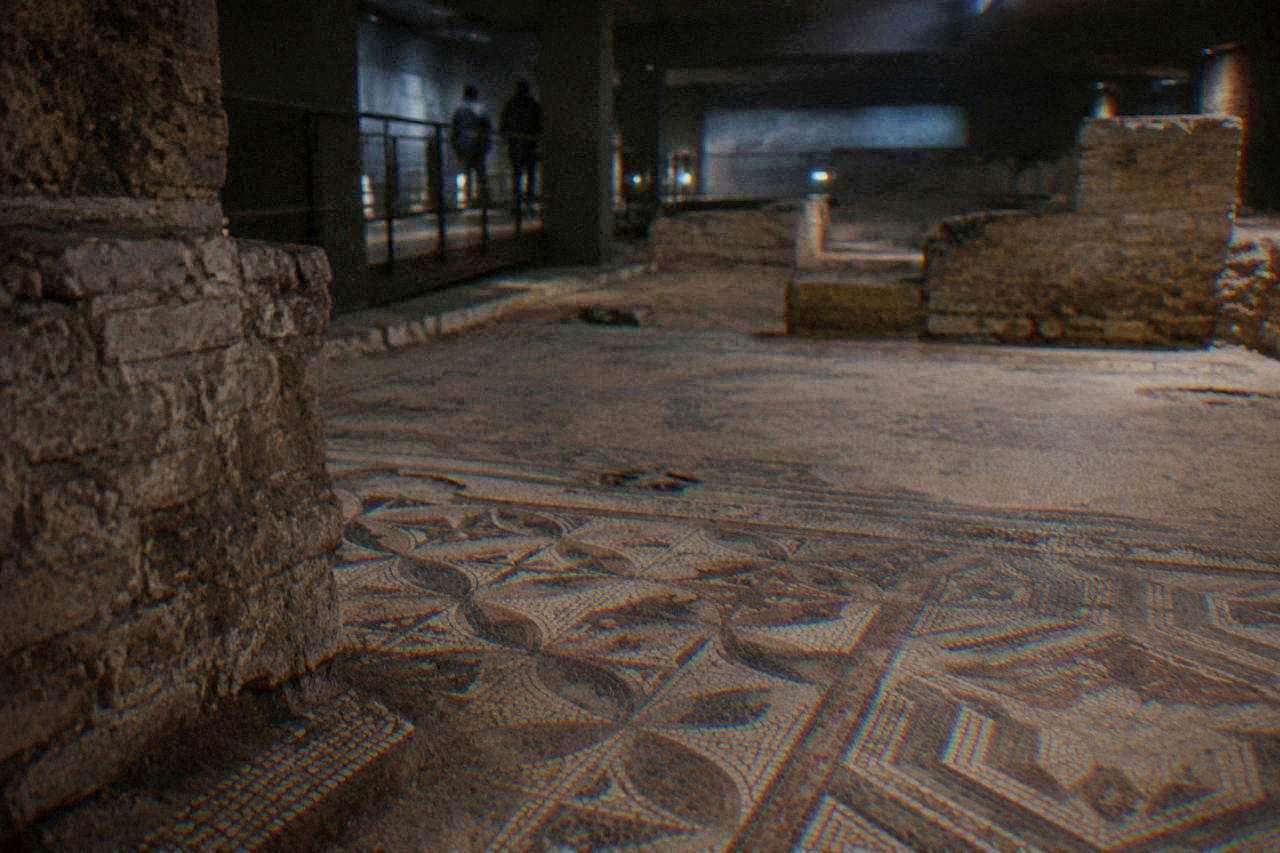
Beneath the church of Sant'Eufemia in the heart of Ravenna, in Emilia-Romagna, lies one of the city's quieter surprises: the Domus dei Tappeti di Pietra, a Byzantine-era archaeological site where decorated floor mosaics were uncovered during work under the church floor. The name translates as the House of Stone Carpets, and it describes exactly what a visitor finds, patterned mosaic pavements laid out like woven rugs in stone. Ravenna holds eight UNESCO Early Christian monuments, and this site sits outside that list, which is part of its appeal: it is small, central, and usually calm compared with the ticketed basilicas a few streets away.
This guide from the Ravenna Travel Guide editorial desk sets out what the site is, what you can see, how it compares with the UNESCO monuments, and the practical details that sources conflict on. Where a figure is not settled, this page says so and points to where the live answer is held, rather than printing a number that may be wrong by the time you travel.
What Is The Domus Dei Tappeti Di Pietra In Ravenna?
The Domus dei Tappeti di Pietra is a Byzantine-era archaeological site beneath the church of Sant'Eufemia in central Ravenna, holding excavated residential floor mosaics rather than church decoration. The Comune di Ravenna describes it as an archaeological site with mosaic pavements, and it is not one of the eight UNESCO Early Christian monuments, which gives it a different character from the basilicas nearby.
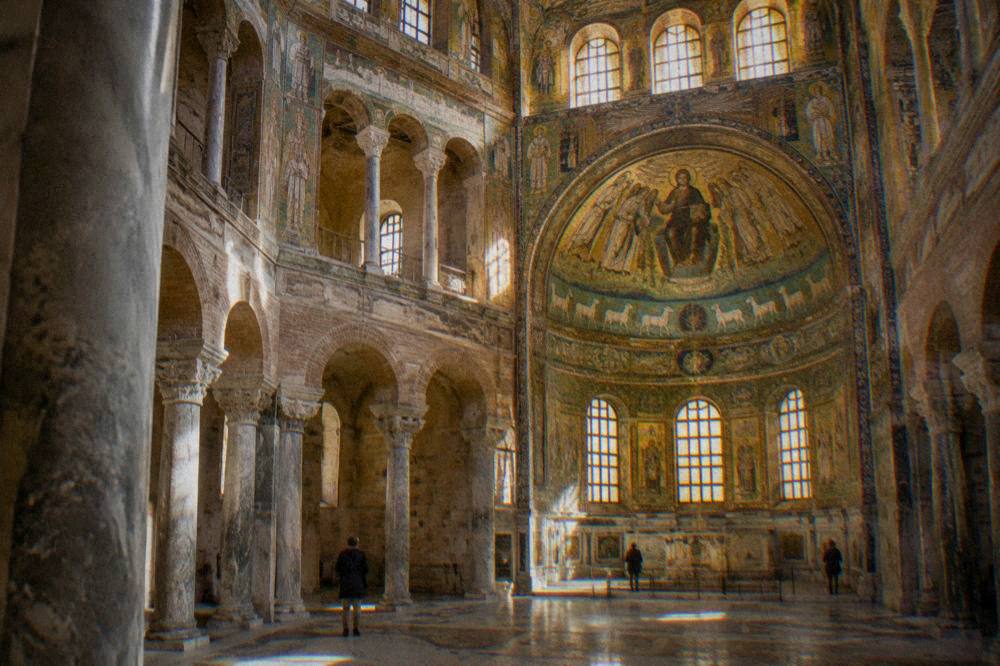
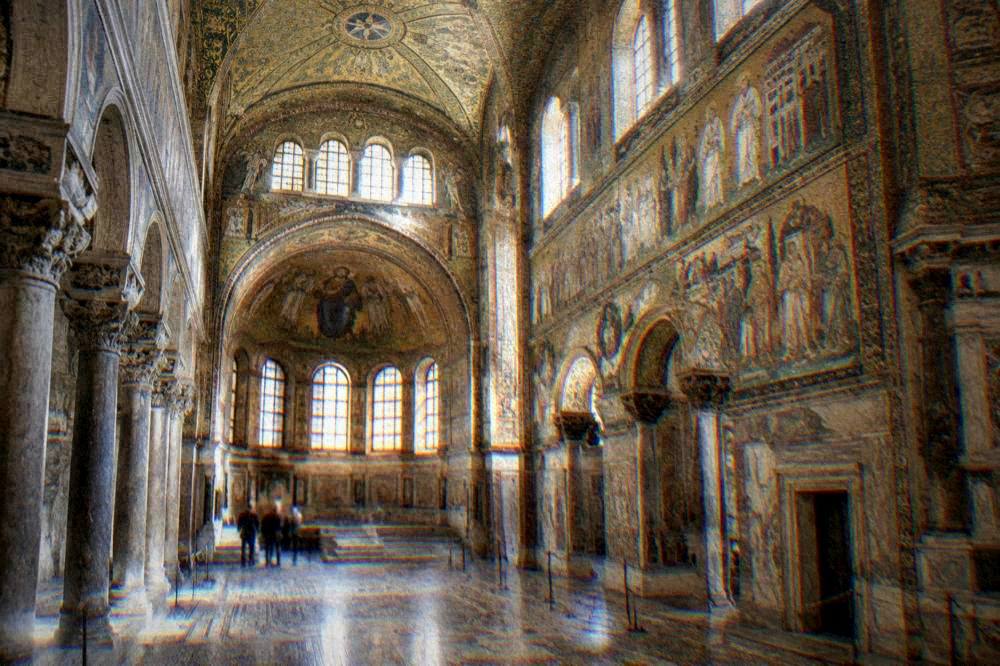
The site preserves the floors of a residential complex, discovered during excavation work under the church. Where the UNESCO monuments such as San Vitale or the Neonian Baptistery carry gold-ground wall and vault mosaics, the Domus holds floors, geometric patterns, figurative panels, and decorative borders laid for private rooms rather than public worship. That distinction shapes the visit. You are looking down, not up, and the scale is domestic rather than ceremonial.
The comparison that helps first-time visitors is with the city's other below-sight-level mosaic attraction, the Classis Ravenna museum in the Classe area, which tells the city's story in a former sugar factory. The Domus is the more intimate of the two: a compact underground space in the historic centre rather than a large museum on the edge of town. Visitors who want the full picture of Ravenna's mosaic tradition often pair the Domus with the big basilicas in one itinerary and leave Classis for a second day, and the Classis Ravenna museum guide covers that option in detail.
A note on expectations. The site is genuinely small. You descend, walk a routed path above and around the pavements, read the panels, and come back up. Photography is normally permitted without flash, as at Ravenna's other mosaic sites, but the lighting is low and designed for preservation, so plan for slow shutter speeds or a steady hand if you want sharp images of the floors.
Where Is The Domus And How Do You Reach It From Central Ravenna?
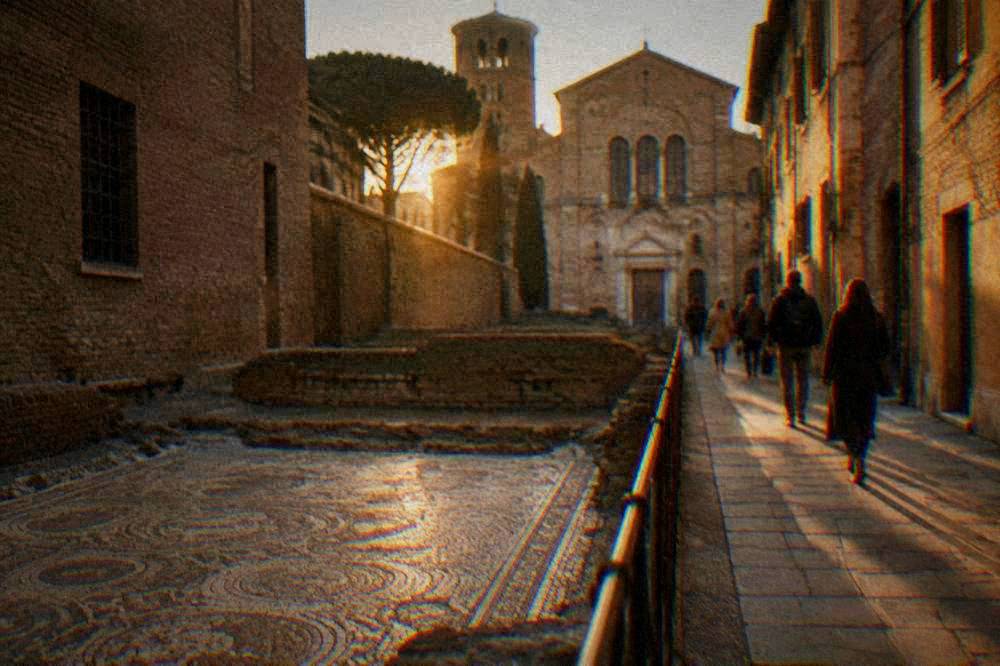
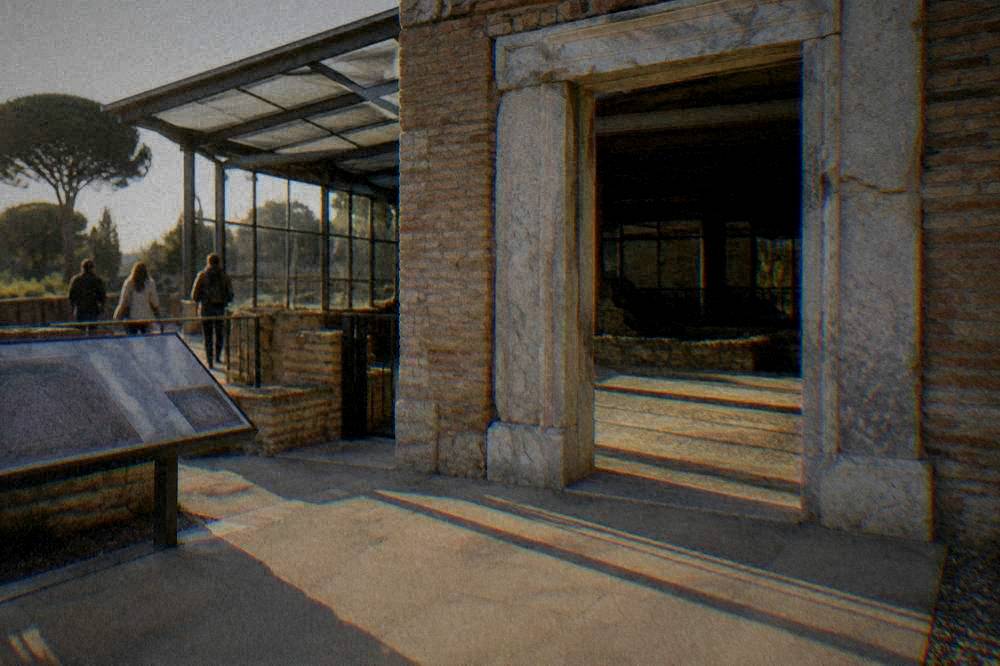
The Domus dei Tappeti di Pietra sits in the historic centre of Ravenna, at the church of Sant'Eufemia, a short walk from Piazza del Popolo and within easy walking distance of the UNESCO monuments on the standard mosaic route. Ravenna's centre is compact and flat, so the site needs no bus or car, and the railway station sits a short walk from the centre as well.
Ravenna is an inland city on the flat Po plain, about 8 km from the Adriatic coast, and its beach resorts such as Marina di Ravenna are reached by Start Romagna bus rather than on foot. None of that matters for the Domus, because it sits in the middle of the walkable core. From the railway station, the route into the centre is level and signposted, and once you are among the streets around Piazza del Popolo, the Domus, the Neonian Baptistery, the cathedral and the archiepiscopal chapel cluster within a few minutes of one another.
A sensible walking order, based purely on geography, is to start at the basilica cluster of San Vitale and the mausoleum of Galla Placidia, work through the cathedral area where the Domus lies, and finish at Sant'Apollinare Nuovo near the station side of town. Cyclists will find the centre equally flat, and Ravenna is a city where bikes are a normal way to move, but for a single central site like the Domus, walking is the obvious choice.
If you are arriving for a fuller day, a guided walk strings the geography together without you needing to plan the order yourself, and the operator's live listing carries the current itinerary and availability: Check availability. The city highlights guided walking tour is one of the walks that covers the centre's principal sights, and pairing it with a self-guided hour at the Domus afterwards works well because the walk finishes in the same part of town.
For drivers, the relevant fact is that Ravenna's historic centre has a camera-enforced limited traffic zone, the ZTL, with gates that operate on differing schedules and a daily permit bought at the parcometers, while hotels can issue a guest authorisation. The permit costs about EUR 8. The practical advice is to park outside the ZTL and walk in; the site-specific guide to things to do in Ravenna links through to the parking details.
What Can You Actually See Inside The Domus Dei Tappeti Di Pietra?
Inside the Domus dei Tappeti di Pietra you see excavated mosaic floors from a Byzantine-era residential building, laid out below the modern church level and viewed from walkways, with geometric carpets, figurative panels and bordered designs in stone and glass tesserae. The Comune di Ravenna's page for the site describes an archaeological area with mosaic pavements rather than a museum collection, so the floors themselves are the whole exhibit.
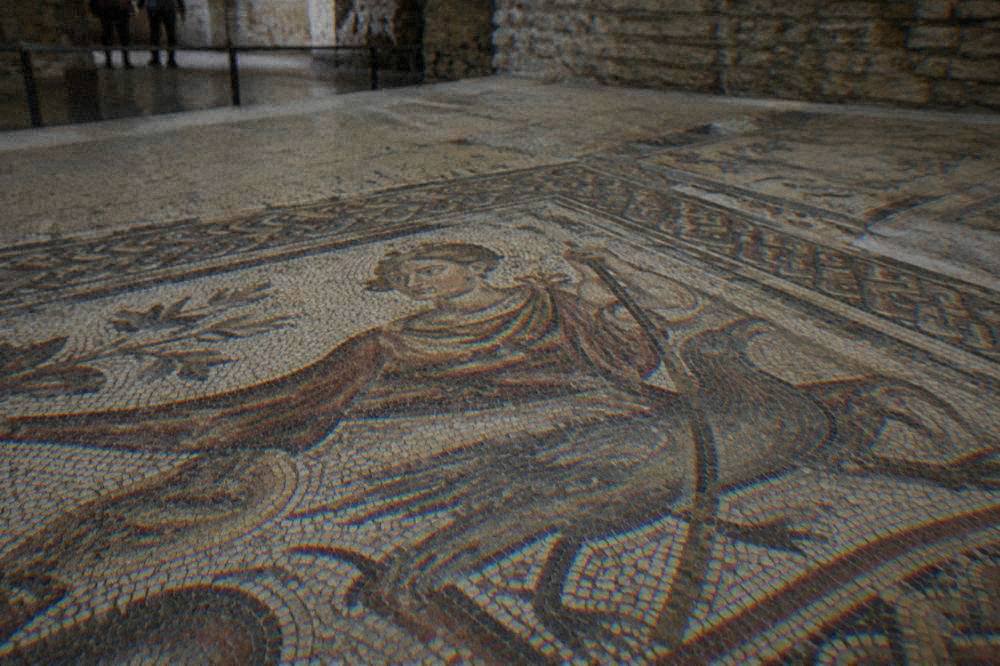
The pavements are the draw. Panels of interlacing geometric pattern give the site its carpet metaphor, and figured scenes, including a well-known depiction of a dancer, sit among them. Interpretive panels explain what was found and how the rooms were understood, and the visit is essentially a single descending circuit rather than a sequence of galleries. Visitors who have come from San Vitale will notice the contrast immediately: no gold vaults, no liturgical imagery, just the private floors of a wealthy household preserved where they lay.
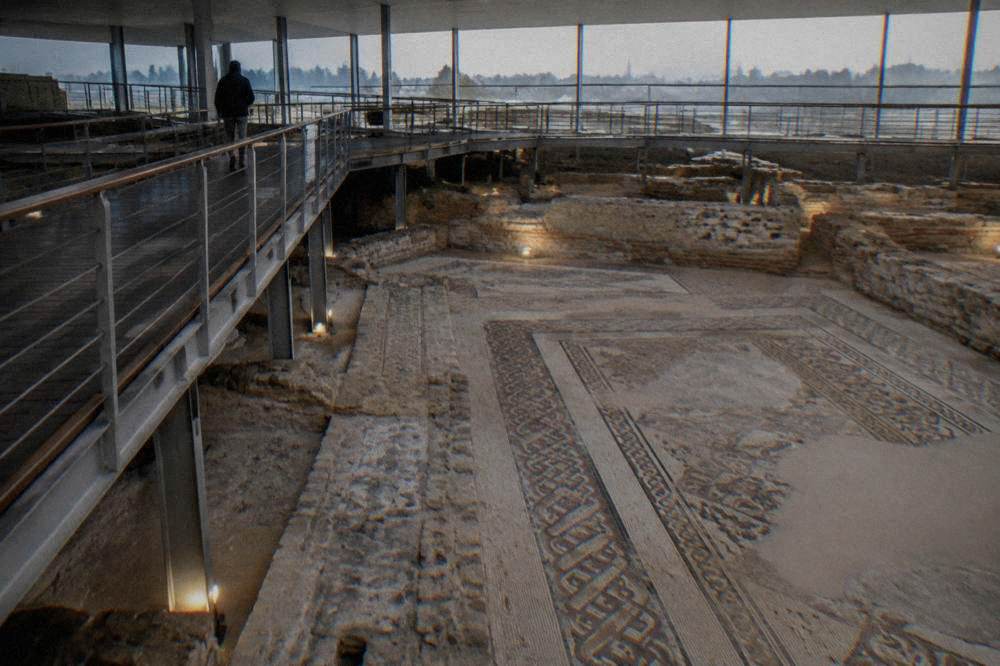
Two practical notes follow from the site's character. First, because the pavements are fragile and the space confined, the flow of visitors is managed, and at busy times you may wait briefly at the entrance. Second, because it is underground, the air is cool and even, which makes it a comfortable stop in the heat of a July afternoon, when the climate table shows a mean of 25.2 C, or a sensible refuge on a wet November day, the wettest month in the modelled 1991 to 2020 normals at 78.3 mm of rain.
Families generally manage the site well. There are no long texts to read, the walkways do the guiding, and children who have just seen the basilicas often respond to the domestic scale here. For a full Ravenna-with-kids plan, the Rocca Brancaleone fortress, with its open green space, is the natural running-around counterweight to a morning of mosaics.
A morning of looking down at floors deserves a reward afterwards, and Ravenna's gelaterias are a serious local institution. An artisan class turns the reward into the afternoon itself: Check availability.
What Are The Opening Hours And Ticket Prices For The Domus?
The Domus dei Tappeti di Pietra's hours vary by season and published sources conflict, with the Comune page and ticket listings showing different schedules, and no admission price can be stated with confidence, so the official Comune di Ravenna page for the site is the place to confirm both opening times and any fee before you travel. Do not rely on third-party guidebook figures for this one.
This is the one section of this page where the editorial desk declines to print a schedule, and the reason is straightforward: the Comune di Ravenna's own page and ticketing listings show different hours, a summer to winter shift is known to apply broadly across Ravenna's sites, and possible maintenance closures are flagged in winter. The Ravenna Mosaici circuit, for comparison, publishes a clean split, 9:00 to 19:00 in summer and 10:00 to 17:00 from 3 November 2026 to 6 March 2027, but the Domus is not part of that circuit and its own calendar must be checked directly.
The same caution applies to the ticket. What can be said is how the Domus relates to the city's other ticketing: it is not covered by the Ravenna Mosaici combined ticket, which covers the five centre-circuit monuments, and it is not one of the state monuments such as the mausoleum of Theodoric, where a EUR 6 ticket applies and state sites are free on the first Sunday of the month.
If you're pairing this visit with the city's main circuit, book a mosaics entry ticket here.
The table below sets out what each Ravenna ticketing route covers, using only the figures the official pages carry, so you can see where the Domus fits and what it does not include.
| Ticket route | What it covers | Validity and notes | Where the price is held |
|---|---|---|---|
| Ravenna Mosaici, 2 monuments | Sant'Apollinare Nuovo and San Vitale | One week validity, one admission per monument, timed entry booked per site | Ravenna Mosaici prices page, reduced fares from EUR 9.50 |
| Ravenna Mosaici, 4 monuments | The two above plus Galla Placidia and the Neonian Baptistery | Same validity; the two small monuments require a booked entry time and allow a stay of a few minutes | Same page |
| Ravenna Mosaici, 5 monuments | The four above plus the Archiepiscopal Museum and Chapel of St Andrew | Same validity and booking rules | Same page |
| Mausoleum of Theodoric ticket | The mausoleum, EUR 6, concession EUR 5, ages 18 to 25 EUR 2 | Combined ticket with the Arian Baptistery and Theodoric's Palace at EUR 7 | Visit Ravenna page for the mausoleum |
| Sant'Apollinare in Classe ticket | The basilica in Classe, EUR 6 full, EUR 2 reduced | Outside the centre, Monday to Saturday 8:30 to 19:00, Sunday 13:30 to 19:00 | cultura.gov.it listing |
| Domus dei Tappeti di Pietra | The archaeological site only, separate from all circuits above | Hours vary by season and sources conflict | Official Comune di Ravenna page for the site |
One more seasonal note. Ravenna's museums and sites commonly shift to winter schedules in early November and back in March, and January and February can carry maintenance closures. If your trip falls in those shoulder months, checking the official page a day or two before is not paranoia, it is the difference between seeing the floors and finding a closed door.
How Does The Domus Compare With Ravenna's UNESCO Monuments?
The Domus dei Tappeti di Pietra is a residential archaeological floor collection, while the eight UNESCO Early Christian monuments of Ravenna, listed since 1996, are churches, baptisteries and mausolea with wall and vault mosaics, so the two experiences complement rather than duplicate each other, and a visitor with time for both gets the domestic and the ceremonial sides of the same mosaic tradition.
The UNESCO list, as the UNESCO listing itself names the eight, covers the Mausoleum of Galla Placidia, the Neonian Baptistery, Sant'Apollinare Nuovo, the Arian Baptistery, the Archiepiscopal Chapel, the Mausoleum of Theodoric, San Vitale and Sant'Apollinare in Classe. The Domus appears nowhere on it, and neither do the MAR city art museum circuit, the national museum or Classis Ravenna. That does not diminish the site; it simply means the comparison is between a category of one and a category of eight.
| Site | Type of mosaic experience | Location | Time needed |
|---|---|---|---|
| Domus dei Tappeti di Pietra | Underground residential floor mosaics, viewed from walkways | Centre, at Sant'Eufemia | Short visit, a single circuit |
| San Vitale | Gold-ground wall and vault mosaics in a basilica, entry in timed slots | Centre | Longer, allow for the slot system |
| Galla Placidia | Small domed chapel with starry vault mosaic, booked entry time, a stay of a few minutes | Centre, beside San Vitale | Very short but must be booked |
| Neonian Baptistery | Domed baptistery with figurative vault mosaic, booked entry time, a stay of a few minutes | Centre | Very short but must be booked |
| Sant'Apollinare in Classe | Basilica apse mosaic, EUR 6 ticket | Classe area, outside the centre | Half a morning with travel |
| Classis Ravenna | City and territory museum, EUR 8 full and EUR 6 reduced, in the Classe area | Classe area | Half a day |
The honest planning advice is this. If you have a single day, the UNESCO centre circuit comes first, because it is what Ravenna is inscribed for, and the Domus slots in as an add-on if the schedule allows and the site is open. If you have two days or a rainy stretch of one, the Domus rises up the list, since it is indoors, central and quick. The one day in Ravenna itinerary and the guide to Ravenna in the rain both build on this logic.
How Long Does A Visit To The Domus Take, And When Is The Best Time To Go?
A visit to the Domus dei Tappeti di Pietra takes a short, self-paced circuit of the underground pavements rather than a half-day commitment, which makes it easiest to slot between two timed entries at the nearby monuments, and the quietest windows are normally weekday mornings outside Italian holidays and the summer weekends when coastal visitors add to the city crowds.
Because the site is a single excavated area rather than a museum with rooms, the visit length is set by how long you spend reading the panels and studying the floors. Some visitors are finished quickly; mosaic enthusiasts linger over the figured panels. Either way, it does not compete for time with a basilica, and that flexibility is its greatest scheduling asset: you can hold it in reserve and drop in whenever a gap appears.
Timing around the year follows Ravenna's rhythm. July, the driest month in the modelled 1991 to 2020 normals at 38.1 mm, brings the biggest combined crowds of seaside and city visitors, while November, the wettest at 78.3 mm, is quiet and grey but perfectly workable for an underground site. A winter visit pairs naturally with indoor neighbours such as the national museum or an afternoon in a gelateria, and Ravenna's cultural calendar gives winter travellers a reason to be in town, with the Ravenna Festival autumn trilogy "Mozart 1791" running 13 to 17 November 2026 at Teatro Alighieri.
What Else Should You See Near The Domus Dei Tappeti Di Pietra?
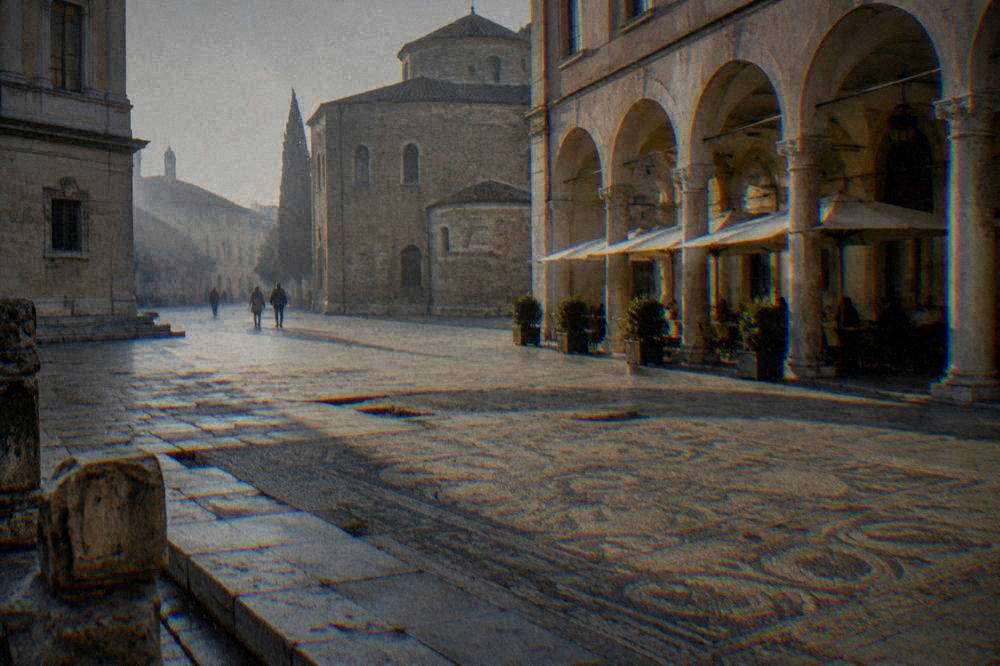
Within a short walk of the Domus dei Tappeti di Pietra you reach Ravenna cathedral, the Neonian Baptistery, the Archiepiscopal Museum and chapel, the basilica of San Francesco with Dante's tomb beside it, and Piazza del Popolo, which together make the densest mosaic-and-history quarter in the city and mean the site never needs to stand alone in your plans.
The geography does the planning for you. The Domus sits in the cathedral quarter. Dante's tomb, free to enter and open 10:00 to 18:00 in the November to March period, lies a few streets away by San Francesco. Piazza del Popolo, the city's civic living room, holds the town hall and cafés, and makes the natural pause between monument clusters. The Piazza del Popolo guide covers what sits on and around it.
| Sight | Distance character from the Domus | Ticket position |
|---|---|---|
| Ravenna cathedral | Same quarter, immediate neighbour | Cathedral generally open; museum items vary |
| Neonian Baptistery | A short walk, same quarter | Ravenna Mosaici 4 and 5 monument combos |
| Archiepiscopal Museum and chapel | Same quarter | Ravenna Mosaici 5 monument combo |
| Dante's tomb | A short walk by San Francesco | Free entry, closed 25 December |
| Mausoleum of Theodoric | Further out, outside the tight centre | EUR 6, or EUR 7 combined with two Theodoric sites |
| MAR art museum | Short distance, its own building | EUR 8 full, EUR 6 reduced, EUR 3 students |
Food closes the loop. Ravenna's table runs on piadina flatbread, cappelletti in broth and the wines of Romagna, all described by dish rather than price on the official food pages, and a cooking class turns the tasting into participation. The piadina cooking class is the natural companion to a mosaic morning, and the class listing carries current dates and availability: Check availability.
Common Questions About The Domus Dei Tappeti Di Pietra
Is the Domus dei Tappeti di Pietra one of the eight UNESCO sites in Ravenna?
No. The UNESCO listing covers the Mausoleum of Galla Placidia, the Neonian Baptistery, Sant'Apollinare Nuovo, the Arian Baptistery, the Archiepiscopal Chapel, the Mausoleum of Theodoric, San Vitale and Sant'Apollinare in Classe. The Domus is a separate archaeological site beneath the church of Sant'Eufemia.
Can I visit the Domus with the Ravenna Mosaici combined ticket?
No. The combined ticket covers the centre-circuit monuments and Sant'Apollinare in Classe, and the Domus is outside that circuit. Check the official Comune di Ravenna page for the site's own admission arrangements.
What are the Domus dei Tappeti di Pietra opening hours?
Confirm current opening times on the official Comune di Ravenna page for the site before you travel, especially between November and March.
How long does a visit take?
The site is a single underground circuit around excavated mosaic floors, so a visit is short and self-paced. It fits easily between timed entries at the nearby UNESCO monuments.
Is the Domus suitable for children?
Yes, in short doses. The walkways route you past the floors, there is little text to read, and the domestic scale contrasts well with the basilicas. Pair it with open space such as Rocca Brancaleone for the running-around part of the day.
Is the Domus a good rainy-day option in Ravenna?
Yes. It is underground and indoors, central, and quick, which makes it one of the natural wet-weather stops alongside the city's museums and churches.
The Domus dei Tappeti di Pietra will never headline a Ravenna itinerary the way San Vitale does, and it does not need to. It adds the domestic floor to a city famous for its vaults, it sits five minutes from everything else you came to see, and the only real planning task it asks of you is a quick check of the official page for hours and admission before you set out. Do that, and the stone carpets of Byzantine-era Ravenna are yours for a quiet half hour in the middle of the day.