What Does Piadina Mean In Italian?
The Italian word piadina names the flatbread of Romagna, the region around Ravenna. Here is what the word means, where it comes from and how the dish is eaten.
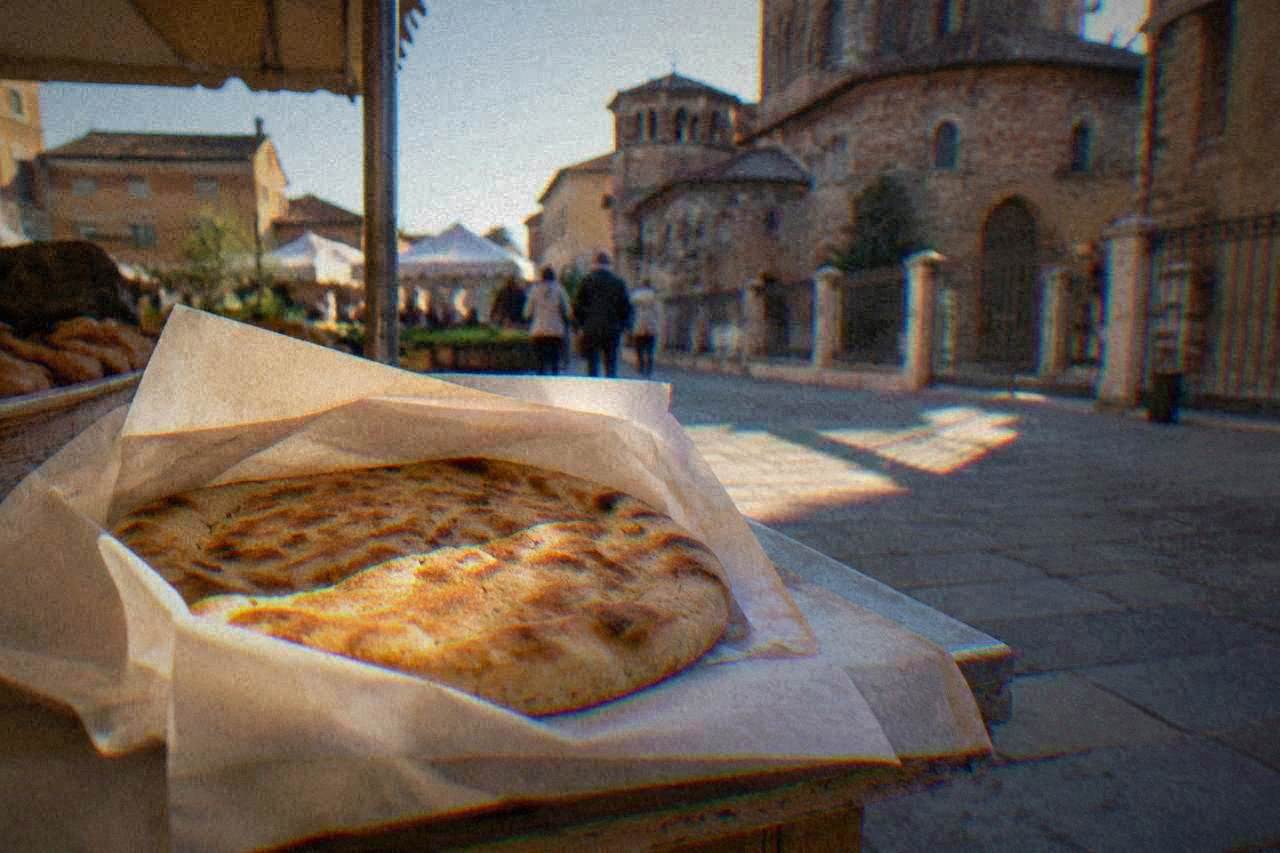
Piadina is the Italian word for the thin, unleavened flatbread of Romagna, the historic territory that spreads east and west of Ravenna across Emilia-Romagna. In the dialect of the area the bread is called piada, and piadina is simply the Italianised form of that word, the little piada. Around Ravenna it is cooked quickly on a hot surface, folded or rolled around a filling, and eaten standing at a market stall or a kiosk as easily as at a table. The Visit Ravenna food pages list it among the signature products of the area, alongside cappelletti and the wines of Romagna.
The word matters to travellers because it appears on signs all over the city. A "piadineria" is a shop that sells them, and a menu that says piadina romagnola is advertising the same bread with its regional label attached. The full story of the dish itself, its fillings and where to buy it in the centre, sits in the piadina romagnola guide, while this page answers the language question: what the name actually means.
What Does Piadina Mean In Italian?
In standard Italian, piadina means a flat, round, unleavened bread cooked on a hot plate or pan, and the word belongs specifically to Romagna, the area around Ravenna. It is the Italianised diminutive of piada, the Romagnol dialect word for the same bread, so the name literally carries the sense of the local flatbread rather than a generic loaf or a leavened bread of any kind.
That is the whole answer in one line, but the detail is worth having. Italian borrowed the word from the dialect rather than inventing its own, which is why dictionaries describe piadina with a regional tag rather than as a national bread. The name does not indicate a brand, a restaurant chain or a specific recipe. It names a type of bread, the way focaccia names a type of bread from Liguria's tradition or pizza names the Neapolitan flatbread with toppings.
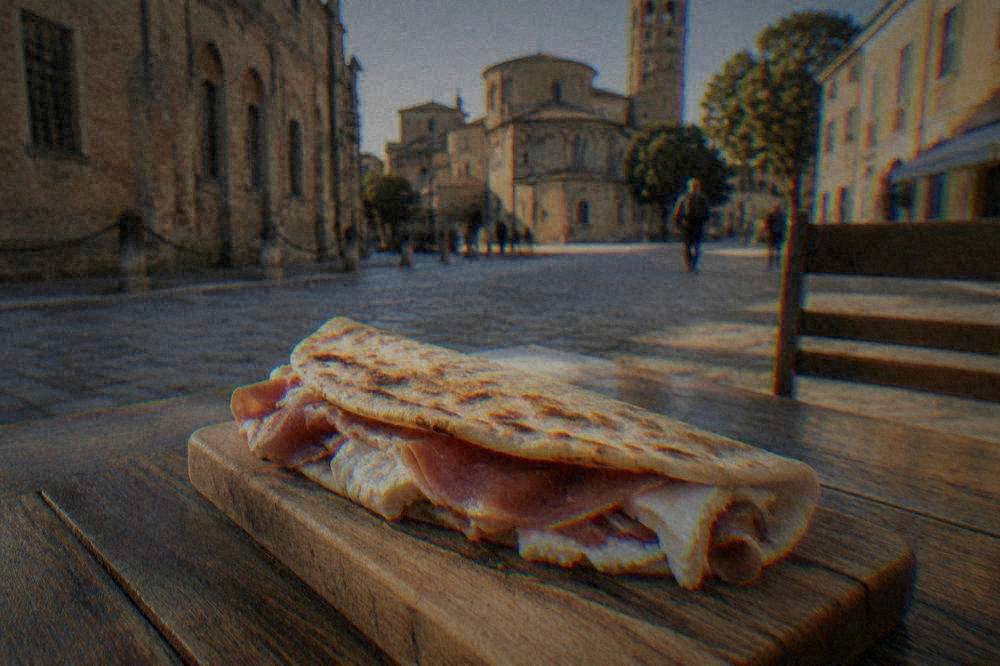
For a visitor in Ravenna the practical translation is simple. Order a piadina and you get a warm round flatbread, usually split or folded, with a filling you choose. The bread is the constant. What changes from stall to stall is the thickness, whether it is folded in half or rolled, and what goes inside it.
Where Does The Word Piada Come From?
The word piada is Romagnol dialect, and its roots are traced by language references to the Latin word for a flat cake or bread, placentula, a diminutive of placenta in its original sense of a flat baked sheet. The name therefore describes the shape: something flat, round and cooked, which is exactly what comes off the hot plate at a Ravenna stall.
Italian food histories link the word to that Latin line of descent, and the dialect form piada stayed in local use while standard Italian adopted the softened piadina. Regional naming like this is common across Emilia-Romagna, where dialect words for food often survive beside their national equivalents. The same bread answers to slightly different names as you move through the region, which is confusing for visitors and normal for locals.
The vocabulary that surrounds the dish is worth a small table, because it appears on menus and shop signs all over Ravenna:
| Word | What it means |
|---|---|
| Piada | The Romagnol dialect word for the flatbread |
| Piadina | The standard Italian form, used everywhere in Italy |
| Piadina romagnola | The same bread sold under its regional label |
| Piadineria | A kiosk or shop that cooks and sells piadine |
| Crescione | A thicker folded flatbread of the same tradition, filled before cooking |
| Cassone | A filled and sealed variant, cooked with the filling inside |
None of these words carries a price implication or a quality grade. They are simply the naming used on menus in and around Ravenna, and recognising them makes a food stall menu easier to read. A visitor who can tell a cassone from a plain piadina also knows before ordering whether the filling will be warm from the plate or added cold after cooking, which is the single biggest difference in how the two arrive in the hand.
How Is Piadina Made And Eaten In Ravenna?
The bread is made from a simple dough of flour, water, salt and a fat, traditionally lard, rolled thin and cooked for a short time on a very hot surface, historically a terracotta disc called a testo. In Ravenna it is then folded or rolled around fillings such as squacquerone cheese, cured meats or grilled vegetables, and eaten immediately while it is still soft and warm.
To try rolling the dough yourself, book a piadina cooking class here.
The cooking method is the defining part. Because there is no yeast, the dough does not rise, and the heat of the plate blistering the surface is what gives the bread its characteristic spots and slight chew. Visit Ravenna's food pages describe piadina as a product of the Romagna tradition, and the descriptions always emphasise speed: a thin dough, a hot plate, a fast cook, a hand-held result.
The fat in the dough is what separates a piadina from a plain unleavened flatbread of other cuisines. Lard keeps the cooked bread soft for the minutes it takes to eat it, and the modern shops that avoid it substitute olive oil, which gives a slightly different crumb. The dough is not fermented, so there is no waiting stage between mixing and cooking, and a busy stall keeps a continuous cycle running through the midday hours.
Fillings vary with the season and the stall. Squacquerone, a soft, fresh cheese of the region, is the classic pairing with cured raw ham. Grilled vegetables, salami, gorgonzola and rocket all appear on menu boards. The food traditions of the city are covered in more depth in the Ravenna food guide, which sets piadina beside cappelletti and the other dishes of the Romagna table.
A natural way to combine the food and the monuments is a guided day trip that arrives from Bologna, walks the UNESCO sites and leaves the lunch stop open for a flatbread. The Bologna start, UNESCO monuments tour does exactly that, and you can Check availability alongside the tour page.
Ravenna's own food identity is larger than one bread, of course. The city sits inland on the flat Po plain, about 8 km from the Adriatic coast, and its restaurant tradition draws on both the agricultural interior and the fishing ports down the coast road. Piadina belongs to the interior tradition, the farm kitchen rather than the harbour, and its ingredients reflect that: flour, salt, fat from pigs, cheese from the dairy belt of Romagna.
Is Piadina The Same Everywhere In Emilia-Romagna?
No. The bread changes character across the region, and the difference visitors notice first is thickness. The Rimini side of Romagna makes a thin, folded piadina, while the area toward Ravenna and inland tends toward a thicker version, and the filled variants, crescione and cassone, are cooked differently again because the filling goes in before or during cooking rather than after.
That said, the word itself is understood everywhere. A stall in Rimini, a bakery in Cesena and a kiosk in Ravenna all answer to piadina, and a visitor ordering by that name will be understood in every one of them. The comparison between the two ends of the coast, and between Ravenna and its larger neighbour, is drawn out in the Ravenna or Rimini comparison, which also touches on how the food traditions of the two cities differ.
What the region shares is the eating occasion. Piadina is quick food, bought at a counter, eaten by hand, and priced as street food rather than restaurant food. Confirm prices at the counter, since they vary by filling and by shop, and no published tariff exists for the dish any more than for a slice of pizza.
The regional spread is worth a second look, because it explains the menu differences a visitor meets between Ravenna and the coast:
| Area | Style of the bread |
|---|---|
| Rimini and the southern coast | Thin, pliable, folded in half |
| Ravenna and inland Romagna | Thicker, softer, often rolled |
| Forli and Cesena hinterland | Midway in thickness, folded or rolled |
| Bologna and the Emilian side | Present on menus, but treated as an import from Romagna |
The table is a guide to expectations, not a rulebook. Individual shops make their own choice of thickness, and the same kiosk will sometimes offer both a thin and a thick version on request.
Where Can You Try Piadina In Ravenna?
Around the historic centre, at kiosks, bakeries and market stalls, and the practical advice is to look for a piadineria near the main squares and the streets between the station and the UNESCO monuments. The centre is compact and flat, so a flatbread stop fits easily between San Vitale, the Mausoleum of Galla Placidia and Dante's tomb, none of which is more than a short walk from another.
The dedicated page on buying the bread, where to buy piadina in Ravenna, covers the stalls and shops in detail. The short version for a first visit: the area around Piazza del Popolo and the market streets has sold the bread for as long as the city has had a market, and the kiosks around the perimeter of the centre serve the midday trade.
Pairing the bread with a walk through the mosaics is the standard shape of a Ravenna day. The one day in Ravenna itinerary leaves room for exactly this kind of stop, and the mosaic-focused walks below cover the monument half of the day:
Common Questions About Piadina In Ravenna
What does piadina mean in Italian?
It means a flat, round, unleavened bread cooked on a hot plate, and the word comes from piada, the Romagnol dialect name for the same bread eaten around Ravenna.
Is piadina the same as a tortilla or flatbread?
The shape is similar, but piadina uses a dough with fat worked into it, traditionally lard, and is eaten warm straight from the plate rather than stored. The texture is softer and richer than a wheat tortilla.
What goes inside a piadina in Ravenna?
Typical fillings are squacquerone, a soft fresh cheese of Romagna, cured ham, salami, grilled vegetables and rocket. Stalls list the options on the board and confirm prices at the counter.
Can you eat piadina if you are vegetarian?
Yes. Cheese and vegetable fillings are standard at every stall, though the traditional dough contains lard, so ask at the counter if the dough matters to you, as some shops make a version without it.
Is piadina a Ravenna dish or a regional one?
It is a Romagna dish, and Ravenna is one of the main cities of that territory. You will find it across Emilia-Romagna, with thickness and style shifting from place to place.
The word, then, is a small door into a larger food tradition. Piadina means the flatbread of Romagna, the piada of the dialect spoken around Ravenna, and once the name is understood every kiosk sign in the historic centre reads plainly. The Ravenna Travel Guide covers the rest of the table, from cappelletti to the wines, and the monuments that fill the hours between meals.