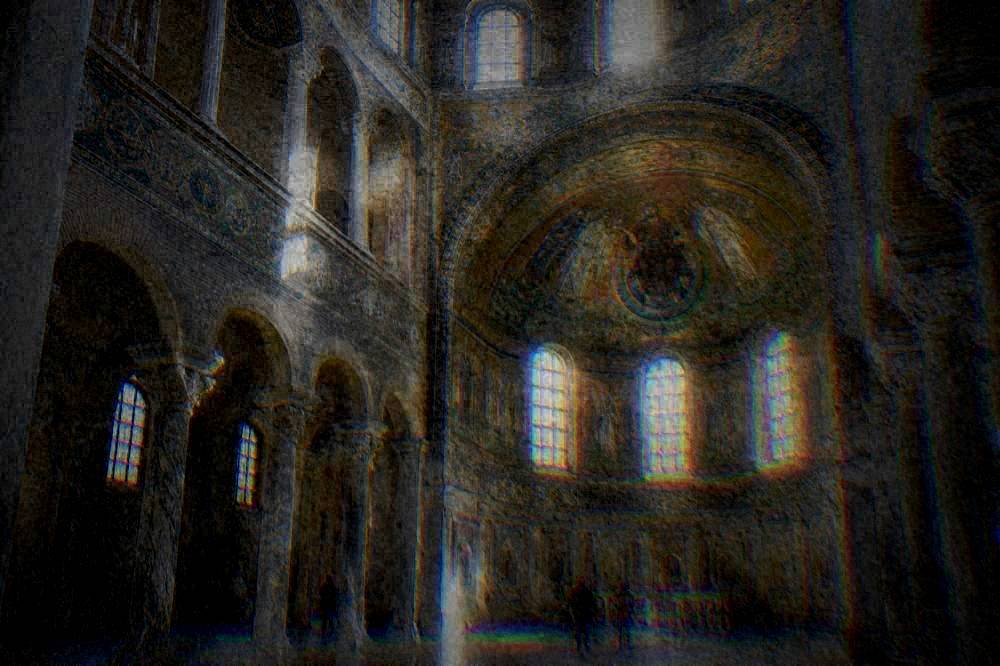
Why Does Ravenna Have So Many Mosaics?
Ravenna holds eight UNESCO Early Christian monuments filled with Byzantine mosaics. This page explains why the city accumulated them, which buildings hold them and how to see them.
Ravenna, a flat Po-valley city in Emilia-Romagna whose historic centre sits inland about 8 km from the Adriatic coast, holds eight monuments on the UNESCO World Heritage list under the name Early Christian Monuments of Ravenna, and glass mosaic is the reason nearly all of them are on it. The UNESCO listing, inscribed in 1996, names the Mausoleum of Galla Placidia, the Neonian Baptistery, Sant'Apollinare Nuovo, the Arian Baptistery, the Archiepiscopal Chapel, the Mausoleum of Theodoric, San Vitale and Sant'Apollinare in Classe. No other city of this size carries a comparable concentration of gold-ground mosaic in surviving early buildings, which is the plain answer to a question this site gets often. This page lays out why the mosaics accumulated here, which walls carry them, and how the Ravenna Travel Guide ticket and touring information fits together.
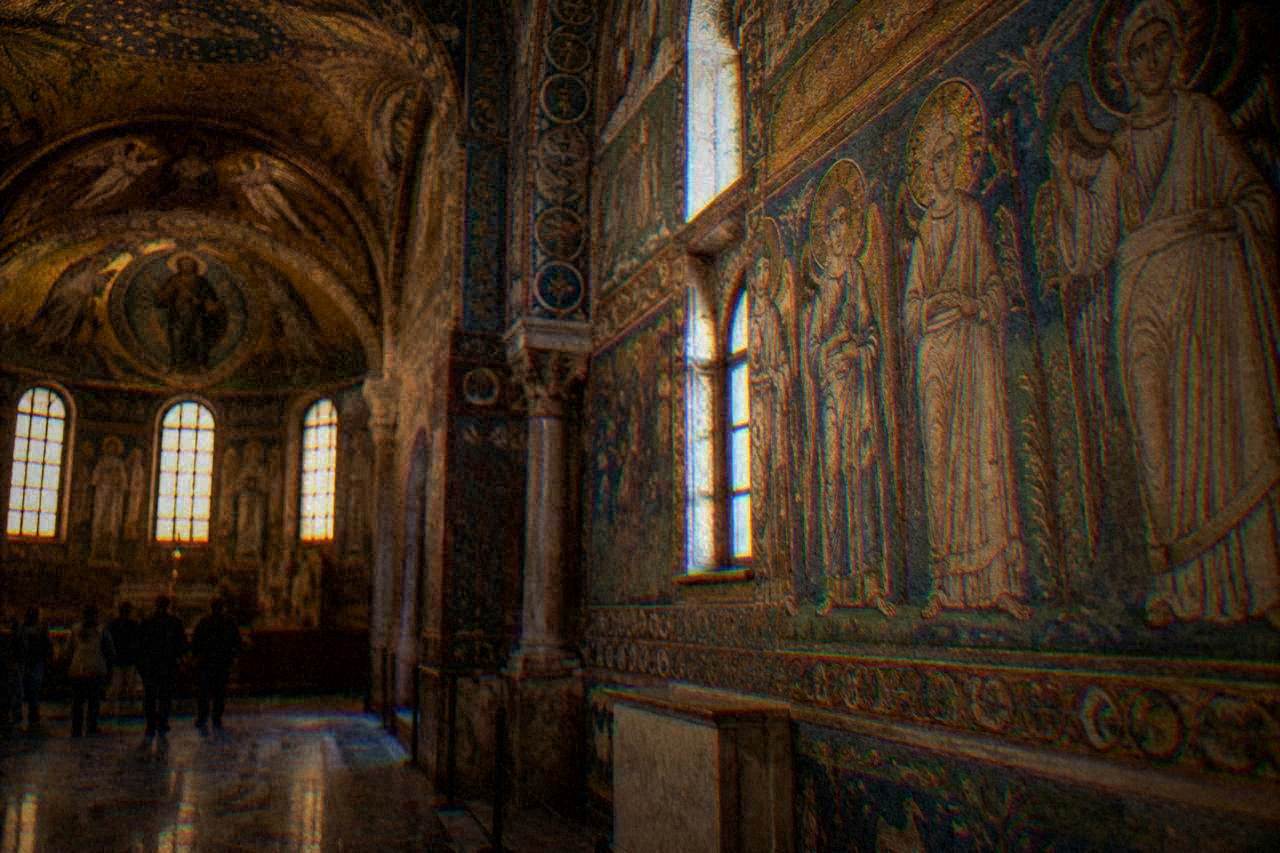
Why Does Ravenna Have So Many Mosaics?
Ravenna has so many mosaics because it served as the seat of imperial and royal courts in late antiquity, and each court, its clergy and its wealthy patrons commissioned church buildings lined with glass mosaic as the premium decoration of the era. The buildings survived later centuries largely intact, and UNESCO listed eight of them together in 1996, so the accumulation is still visible today in one walkable centre.
The short version is patronage plus survival. Ravenna was a capital city when mosaic was the most expensive wall covering a ruler could order, and the buildings raised for worship, baptism and burial were designed around mosaic surfaces rather than fresco. The UNESCO listing's own wording describes the monuments as Early Christian with Byzantine mosaics, and that framing is the safest one: the site's editorial desk reports what the listing says rather than dating each building, which the sources on this site do not carry.
What a visitor actually sees is consistent across the eight buildings. Gold-ground glass tesserae set at slight angles, so candlelight and daylight catch them from different directions. Figures rendered in coloured stone and glass on blue or gold fields. Basilica walls, dome vaults and burial vaults all treated as mosaic surfaces. The full inventory of where each cycle sits is covered in which famous mosaics to look for in Ravenna, a companion answer on this site.
Which Monuments Hold The Mosaics In Ravenna?
All eight UNESCO monuments hold mosaic decoration, and five of them sit inside the historic centre within a short walk of each other: San Vitale, the Mausoleum of Galla Placidia, the Neonian Baptistery, Sant'Apollinare Nuovo and the Archiepiscopal Chapel with its museum. The Arian Baptistery and the Mausoleum of Theodoric are also central, while Sant'Apollinare in Classe stands in the Classe area outside the centre.
The Ravenna Mosaici ticket page groups the central buildings into combined itineraries. Reduced fares start at EUR 9.50 for a two-monument ticket covering Sant'Apollinare Nuovo and San Vitale, EUR 11.50 for the four-monument ticket that adds Galla Placidia and the Neonian Baptistery, and EUR 13.50 for the five-monument version that adds the Archiepiscopal Museum and the Chapel of St Andrew. Full prices sit on the official page. The ticket is valid one week, allows one admission per monument, and an entry time must be booked for each monument. Galla Placidia and the Neonian Baptistery take mandatory timed entry with a stay of a few minutes each, and San Vitale admits in slots.
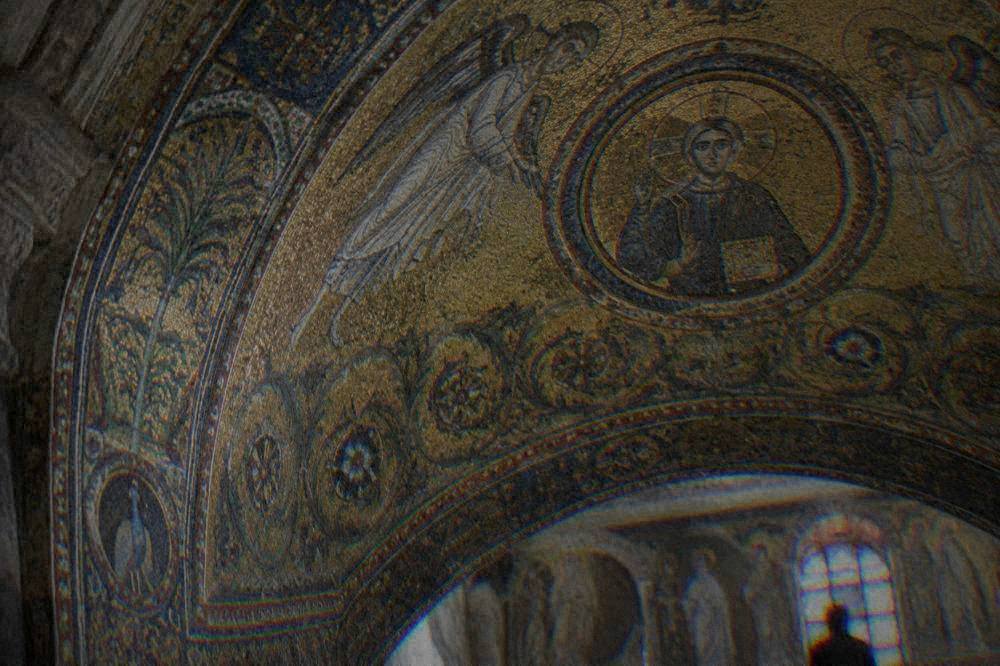
Here is how the eight monuments sit:
| Monument | Location | Ticket notes |
|---|---|---|
| San Vitale | Historic centre | Ravenna Mosaici combo, slot admission |
| Mausoleum of Galla Placidia | Historic centre | Combo, mandatory timed entry, brief stay |
| Neonian Baptistery | Historic centre | Combo, mandatory timed entry, brief stay |
| Sant'Apollinare Nuovo | Historic centre | Two-monument combo anchor |
| Archiepiscopal Chapel and Museum | Historic centre | Five-monument combo |
| Arian Baptistery | Historic centre | EUR 3 individual, per the cultura.gov.it listing |
| Mausoleum of Theodoric | Centre, Via delle Rocche area | EUR 6, concession EUR 5, EUR 2 ages 18 to 25 |
| Sant'Apollinare in Classe | Classe, outside the centre | EUR 6, EUR 2 reduced |
Sant'Apollinare in Classe, covered in detail on the page about the eight UNESCO sites in Ravenna, keeps its own hours on the cultura.gov.it listing: Monday to Saturday 8:30 to 19:00 and Sunday 13:30 to 19:00. The Ravenna Mosaici monuments run summer hours of 9:00 to 19:00 until 2 November 2026, then 10:00 to 17:00 from 3 November 2026 to 6 March 2027, closed 25 December and 1 January.
How Do You See The Ravenna Mosaics Without Rushing?
Plan two half-days rather than one: the five central monuments fit a single morning on the combo ticket if entry times are booked in advance, while Sant'Apollinare in Classe and the Mausoleum of Theodoric need separate travel and their own tickets. Booking an entry time per monument is mandatory on the combo, and Galla Placidia with the Neonian Baptistery allow only a few minutes inside on each timed stay.
A guided walk saves the sequencing work, because a guide arranges the rhythm around the timed entries and reads the iconography while you look. The mosaic monuments circuit suits this well:
The budget private option, a Walking Tour With Mosaics, is this page's featured pick for a first visit, and Check availability before locking monument entry times, since the walk's route and the timed slots need to agree. For a self-guided sequence, the half-day itinerary on this site, Ravenna mosaics in half a day, orders the central five around the booking rules. Ticket purchasing mechanics, including where to buy and what the reduced rates cover, sit in how and where to buy Ravenna mosaic tickets.
Why Did The Mosaic Tradition Survive In Ravenna?
The mosaics survived because the buildings that hold them stayed in continuous religious use, were built of brick on the flat Po plain and were later protected as heritage rather than rebuilt, and because the UNESCO inscription of 1996 tied the eight monuments into one managed ensemble with a shared ticket and conservation regime. Survival, not fresh production, is what makes the city dense with mosaic today.
That distinction matters. Ravenna is not a city where new mosaics are still being commissioned for its churches; it is a city where an unusually large share of the original glass surfaces was never plastered over, looted to bare wall or demolished. The materials themselves helped. Glass tesserae with gold leaf sandwiched between two glass layers do not fade the way paint does, so surfaces that were never restored still read as bright.
The tradition also left a living trace in the city's workshops. Ravenna still has working mosaic studios, and the Classis Ravenna museum, at EUR 8 full and EUR 6 reduced according to the museum's own listing, carries the city's story beyond the churches, including material moved from TAMO when that museum closed in 2023. The Classis Ravenna museum guide on this site covers what is there. For background on the city's wider role, see why Ravenna is so important.
| Where mosaics sit in Ravenna | Type of space | Access |
|---|---|---|
| The eight UNESCO monuments | Churches, baptisteries, mausolea | Combo or individual tickets |
| Classis Ravenna museum | Museum, in Classe | EUR 8 full, EUR 6 reduced |
| National Museum of Ravenna | Museum, centre | EUR 7 full, EUR 2 reduced |
| MAR art museum | Museum, centre | EUR 8 full, EUR 6 reduced |
The museums matter to the question because they hold detached mosaic floors and conservation material, which round out the picture the churches give. The Domus dei Tappeti di Pietra also holds excavated floor mosaics, but its hours vary by season and the ticketing conflicts between listings, so check the official page before going.
Do You Need A Guide For The Ravenna Mosaics?
A guide is not required, since every monument can be entered on a combo ticket alone, but the mosaics are dense with figures and inscriptions that carry no wall labels, so a guided walk converts decoration into explanation. Visitors who want the reading can join a group or private walk; visitors who want only to look can book timed entries and go at their own pace.
The choice is really about depth. The monuments themselves give a visitor almost no interpretive text, and a dome full of figures rewards knowing who is who. Private options run at group prices that render live on the listings, and this trio is the practical shortlist for this page:
Whatever the choice, book the monument entry times first or let the tour handle them, because the timed-entry rule at Galla Placidia and the Neonian Baptistery applies to everyone. How long the full circuit takes, paced honestly, is answered in how long it takes to see the mosaics in Ravenna, and the wider overview lives in the Ravenna mosaics guide.
Common Questions About Ravenna's Mosaics
Why does Ravenna have so many mosaics?
Because it was a seat of imperial and royal courts in late antiquity, when glass mosaic was the most prestigious wall decoration available, and the church buildings commissioned here survived with their mosaic surfaces intact. UNESCO listed eight of them together in 1996, which keeps the whole ensemble protected and ticketed as one group.
Are all eight UNESCO monuments in the centre of Ravenna?
Seven are in or near the historic centre. Sant'Apollinare in Classe stands in the Classe area outside the centre, and the Arian Baptistery and Mausoleum of Theodoric have their own tickets rather than the standard combo.
Do the Ravenna mosaics need a booked entry time?
The Ravenna Mosaici combo requires an entry time booked for each monument. Galla Placidia and the Neonian Baptistery take mandatory timed entry with a stay of a few minutes, and San Vitale admits in slots.
Can you see the mosaics without a tour?
Yes. The combo ticket covers independent entry to the central monuments for one week, one admission per monument. A guide adds interpretation rather than access, since the walls themselves carry little explanatory text.
Where are the best mosaics in Ravenna?
The gold-ground vaults of San Vitale and Galla Placidia, the dome of the Neonian Baptistery and the nave walls of Sant'Apollinare in Classe are the headline surfaces, and this site keeps a dedicated page ranking where to look.
Ravenna's mosaics are the product of patrons who could afford glass, buildings that were never stripped, and a listing that now keeps the eight monuments open on one shared system, and that combination is why one small inland city still reads as a mosaic capital.