What Are Some Of The Most Famous Mosaics In Ravenna, Italy?
The most famous mosaics in Ravenna, from the imperial panels of San Vitale to the star vault of Galla Placidia and the green paradise of Sant'Apollinare in Classe, with ticket and visiting notes.
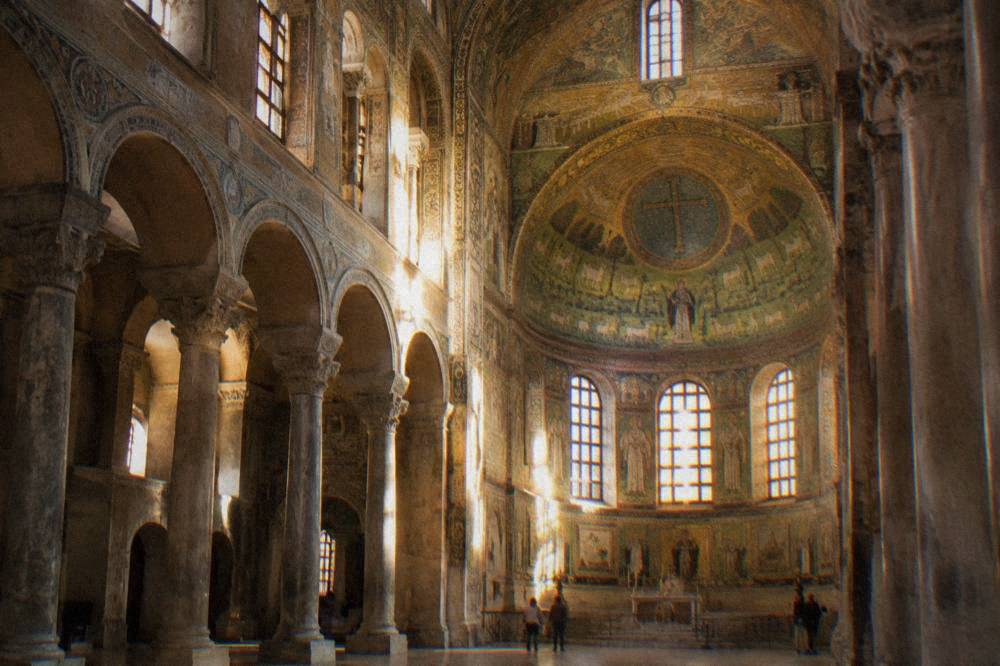
Ravenna, a flat Po-valley city in Emilia-Romagna whose historic centre sits inland about 8 km from the Adriatic, holds eight Early Christian monuments inscribed by UNESCO in 1996, and the gold-ground glass mosaics inside them are the entire reason for that listing. The UNESCO set runs from the Mausoleum of Galla Placidia and the Neonian Baptistery in the centre out to Sant'Apollinare in Classe beyond it, and the mosaics cover vaults, domes and walls rather than hanging as framed panels. This page walks through the cycles people travel for, what each one shows, and how the combo ticket ties them together.
What Are Some Of The Most Famous Mosaics In Ravenna, Italy?
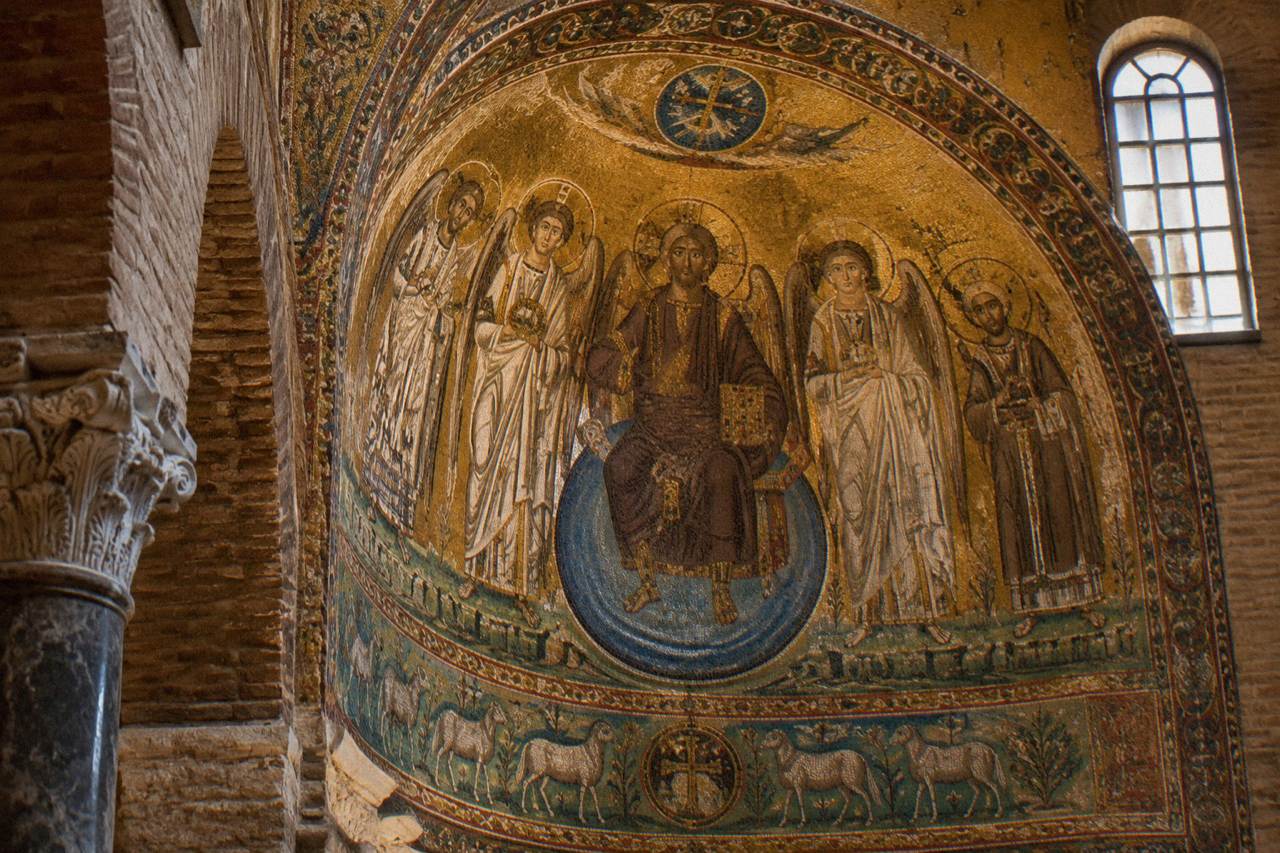
The most famous mosaics in Ravenna are the imperial court panels in San Vitale, the blue star vault of the Mausoleum of Galla Placidia, the dome of the Neonian Baptistery, the procession of figures along Sant'Apollinare Nuovo, and the green paradise apse of Sant'Apollinare in Classe. All five sit inside monuments on the UNESCO list of eight, and four of them are covered by a single Ravenna Mosaici combo ticket.
To see these mosaics in person, book a mosaic entry ticket here.
That shortlist is not a ranking of quality so much as a map of the city. San Vitale and the Neonian Baptistery stand a few streets apart near the centre, Galla Placidia sits in the same courtyard complex, Sant'Apollinare Nuovo lines the old processional street, and Sant'Apollinare in Classe lies in the Classe area outside the centre, reached by a short bus or taxi ride. A visitor with one full day can see all five, though the timed-entry rules at Galla Placidia and the Neonian Baptistery, where the Ravenna Mosaici terms allow only a few minutes inside, shape the day more than the walking does.
The things to do in Ravenna overview covers how these monuments slot into a wider itinerary, and the question of why Ravenna has so many mosaics explains how the city ended up with them at all.
San Vitale And The Imperial Panels
The Basilica of San Vitale holds the most reproduced mosaics in Ravenna: two facing panels showing a male and a female member of the imperial court with their retinues, set beside the apse vault where a youthful figure sits in a gold meadow. The church is one of the eight UNESCO monuments, and the Ravenna Mosaici combo ticket admits visitors in scheduled slots.
The two court panels are what almost every guidebook photograph of Ravenna comes from. Each shows a procession bearing gifts, rigidly frontal, against a gold ground that catches any amount of light. The apse above them carries the vault mosaic, a green landscape strip running beneath the central figures, an image so distinctive that Ravenna's tourism pages use it as the city's shorthand. Around the walls, smaller panels of prophets and evangelists hold books and scrolls.
San Vitale shares its courtyard with the Mausoleum of Galla Placidia and the Archiepiscopal Museum, so the three are visited as one cluster. The Ravenna Mosaici page lists summer hours of 9:00 to 19:00 from 8 March to 2 November 2026, moving to 10:00 to 17:00 from 3 November 2026 to 6 March 2027, with 25 December and 1 January closed. The 2-monument combo covers San Vitale together with Sant'Apollinare Nuovo; larger combos add the other sites. A dedicated guide to the Basilica of San Vitale goes deeper into what each panel shows.
Visitors who want the panels explained rather than simply seen have options. The Check availability link shows a guided walk built around these very cycles, and the site's page on Ravenna mosaic tours compares it against the others.
The Mausoleum Of Galla Placidia And Its Star Vault
The Mausoleum of Galla Placidia is famous for one of the earliest and most complete mosaic interiors in the city: a deep blue vault scattered with gold stars, over walls of deer, doves and apostles. Entry is by mandatory booked time slot under the Ravenna Mosaici rules, and the stay inside is limited to a few minutes, so the visit is short by design.
The cross-vault is the image people remember. On a ground of midnight blue, hundreds of small gold stars form a sky, and at the centre a figure stands with a cross. Below it, lunettes show a stag drinking at a stream, doves around a basin, and the apostles as lambs. The brick exterior gives no hint of any of this; the mausoleum reads as a plain small brick box until the door opens.
The Ravenna Mosaici terms of purchase state that the combo ticket is valid for one week, allows one admission per monument, and requires an entry time to be booked for each monument, with Galla Placidia and the Neonian Baptistery under mandatory timed entry. That means a traveller with a 4-monument or 5-monument combo still books a slot for Galla Placidia separately. The full guide to the Mausoleum of Galla Placidia unpacks the iconography scene by scene.
The Neonian Baptistery Dome
The Neonian Baptistery carries a dome mosaic showing the baptism of Christ by John the Baptist in the river Jordan, ringed by a procession of the twelve apostles walking toward an empty throne. It is one of the eight UNESCO monuments, entry is timed under the same Ravenna Mosaici rules as Galla Placidia, and it stands a short walk from the cathedral.
The dome is the whole show. At its centre, Christ stands waist-deep in the personified river while John lowers a bowl; around them the apostles process in two directions, and below the ring a decorative band of foliage and seats runs the full circle. The octagonal brick building is small, and the mosaic sits directly overhead, which is why the visit runs to a few minutes: there is one thing to look at, and it is above you. The wider set of guides lives on Ravenna Travel Guide.
Because both timed-entry monuments sit in the same ticket family, the practical advice on how long it takes to see the mosaics in Ravenna matters here. Slots at the two baptistery-class sites are short, and the walk between clusters is what fills the day. The Neonian Baptistery guide covers the dome in full.
Sant'Apollinare Nuovo And The Processions
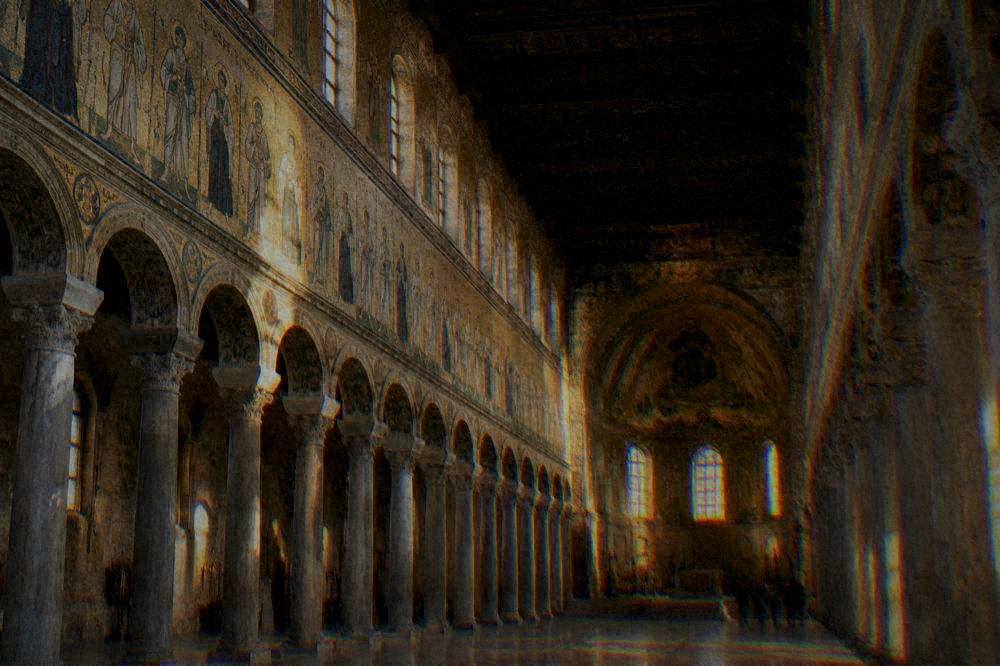
Sant'Apollinare Nuovo is famous for the two processions that run the full length of its nave walls: a line of female figures moving toward one end and a line of male figures toward the other, above smaller scenes set against a gold ground. It is part of the 2-monument combo together with San Vitale, and both monuments take the same day ticket.
The nave mosaic is a single unbroken narrative. One wall carries the female procession, the other the male, both rendered as near-identical figures differing in dress and setting, with the port of Classe and the palace front shown at the ends. Below them, a strip of small scenes runs toward the apse. The basilica's plain brick outside again prepares a visitor for nothing.
The Visit Ravenna pages describe the basilica as one of the eight UNESCO monuments, and the Ravenna Mosaici summer hours of 9:00 to 19:00 apply to it directly. The dedicated guide to the Basilica of Sant'Apollinare Nuovo gives the scene-by-scene reading.
Sant'Apollinare In Classe And The Green Paradise
Sant'Apollinare in Classe holds the most celebrated apse in the Ravenna group: a figure standing in a green landscape among sheep and stylised trees, beneath a gold sky with a jewelled cross at its centre. The basilica sits in the Classe area outside the centre, opens Monday to Saturday 8:30 to 19:00 and Sunday 13:30 to 19:00, and costs EUR 6 full or EUR 2 reduced.
The apse is the only major mosaic in the group that replaces gold with green. Instead of a court or a procession, it shows a shepherd figure in a flowering meadow, a deliberate image of paradise. Above, the vault band carries the transfiguration sign: a jewelled cross on a starry ground. The interior is larger and quieter than the centre-city sites, and the Classis Ravenna museum stands in the same area for visitors combining the trip.
The cultura.gov.it listing gives the hours and prices above, with last admission 30 minutes before closing and closures on 25 December and 1 January. The guides to Sant'Apollinare in Classe and Classe cover the trip out and what else sits there.
How The Combo Ticket Covers The Famous Mosaics
The Ravenna Mosaici combo ticket covers the famous mosaic monuments in tiers: a 2-monument ticket for Sant'Apollinare Nuovo and San Vitale, a 4-monument ticket adding Galla Placidia and the Neonian Baptistery, and a 5-monument ticket adding the Archiepiscopal Museum and Chapel of St Andrew, with reduced fares starting at EUR 9.50 and validity of one week.
The Ravenna Mosaici prices page lists the reduced fares for each tier, with the reduced rate applying to students, non-accredited journalists and paying groups over 20, and free entry for children 0 to 10, Ravenna residents, ICOM members, licensed guides, and disability with companion. The full-price figures sit on the same official page.
| Ticket or monument | What it covers | Reduced fare | Notes from the official pages |
|---|---|---|---|
| Ravenna Mosaici, 2 monuments | Sant'Apollinare Nuovo + San Vitale | EUR 9.50 | Valid one week, one admission per monument |
| Ravenna Mosaici, 4 monuments | Adds Galla Placidia + Neonian Baptistery | EUR 11.50 | Timed entry mandatory at both added sites |
| Ravenna Mosaici, 5 monuments | Adds Archiepiscopal Museum + Chapel of St Andrew | EUR 13.50 | Booking an entry time per monument applies |
| Mausoleum of Theodoric | Theodoric alone | EUR 5 concession, EUR 2 ages 18 to 25 | EUR 6 full; combined with Arian Baptistery and Theodoric's Palace EUR 7 |
| Sant'Apollinare in Classe | The Classe basilica | EUR 2 | EUR 6 full, per the cultura.gov.it listing |
State museums and monuments, including Sant'Apollinare in Classe and the Mausoleum of Theodoric, are reported free on the first Sunday of the month. The answers on where to buy tickets for the Ravenna mosaics and purchasing tickets for the five UNESCO sites give the buying routes, and the Ravenna combo ticket guide works through the tiers in detail.
Beyond the five headline cycles, the Arian Baptistery holds its own smaller dome mosaic for EUR 3, the Archiepiscopal Chapel sits inside the 5-monument ticket, and the Classis Ravenna museum, EUR 8 full and EUR 6 reduced, displays mosaic material in the Classe area. The Domus dei Tappeti di Pietra is a separate ancient floor complex whose hours vary by season, so its official page holds the live times.
For travellers arriving without a car and without a plan, guided options exist that bundle the interpretation. The trio below spans a city walk focused on the celebrated cycles and two day-trip formats starting from Bologna for visitors based there.
Common Questions About Ravenna Mosaics
What are some of the most famous mosaics in Ravenna, Italy?
The imperial panels in San Vitale, the star vault of the Mausoleum of Galla Placidia, the baptism dome of the Neonian Baptistery, the twin processions in Sant'Apollinare Nuovo, and the green paradise apse of Sant'Apollinare in Classe are the five cycles Ravenna is known for. All sit inside monuments on the UNESCO list of eight.
Where are the best mosaics in Ravenna?
The densest cluster is around San Vitale, Galla Placidia and the Neonian Baptistery, all within a short walk of each other. The best mosaics in Ravenna answer maps them by cluster and ticket tier.
Can I see the famous mosaics in half a day?
Yes, with timed slots booked. The itinerary Ravenna mosaics in half a day sequences the centre-city monuments around the short stays at Galla Placidia and the Neonian Baptistery.
Is Sant'Apollinare in Classe included in the combo ticket?
It is a state monument priced separately, EUR 6 full and EUR 2 reduced per the cultura.gov.it listing, rather than part of the Ravenna Mosaici tiers. It lies in the Classe area outside the centre, so it needs a bus or taxi ride.
Do the mosaic monuments close in winter?
No. The Ravenna Mosaici sites move to 10:00 to 17:00 from 3 November 2026 to 6 March 2027 and close only on 25 December and 1 January. Sant'Apollinare in Classe keeps its Monday to Saturday 8:30 to 19:00 and Sunday 13:30 to 19:00 hours.
Taken together, the five famous cycles explain why a small inland city on the Po plain carries a UNESCO inscription and a steady stream of visitors who come for nothing else: the mosaics are not scattered highlights but a coherent body of work, readable in a day, and the ticket system that links them makes that day straightforward to plan.