Bologna Day Trip From Ravenna
Bologna sits about 84 km from Ravenna by direct regional train, which puts it within reach of a single day. This guide sets out what the timetables and official pages say, and how to divide the hours.
Short answer
A Bologna day trip from Ravenna works on the direct regional train, about 84 km via Castelbolognese, with fastest runs about 57 to 60 minutes and typical journeys 1 hour to 1 hour 20. Fares are shown at booking.
Ravenna is an inland city on the flat Po plain of Emilia-Romagna, about 8 km from the Adriatic coast, and Bologna is the regional capital that sits inland of it. The two are tied together by a direct regional rail line via Castelbolognese, about 84 km, which makes Bologna the day trip the timetables make easiest: the fastest runs take about 57 to 60 minutes and typical journeys run 1 hour to 1 hour 20, according to the timetable and aggregator summaries. Many people arrive in the region for the eight UNESCO Early Christian monuments and Dante's tomb, then wonder whether Bologna deserves one of their days. The short answer is that it does, and this guide lays out the train reality, the shape of a one-day visit and the ways a guided tour can replace the logistics entirely.
The case for Bologna is straightforward. It is the largest city in Emilia-Romagna, a university city with a medieval core of porticoed streets and brick towers, and a food culture that the whole region trades on. The dishes Ravenna is known for, cappelletti and piadina above all, belong to the same Romagna table that Bologna shares from its side of the regional border. A day there complements rather than repeats a Ravenna stay. The pages on things to do in Ravenna and the one day in Ravenna itinerary cover the mosaics side; this page covers the train out and back.
How Long Is The Train From Ravenna To Bologna?
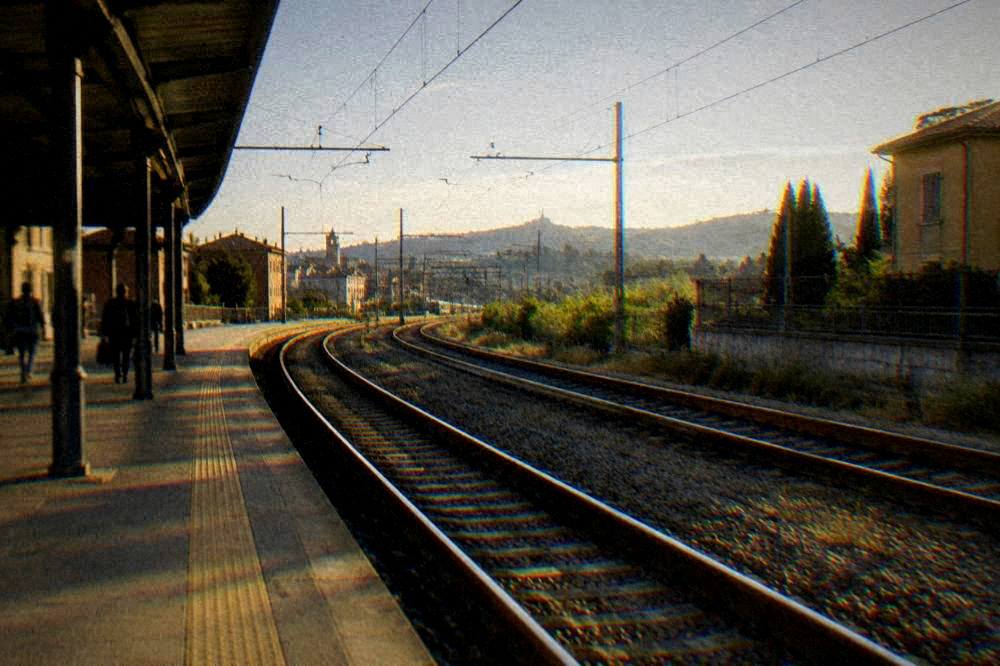
The train from Ravenna to Bologna Centrale is a direct regional service via Castelbolognese, about 84 km, with the fastest runs taking about 57 to 60 minutes and typical journeys running 1 hour to 1 hour 20. These figures come from the regional timetable and aggregator summaries. The fare is shown at booking on the operator's ticket channels.
Ready to compare rail and coach options? Book a train or bus ticket here.
There is no high-speed option on this corridor. The route is regional all the way, which has two practical consequences. First, the train stops at intermediate stations, which is why the same journey can vary between roughly an hour and an hour and twenty minutes depending on the departure. Second, seats are not reserved in the way they are on fast trains, so a ticket bought for the day can generally be used on a regional service, subject to validation rules printed on the ticket itself.
The scheduling question, how many trains run and at what intervals, is answered in detail on the page how often do trains run from Bologna to Ravenna. The safe planning frame is "regular regional services" rather than a precise interval: departures are spread across the day, and the last returns run late enough for an evening in Bologna, but the live timetable is the only authority worth trusting for a specific date.
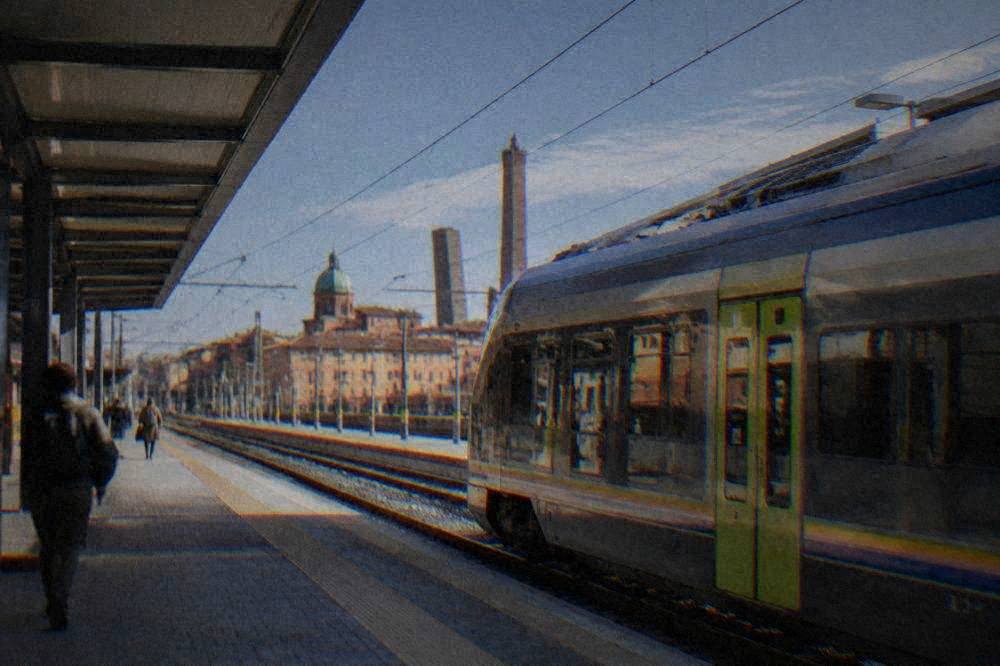
A few practical points from the timetable's own structure:
- Ravenna's station is a short walk from the historic centre, so getting to the platform adds little time.
- Bologna Centrale is a large terminus; allow a few minutes to find the correct exit toward the centre.
- Return journeys in the evening are regional too, so the same 1 hour to 1 hour 20 range applies in both directions.
The question of trains from the airport, for anyone flying out of Bologna BLQ after a Ravenna stay, is separate: the route is the Marconi Express to Bologna Centrale and then a regional train, about 2 to 2.5 hours door to door, covered on Bologna airport to Ravenna and the answer page can you get a train from Bologna airport to Ravenna.
Is Bologna Worth A Day Trip From Ravenna?
Bologna is worth a day trip from Ravenna whenever the interest is food, porticoes and a big working city rather than mosaics, because the two cities offer almost nothing in the way of overlapping sights. Ravenna's eight UNESCO monuments have no equivalent in Bologna, and Bologna's medieval towers and porticoed streets have no equivalent in Ravenna. A day in each city duplicates nothing.
The comparison is written up at length on the Ravenna vs Bologna page. The short version is that Ravenna is small, flat and walkable, with a compact historic centre and a visit shaped around the mosaic monuments, while Bologna is larger, busier and more of a general city break: a university quarter, long porticoed streets, markets and a food scene that draws people for its own sake.
The planning question is how the two fit together. A common shape is two or three nights in Ravenna with one of those days given to Bologna, which is the structure the two days in Ravenna and three days in Ravenna itineraries suggest adapting. Doing Bologna as a day trip rather than a hotel change also avoids packing and checking in twice for a single day away.
For anyone who would rather not manage the trains and the routing alone, guided options run in both directions. There is a guided day trip that starts in Bologna or Ravenna and covers the Ravenna mosaics with a guide:
The alternative is to travel independently and take a guided walk on arrival, which is what the picks above also allow when the starting point is Ravenna itself.
What Should A One-Day Bologna Itinerary From Ravenna Look Like?
A one-day Bologna itinerary from Ravenna should be built around a morning train out, four to six hours in the city, and an evening return, because the journey runs 1 hour to 1 hour 20 each way and the city's core sights cluster within a walk of Piazza Maggiore. The shape that works is a morning arrival, the central square and towers before lunch, food and the portico quarter after, and a late-afternoon or evening train back.
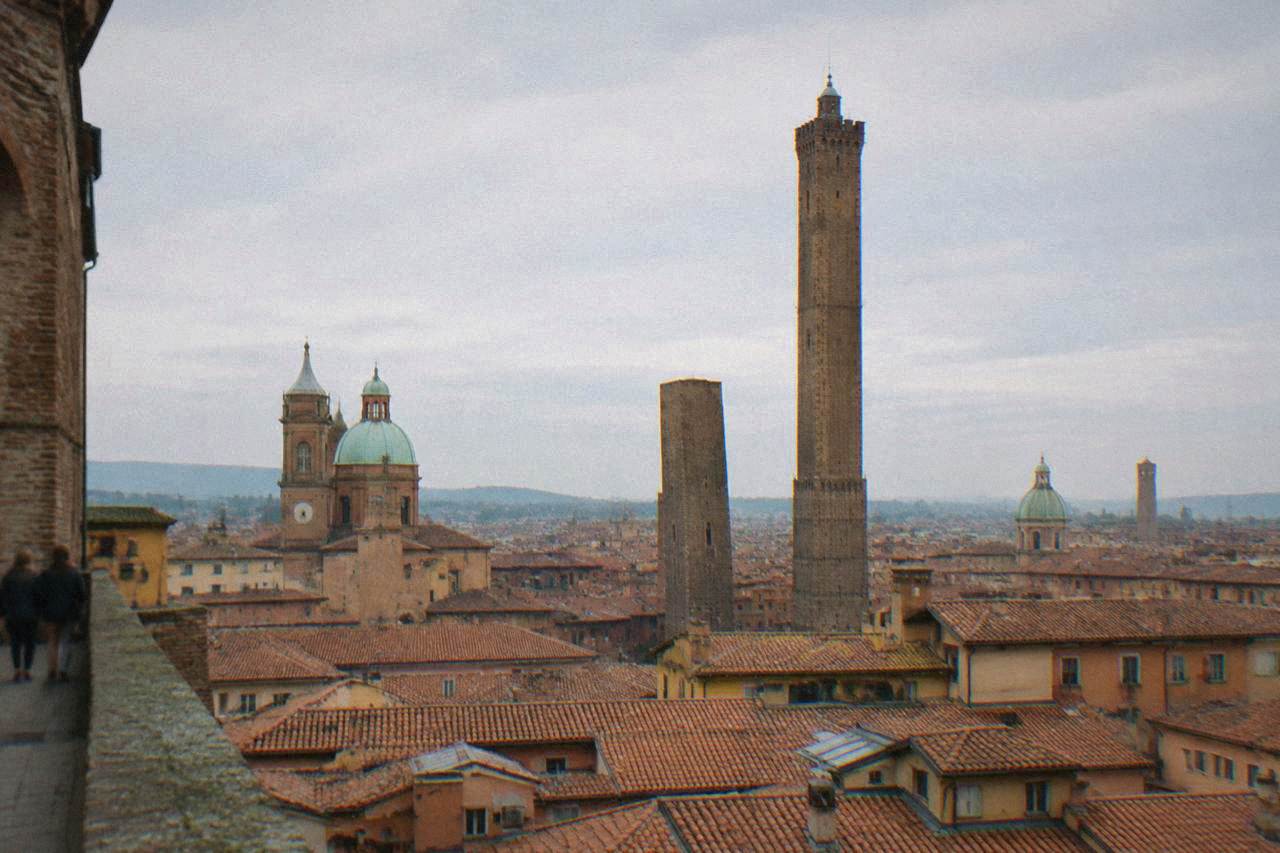
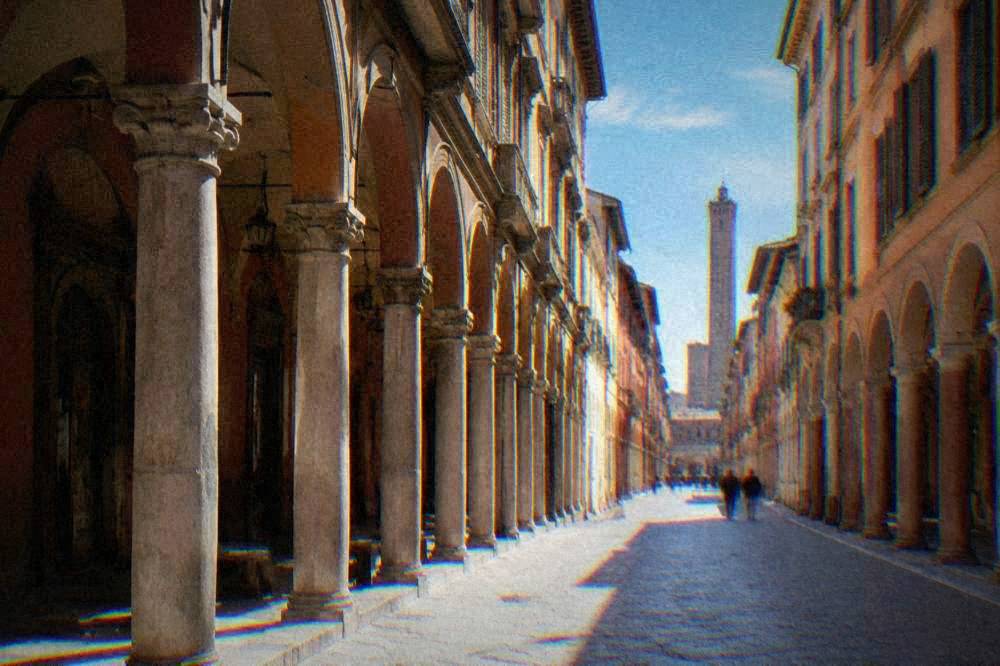
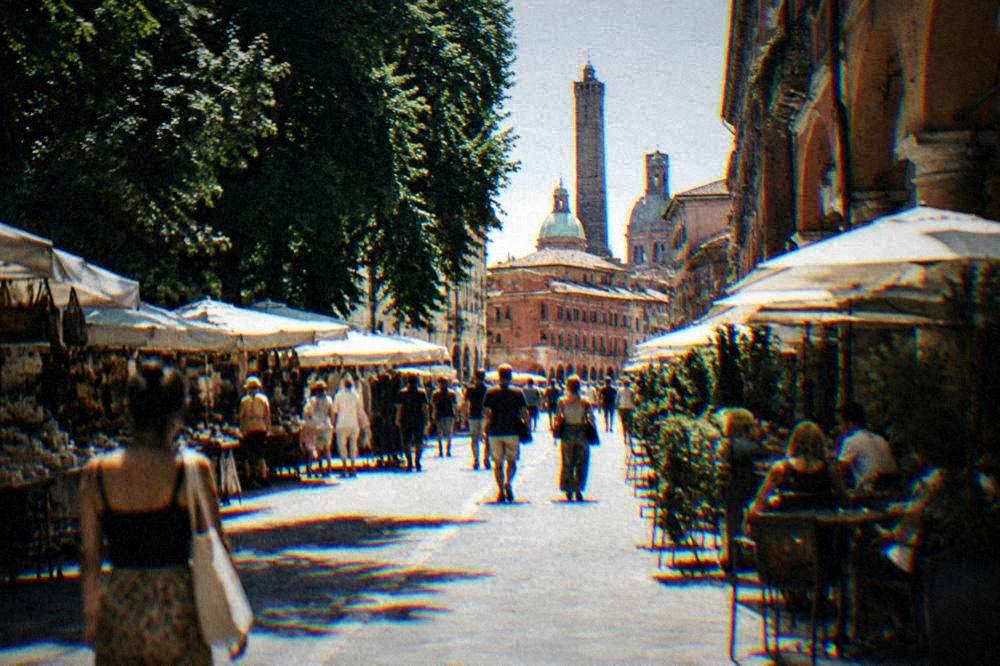
Bologna's centre is compact in the way that matters for a day trip: the two leaning towers, Piazza Maggiore, the Basilica di San Petronio and the market streets around the Quadrilatero all sit within a short walk of one another. A day visitor does not need transport inside the city once off the train at Bologna Centrale, which is itself connected to the centre by a direct street.
A sample frame, using only distances a walker can judge on arrival:
| Time | Where | What It Gives |
|---|---|---|
| Morning train | Ravenna station | Direct regional service, about 84 km |
| Mid-morning | Piazza Maggiore and San Petronio | The main square and the city's large basilica |
| Lunch | Quadrilatero market streets | The food quarter behind the square |
| Afternoon | Two Towers and portico walk | The landmark towers and the covered streets |
| Late afternoon | Return train from Bologna Centrale | Back in Ravenna for the evening |
The frames that fail are the ones that overpack. Adding a second city to the same day, Bologna plus Ferrara or Bologna plus Modena, turns the day into a timetable exercise, and the day-trip pages for Ferrara and Faenza are better used as alternatives on separate days.
What Is There To Do In Bologna Beyond The Centre?
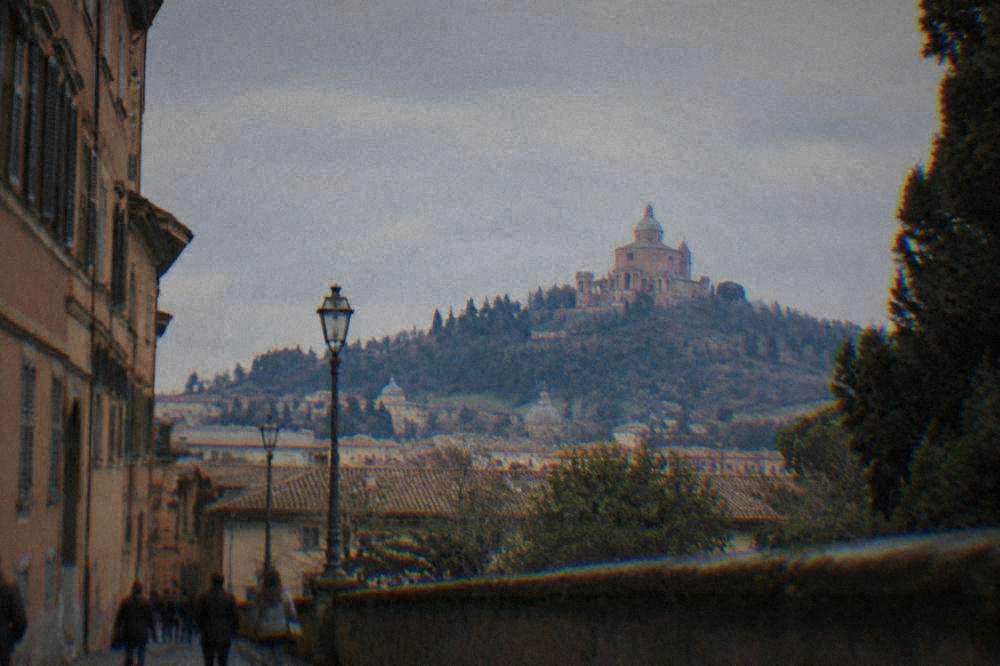
Beyond the centre, Bologna offers the Basilica di San Luca reached by the world-famous portico climb, the university quarter with its historic buildings, and a set of museums spread across the city, all reachable on foot or by the city's local transport. None of these needs a car, and none of them requires more than a half-day each, which is why they suit a day trip with a late return.
The San Luca portico is the one excursion that changes the shape of the day. It is a long covered walkway climbing to a basilica above the city, and doing it takes a solid block of time and reasonable legs. A day visitor who wants it should either make it the afternoon's single activity or accept an evening return train.
The university quarter, by contrast, costs nothing to walk through. Bologna's university is one of the defining institutions of the city, and its historic heart sits a short way from the Two Towers. Museums cluster nearby, including the city's archaeological and art collections, and opening hours and ticket prices are posted at each museum's own entrance and website.
For a sense of how the region's day trips compare in character:
| Day Trip From Ravenna | Character | Travel Basis |
|---|---|---|
| Bologna | Big city, food, porticoes | Direct regional train |
| Ferrara | Renaissance city, cycling | Train connection |
| Faenza | Ceramics town | Train connection |
| Rimini | Beach resort and Roman core | Regional train, about 42 to 58 minutes |
| Comacchio | Lagoon town, flamingos | See the Comacchio day-trip page |
The good day trips from Ravenna answer page expands the list, and Rimini and Comacchio have their own pages.
Where Should You Eat On A Bologna Day Trip?
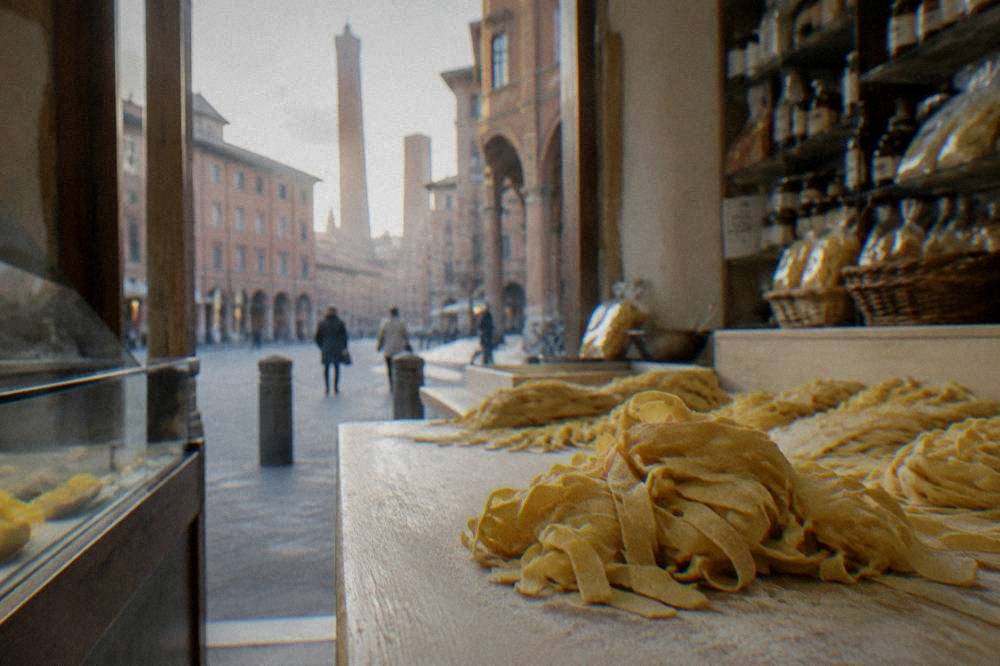
Eating well on a Bologna day trip means lunch in the Quadrilatero market streets or a trattoria near the centre, where the Romagna and Emilia table overlaps with Ravenna's own: tagliatelle, mortadella, tortellini in broth and the piadina that both cities share. Prices are posted at each establishment, and a cover charge, the coperto, is legal when printed on the menu. Tipping is not obligatory.
The food overlap between the two cities is real. Ravenna's cappelletti and piadina, described on the piadina romagnola and cappelletti pages, sit on the same regional table as Bologna's tortellini. A visitor who eats their way through Ravenna will recognise half of a Bologna menu, and the other half, the Bologna-specific pasta shapes and cured meats, is the reason to reserve a proper lunch stop rather than grazing.
No individual restaurants are named. What can be said is structural: the market quarter behind Piazza Maggiore concentrates food shops and quick counters, the streets radiating outward hold sit-down trattorias, and the itemised bill should show the coperto as a separate line when it applies.
A planning table for the food day:
| Meal | Where To Aim | Notes |
|---|---|---|
| Coffee on arrival | Near Piazza Maggiore | Counter service, stand at the bar |
| Lunch | Quadrilatero or a trattoria | Main meal of the day |
| Afternoon | Market streets | Cheese, cured meats, pastry stops |
| Evening | Back in Ravenna | Trains run into the evening |
Wines from the region are covered on the Romagna wines page, and the wider Ravenna food scene, including where the food tours run, is on Ravenna food tours and cooking classes.
Should You Take A Guided Tour Or Travel Independently?
Taking a guided tour instead of travelling independently suits anyone who wants the Ravenna mosaics explained rather than just entered, because the guided options include admission and a local expert, while independent travel suits confident walkers who are happy with the regional train and a map. Both work on the same day-trip radius: the decision is about depth of commentary, not distance.
The independent route is described above: train out, walk, eat, train back. Its costs are the fare, shown at booking, and whatever lunch costs. Its risks are timetable errors and a day spent finding the way rather than looking.
The guided route replaces the navigation with a fixed structure. The featured option on this page runs from Bologna or Ravenna and covers the Ravenna mosaics with a guide, which means it works in the other direction too: a visitor based in Bologna can use it to see Ravenna. The listing shows the current price, rating and inclusions.
For visitors who want a private structure inside Ravenna itself, either before or after the Bologna day, two further options fill the same role:
Booking conditions, cancellation terms and what each ticket includes are shown on each operator's live listing.
What Does A Bologna Day Trip Cost?
A Bologna day trip costs the regional train fare, shown at booking, plus lunch and any museum or tower entry paid on the day, and nothing else that is fixed: the city's streets, porticoes, squares and the walk to San Luca cost nothing to see.
What can be broken down is the structure of the spend. The table below lists the cost blocks and where the live figure is held:
| Cost Block | Who Sets It | Where The Figure Lives |
|---|---|---|
| Return train, Ravenna to Bologna | Rail operator | Ticket channels at booking |
| Lunch and the coperto | Each restaurant | The menu and the bill |
| Tower climb, museums | Each institution | At the entrance |
| Guided day tour | Tour operator | The operator's live listing |
| Local buses in Bologna | City transport | At the ticket machine |
Two tips that carry no numbers. First, a day trip's cheapest version is the walking version: Bologna's core rewards pedestrians and charges them nothing. Second, the guided tour version converts the whole day into a single known price, which some travellers prefer for budgeting even before any discount is applied.
The budget question for the Ravenna end of the trip, including free monuments such as Dante's tomb, is covered on Ravenna on a budget and free things to do in Ravenna.
What Is The Best Time Of Year For A Ravenna And Bologna Pairing?
The best time of year for a Ravenna and Bologna pairing is spring through early autumn for long daylight and full opening hours, with a caveat from the climate table: July is the warmest month in Ravenna at a mean of 25.2 C and November is the wettest at 78.3 mm, while July is also the driest month at 38.1 mm. Winter visits work, with shorter monument hours from 3 November 2026.
These figures are modelled ERA5 normals for the 1991 to 2020 period, which is what this site holds for Ravenna's climate, and they describe Ravenna rather than Bologna; the two cities sit close enough on the Po plain that the seasonal shape transfers. The full breakdown, month by month, is on the Ravenna weather page and the best time to visit Ravenna guide.
The seasonal factors that matter for this specific pairing:
| Season | Ravenna Monuments | Day-Tip Suitability |
|---|---|---|
| Spring | Full summer hours from 8 March 2026 | Long days, moderate rain |
| Summer | 9:00 to 19:00 to 2 November 2026 | Warmest, July mean 25.2 C |
| Autumn | Winter hours from 3 November 2026 | November wettest at 78.3 mm |
| Winter | 10:00 to 17:00, closed 25 December and 1 January | Short days, indoor-focused |
The hours above are the Ravenna Mosaici hours for the five central monuments, from the official ticket page. A Bologna day itself is largely indoor-and-portico shaped, which makes it a reasonable rainy-day substitute for the coast; the same logic drives the Ravenna in the rain page.
How Does A Bologna Day Trip Fit A Longer Ravenna Stay?
A Bologna day trip fits a longer Ravenna stay as the second or third day: one day covers Ravenna's core mosaics, a second adds the outlying monuments and Classe, and the Bologna day slots in whenever the forecast or the legs call for a city of a different character. The train timing is stable across the year, so the choice is about energy, not season.
The canonical splits are written out on the itinerary pages. One day in Ravenna concentrates the centre; two days adds breathing room and the Classe basilica; three days is the first length at which a full Bologna day fits without sacrificing Ravenna's own depth. The half-day mosaic plan on Ravenna mosaics in half a day is the tool for anyone who arrives late and wants a first evening of mosaics before the Bologna day.
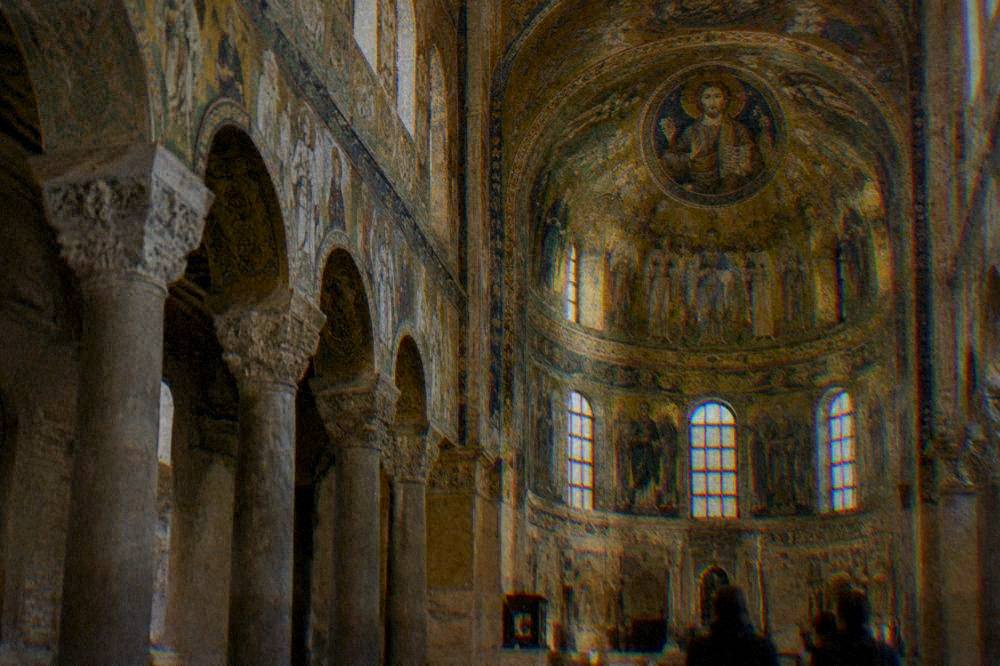
For visitors weighting the trip toward Ravenna's own heritage, the ordering advice is simple: see the mosaics first, in Ravenna, before the Bologna day. The eight UNESCO monuments, listed and mapped on the Ravenna UNESCO sites page, are the reason the region draws long-haul visitors, and the combo-ticket mechanics, one week of validity, one admission per monument and booked entry times, are explained on the Ravenna combo ticket guide. Bologna then arrives as a contrast rather than a competitor.
Cruise visitors, who berth at Porto Corsini about 15 km away, face a different calculation and one where Bologna usually loses to the nearer sights: that case is argued on the Ravenna cruise port day page and the cruise port guides, with the shuttle taking about 30 minutes between the terminal and the centre.
Common Questions About A Bologna Day Trip From Ravenna
How long is the train from Ravenna to Bologna?
The direct regional train via Castelbolognese covers about 84 km, with the fastest runs about 57 to 60 minutes and typical journeys 1 hour to 1 hour 20. The answer page on how long is a train ride from Bologna to Ravenna has the detail, and the fare is shown at booking.
Is Bologna worth a day trip from Ravenna?
Yes, whenever the interest is food, porticoes and a large working city, because Bologna's sights barely overlap with Ravenna's UNESCO mosaics. The comparison is set out on the Ravenna vs Bologna guide.
Do you need to book the Ravenna to Bologna train in advance?
The service is regional, and regional tickets are not tied to a reserved seat in the way high-speed tickets are. Check the validation rules printed on the ticket and buy through the operator's own channels for the live fare.
Can you do Bologna and Ravenna in one day?
It is possible to see a slice of each, but the pairing works better across two or more days. A day of mosaics in Ravenna followed or preceded by a Bologna day, using the direct train, duplicates nothing.
What is there to eat in Bologna on a day trip?
Tagliatelle, tortellini in broth, mortadella and the shared Romagna table that includes piadina. The coperto is legal when printed on the menu, and tipping is not obligatory.
Is a guided Bologna or Ravenna tour better than going alone?
A guided tour suits visitors who want commentary and included admission, while independent travel suits confident walkers. The guided options and their live prices are shown through the tour listings on this page.
The pair of cities, joined by about 84 km of regional rail, rewards exactly this kind of split week: mosaics and quiet streets on one side, towers and porticoes on the other, with the train doing the work between them. More of the reasoning, including the full day-trip menu from Faenza to the Po Delta, is collected across the day-trip section of Ravenna Travel Guide, starting with good day trips from Ravenna.