What Is The History Of Ravenna, Italy?
The full history of Ravenna, from Roman port to imperial capital, Ostrogothic court, Byzantine rule and papal city, told through the monuments and mosaics you can still visit.
Ravenna is an inland city on the flat Po plain of Emilia-Romagna, about 8 km from the Adriatic coast, and its past is the reason it looks the way it does today. Eight Early Christian monuments with Byzantine mosaics make up its UNESCO World Heritage entry, listed in 1996, and the sequence of powers that ruled here, Roman, Ostrogothic, Byzantine, Venetian and papal, each left a layer a visitor can still read in the brick and the gold. The full story is on the site's Ravenna history guide, and this page answers the question in order, era by era.
What Is The History Of Ravenna, Italy?
Ravenna's history is the story of a Roman lagoon city that rose to become an imperial capital, then the seat of an Ostrogothic kingdom under Theodoric, then a western outpost of Byzantine rule, before slipping into centuries of quiet under Venice and the Popes. What makes it unusual is that each era's buildings survived, so the sequence of powers is still visible in one small, walkable centre. UNESCO inscribed eight Early Christian monuments as a single World Heritage entry in 1996.
The city began as a settlement threaded with canals, connected to the sea through the Roman port of Classe a few kilometres away. Ships docked at Classe, grain and goods moved inland, and Ravenna grew rich on trade long before any emperor arrived. The harbour has since silted up, and the modern visitor reaches the basilica of Sant'Apollinare in Classe, one of the eight UNESCO monuments, through flat farmland where the port water once stood.
That geography matters for understanding everything that follows. Ravenna was defensible, close to the sea route to the eastern empire, and far enough from the old political centres of Italy to suit rulers who wanted a fresh start. The same flatness that once made it a port city now makes it a compact place to explore on foot, as the one day in Ravenna itinerary shows.
How Did Ravenna Become An Imperial Capital?
Ravenna became a capital in late antiquity, when the imperial court moved here and the city replaced the older capitals of the west. The court brought money, marble and mosaicists, and the buildings raised in that period, including the Mausoleum of Galla Placidia and the Neonian Baptistery, are among the earliest and finest of the UNESCO monuments. Galla Placidia, a member of the imperial family, is named on the UNESCO listing in connection with her mausoleum.
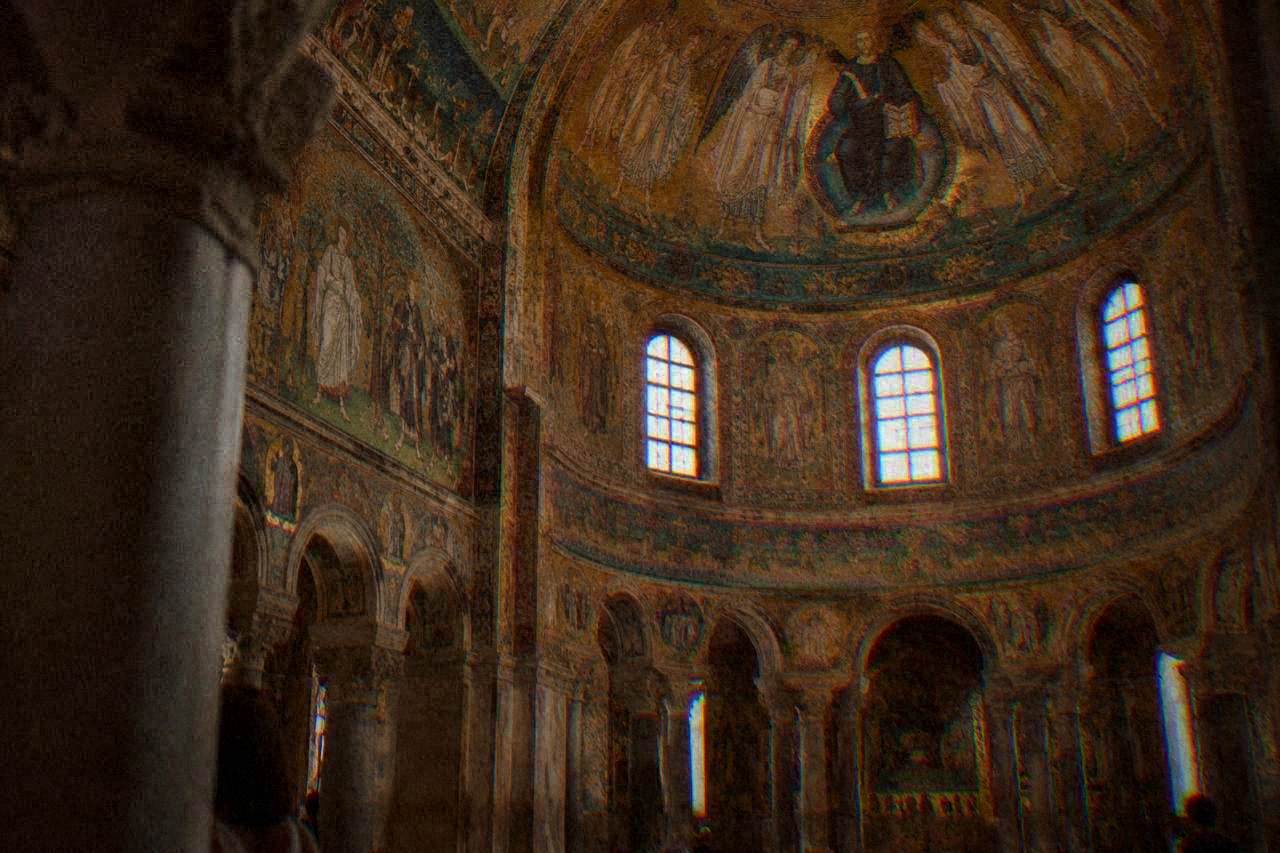
The move changed everything. A provincial port suddenly needed palaces, churches and a court administration, and the workshops that arrived with the court developed the gold-ground glass mosaic technique that Ravenna is famous for. The Mausoleum of Galla Placidia, a small brick cross-shaped chapel, carries mosaics on a deep blue ground that the UNESCO citation itself singles out. The Neonian Baptistery, a plain brick drum outside, holds a domed interior where the mosaic decoration is so complete that it sets the pattern for every baptistery that followed in the region.
The imperial phase was short as centuries go, but its artistic standards were not. The mosaicists trained here stayed, or their workshops did, and the level of craftsmanship carried forward into the next era's commissions. Visitors who want the short version of which building belongs to which moment can follow the eight UNESCO sites of Ravenna page, which lists all eight monuments by name.
What a visitor sees today is the result of continuous use rather than ruin. Several of these buildings have served as churches without long interruptions, which is a large part of why the mosaics survived in place rather than in fragments.
What Did Theodoric's Rule Leave Behind In Ravenna?
Theodoric, the Ostrogothic king, made Ravenna the capital of his kingdom and left the city some of its most distinctive buildings, above all the Mausoleum of Theodoric, a two-storey monument capped with a single enormous block of stone, listed by UNESCO among the eight. His reign also produced the Arian Baptistery and the basilica now known as Sant'Apollinare Nuovo, both part of the same World Heritage entry. His court kept the local mosaic workshops in full production.
Theodoric ruled as a king in Ravenna while formally acknowledging the eastern emperor, and his building programme shows a kingdom performing Romanness in brick and gold. Sant'Apollinare Nuovo, a long basilica with aprocession of figures running along each side wall of the nave, was his palace church, and the mosaics there include portraits of the city of Classe and of Ravenna itself, rendered as port cities with ships and walls, a valuable record of how the place looked when the harbour still worked.
The Mausoleum of Theodoric stands apart from the centre, in a quieter zone of its own. The Visit Ravenna page for the Mausoleum of Theodoric lists a ticket at EUR 6, a concession at EUR 5 and EUR 2 for ages 18 to 25, with a combined ticket at EUR 7 covering the Arian Baptistery and Theodoric's Palace, and last admission 30 minutes before closing. The Arian Baptistery is a small domed building, and its mosaic dome shows a baptism scene directly comparable to the earlier Neonian version a short walk away, which is one of the more instructive pairings in European art.
The Archiepiscopal Chapel, the smallest of the UNESCO monuments, also belongs to this late antique Christian world and is reached through the Archiepiscopal Museum. A dedicated Mausoleum of Theodoric guide covers the monument in detail.
The Ostrogothic period is also the moment when the two baptisteries tell a political story. One faith community, one court, and two baptismal halls, one for the Catholic congregation and one for the Arian court, still standing a few streets apart. A guided walk through the monuments puts that rivalry into words on the ground, and the site's mosaic tours in Ravenna page lists the options.
What Happened To Ravenna After Byzantine Rule?
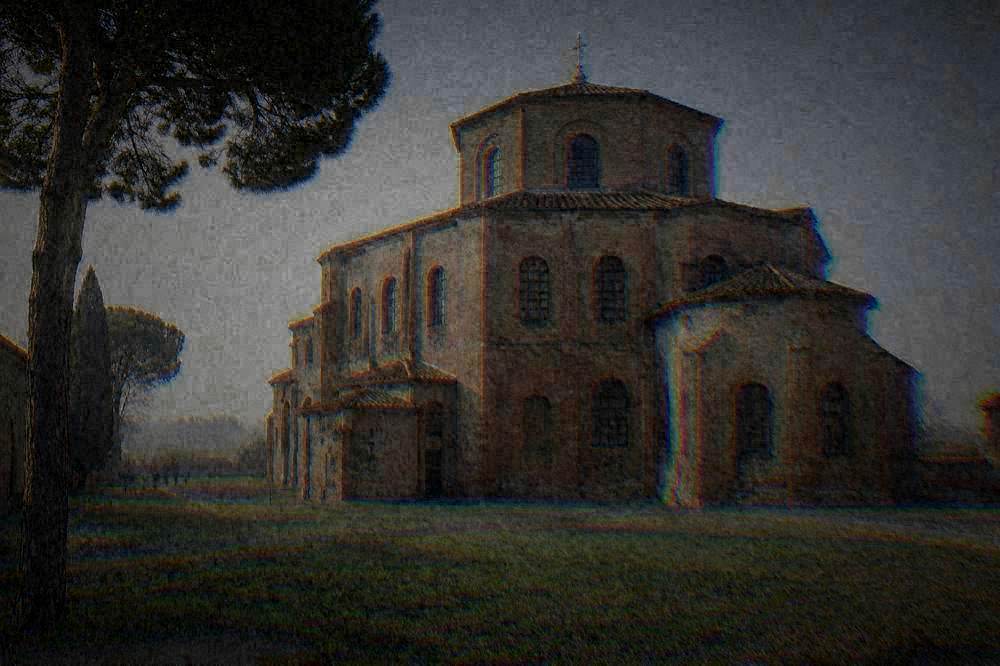
Ravenna then passed under Byzantine rule, the era that produced San Vitale and Sant'Apollinare in Classe, the two monuments where the gold-ground Byzantine mosaics are at their fullest, and the city served as the seat of the imperial administration in Italy. After that administration fell, Ravenna shrank for centuries, passing under Venetian influence and then the Popes, a long quiet period that paradoxically protected its monuments from redevelopment. Dante lived his final years here under a ruling family of the city and is buried in Ravenna.
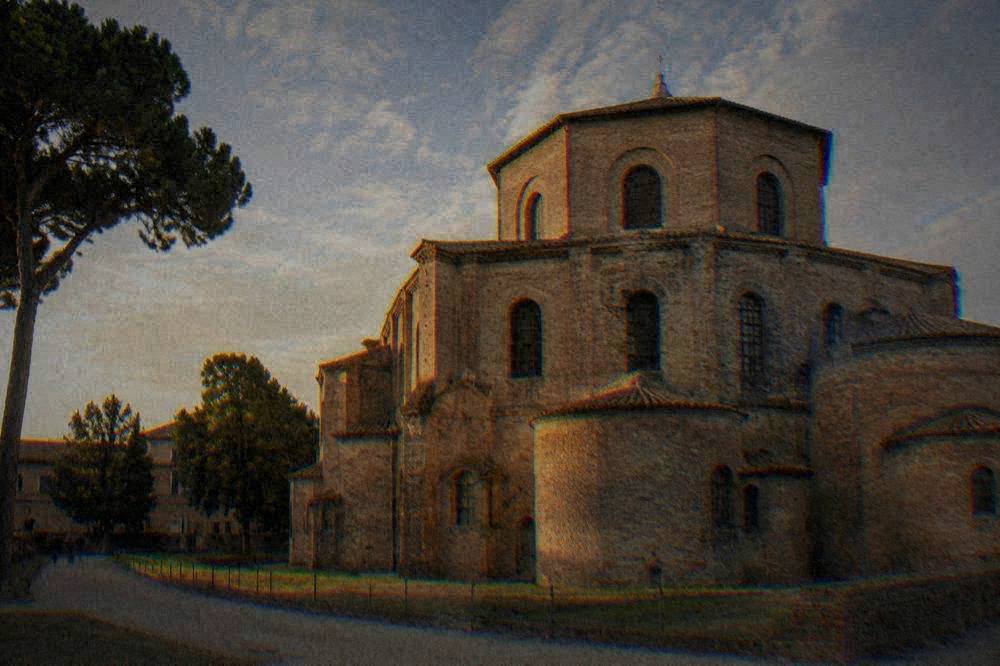
San Vitale is the masterpiece of the Byzantine phase, an octagonal church with an apse mosaic of the imperial court of Justinian and Theodora, the only place where both rulers appear together in this way. The basilica of San Vitale guide covers the building and how to visit with the combo ticket. Sant'Apollinare in Classe, out at the old port, holds a green paradise meadow of a mosaic in its apse, quite different in mood from the courtly gold.
Dante arrived in Ravenna as an exile from Florence, was hosted by the city's ruling family, and died here, which is why the question why is Dante buried in Ravenna has a direct answer. His tomb, a small neoclassical chamber near the basilica of San Francesco, is free to enter, open daily 10:00 to 18:00 in the November to March period and 10:00 to 19:00 April to October, and closed on 25 December, according to the municipal page. Each year on the second Sunday of September, oil from the Tuscan hills is offered at the tomb, a gift from Florence to the city that sheltered its poet.
To follow Dante's Ravenna at your own pace, book a self-guided audio tour here.
The Venetian and papal centuries were quiet ones, marked by flooding, silting and slow decline rather than monuments. That stagnation is why no baroque rebuilding swept the early churches away. The city the visitor walks today is essentially the medieval street plan with late antique buildings standing in it, plus the large central Piazza del Popolo, the civic heart laid out by the Venetian administration.
How Does Ravenna's Past Shape The City Today?
Ravenna's economy and identity today rest directly on its history: the UNESCO listing drives a year-round cultural tourism sector, the Ravenna Festival fills the Teatro Alighieri each season, the Classis Ravenna museum tells the port story at Classe, and the mosaic workshops of the historic centre keep a craft tradition alive as working studios. The autumn trilogy "Mozart 1791" runs 13 to 17 November 2026 at the Teatro Alighieri, with opera and the Requiem.
The city is also the cruise port of Porto Corsini, about 15 km away, whose new terminal inauguration is reported for spring 2027.
| Era of Ravenna | Who ruled | What survives to visit |
|---|---|---|
| Roman port period | Rome, through the port of Classe | Sant'Apollinare in Classe site, Classis Ravenna museum |
| Imperial court period | Western imperial court | Mausoleum of Galla Placidia, Neonian Baptistery |
| Ostrogothic kingdom | Theodoric | Mausoleum of Theodoric, Arian Baptistery, Sant'Apollinare Nuovo |
| Byzantine administration | Emperor in Constantinople | San Vitale, Sant'Apollinare in Classe, Archiepiscopal Chapel |
| Exile and medieval period | Local ruling families, then Venice | Dante's tomb, Piazza del Popolo, basilica of San Francesco |
| Papal and modern period | The Popes, then united Italy | Historic centre street plan, Teatro Alighieri, MAR |
The craft dimension deserves its own mention. Mosaic workshops in the centre still cut smalti and gold leaf by hand, and a visit to a studio, or a class, turns the gold ceilings from spectacle into technique. Food history runs the same way: the market tradition of Romagna, piadina, cappelletti and the wines of the hills, is the everyday inheritance of the same agricultural plain that fed the Roman port. The site's Ravenna food guide maps it dish by dish.
For travellers who want the history through its food, the Small Group Market tour and Cooking class in Ravenna walks the market with a local cook and then builds a meal from what the stalls hold, which is as close to the city's economic history as a visitor gets in a morning. Check availability on the operator's live listing.
Which Single Day Trip Best Continues The Story?
The most historically coherent day trip from Ravenna is to Comacchio and the Po Delta, because Comacchio is another former lagoon port, canal-threaded and bridge-linked, with salt pans where flamingos stand year-round, and the delta landscape shows what Ravenna's own lost lagoon looked like. Ferrara, the Renaissance city up the Po plain, pairs naturally with it on combined day tours from Ravenna. The old port relationship between Ravenna, Classe and the water is easier to understand standing in Comacchio than anywhere else.
Ferrara itself adds the chapter Ravenna never had, a Renaissance court city with a Schifanoia palace and an intact street plan, and Bologna, about 84 km away by direct regional train, in roughly an hour to an hour and twenty minutes, adds the medieval university world. Each of these is covered on its own page: Bologna, Ferrara and Comacchio. The full list of options, including San Marino, Brisighella and Faenza, is in the things to do in Ravenna round-up.
The Dark Ravenna walk, for its part, takes the medieval chapters of the city, the crimes, feuds and court vendettas recorded in its archives, and walks them through the evening streets, a reminder that the peaceful brick centre had its violent centuries too. The Ravenna Travel Guide site covers each era's buildings in its own monument pages, from the Neonian Baptistery to the basilica of Sant'Apollinare Nuovo.
Common Questions About Ravenna's History
What is the history of Ravenna, Italy?
Ravenna was a Roman port city that became an imperial capital, then the capital of Theodoric's Ostrogothic kingdom, then the seat of Byzantine administration in Italy. After that it declined under Venetian and papal rule, preserving its early churches. Eight of its Early Christian monuments with Byzantine mosaics were inscribed by UNESCO as one World Heritage entry in 1996.
Why does Ravenna have so many mosaics?
Because the city served as a capital across successive regimes, each of which commissioned gold-ground glass mosaics for its churches, and the local mosaic workshops sustained that craft over generations. The buildings stayed in use, so the mosaics survived in place. The site's page on why Ravenna has so many mosaics covers the full answer.
Who was Theodoric of Ravenna?
Theodoric was the Ostrogothic king who ruled his kingdom from Ravenna. His reign produced the Mausoleum of Theodoric, the Arian Baptistery and the basilica now called Sant'Apollinare Nuovo, all three among the eight UNESCO monuments.
Why is Dante buried in Ravenna?
Dante lived his last years in Ravenna as an exile from Florence, hosted by the city's ruling family, and died and was buried here. Florence has sent oil for an annual offering at the tomb each second Sunday of September. The tomb is free to visit.
Is Ravenna worth visiting for its history alone?
Yes. The historic centre is compact and walkable, the eight UNESCO monuments can be covered with one combo ticket valid one week, and the smaller museums, from the Classis Ravenna museum at the old port to Dante's tomb, fill out the story. The page on whether Ravenna is worth visiting weighs it against the alternatives.
Ravenna's history is not a single golden age but a sequence of them, followed by a long sleep that saved everything, and the city today lets a visitor walk that sequence in the order it happened.