Ravenna History
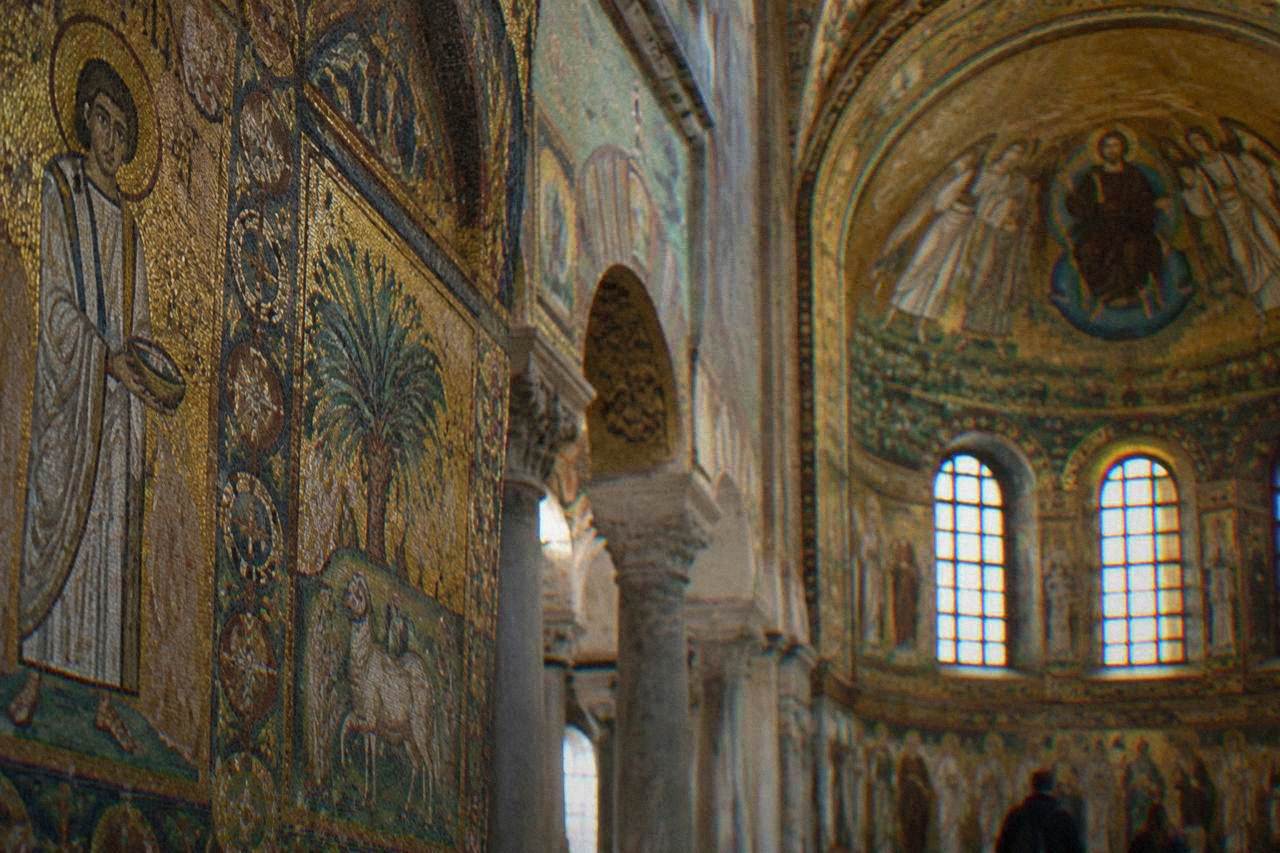
Ravenna, an inland city on the flat Po plain of Emilia-Romagna in Italy, served as the seat of successive rulers, and the eight UNESCO Early Christian monuments that survive from those centuries hold the finest Byzantine mosaics anywhere outside Istanbul.
Short answer
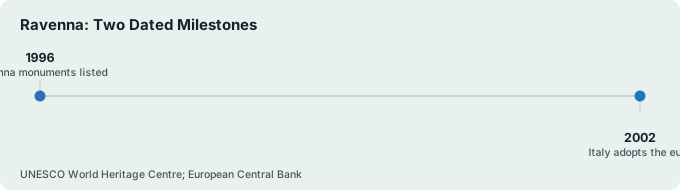
Ravenna's history is the story of a small Po-valley city that became a capital, hosted the courts whose churches were decorated in gold-ground mosaic, kept that inheritance remarkably intact, and buried Dante. Eight monuments inscribed by UNESCO in 1996 form the core of what a visitor sees today.
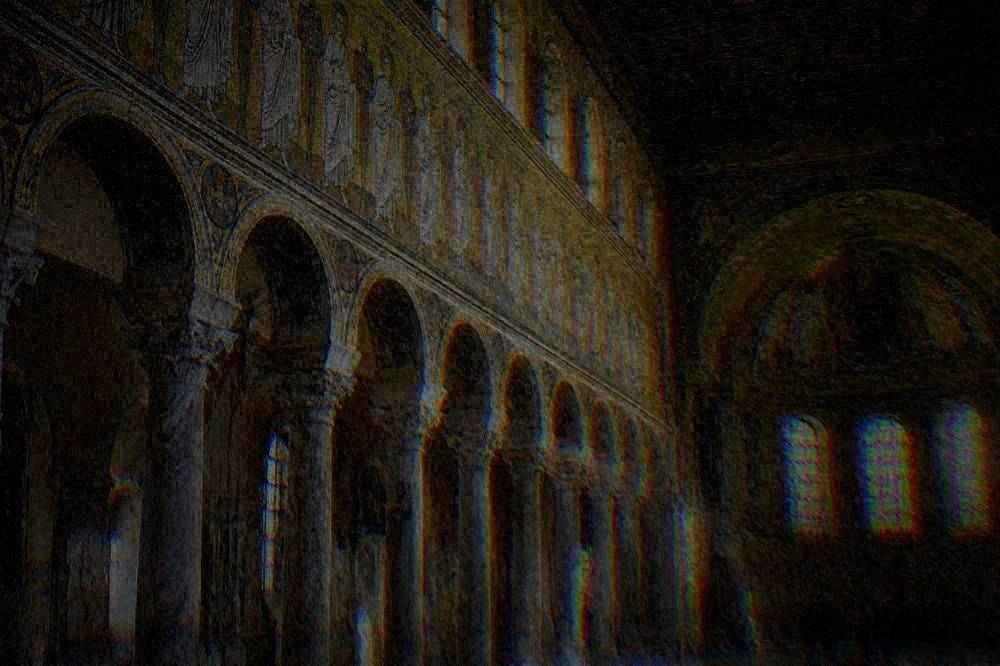
Ravenna, in Emilia-Romagna on the flat Po plain of northern Italy, is one of the few cities whose entire reputation rests on a single inherited body of work: eight Early Christian monuments carrying Byzantine mosaics, inscribed together by UNESCO in 1996. The city is inland, about 8 km from the Adriatic coast, and its historic centre is compact enough that the whole mosaic itinerary is walked rather than driven. What follows is the history of Ravenna as the sources present it, capital by capital, monument by monument, with the practical detail a visitor needs on the ground.
What Is The History Of Ravenna?
The history of Ravenna is the story of a modest settlement on the Po plain that became the seat of successive rulers, whose courts filled the city with gold-ground mosaic churches, and which then spent centuries as a quiet provincial town that never rebuilt over its inheritance. UNESCO inscribed the eight surviving Early Christian monuments together in 1996, and that single listing now defines the city for travellers. The names the sources attach to those centuries are Galla Placidia and Theodoric, and later Dante, who died and is buried here.
The UNESCO listing text names the eight monuments explicitly: the Mausoleum of Galla Placidia, the Neonian Baptistery, Sant'Apollinare Nuovo, the Arian Baptistery, the Archiepiscopal Chapel, the Mausoleum of Theodoric, San Vitale and Sant'Apollinare in Classe. That is the complete list, and no other building in the city belongs to it. The Archiepiscopal Museum sits inside the same listing as the chapel, and the Ravenna Mosaici combined ticket mirrors this grouping.
What makes the history unusual is the pattern of rise and retreat. A city built up as a capital, then left quietly aside when power moved on, keeps its fabric in a way a continuously important city does not. The historic centre a visitor walks today is the direct result: small, flat, and dense with buildings that were never torn down for something grander.
For a broader answer to the same question in question-and-answer form, see the history of Ravenna answer page, and for how the story translates into sightseeing, things to do in Ravenna carries the full itinerary logic.
Why Was Ravenna A Capital, And Who Ruled From It?
Ravenna served as a capital under successive rulers, first as an imperial residence in the late Roman west, then under the names the sources give as Galla Placidia and Theodoric, and later as the seat of a Byzantine administration in Italy. Its lagoons and marshes made it defensible when overland frontier cities were not, and its port at Classe connected it to the Adriatic trade that paid for the buildings.
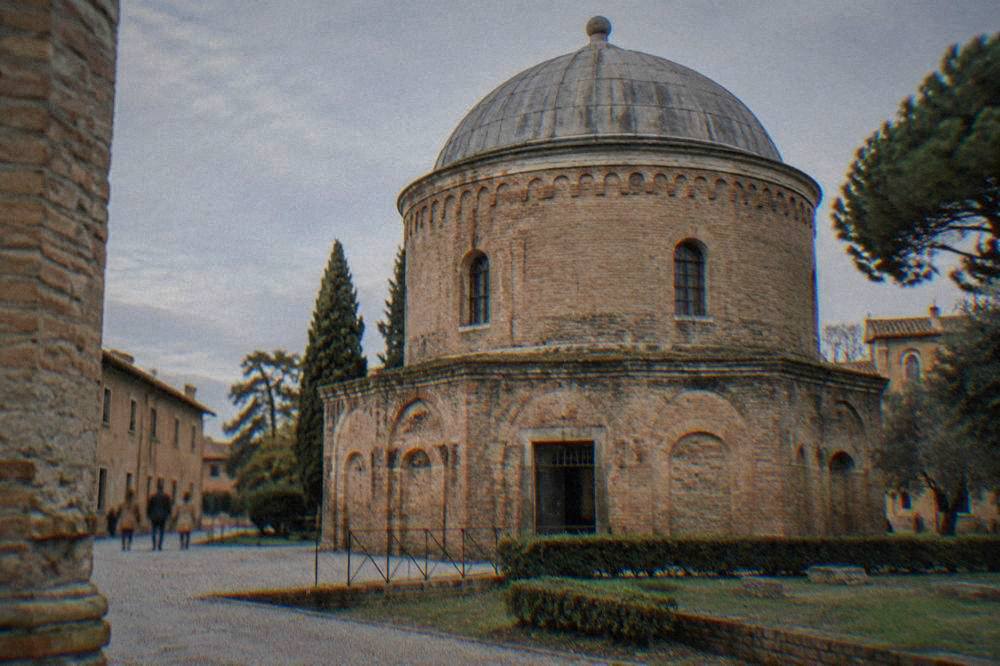
The sources this site reports from say little about the rulers as people, and this page keeps to that boundary. Galla Placidia appears in the monument names themselves, above all the mausoleum that carries her name, one of the eight UNESCO sites. Theodoric appears the same way, in the Mausoleum of Theodoric and the Palace of Theodoric. The men and women behind the names stay in the background, and what a visitor actually meets is the architecture: a brick drum, a domed chapel, walls of gold-ground glass mosaic laid by workshops whose standards the UNESCO listing itself calls out.
The defensive logic is visible on any map. Ravenna sat behind water, with Classe as its outlet to the sea and the Po marshes at its back. When the political centre of gravity in Italy shifted, the city slipped into centuries of quiet, under Venetian influence at one point and papal administration at another, and the mosaic churches became parish buildings rather than court statements. The rediscovery of the mosaics as art objects is a modern chapter, and the 1996 UNESCO inscription is its official punctuation.
A guided walk is the efficient way to absorb the sequence, because the monuments sit in a walkable line through the centre. The overview of Ravenna's UNESCO sites covers each building in detail, and how to get to Ravenna handles the arrival practicalities, including the rail route from Bologna, which runs about 84 km by direct regional train.
What Are The Eight UNESCO Monuments, And What Does Each One Show?
The eight UNESCO monuments in Ravenna are the Mausoleum of Galla Placidia, the Neonian Baptistery, Sant'Apollinare Nuovo, the Arian Baptistery, the Archiepiscopal Chapel, the Mausoleum of Theodoric, San Vitale and Sant'Apollinare in Classe. Seven sit in or near the historic centre, while Sant'Apollinare in Classe stands in the Classe area outside town, beside the Classis Ravenna museum.
The listing is the anchor for every itinerary, and the table below is the working version of it, with what a visitor actually looks at in each building. Descriptions here stay with what can be seen: mosaic vaults, brick exteriors, domed interiors, arcaded naves.
| Monument | Location | What The Visitor Sees |
|---|---|---|
| Mausoleum of Galla Placidia | Historic centre | A small cruciform brick chapel with a blue and gold mosaic vault |
| Neonian Baptistery | Historic centre | A domed brick baptistery with mosaic decoration in the dome |
| Sant'Apollinare Nuovo | Historic centre | A basilica with three registers of mosaic along the nave walls |
| Arian Baptistery | Historic centre | A small domed baptistery a short walk from the Neonian one |
| Archiepiscopal Chapel | Historic centre, within the Archiepiscopal Museum | A chapel interior decorated in mosaic, museum access |
| Mausoleum of Theodoric | Outside the centre, near the rail line | A two-storey stone drum capped by a single carved dome |
| San Vitale | Historic centre | An octagonal church with presbytery mosaics in gold ground |
| Sant'Apollinare in Classe | Classe area, outside the centre | A vast arcaded basilica with an apse mosaic of a green paradise |
Two of the eight need a little planning. Galla Placidia and the Neonian Baptistery take timed entry with short stays of a few minutes each, a rule the Ravenna Mosaici ticket terms state plainly, and San Vitale admits in slots. The combined ticket is valid one week, one admission per monument, with an entry time booked for each. The Ravenna combo ticket guide walks through the mechanics.
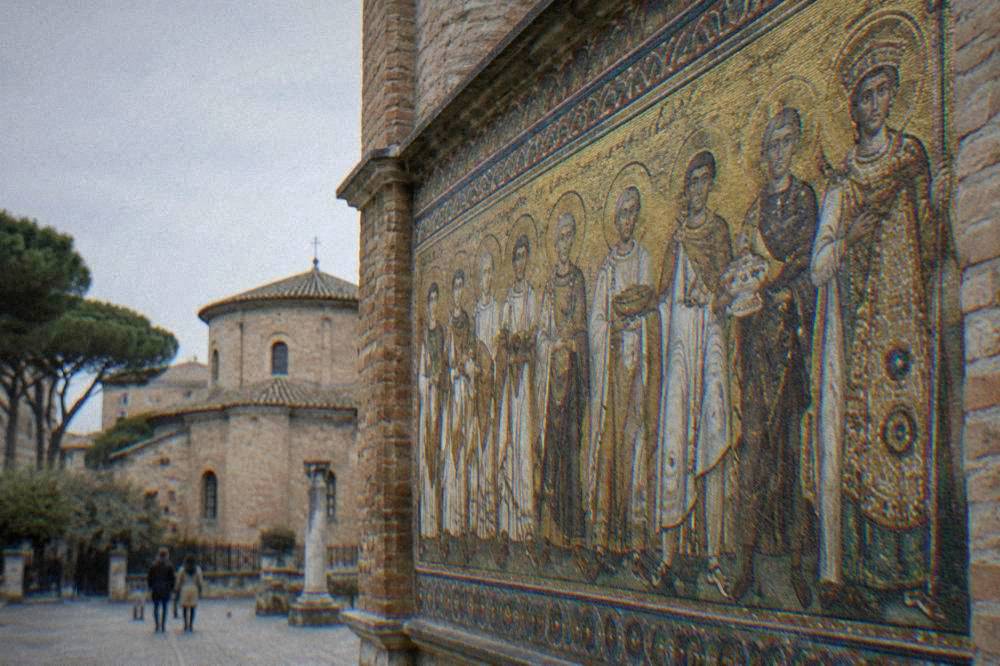
The mosaics reward preparation, and there is a lot of ground to cover. For a deeper reading of the imagery, the Ravenna mosaics guide takes each cycle in turn, and Ravenna mosaic tours compares the guided options, including private ones. Visitors who want to try the craft rather than only look at it can look at Ravenna mosaic workshops.
Where Does Dante Fit In Ravenna's History?
Dante died in Ravenna and is buried here, in a small tomb near San Francesco that is free to enter, and the city has kept the connection alive ever since: the Museo Dante tells the story, and each year on the second Sunday of September an oil offering for the tomb's lamp arrives from Tuscany through the Comune di Firenze. The tomb is open 10:00 to 18:00 from November to March and 10:00 to 19:00 from April to October, closed on 25 December.
To hear that story told at your own pace, book a Dante audio tour here.
This is the part of Ravenna's history with a living ritual attached. The oil offering is the detail that surprises people who know Dante only from Florence, where the poet was sentenced to exile: his city of birth sends the oil that keeps the lamp burning over his grave in the city that took him in. The ceremony's date comes from the sources this site reports, and the municipal tomb page carries the opening hours quoted above.
The Museo Dante, reached on the same ticket logic as the Casa Dante, is priced at EUR 5 with a reduced rate of EUR 3.50, and it is closed on Mondays. The Dante's tomb guide covers the site fully, including what the small burial chamber actually contains and how the surrounding streets frame it.
What Can You Still Visit, And What Does It Cost?
The monuments the history left behind are open daily on a published schedule: the Ravenna Mosaici sites run 9:00 to 19:00 in summer and 10:00 to 17:00 from 3 November 2026 to 6 March 2027, closed only on 25 December and 1 January. Reduced combined fares start at EUR 9.50 for two monuments, EUR 11.50 for four and EUR 13.50 for five, with free entry for children 0 to 10, Ravenna residents, ICOM members, licensed guides, and visitors with a disability plus companion.
The combined-ticket structure follows the UNESCO grouping: the two-monument ticket covers Sant'Apollinare Nuovo and San Vitale, the four-monument ticket adds Galla Placidia and the Neonian Baptistery, and the five-monument ticket adds the Archiepiscopal Museum and the Chapel of St Andrew. Full-price figures sit on the official Ravenna Mosaici page, which is where to check before buying.
The separately run sites carry their own prices, all printed from the official pages this site reports from:
| Site | Ticket | Concession | Hours As Published |
|---|---|---|---|
| Mausoleum of Theodoric | EUR 6 | EUR 5, EUR 2 ages 18 to 25 | Daily 8:30 to 17:30 |
| Combined Theodoric route (mausoleum, Arian Baptistery, Palace of Theodoric) | EUR 7 | - | Site hours apply |
| Arian Baptistery | EUR 3 | - | 9:00 to 17:00 |
| Sant'Apollinare in Classe | EUR 6 | EUR 2 | Mon to Sat 8:30 to 19:00, Sun 13:30 to 19:00 |
| Museo Nazionale | EUR 7 | EUR 2 | Closed Mondays |
| MAR | EUR 8 | EUR 6, EUR 3 students | Tue to Sat 9:00 to 18:00, Sun 15:00 to 19:00 |
| Museo Dante | EUR 5 | EUR 3.50 | Tue to Sun 10:00 to 17:30 |
| Classis Ravenna | EUR 8 | EUR 6 | Daily 10:00 to 17:00 |
| Dante's tomb | Free | - | 10:00 to 18:00 Nov to Mar, 10:00 to 19:00 Apr to Oct |
The state museums and monuments are free on the first Sunday of the month, a detail worth building an itinerary around for a budget-conscious trip. The Domus dei Tappeti di Pietra, a buried Roman floor complex near the cathedral, has hours that vary by season and a price situation the official page should settle at the moment of booking. TAMO, the former mosaic museum, closed permanently in 2023 and its collection moved to Classis Ravenna, so any older itinerary still listing it is out of date.
How Does Ravenna's Past Shape A Visit Today?
Ravenna's history determines the shape of a visit almost entirely: the historic centre is small, flat and walkable, the station sits a short walk from the core, and the one UNESCO monument that breaks the pattern, Sant'Apollinare in Classe, requires a short bus or car ride to the Classe area, where the Classis Ravenna museum tells the story of the ancient port that made the city a capital in the first place.
Practical planning flows from that geography. The centre keeps a limited-traffic zone, the ZTL, camera-enforced with gates operating on different schedules, some from 7:30 to 20:30 and some around the clock, and a daily permit of about EUR 8 is bought at the parcometers, with hotels able to issue guest authorisation. The parking and ZTL guide spells out the gates, and getting around Ravenna covers the rest, including the Start Romagna buses that serve both Classe and the coast.
Timing matters too. The climate table, modelled ERA5 normals for 1991 to 2020, shows July as the driest month at 38.1 mm of rain and November as the wettest at 78.3 mm, with a yearly total of about 674 mm and July the warmest month at a mean of 25.2 C against 5.1 C in January. Mosaic interiors are weatherproof, which is one reason the city works as a shoulder-season destination, and the best time to visit Ravenna and Ravenna weather carry the month-by-month detail.
| Month | Mean Temperature (C) | Precipitation (mm) |
|---|---|---|
| January | 5.1 | 43.8 |
| March | 9.4 | 54.9 |
| May | 17.9 | 58.2 |
| July | 25.2 | 38.1 |
| September | 20.3 | 57.9 |
| November | 10.6 | 78.3 |
How long to stay is the other planning question, and the answer follows from the monument list: how many days in Ravenna sets out the case for one, two or three days, and is Ravenna worth visiting addresses the sceptic's version of the question.
What Does Ravenna's History Look Like Outside The Centre?
Outside the centre, Ravenna's history runs in two directions: inland to Classe, where the basilica of Sant'Apollinare and the Classis Ravenna museum stand on the site of the ancient port city, and out to the coast, where Porto Corsini and the beach resorts of Marina di Ravenna, Punta Marina, Lido Adriano, Lido di Classe and Lido di Savio occupy the shoreline that trade and defence once made important.
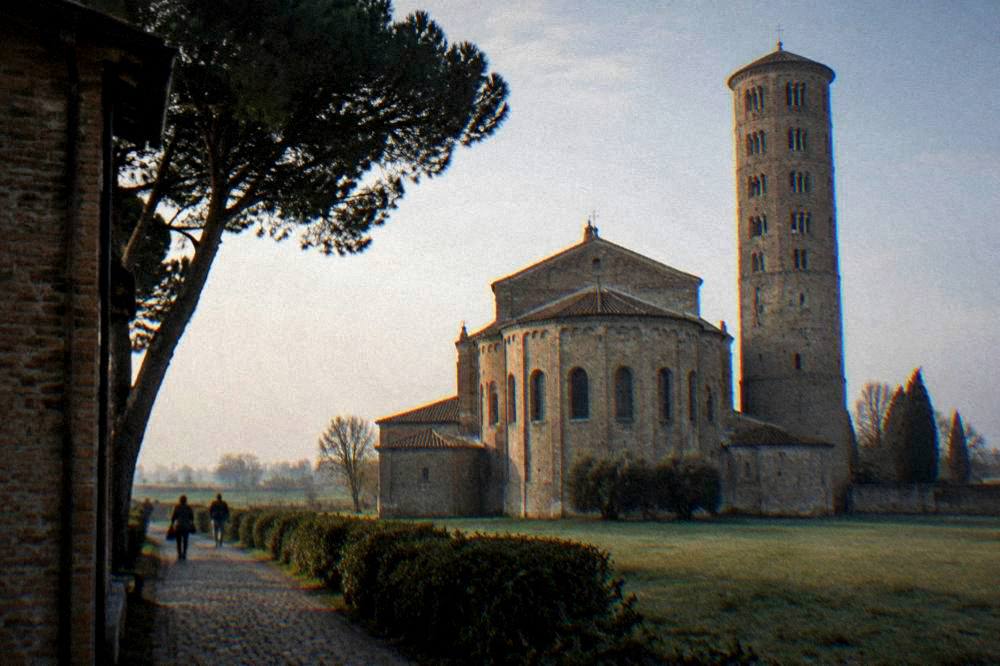
Classe is the essential detour. The ancient city that rivalled Ravenna itself has vanished above ground except for its great basilica, and the Classis Ravenna museum, daily 10:00 to 17:00 with last entry 50 minutes before closing, reconstructs the port's story in a modern building beside it. The Classe area guide covers how to get there by Start Romagna bus, and the Classis Ravenna museum guide details the collection, including the material that arrived from the closed TAMO museum.
The coast tells a more modern chapter. Porto Corsini, about 15 km from the centre, is Ravenna's cruise terminal, with 111 calls and about 390,000 passengers planned for 2026 and a new terminal reported for inauguration in spring 2027, and the Visit Ravenna shuttle runs the route in about 30 minutes during the season listed on its page. A sand barrier of 25,000 cubic metres is built each autumn at Punta Marina, Marina di Ravenna Sud and Lido di Savio and stays until spring 2027, which changes the look of those beaches in winter. The cruise port guide and the beach pages, starting with Ravenna beaches, carry the detail.
Which Day Trips Follow The Same Historical Thread?
The same historical threads that built Ravenna continue into the surrounding region: Bologna lies about 84 km away by direct regional train with journeys of about 1 hour to 1 hour 20, Ferrara and Comacchio carry the same Po-valley water logic, Faenza preserves the ceramic craft the region is named for, and the Po Delta park holds the marsh landscape that once protected the capital. Train fares for these routes are shown at booking, and the timetables sit on the regional rail pages.
| Day Trip | Connection As Listed | Historical Link |
|---|---|---|
| Bologna | Direct regional train, about 1 hour to 1 hour 20 | Regional capital, rail gateway to Ravenna |
| Ferrara | Regional rail via the Po plain | A Po-valley court city of the same era of influence |
| Comacchio | Road and local transport | Lagoon town in the Po Delta, the same watery defence logic |
| Faenza | Short regional hop | The ceramics city that gives Emilia-Romagna half its name |
| Cervia | Start Romagna bus or train | Historic salt pans, now a birding site with year-round flamingos |
Each of these has its own page on this site: Bologna, Ferrara, Comacchio, Faenza and Cervia. The pattern worth noticing is that Ravenna's defences, its port and its marshes were one system, and the day trips that feel most connected to its history are the ones that follow the water.
For visitors arriving from further off, Bologna to Ravenna and Bologna airport to Ravenna cover the standard approach, which runs the Marconi Express to Bologna Centrale and then a regional train, about 2 to 2.5 hours door to door. Cruise passengers with Venice ambitions can read Ravenna cruise port to Venice or the reverse Venice to Ravenna.
Common Questions About Ravenna History
What is the history of Ravenna?
Ravenna was a modest Po-plain settlement that became the seat of successive rulers, whose courts filled it with mosaic-decorated churches, and it later kept that inheritance intact as a quiet provincial city. UNESCO inscribed its eight Early Christian monuments together in 1996, and Dante died and is buried here. The full question-and-answer version sits on the history answer page.
What are the 8 UNESCO sites in Ravenna?
The Mausoleum of Galla Placidia, the Neonian Baptistery, Sant'Apollinare Nuovo, the Arian Baptistery, the Archiepiscopal Chapel, the Mausoleum of Theodoric, San Vitale and Sant'Apollinare in Classe. No other building in the city belongs to the listing.
Why does Ravenna have so many mosaics?
Because the city was a capital for successive courts that commissioned church decoration at the highest level, and it then declined quietly enough that the buildings were never rebuilt over. The mosaic workshops' output survived in place, and the UNESCO listing of 1996 recognised it as a group.
Where is Dante actually buried?
In Ravenna, in a free-to-enter tomb near San Francesco, open 10:00 to 18:00 from November to March and 10:00 to 19:00 from April to October. Each second Sunday of September an oil offering for the tomb's lamp arrives from Tuscany through the Comune di Firenze.
Is Ravenna worth visiting for its history alone?
Yes. The eight UNESCO monuments, Dante's tomb and the Classis Ravenna museum form a coherent two-day itinerary without any other attraction, and the historic centre is compact and walkable. The detailed case is set out on the Ravenna worth visiting page.
How long does it take to see Ravenna's historic monuments?
The five Ravenna Mosaici sites plus Dante's tomb fit in one full day on a combined ticket, with a few extra hours needed for Sant'Apollinare in Classe and Classis Ravenna outside the centre. Two unhurried days is the comfortable version, as the days-in-Ravenna guide explains.
Ravenna's history is unusually generous to the visitor: the capital that built the mosaics faded, the mosaics stayed, and UNESCO gathered them into one walkable list in 1996. Read the monument pages, book the entry times, and the city's whole chronology lays itself out in gold and brick. Ravenna Travel Guide carries the rest, from where to stay in Ravenna to Ravenna restaurants for the evenings between monuments.
A history-focused trip still needs its pauses, and a food-and-craft interlude is the local way to take one: the gelato class sits in that slot neatly, and a Check availability link beside the two-hour private mosaic tour page lets a visitor lock the centrepiece walk in first.