Who Built San Vitale Ravenna?
What the official sources say about San Vitale in Ravenna, what the UNESCO listing covers, ticket prices, opening hours and guided tour options.
San Vitale is one of the eight Early Christian monuments of Ravenna inscribed together on the UNESCO World Heritage list, a city in Emilia-Romagna whose historic centre sits inland on the flat Po plain, about 8 km from the Adriatic coast. The question of who built it is asked constantly, and the honest answer is that the official sources describe the building rather than credit a single named architect. This page reports what the UNESCO listing, the Ravenna Mosaici ticket pages and the monument listings actually say, and then covers the practical parts a visitor needs: what there is to see, what tickets cost and when the doors are open.
Who Built San Vitale Ravenna?
No official source names an architect of San Vitale in Ravenna. The UNESCO World Heritage list inscribes the building in 1996 as one of the Early Christian Monuments of Ravenna and describes its gold-ground glass mosaics and its octagonal form, but the listing credits no builder, patron or construction year, and this site reports the listing rather than repeating a name the sources do not give.
The UNESCO entry for the Early Christian Monuments of Ravenna covers eight buildings: the Mausoleum of Galla Placidia, the Neonian Baptistery, Sant'Apollinare Nuovo, the Arian Baptistery, the Archiepiscopal Chapel, the Mausoleum of Theodoric, San Vitale and Sant'Apollinare in Classe. The list text is a description of what the buildings are and what a visitor sees in them. It uses the wording "Byzantine mosaics" and "Early Christian" as its own characterisation, and it stops there.
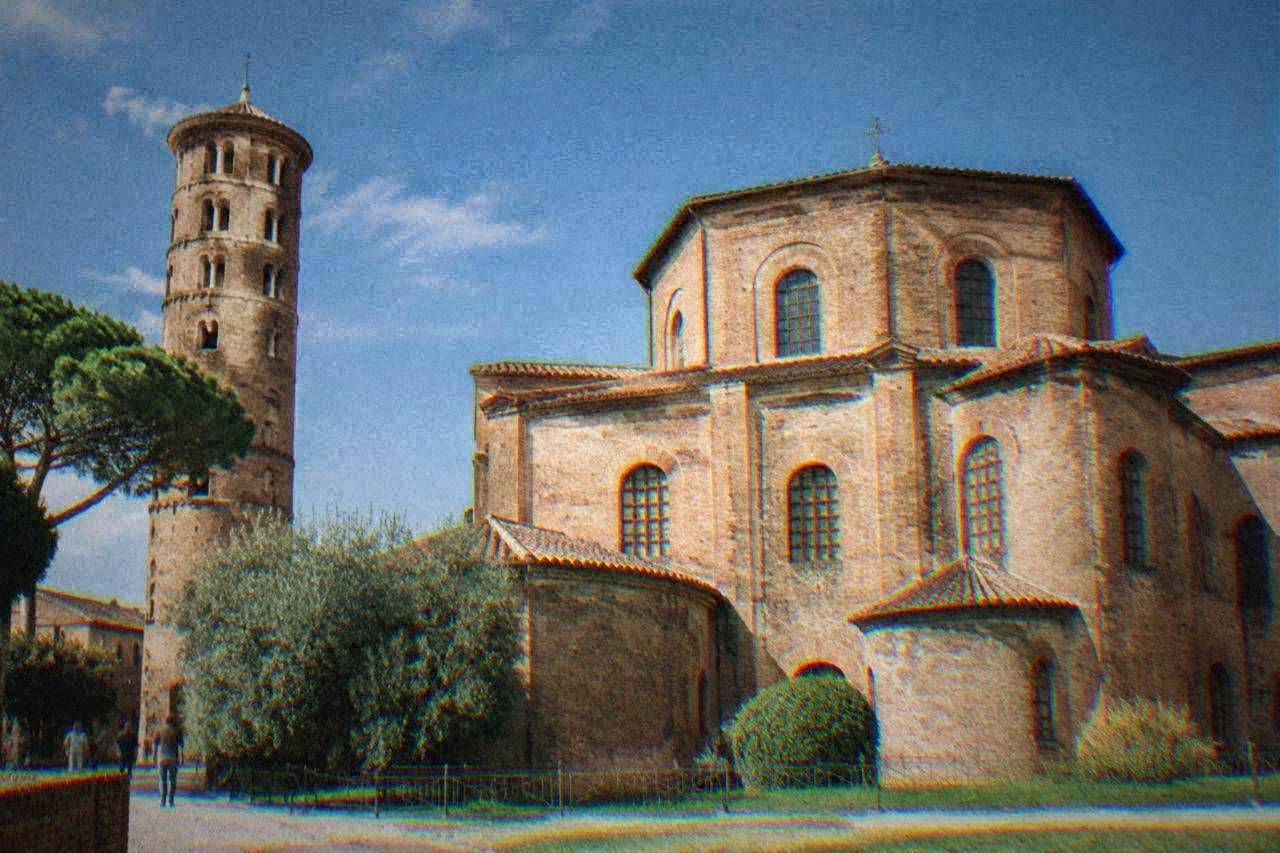
Many popular guides attach names and imperial biographies to San Vitale. Those details do not appear in the material this site holds, which is the UNESCO listing and the official Ravenna monument pages, so they do not appear here. What the official pages do say is concrete and useful: the basilica is an octagonal brick church with a domed core, its interior walls carry gold-ground glass mosaic, and it stands a short walk from the other UNESCO monuments in the historic centre. A fuller description of the building itself is on the San Vitale attraction page, and the broader picture is in what the eight UNESCO sites in Ravenna are.
What Does The UNESCO Listing Say About San Vitale?
The UNESCO listing treats San Vitale as one of eight monuments inscribed together in 1996 under the Early Christian Monuments of Ravenna, describing Byzantine mosaics and Early Christian architecture without naming founders, architects or construction dates, so everything officially attributable to the building is descriptive rather than biographical.
This matters for a reader trying to check a claim. If a guidebook or a travel article names an emperor, a bishop or a decade for San Vitale, that name comes from outside the listing. The listing itself is the authority that gives the site its World Heritage status, and it stays at the level of what the buildings represent: a group of Early Christian and Byzantine monuments whose mosaics are the reason for the inscription.
The same restraint applies to Ravenna's other monuments. Questions like why the Mausoleum of Galla Placidia was built and when Sant'Apollinare Nuovo was built run into the same wall: the official pages describe, and the dating and attribution questions are answered from historical scholarship rather than from the monument listings. Where a competing guide writes a confident date, this site's editorial desk writes what the primary source says instead.
For context on why this small inland city holds so many of these buildings, the page on why Ravenna has so many mosaics covers the ground the sources support.
What Can You See Inside San Vitale Today?
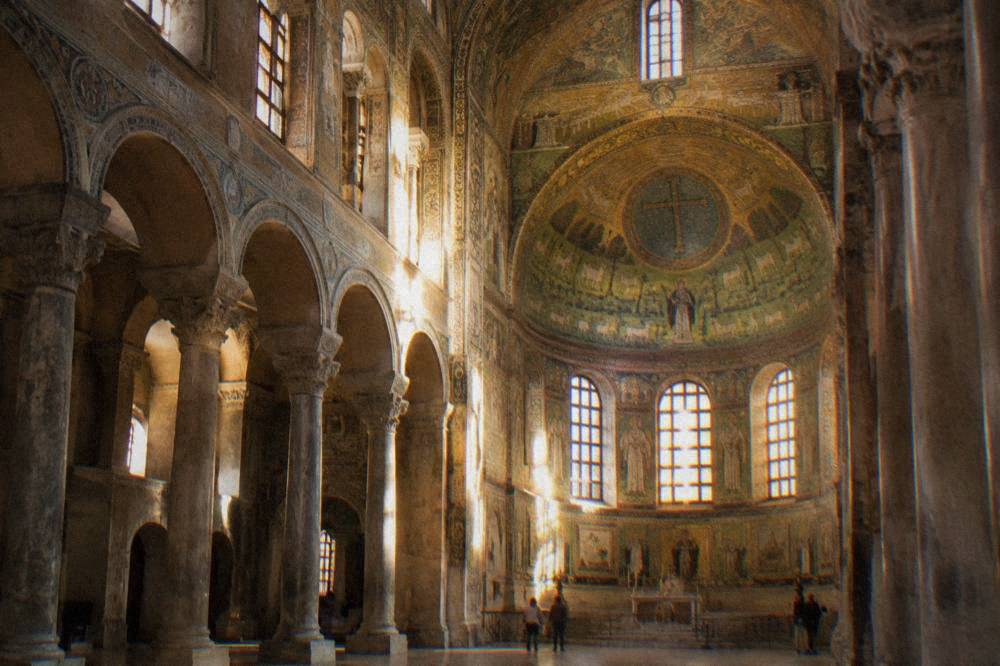
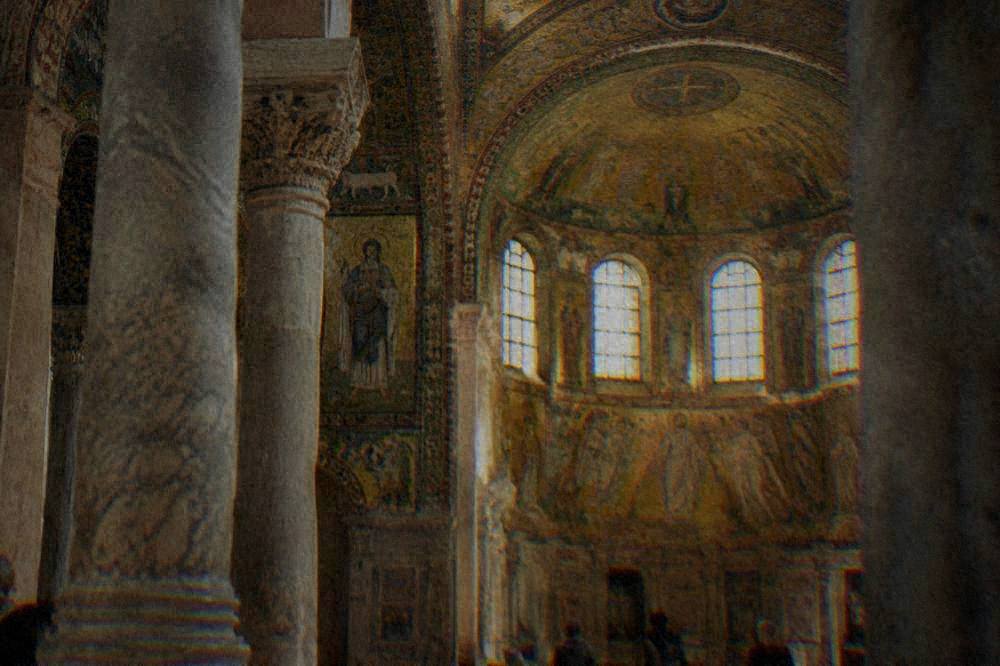
Inside San Vitale a visitor sees an octagonal interior ringed by galleries, with gold-ground glass mosaic covering the apse and the walls around it, marble revetment on the lower surfaces and a domed ceiling of brick, all described on the official monument pages, which present the interior visually rather than historically.
The apse mosaics are the draw, and the Ravenna Mosaici pages describe them in visual terms: figures in ceremonial dress, gold backgrounds, green landscapes and votive panels. The neighbouring Mausoleum of Galla Placidia, covered by the same ticketing system, holds its own star-vaulted mosaic ceiling. San Vitale is also the monument where the ticketing has a particular quirk: the Ravenna Mosaici terms page states that admissions are scheduled in slots, and that Galla Placidia and the Neonian Baptistery require a booked entry time with stays of a few minutes, so a visit needs a little planning rather than a casual drop-in.
The basilica sits in the compact historic centre, close to the Mausoleum of Galla Placidia, the Neonian Baptistery and the National Museum, all reachable on foot from the railway station. Visitors with only a few hours can see the core group; the question of how many days are needed in Ravenna has a short answer for mosaic lovers and a longer one for anyone adding the coast or day trips.
A guided walk puts the mosaics in context without inventing history. The Walking Tour With Mosaics is a low-cost private option that covers the mosaic monuments with a local guide: Check availability
The bands above cover the three bookable options this site features for the mosaics: a private walking tour, a food-and-craft class and a short private guided visit. Each listing carries its own price, rating and cancellation terms.
How Much Do San Vitale Tickets Cost In Ravenna?
San Vitale is covered by the Ravenna Mosaici combined tickets, which this site prices from the reduced fares: EUR 9.50 for two monuments, EUR 11.50 for four and EUR 13.50 for five, valid one week with one admission per monument, and full prices sit on the official Ravenna Mosaici page, which readers should check before buying.
The two-monument combo covers Sant'Apollinare Nuovo and San Vitale. The four-monument combo adds the Mausoleum of Galla Placidia and the Neonian Baptistery. The five-monument combo adds the Archiepiscopal Museum and the Chapel of St Andrew. Reduced fares apply to students, non-accredited journalists and paying groups over 20; entry is free for children 0 to 10, residents of Ravenna, ICOM members, licensed guides, and visitors with a disability plus one companion.
| Ticket | Monuments covered | Reduced fare | Notes |
|---|---|---|---|
| 2-monument combo | Sant'Apollinare Nuovo, San Vitale | EUR 9.50 | Valid one week, one admission each |
| 4-monument combo | Adds Galla Placidia, Neonian Baptistery | EUR 11.50 | Timed entry at Galla Placidia and the Neonian Baptistery |
| 5-monument combo | Adds Archiepiscopal Museum, Chapel of St Andrew | EUR 13.50 | Entry times booked per monument |
Separately ticketed monuments outside the combo include the Mausoleum of Theodoric at EUR 6, with a concession of EUR 5 and EUR 2 for ages 18 to 25, or EUR 7 combined with the Arian Baptistery and Theodoric's Palace, and Sant'Apollinare in Classe at EUR 6 full and EUR 2 reduced, per the state pages. Dante's tomb is free. The state museums and monuments are free on the first Sunday of the month. Full combo prices and any one-off changes sit on the official Ravenna Mosaici page.
When Is San Vitale Open, And When Should You Go?
San Vitale keeps summer hours of 9:00 to 19:00 from 8 March to 2 November 2026, with last admission 30 minutes before closing, and winter hours of 10:00 to 17:00 from 3 November 2026 to 6 March 2027, with last admission 16:30, closing only on 25 December and 1 January, per the official Ravenna Mosaici page.
The winter shift matters for planning. From early November the whole mosaic group closes at 17:00, and the short timed visits at Galla Placidia and the Neonian Baptistery mean the last usable entries come earlier still. A morning start in winter leaves comfortable room for four or five monuments plus lunch; an afternoon start does not.
| Period | Hours | Last admission | Closures |
|---|---|---|---|
| 8 March to 2 November 2026 | 9:00 to 19:00 | 18:30 (San Vitale) | One-off changes possible |
| 3 November 2026 to 6 March 2027 | 10:00 to 17:00 | 16:30 (San Vitale) | 25 December and 1 January |
The climate table shows November as the wettest month of the year in Ravenna at 78.3 mm of rain on modelled 1991 to 2020 normals, and July as the driest at 38.1 mm, with July also the warmest month at a 25.2 C mean. Since the mosaics are all indoors, a wet day costs little; the page on Ravenna in the rain is built around that fact. For anyone weighing seasons against crowds and weather, the best time to visit Ravenna guide works through the same table.
One-off closures and schedule changes do happen, and the Ravenna Mosaici page is the place to confirm before a visit.
Which Guided Tours Cover San Vitale In Ravenna?
Guided tours covering San Vitale include private walking tours of the mosaic monuments, small-group mosaic walks with tickets included, and self-guided entry-ticket options, with prices, ratings and durations shown on each operator's live listing rather than typed here, so a reader compares the live listings rather than a summary.
A guide adds something the plaques do not: the visual reading of the mosaics, the sequence in which to see the monuments and the slot-booking mechanics of the combo ticket. The private options in the band below suit couples and families who want their own guide, and the food class suits a day split between mosaics and the Romagna table. Cancellation and pay-later terms sit on each listing.
The related tour above, the Walking Tour With Mosaics, is the site's featured pick for this page: a private, low-cost walk covering the mosaic monuments, bookable on the operator's live listing.
Independent visitors are also well served. The combo ticket, a booked entry time for the timed monuments and a comfortable pair of shoes cover the same ground without a guide, and the Ravenna mosaic tours guide compares the guided options in detail.
Common Questions About San Vitale In Ravenna
Who built San Vitale Ravenna?
No official source names an architect or founder. The UNESCO listing inscribes San Vitale in 1996 as one of the eight Early Christian Monuments of Ravenna and describes the building and its Byzantine mosaics without naming a builder or giving a construction date.
Is San Vitale one of the UNESCO sites in Ravenna?
Yes. San Vitale is one of the eight Early Christian monuments of Ravenna on the UNESCO World Heritage list, alongside the Mausoleum of Galla Placidia, the Neonian Baptistery, Sant'Apollinare Nuovo, the Arian Baptistery, the Archiepiscopal Chapel, the Mausoleum of Theodoric and Sant'Apollinare in Classe.
Do you need a timed ticket for San Vitale?
The Ravenna Mosaici terms page states that San Vitale admits visitors in scheduled slots, and an entry time must be booked for each monument on a combo ticket. Galla Placidia and the Neonian Baptistery require booked entry times with stays of a few minutes.
How long is a combo ticket valid?
The Ravenna Mosaici combined ticket is valid one week, with one admission per monument, so the two, four or five monuments can be spread across several days rather than crammed into one.
Can children enter the monuments free?
Yes. Per the Ravenna Mosaici page, children aged 0 to 10 enter free, along with residents of Ravenna, ICOM members, licensed guides and visitors with a disability plus one companion.
San Vitale rewards the visitor who arrives with the ticket sorted, the entry time booked and the expectations set on what the sources say: a building the UNESCO listing describes in gold and glass rather than in names and dates, standing at the centre of the small inland city that holds eight of them. The Ravenna Travel Guide covers the rest of that city, from Dante's tomb to the beach resorts 8 km away.