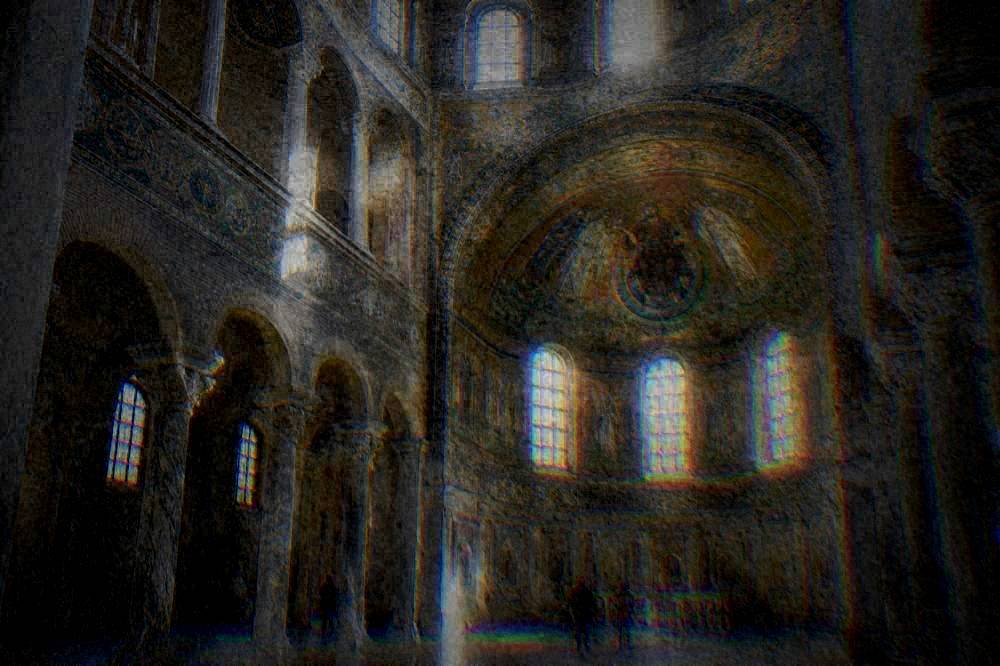
Ravenna Rainy Day
Ravenna is an inland Po-valley city whose rainy day strengths are real: eight UNESCO monuments full of mosaics, a walkable historic centre, and museums a short distance apart. This plan sets out what stays open, what costs what, and how to spend a wet day well.
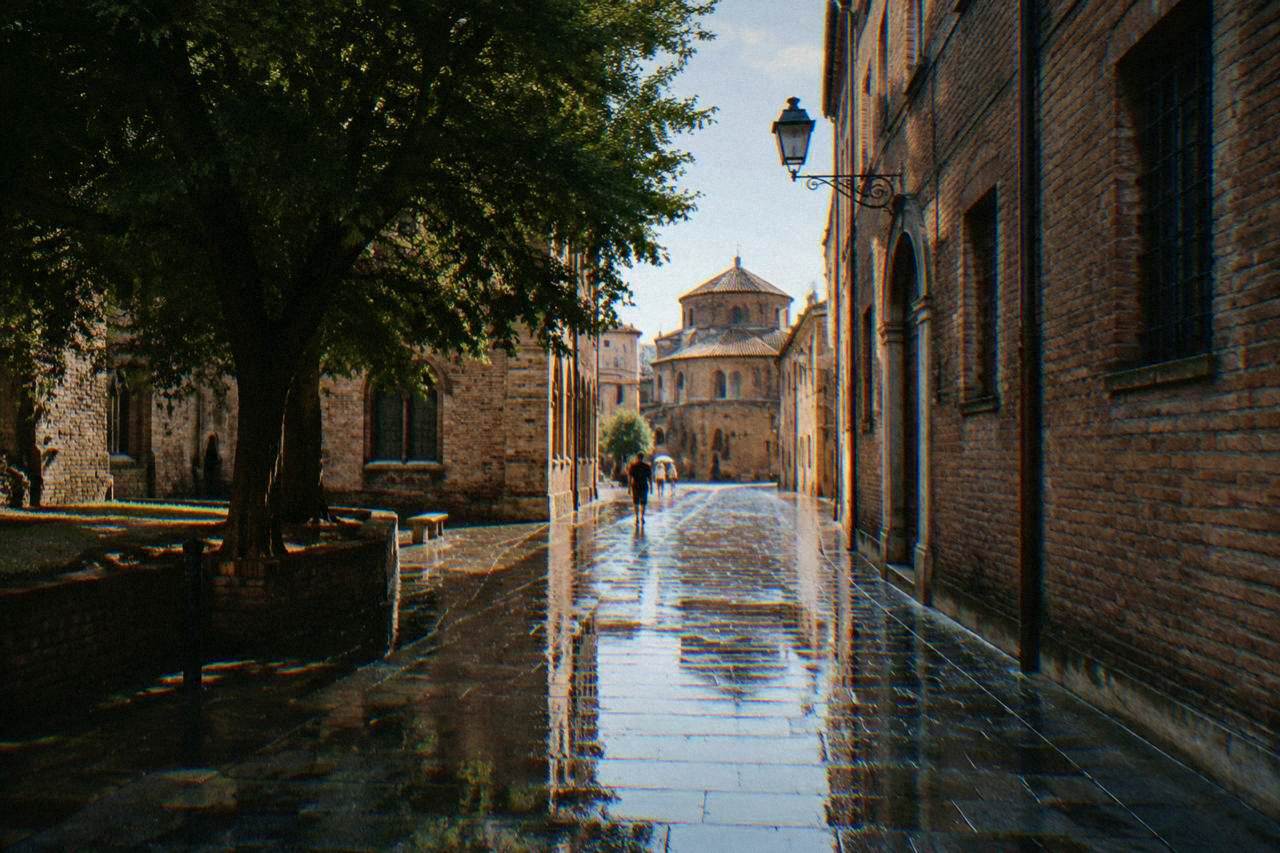
Short answer
Ravenna is one of the better rainy day cities in Emilia-Romagna because its headline sights are indoors: San Vitale, the Mausoleum of Galla Placidia, the Neonian Baptistery and the other UNESCO mosaic monuments are all covered spaces reached on foot from the centre. A combined ticket, a museum or two, and a long lunch fill a full wet day without a car.
Ravenna sits on the flat Po plain of Emilia-Romagna, inland, about 8 km from the Adriatic beaches, and its rainy day fortune is unusually good for an Italian art city: the eight monuments that draw people here are all enclosed, mosaic-lined interiors, and they cluster inside a compact historic centre that the Ravenna Travel Guide maps street by street. Rain changes the light on the gold tesserae rather than the plan. This itinerary sets out a full wet day: which covered sights to visit in what order, what the official pages say about hours and tickets, where to eat without standing in the weather, and when a rainy Ravenna day should become a day trip instead.
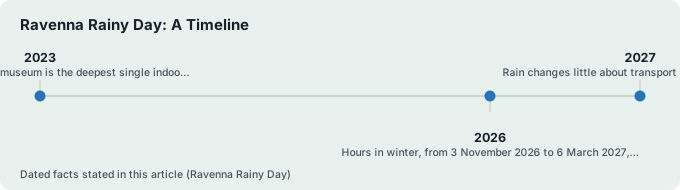
What Makes Ravenna A Good Rainy Day City?
Ravenna is a strong rainy day city because its core sights are indoor mosaic interiors, and the historic centre is small, flat and walkable, so the walks between monuments are short. The UNESCO listing covers eight Early Christian monuments, and the basilicas, baptisteries and mausoleums that hold the mosaics are covered spaces, not open plazas. The Ravenna Mosaici ticket page groups five of them into one combined itinerary, which turns a wet day into a single ticketed circuit.
The city's climate is that of the Po valley and the Adriatic coast together: hot, humid summers, cold and damp winters when fog can sit over the plain, and mild but showery springs and autumns. Rain here is rarely a whole-day deluge, but it does not need to be, because the plan barely changes. San Vitale, the Mausoleum of Galla Placidia, the Neonian Baptistery and the Archiepiscopal Museum sit within a few minutes of one another, and the combined ticket that covers them is valid for one week, one admission per monument, with an entry time booked for each. That flexibility matters on a day when a shower interrupts a walking plan.
The practical shape of a wet day is therefore simple. Book the mosaic monuments for the morning, use the middle of the day for a long indoor lunch, and give the afternoon to one or two of the museums. If the rain eases, the Piazza del Popolo and the streets around Dante's tomb are a short walk away, and the one day in Ravenna itinerary shows how the same route reads in dry weather.
To arrange those timed entries in advance, book an UNESCO mosaics entry ticket here.
One warning from the ticket page itself: the Mausoleum of Galla Placidia and the Neonian Baptistery use mandatory timed entry with a stay of a few minutes inside, because both are small domed spaces. That is not a rain penalty, it is the normal rule, and it applies in sunshine too.
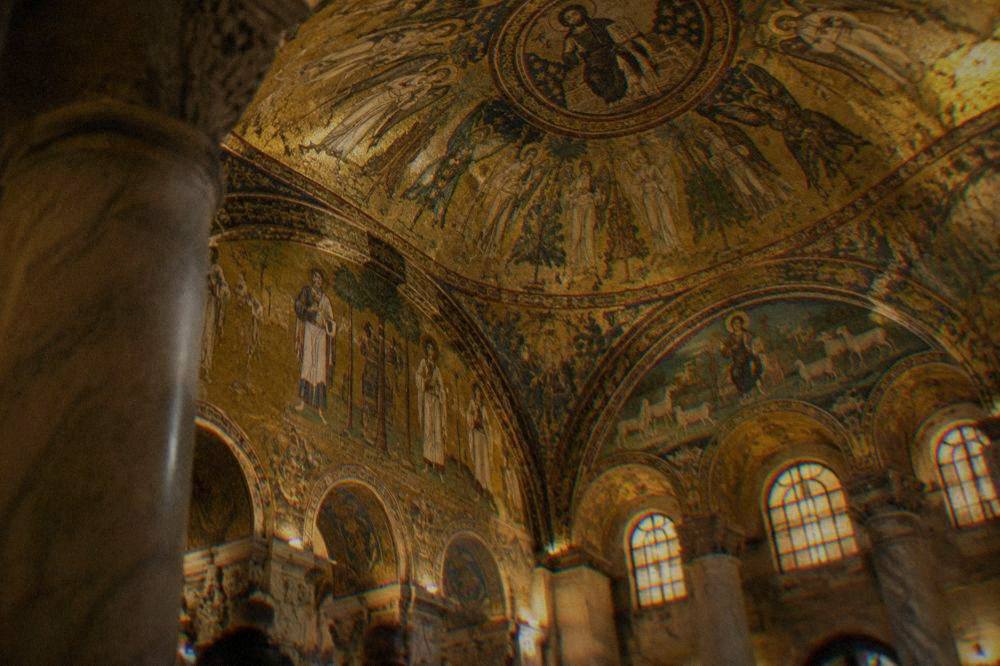
Which Indoor Mosaic Sites Can You Visit In Ravenna In The Rain?
The five monuments on the Ravenna Mosaici combined circuit, San Vitale, the Mausoleum of Galla Placidia, the Neonian Baptistery, Sant'Apollinare Nuovo and the Archiepiscopal Museum with its chapel, are all indoor, and the reduced combo fares start at EUR 9.50 for two monuments, EUR 11.50 for four and EUR 13.50 for five, per the official ticket page. Hours in winter, from 3 November 2026 to 6 March 2027, run 10:00 to 17:00, and in summer to 2 November 2026, 9:00 to 19:00.
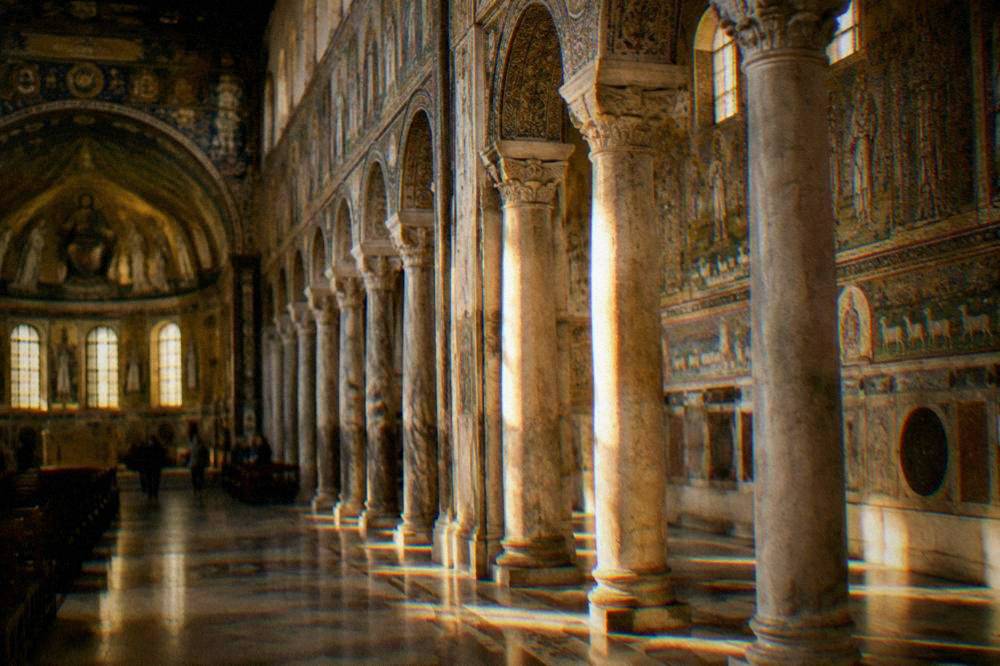
Start with San Vitale, because it is the largest interior of the group and the one where time inside is least restricted. The Ravenna Mosaici page says admissions there are scheduled in slots, so a booking holds your place whatever the sky is doing. The basilica of San Vitale guide describes what to look for once inside: gold-ground glass mosaic, the emperor and empress processions, and the marble thrones.
From San Vitale the whole cluster unfolds on foot. The Mausoleum of Galla Placidia and the Neonian Baptistery are each a short walk away, and both are small, domed, and entirely covered, which makes them ideal rain stops, with the mausoleum of Galla Placidia and the Neonian Baptistery guides covering the mosaics in detail. The basilica of Sant'Apollinare Nuovo, with its long processional wall mosaics, is the one site of the five where you stand indoors the longest, a good fit for the worst hour of rain.
| Monument | Indoor | Combined ticket | Notes for a rainy day |
|---|---|---|---|
| San Vitale | Yes, full interior | 2, 4 and 5 monument combos | Admission in scheduled slots |
| Mausoleum of Galla Placidia | Yes, domed chapel | 4 and 5 monument combos | Timed entry, a few minutes inside |
| Neonian Baptistery | Yes, domed interior | 4 and 5 monument combos | Timed entry, a few minutes inside |
| Sant'Apollinare Nuovo | Yes, basilica nave | 2, 4 and 5 monument combos | Longest indoor stand of the circuit |
| Archiepiscopal Museum and chapel | Yes, museum halls | 5 monument combo | Fully covered, includes the chapel |
The sixth and seventh UNESCO names, the Arian Baptistery and the Archiepiscopal Chapel, follow the same logic. The Arian Baptistery is a small domed space reached on foot, and the Visit Ravenna page lists a EUR 3 individual ticket, or a EUR 7 combined ticket that adds the Mausoleum of Theodoric and Theodoric's Palace. The Arian Baptistery and archiepiscopal chapel pages carry the details.
A guided walk ties the circuit together, and two of the strongest options for wet weather are below, since a guide keeps the group moving between covered interiors and the operator's listing shows the live price and availability.
The eighth UNESCO monument, the basilica of Sant'Apollinare in Classe, stands in the Classe area outside the centre, so on a rainy day it becomes a deliberate outing rather than a stroll. The cultura.gov.it listing gives EUR 6 full and EUR 2 reduced, Monday to Saturday 8:30 to 19:00 and Sunday 13:30 to 19:00. If the rain is heavy, save Classe for the Classis Ravenna museum trip described below, where the basilica and the museum pair naturally indoors.
Which Ravenna Museums Work Best In Wet Weather?
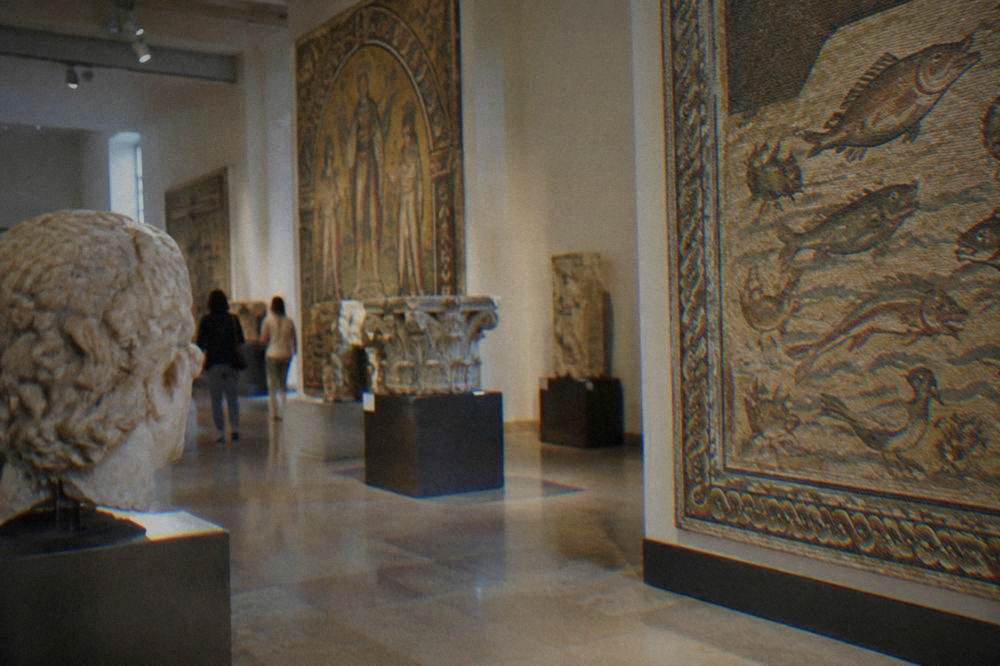
Four museums fill a rainy afternoon in Ravenna: the National Museum at EUR 7 full and EUR 2 reduced, the MAR art museum at EUR 8 with EUR 6 reduced and EUR 3 students, the Classis Ravenna city museum at EUR 8 and EUR 6 reduced, and the Museo Dante at EUR 5 with EUR 3.50 reduced, according to their official pages. Dante's tomb itself is free, open 10:00 to 18:00 from November to March and 10:00 to 19:00 from April to October.
The National Museum of Ravenna sits beside the cathedral complex, close enough to the mosaic cluster that rain barely registers on the transfer. It closes on Mondays, and its hours shift through the week, so the listing is the place to check before setting out. The MAR, the city art museum, keeps Tuesday to Saturday 9:00 to 18:00 and Sunday afternoons, closed Mondays and 25 December. Both are full buildings with long indoor circuits, which is exactly what a wet afternoon wants.
The Classis Ravenna museum is the deepest single indoor stop in the area, a former sugar factory in Classe that now holds the city and territory collection, including the material that moved there when the TAMO mosaic museum closed in 2023. Its listed hours are daily 10:00 to 17:00 with last entry 50 minutes before closing, closed 25 December, and it pairs with Sant'Apollinare in Classe for a wet day built around one outbound trip.
| Museum | Ticket | Hours to check | Rainy day fit |
|---|---|---|---|
| National Museum of Ravenna | EUR 7 full, EUR 2 reduced | Closed Monday, hours vary by day | Near the cathedral, short walk from mosaics |
| MAR, city art museum | EUR 8, EUR 6 reduced, EUR 3 students | Tue to Sat 9:00 to 18:00, Sun afternoon, closed Monday | Long indoor circuit, central |
| Classis Ravenna | EUR 8 full, EUR 6 reduced | Daily 10:00 to 17:00, closed 25 December | Pairs with Sant'Apollinare in Classe |
| Museo Dante | EUR 5, EUR 3.50 reduced | Tue to Sun 10:00 to 17:30, closed Monday | Small, central, joins the free tomb |
| Domus dei Tappeti di Pietra | Check the official page | Hours vary by season | Underground Roman floors, fully covered |
The Domus dei Tappeti di Pietra is a natural rainy day sight, an excavated complex of ancient floor mosaics below street level, but its hours shift with the season and sources disagree on the ticket, so the official page is the reference to check on the morning you go. The Domus dei Tappeti di Pietra and Classis Ravenna guides carry what each official page states.
Dante's tomb closes the loop. It is free, it is central, and a visit takes minutes, so it slots between museum stops without exposing anyone to the weather for long. The Dante's tomb page explains the small neoclassical interior and the lamp that Florentine oil keeps lit each September.
Where Should You Eat In Ravenna When It Rains?
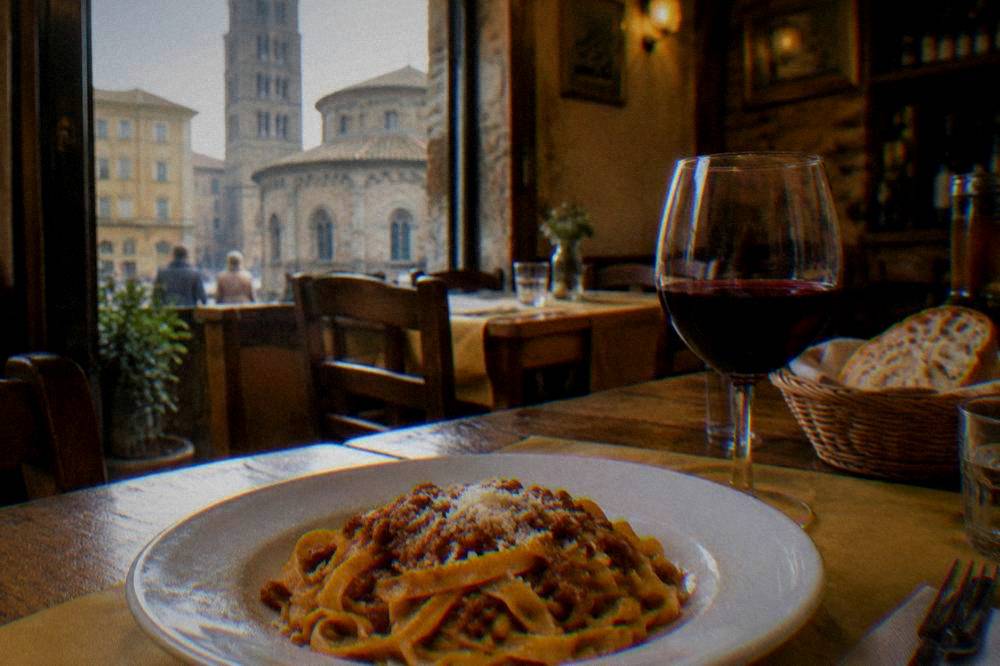
Ravenna's rainy day eating plan rests on long indoor lunches, since a cover charge, the coperto, is legal in Italy when printed on the menu, and tipping is not obligatory, so a two-hour table costs the menu price plus the printed coperto. The city's signature dishes, cappelletti, piadina and Romagna wines, are described on the Visit Ravenna food pages, which is where dish descriptions belong rather than in invented recommendations.
The Emilia-Romagna table suits a wet afternoon precisely, because the region's food culture treats lunch as an event. The Ravenna food guide walks through cappelletti, the small filled pasta served in broth, and the piadina romagnola page covers the flatbread that began as farm food and now appears at every hour. Both are eaten indoors at a table or standing under an awning at a piadineria, and a rainy day argues for the table.
The municipal tourism pages describe the city's traditional dishes and local wines without ranking restaurants, and this site follows that line: no invented restaurant names, no price per plate. What can be said with confidence is structural. The historic centre is dense with eating places inside a walkable radius, the itemised bill shows the coperto when it applies, and no service charge is obligatory beyond it.
| Stop | What it is | Rainy day logic |
|---|---|---|
| Cappelletti lunch | Filled pasta in broth, a Romagna staple | Long indoor table, unhurried service |
| Piadina break | Flatbread filled to order | Quick covered stop between monuments |
| Romagna wines | Sangiovese and local whites by the glass | Sits inside the lunch or an evening enoteca |
| Gelato | Display-case gelateria, central streets | Indoor counter, no weather exposure |
A mosaic and food walk is the one bookable product that combines the wet-day halves of Ravenna, a guided route through the monuments with tastings built in, and the operator's live listing shows what the current price and availability are. Beyond that, the Ravenna restaurants page explains how the local table is structured across the day.
How Does Rain Change Getting Around Ravenna?
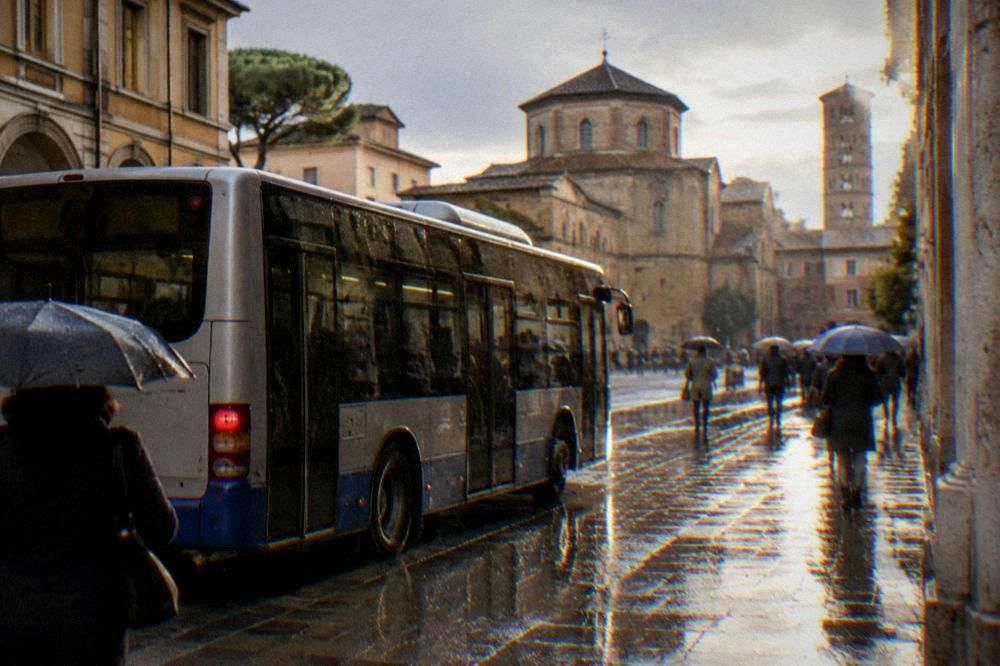
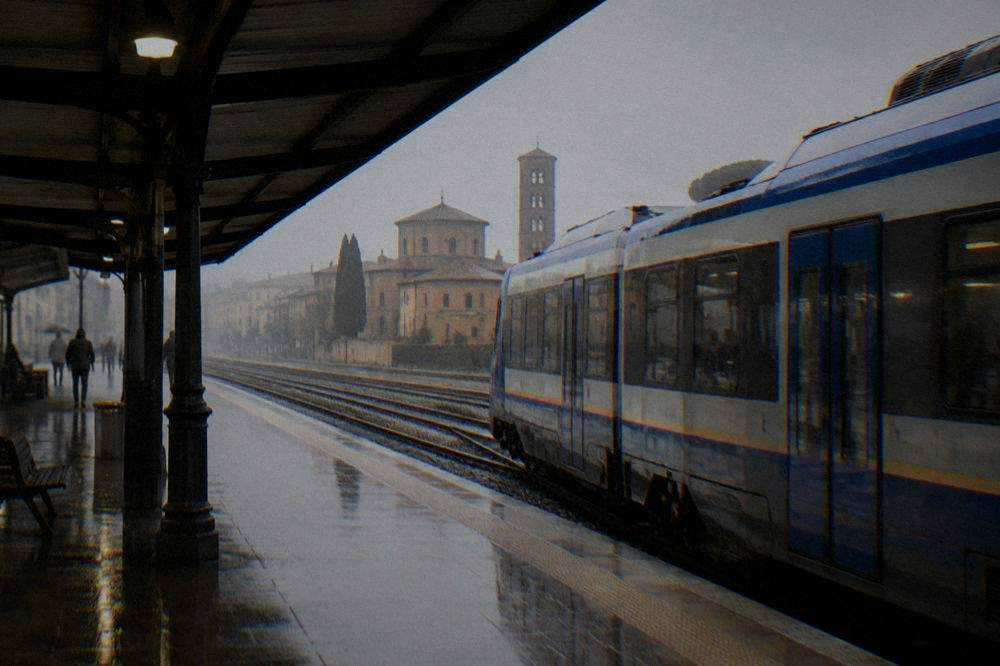
Rain changes little about transport in Ravenna: the historic centre is flat and walkable, the railway station sits a short walk from the centre, and the Start Romagna buses that serve the coast and the Classe area run from the station on the winter booklet in force to about 6 June 2027. The city's ZTL is camera-enforced with some gates active 7:30 to 20:30 and others 24 hours, so drivers should park outside the limited zone rather than chance it in bad weather.
On foot, the distances that matter are short. The mosaic cluster, the museums and the eating streets sit within a compact centre, and the getting around Ravenna guide maps the walking logic. Rain makes the case for the combined ticket even stronger, since entry times are booked per monument and the walking gaps between them are minutes, not half-hours.
For Classe and the coast, the buses matter. The Start Romagna winter timetable booklet covers the Ravenna area lines, and one current note from the municipal press pages is that city Line 1 runs free for the whole winter period, first to last run. Sant'Apollinare in Classe and the Classis Ravenna museum are served from the station area, and the beaches at Marina di Ravenna and the other lidi are a bus ride of their own, though on a rainy day the sand barrier story below explains why the coast is not the plan.
| Mode | Rain consideration |
|---|---|
| Walking | Short flat distances between all central sights |
| Start Romagna buses | Serve Classe and the coast from the station, winter booklet in force |
| Car and ZTL | Camera-enforced gates, some 7:30 to 20:30, some 24 hours; daily permit via parcometer |
| Train | Station a short walk from the centre; regional services to Bologna and Rimini |
| Cruise shuttle | Runs to Porto Corsini terminal on the days listed on the Visit Ravenna page |
Drivers should read the Ravenna parking and ZTL guide before a wet arrival, because circling a camera-enforced limited zone in rain is the one genuinely bad experience a rainy day can produce here. A daily permit for the ZTL can be bought at the 24-hour parcometers, and hotels can issue a guest authorisation, so the details are solvable, but better solved in advance.
What If The Rain Will Not Stop, Should You Leave Ravenna For The Day?
If rain settles in for a full day, Ravenna's best swap is a day trip to another indoor-rich city, and Bologna is the natural one: direct regional trains cover about 84 km in roughly 1 hour to 1 hour 20, though no fare is stated here, and the Bologna guide lists what a day there holds. Ferrara, Comacchio and Florence are further options, each reached by rail, and each with enough covered sights to fill a wet day.
The honest answer is that a rainy day is rarely a reason to leave Ravenna, because the mosaic city is already one of the most rain-proof destinations in the region. But a two-day or three-day visitor who has finished the monuments can swap the second rainy day without guilt. The Bologna day trip page covers the arcades that make that city famously walkable in rain, and the Florence and Venice pages set out the longer rail options. Venice in rain has its own logic, vaporetos and covered museums, and the Ravenna cruise port to Venice guide explains that link from the port side.
Closer to home, Comacchio and the Po Delta are nature destinations, and the flamingos of the Comacchio and Cervia salt pans are present year-round, including winter, according to the park and local tourism pages. That is a fair-weather plan in everything but name, so on a genuinely wet day the museum cities win.
| Day trip | Reached by | Rain logic |
|---|---|---|
| Bologna | Direct regional train, about 1 hour to 1 hour 20 | Arcades and indoor markets |
| Ferrara | Regional rail | Castle interiors and museums |
| Comacchio and Po Delta | Rail or bus, then local transport | Open-air nature, better in dry weather |
| Florence | Rail with a change | Dense museum city, fully rain-proof |
| Venice | Rail | Covered museums and vaporeto network |
For visitors arriving from Bologna in the first place, a guided day trip that starts there and returns there removes the wet-day transport question entirely, and the listing shows what the current tour covers.
For a private version of the same covered circuit, two options below render the live details from the operator pages.
What Does A Full Ravenna Rainy Day Look Like, Hour By Hour?
A workable rainy day in Ravenna runs: 10:00, San Vitale and the timed entries at Galla Placidia and the Neonian Baptistery on the combined ticket, 12:30, a long indoor cappelletti lunch, 14:30, the National Museum or the MAR, 16:30, Dante's tomb, which is free, and the evening indoors with Romagna wine. In winter hours, from 3 November 2026, last admissions fall between 16:30 and 16:45, so the museum comes before the tomb.
The sequencing matters more in winter than in summer, because the Ravenna Mosaici page shifts the monuments to 10:00 to 17:00 from 3 November 2026 to 6 March 2027, with the last entries around 16:30 and 16:45. In the summer schedule, running to 2 November 2026 with 9:00 to 19:00 hours, the day loosens up and an evening monument visit becomes possible after the rain clears.
Sant'Apollinare Nuovo is the flex slot. Its long nave suits the middle of a downpour, and it is on the 2-monument combo alongside San Vitale, so a traveller on the smaller ticket still has a full second interior. The Archiepiscopal Museum, on the 5-monument combo, is the third flex slot, fully covered and short.
The evening needs no plan beyond a table. The Ravenna nightlife page lists what stays open late, and the two days in Ravenna itinerary shows how a second, hopefully drier day absorbs whatever the rain pushed aside, with the three days in Ravenna version stretching the same idea further.
Common Questions About A Ravenna Rainy Day
Is Ravenna good in the rain?
Yes. Ravenna's main sights are indoor mosaic interiors, and the historic centre is compact and flat, so a rainy day changes the schedule very little. The five combined-ticket monuments, the museums and Dante's tomb are all covered spaces a short walk apart.
What can you do in Ravenna on a rainy day?
Visit the UNESCO mosaic monuments on the combined ticket, spend the afternoon in the National Museum, the MAR or the Classis Ravenna museum, see Dante's tomb, which is free, and take a long indoor lunch built around cappelletti and piadina. The mosaics in half a day plan shows the fastest version of the circuit.
Does rain close the Ravenna mosaics?
No. The Ravenna Mosaici page lists closures only on 25 December and 1 January. Rain does not close the monuments; the timed entries at the Mausoleum of Galla Placidia and the Neonian Baptistery apply in all weather.
Are Ravenna's beaches an option in the rain?
Not really. The beaches at Marina di Ravenna, Punta Marina and the other lidi are 8 km or more from the centre and reached by Start Romagna bus, and a winter sand barrier is built each autumn at Punta Marina, Marina di Ravenna Sud and Lido di Savio, staying until spring 2027, so the shoreline itself changes shape in the cold months.
Can you visit Ravenna's museums on a Monday?
Partly. The National Museum, the MAR and the Museo Dante close on Mondays, but the Ravenna Mosaici monuments and, per its listing, Classis Ravenna run daily, so a Monday rainy day leans on the combined ticket and the Classe trip.
Is a guided tour worth it in bad weather?
A guided walk can suit rain well, because the route runs between covered interiors and the guide keeps the group moving. Availability and cancellation terms are shown on the operator's live listing, and free cancellation up to 24 hours before keeps a rain-dependent plan flexible.
A rainy day in Ravenna is not a lost day, it is the day the city was built for: gold ceilings, enclosed chapels, museums a street apart, and a table that expects you to stay. Pack the umbrella, book the entry times, and let the weather do what it likes outside the mosaics.