Getting Around Ravenna
Ravenna's historic centre is small, flat and made for walking, and almost everything beyond it, the beaches, the port, Classe and the day-trip cities, is reached by Start Romagna bus or regional train. This guide sets out what the official pages say about each way of moving, from the ZTL camera gates to the cruise shuttle and the winter bus timetable.
Short answer
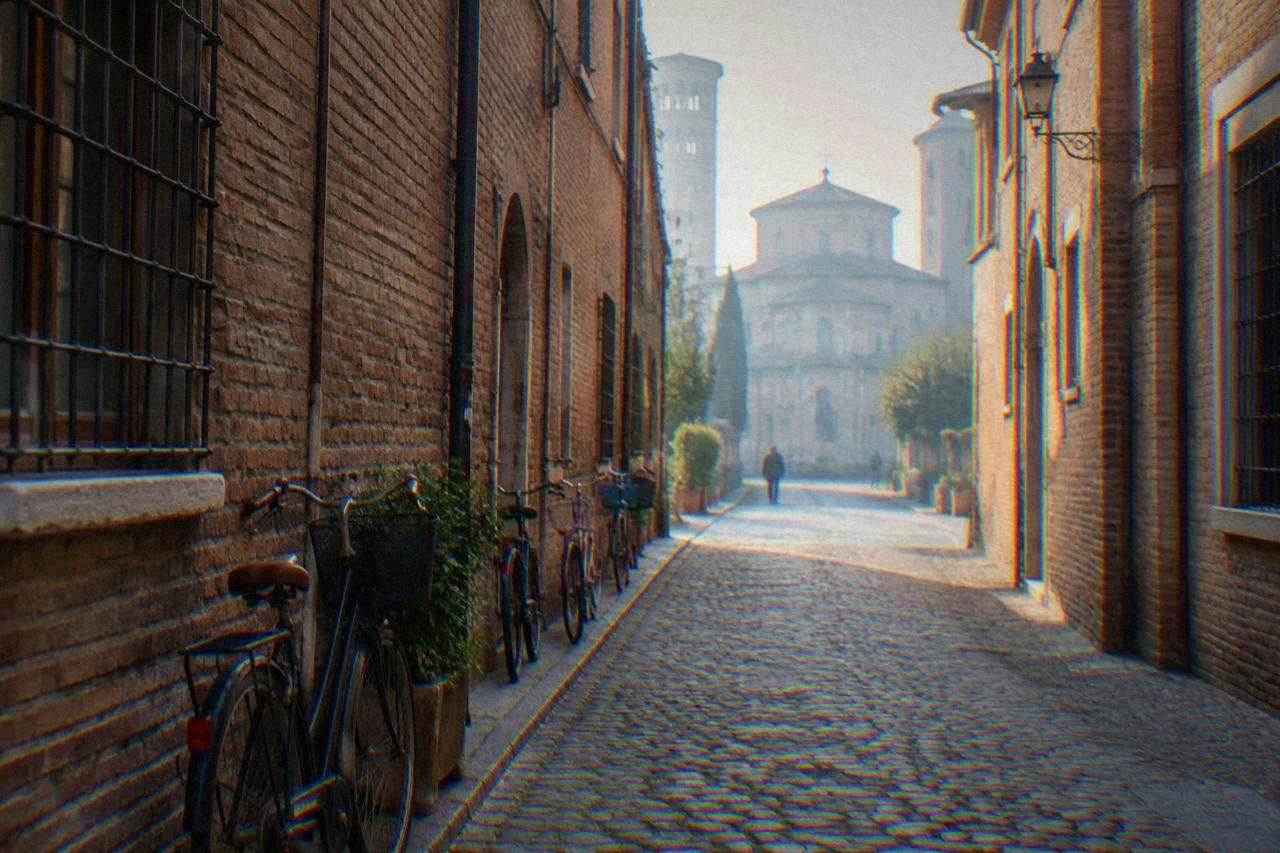
Ravenna is best explored on foot: the UNESCO monuments, Dante's tomb and the main squares sit inside a compact inland centre. Start Romagna buses run from the railway station to the beach resorts and the surrounding towns, regional trains link the city with Bologna, Rimini, Ferrara and beyond, and the Visit Ravenna shuttle connects the centre with the cruise terminal at Porto Corsini. A car is useful for the Po Delta but the centre's ZTL is camera-enforced.
Ravenna, in Emilia-Romagna, Italy, is a flat Po-valley city whose historic centre sits inland, about 8 km from the Adriatic coast, and that geography shapes every transport decision a visitor makes. The eight UNESCO Early Christian monuments, Dante's tomb, Piazza del Popolo and the shopping streets all sit close together inside a compact core that the municipal tourism pages describe as small and walkable. The beach resorts, Marina di Ravenna, Punta Marina, Lido Adriano, Lido di Classe and Lido di Savio, are separate places strung along about 35 km of coast, reached by Start Romagna bus from the station rather than on foot. This page pulls together what the official sources say about each way of moving through and beyond the city, from the camera-enforced limited traffic zone to the cruise shuttle at Porto Corsini.
Is Ravenna Easy To Explore On Foot?
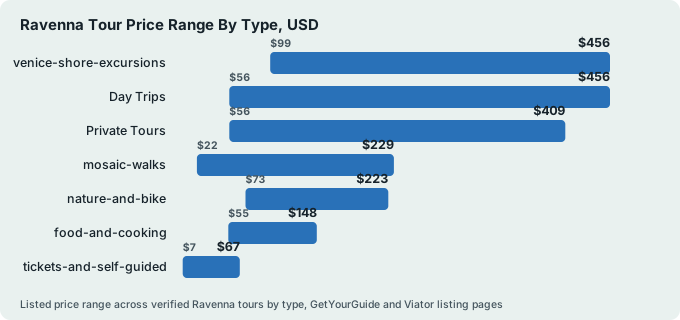
Yes, Ravenna is one of the easiest cities in Emilia-Romagna to explore on foot, because the historic centre is small, flat and holds nearly all the main sights within a short walk of each other. The UNESCO monuments, Dante's tomb, Piazza del Popolo and the railway station all sit inside or immediately beside this core, so a visit built around walking needs no bus, no tram and no taxi for the sights themselves. The terrain is level Po-plain ground throughout.
The practical consequence is that shoe choice matters more than transport planning. San Vitale, the Mausoleum of Galla Placidia, the Neonian Baptistery, Sant'Apollinare Nuovo and the Archiepiscopal Museum cluster in one corner of the centre, while Dante's tomb and Piazza del Popolo sit a few blocks away. The Ravenna Mosaici combo ticket is valid for one week with one admission per monument and an entry time booked for each, which rewards a walking plan that groups the timed entries sensibly rather than zigzagging. The Ravenna Mosaici combo ticket guide breaks down what each ticket tier covers, and the site's Ravenna combo ticket page holds the detail.
Two exceptions pull walkers outside the core. Sant'Apollinare in Classe and the Classis Ravenna museum stand in the Classe area outside the centre, and the Basilica of Sant'Apollinare in Classe keeps its own hours, Monday to Saturday 8:30 to 19:00 and Sunday 13:30 to 19:00 according to the cultura.gov.it listing. The Mausoleum of Theodoric also sits at the edge of town. Both are bus or bike territory, covered further down this page.
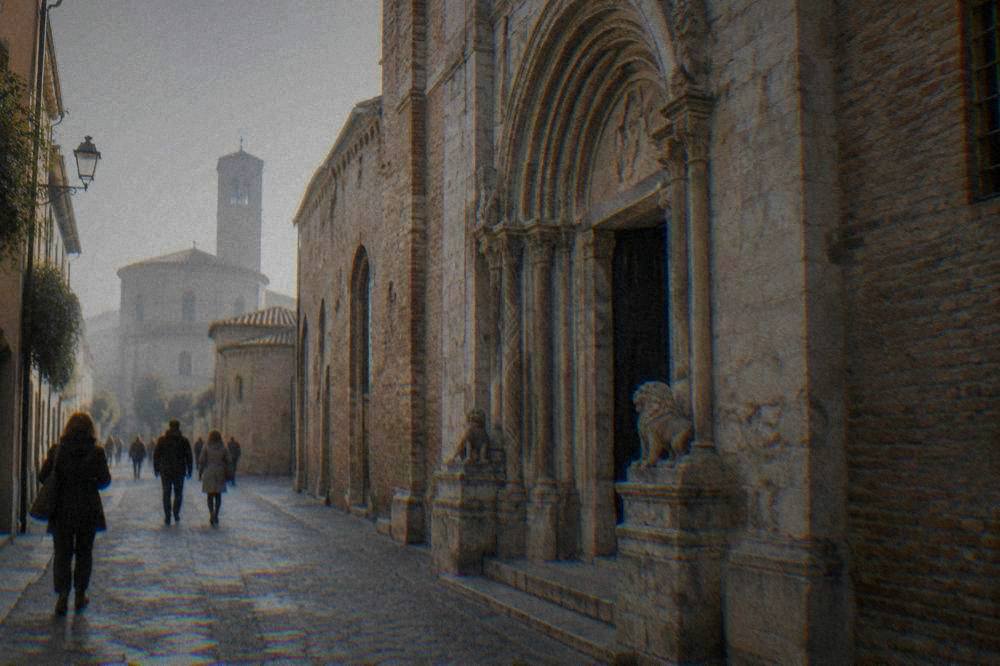
For anyone weighing whether the city justifies the journey at all, the is Ravenna worth visiting guide covers the case for and against, and the advice in how many days in Ravenna helps size the stay to the walking distance involved.
If you would rather have the walking organised for you, a guided option is worth comparing: the Bologna start, UNESCO monuments tour pairs the rail journey with a guided walk through the mosaic monuments, and Check availability shows the operator's live listing.
How Do The Start Romagna Buses Work In Ravenna?
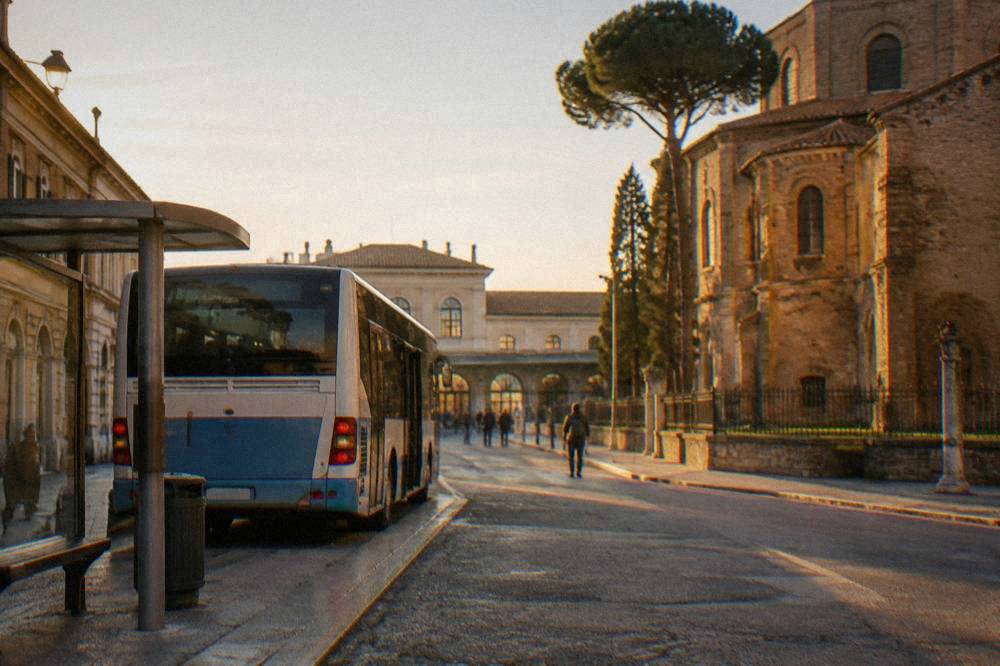
Start Romagna is the local bus operator, running the urban lines through Ravenna and the suburban services from the railway station out to the beach resorts of Marina di Ravenna, Punta Marina, Lido Adriano, Lido di Classe and Lido di Savio, which are otherwise out of walking reach. The winter timetable in force from 15 September 2026 runs to approximately 6 June 2027, and Line 1 is fully free on every run of the day for that whole winter period.
The station is the hub. Buses for the coast and the surrounding towns depart from there, and the winter timetable is published as booklet I26-27 on the operator's site. The Comune press release of 3 October 2026 confirms the free Line 1 arrangement for the entire winter period, first run to last, after recording a 25 percent rise in passengers in the timetable's first fifteen days, which makes at least one central route a zero-cost option for visitors.
| Bus topic | What the official sources say |
|---|---|
| Operator | Start Romagna, urban and suburban lines |
| Beach routes | From the railway station to Marina di Ravenna, Punta Marina, Lido Adriano, Lido di Classe, Lido di Savio |
| Winter timetable | 15 September 2026 to approximately 6 June 2027, booklet I26-27 |
| Line 1 | Fully free, all days, first to last run, for the whole winter period |
| Fares on other lines | Confirm on the operator's site or app before travel |
The operator's own site holds the live fares and the route PDFs, and that is where to check before committing to a bus-only beach day.
The beaches themselves deserve their own planning, and the Ravenna beaches guide covers what each resort offers. One winter detail worth knowing: the Comune approved a 25,000 cubic metre sand barrier built each autumn at Punta Marina, Marina di Ravenna Sud and Lido di Savio, and it stays in place until spring 2027, so the winter shoreline looks different from the summer one.
Can You Drive Into Ravenna, And What Is The ZTL?
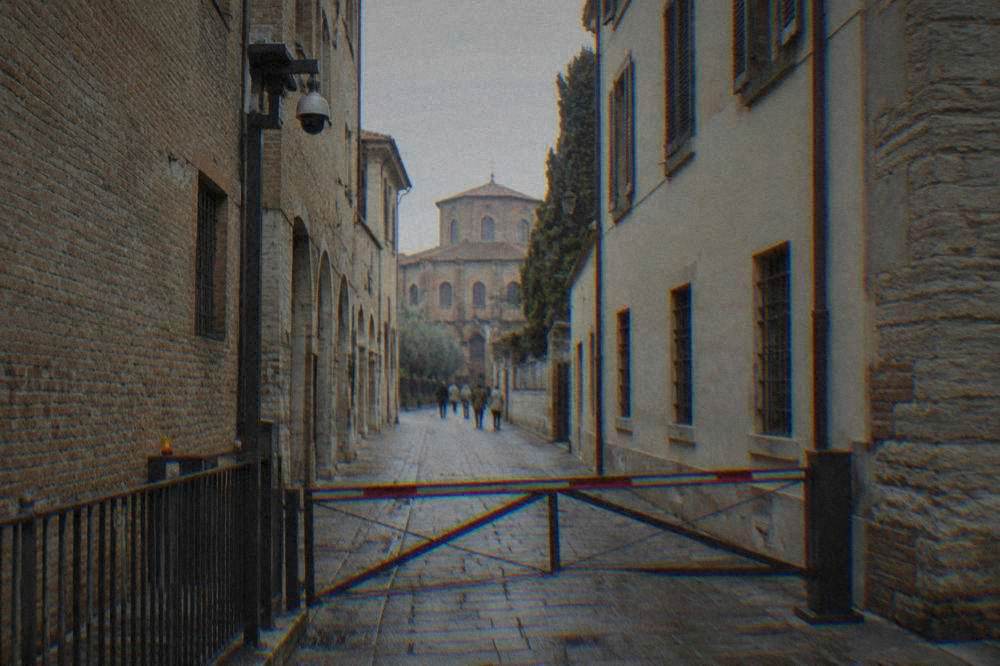
You can drive to Ravenna easily, but the historic centre is protected by a camera-enforced limited traffic zone, the ZTL, whose gates differ: some operate from 7:30 to 20:30, including Via Mariani, Via Guerrini and Via Matteucci, while others around the Via Ponte Marino area run 24 hours. A daily permit, about EUR 8, is bought at the 24-hour parcometers for vehicles up to 5 tonnes, and hotels can issue a special authorisation for their guests.
The Visit Ravenna page on the zone sets out the gate hours and the parcometer list, and it is the page to check on the day you travel, because the enforcement bands and the seasonal measures change. From around 1 October to late March or April the Emilia-Romagna winter air-quality plan adds emission restrictions and ecological Sundays on scheduled dates, with diesel and older petrol vehicles affected during those windows. Nothing here needs to deter a driver; it just needs arranging in advance.
| Driving topic | What the rules say |
|---|---|
| Enforcement | Cameras at the ZTL gates |
| Gate hours | Some 7:30 to 20:30, some 24 hours, gate by gate |
| Daily permit | About EUR 8, from the 24-hour parcometers, vehicles up to 5 t |
| Hotel guests | Hotels can issue a special authorisation |
| Winter air measures | Emission limits and scheduled ecological Sundays, roughly October to spring |
ZTL fine amounts are likewise a matter for the official notices rather than a travel guide.
Is Ravenna Good For Cycling?
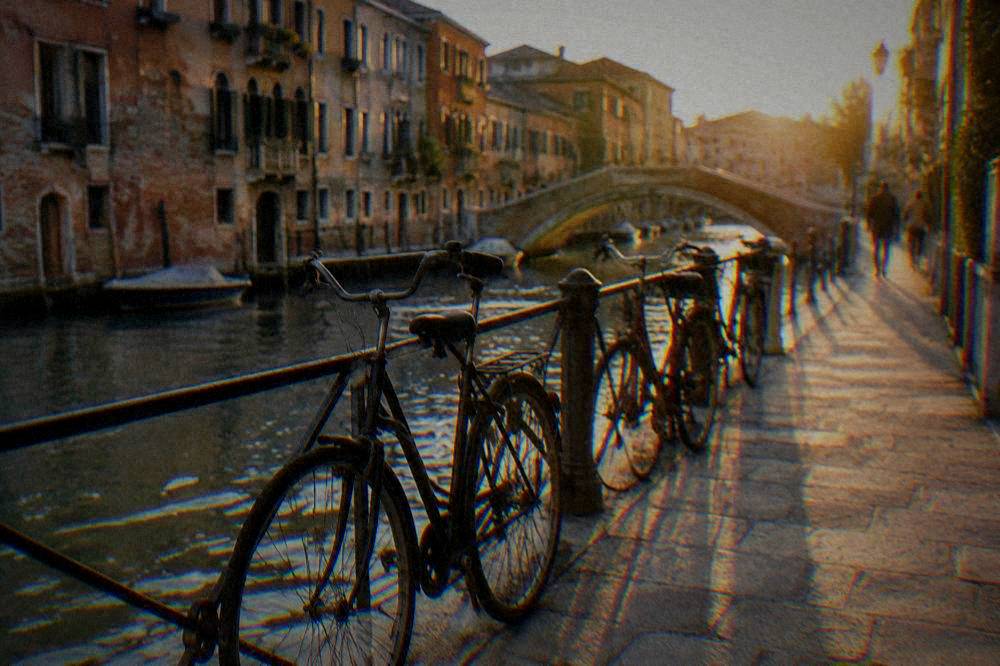
Cycling suits Ravenna well, because the city sits on dead-flat Po-plain ground and the ride out to the coast, about 8 km to the nearest resort, is over level terrain the whole way, with the Pineta di San Vitale and the Classe pinewood offering shaded riding between the city and the beaches. The Po Delta regional park to the south is also cycling country, with the Anello Dolce Salato loop of about 4 km around the Punte Alberete and Valle Mandriole marshes listed among the park's accessible itineraries.
The historic centre's calm streets and the flat roads to Marina di Ravenna make a bike a genuine alternative to the bus for the beach run, though this site prints no bike-rental or bike-share operator details, fares or schemes, so ask at your accommodation or the tourism office for the current options. For riders who want a guide rather than a map, a supported option exists: the guided e-bike tour covers ground between the city's history and its natural areas, and Check availability shows the operator's listing.
If you would like the coastal ride led for you, book a guided electric bike tour here.
Birders heading for the wetlands should know what the park pages say: Punte Alberete, Valle Mandriole and the Pineta di San Vitale are the flooded-forest and marsh areas, with the Ca Vecchia visitor centre as the access point, and the Cervia salt pans visitor centre at Via Bova 61 opens weekends and holidays with September to November hours of 10:00 to 12:30 and 14:30 to sunset on Saturdays, Sundays and holidays.
How Do Trains Connect Ravenna With The Region?
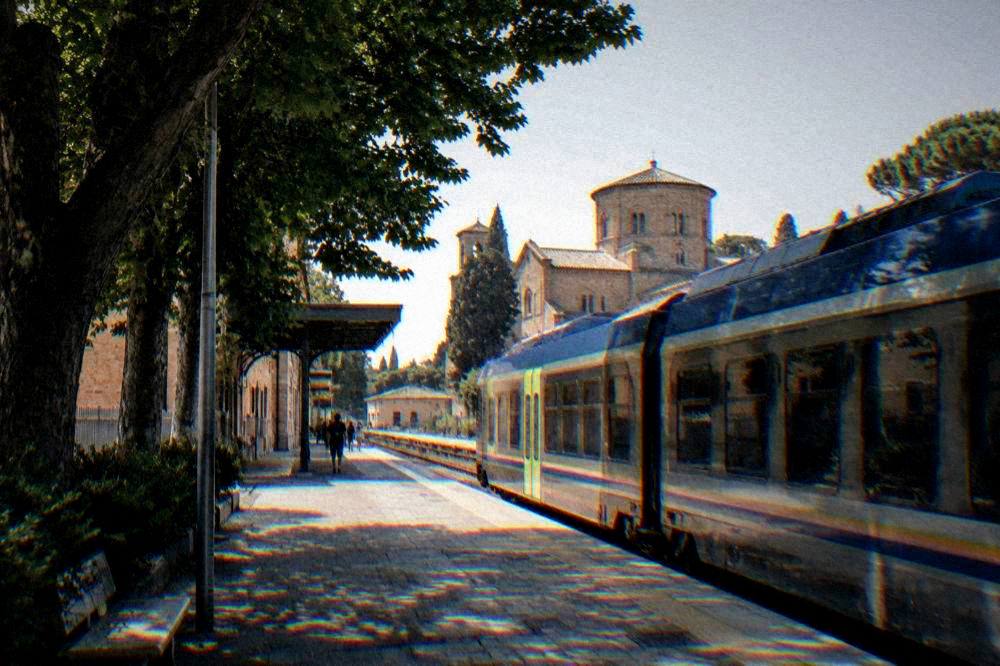
Ravenna's railway station sits a short walk from the historic centre and is the rail hub for the region, with direct regional trains to Bologna Centrale covering about 84 km in roughly one hour to one hour twenty, and direct regional services to Rimini taking around 42 to 58 minutes, from where the rest of the coast and the Florence and Venice lines open up. The regional timetable gives the authoritative times, and fares are confirmed at booking rather than quoted here.
The Bologna link matters because Bologna's airport is the region's main gateway, and there is no direct airport bus to Ravenna listed: the route is the Marconi Express people-mover from the airport to Bologna Centrale, then a regional train, about 2 to 2.5 hours door to door. The Marconi Express runs daily from 05:40 to midnight with a night bus substitute in the small hours, according to its operator's page. The Bologna airport to Ravenna guide walks through that journey step by step, and the Bologna to Ravenna guide covers the rail leg on its own.
| Rail route | What the timetable sources give |
|---|---|
| Ravenna to Bologna Centrale | Direct regional trains, about 84 km, fastest about 57 to 60 minutes, typical 1 hour to 1 hour 22 |
| Ravenna to Rimini | Direct regional, about 42 to 58 minutes |
| Bologna airport to Ravenna | Marconi Express to Bologna Centrale, then regional train, about 2 to 2.5 hours total |
| Fares | Confirm with the operator at booking |
Autumn 2026 shows why a timetable check before travel pays off: the Ravenna to Rimini line had weekend bridge maintenance in October with trains replaced by buses, and regional rail saw strike days in the same month, both standard Italian railway events that the live timetable and strike notices track. Nothing of the sort is announced for later in the winter, but the timetable is the live authority.
For longer legs, the Florence to Ravenna guide and the Venice to Ravenna guide cover the connections, and the general how to get to Ravenna guide is the overview page.
How Do You Get From Ravenna To The Cruise Port?
The cruise terminal at Porto Corsini sits about 15 km from the centre, and the Visit Ravenna shuttle connects the city centre and the railway station area with the terminal in about 30 minutes, with a pick-up point 300 m from the station; the 2026 shuttle page ran the service from 3 May to 26 October. The port expects 111 calls and about 390,000 passengers across the 2026 season, and the new terminal's inauguration is reported for spring 2027, so the current terminal handles the season now underway.
Cruise passengers with a short day in port face a straightforward choice: the shuttle into the centre, then a walking visit of the mosaic monuments, with the timing of the last shuttle back checked against the ship's all-aboard. The Ravenna cruise port guide and the dedicated cruise port day guide plan that day in detail, and the cruise port to Venice guide covers the reverse direction.
| Cruise transport fact | Figure |
|---|---|
| Terminal location | Porto Corsini, about 15 km from the centre |
| Visit Ravenna shuttle | Centre and station area to terminal, about 30 minutes |
| Station pick-up | 300 m from Ravenna railway station |
| 2026 shuttle season | 3 May to 26 October, per the 2026 page |
| 2026 port season | 111 calls, about 390,000 passengers planned |
| New terminal | Inauguration reported for spring 2027 |
Passengers who prefer a guided use of the port day can compare excursions: the 7-hour Venice shore excursion turns the call into a Venice day, and Check availability shows the operator's listing.
Do You Need A Car For The Day Trips Around Ravenna?
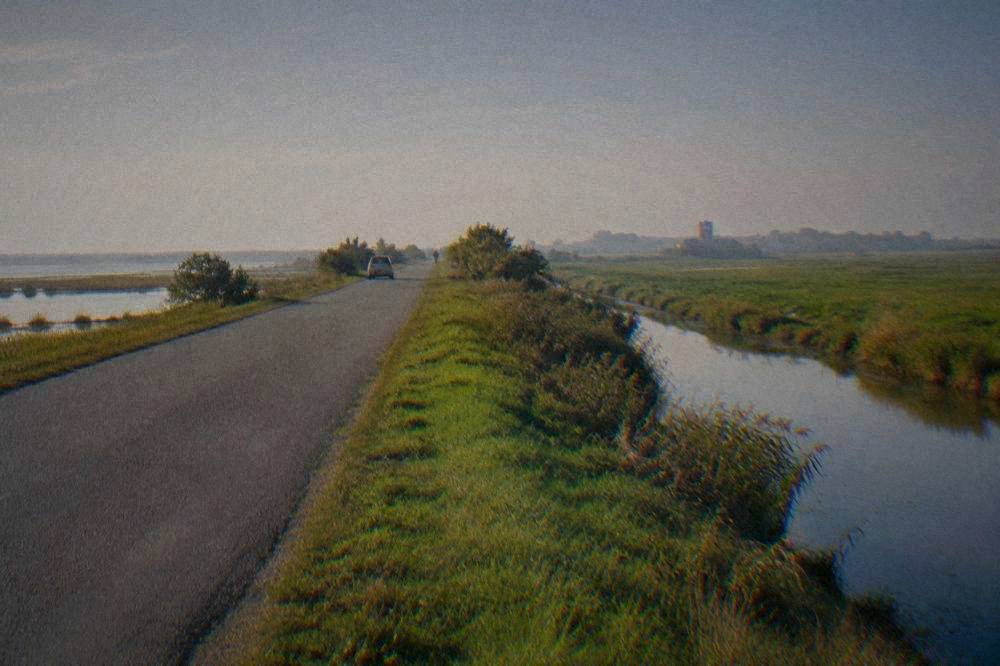
A car helps for exactly one category of day trip from Ravenna, the natural areas of the Po Delta, the Cervia salt pans and the scattered wetland reserves, where bus frequency thins out and the visitor centres sit on minor roads; for every city day trip, Bologna, Rimini, Ferrara, Faenza, Florence and Venice, the regional train from Ravenna station is the simpler answer, and for San Marino the route runs by train to Rimini and then the onward connection. The historic cities are all direct or one-change rail journeys.
The pattern is consistent. Bologna is about 84 km by direct regional train, Rimini under an hour, and the day trip pages for Bologna, Rimini, Ferrara, Faenza, Cervia, Brisighella, Comacchio, the Po Delta, Florence, Venice and San Marino each cover their own transport leg. A car earns its keep in the delta, where the Cervia salt pans visitor centre keeps weekend and holiday hours and the marsh reserves have their own access points, and where a schedule built around bus timetables eats into the daylight.
Guided day trips cover some of the same ground without the driving: the private tour with Romagna flavors combines the mosaics with the region's food, and Check availability shows the operator's listing.
What About Taxis, Ride-Hailing And Getting Around At Night?
Taxis and ride-hailing operate in Ravenna at the scale of a mid-sized Italian provincial city, useful for the station-to-hotel leg, the port run and late-night returns, but they are not something this page prices, because no taxi fare for any Ravenna journey appears in the sources; the practical guidance is to agree the fare or check the meter before setting off, save the local taxi company's number, and confirm at booking whether your accommodation can arrange a car.
Night movement is mostly a centre affair. The Ravenna nightlife guide covers the evening city, which stays inside walking scale. Petty crime such as pickpocketing around tourist sites and on public transport is the standard precaution the safety pages give, so a bag zipped and held in front on a crowded bus is the check a reader can actually make. Ride-hailing availability is confirmed in the app on the day, since operator coverage shifts. Emergency services across Italy, including Ravenna, run on 112.
| Way of getting around | Best for | Watch out for |
|---|---|---|
| On foot | The whole historic centre and every UNESCO monument except Sant'Apollinare in Classe | Timed entries at Galla Placidia and the Neonian Baptistery still need booking |
| Start Romagna bus | Beaches, Classe, surrounding towns, from the station | Fares and times on the operator's site; winter booklet I26-27 |
| Bike | The flat run to the coast, the pinewoods, the delta reserves | Rental options confirmed locally |
| Regional train | Bologna, Rimini, Ferrara, onward to Florence and Venice | Fares at booking; strikes and works appear in the live timetable |
| Car | The Po Delta, salt pans and scattered wetlands | Camera-enforced ZTL, gate hours vary, daily permit about EUR 8 |
| Cruise shuttle | Porto Corsini terminal to centre, about 30 minutes | 2026 season ran 3 May to 26 October; new terminal reported for spring 2027 |
Season shapes all of this. The best time to visit Ravenna guide and the Ravenna weather guide give the climate picture, and the winter monument hours, 10:00 to 17:00 from 3 November 2026 to 6 March 2027 on the Ravenna Mosaici page, mean the last admission times tighten the walking day in the cold months. Where to base yourself is the other half of the equation, and the where to stay in Ravenna guide maps the neighbourhoods against the transport on this page. For everything the city holds beyond movement, the Ravenna Travel Guide homepage is the starting point, and the things to do in Ravenna round-up lists the sights themselves.
Common Questions About Getting Around Ravenna
Is Ravenna walkable?
Yes. The historic centre is small, flat and holds the UNESCO monuments, Dante's tomb and the main squares within a short walk of each other, and the railway station sits a short walk from the core. Only Sant'Apollinare in Classe, the Classis Ravenna museum and the Mausoleum of Theodoric pull you outside walking range.
How do I get from Ravenna to the beaches?
Start Romagna buses run from the railway station to Marina di Ravenna, Punta Marina, Lido Adriano, Lido di Classe and Lido di Savio along about 35 km of coast. The winter timetable, booklet I26-27, runs from 15 September 2026 to about 6 June 2027, and Line 1 is free all winter. Fares for the beach routes are on the operator's site.
Can I drive into Ravenna's centre?
The centre is a camera-enforced ZTL. Some gates run 7:30 to 20:30 and some 24 hours, a daily permit costs about EUR 8 from the 24-hour parcometers for vehicles up to 5 tonnes, and hotels can issue a guest authorisation. Check the Visit Ravenna ZTL page before driving in.
How do I get from Ravenna station to the cruise terminal?
The Visit Ravenna shuttle runs from the centre and the station area, with a pick-up 300 m from the station, to the Porto Corsini terminal in about 30 minutes; the 2026 page ran it from 3 May to 26 October. The terminal is about 15 km from the centre.
Do I need a car in Ravenna?
Not for the city or the main day trips: the centre is walkable, trains cover Bologna, Rimini, Ferrara and onward connections, and buses cover the beaches. A car earns its keep for the Po Delta, the Cervia salt pans and the scattered wetland reserves, provided you arrange ZTL access and parking first.
How long is the train from Bologna to Ravenna?
Direct regional trains cover about 84 km, with the fastest runs about 57 to 60 minutes and typical journeys 1 hour to 1 hour 22. The regional timetable holds the live times, and fares are confirmed at booking.
Getting around Ravenna comes down to a simple split: the centre belongs to your feet, the coast belongs to the bus or a bike, the region belongs to the regional train, and the delta belongs to whoever drove. Plan the timed monument entries around the walking distances, check the Start Romagna and rail timetables on the day, and the city does the rest.