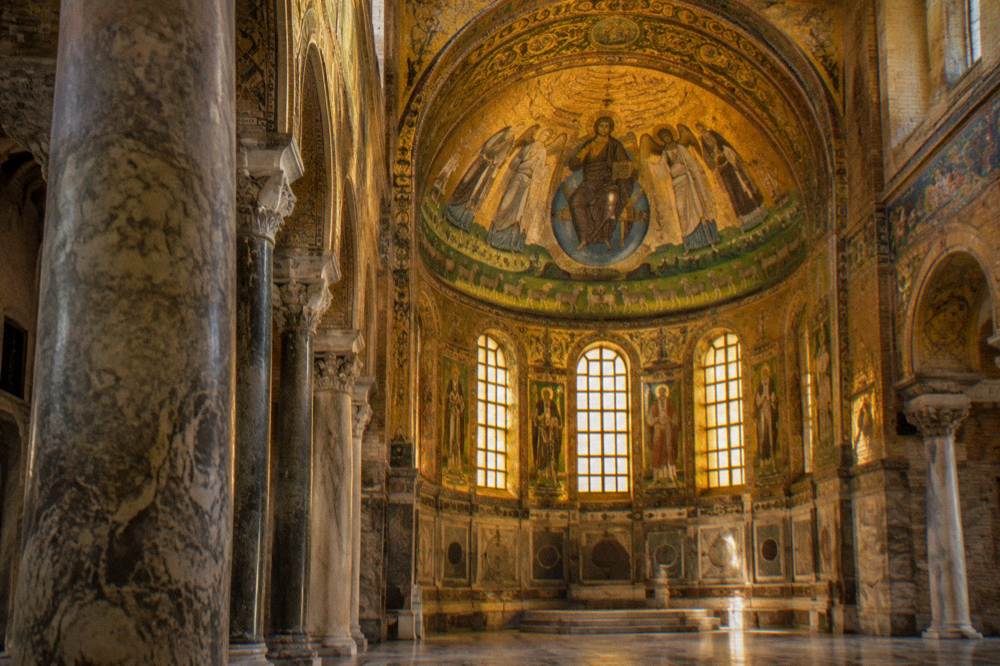
Ravenna Combo Ticket
The Ravenna Mosaici combined ticket bundles the mosaic monuments of Ravenna's historic centre into one purchase with seven days of validity. Here is what the official ticket page lists, how timed entry works, and which monuments need separate tickets.
Short answer
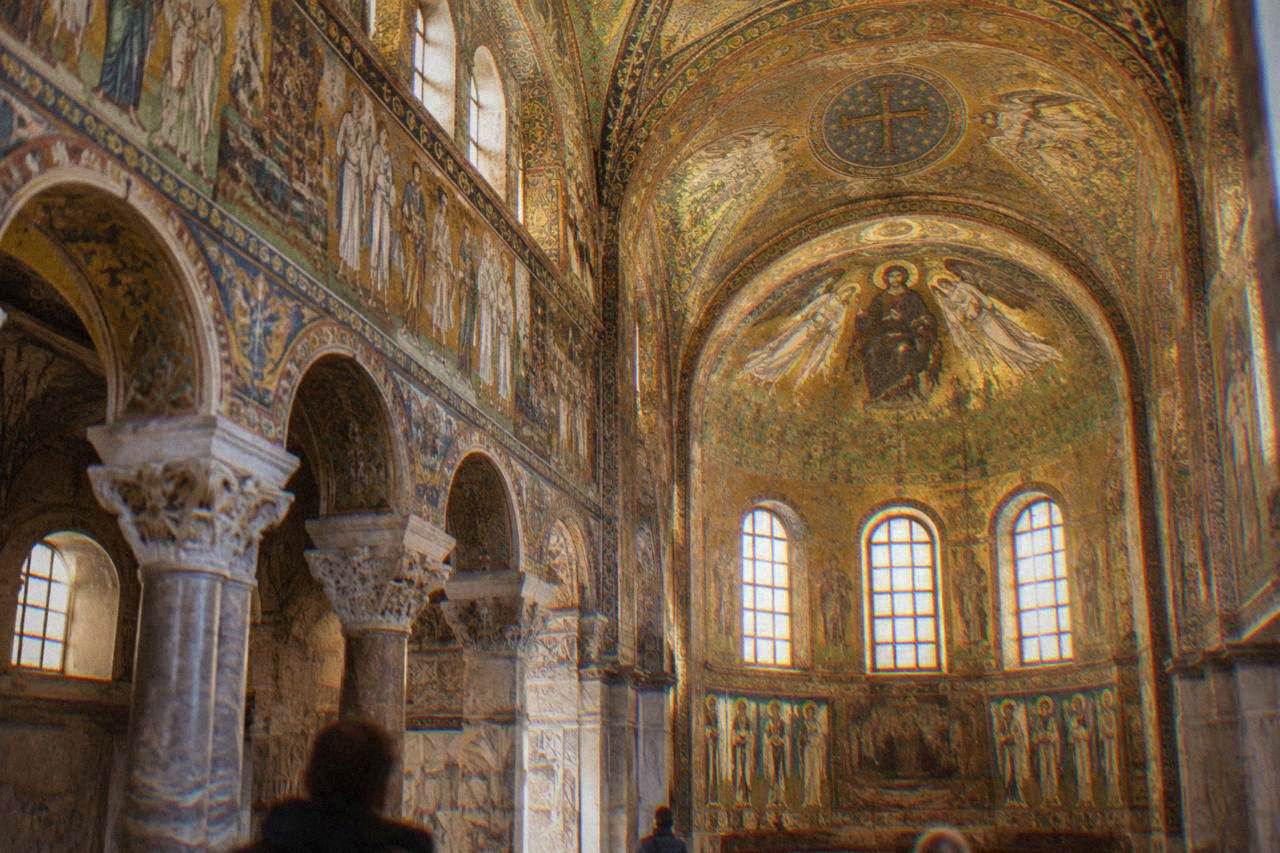
The Ravenna Mosaici combined ticket covers San Vitale, Sant'Apollinare Nuovo, the Mausoleum of Galla Placidia, the Neonian Baptistery and the Archiepiscopal Museum with the Chapel of St Andrew, from EUR 9.50 reduced, valid 7 days with one admission per monument and a booked entry time for each.
Ravenna, in Emilia-Romagna, Italy, sells its mosaic monuments through a combined ticket system run under the Ravenna Mosaici banner, and the ticket structure shapes every visit to the city's UNESCO sites. The combined ticket is not a city pass: it is a bundle of specific monuments, sold in tiers, valid for seven days, and it leaves several famous sites, including Dante's tomb and the Mausoleum of Theodoric, outside its scope. This page sets out what the official Ravenna Mosaici pages state, tier by tier, plus the separate tickets a full Ravenna itinerary needs.
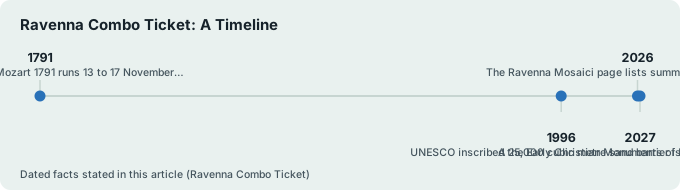
The background matters for planning. UNESCO inscribed the Early Christian Monuments of Ravenna on the World Heritage List in 1996, recognising eight monuments: the Mausoleum of Galla Placidia, the Neonian Baptistery, Sant'Apollinare Nuovo, the Arian Baptistery, the Archiepiscopal Chapel, the Mausoleum of Theodoric, San Vitale and Sant'Apollinare in Classe. The combined ticket covers the five in and around the historic centre's core cluster. The others need their own arrangements, and the overview on Ravenna's UNESCO sites explains how they fit together geographically.
What Is The Ravenna Combo Ticket And What Does It Cover?
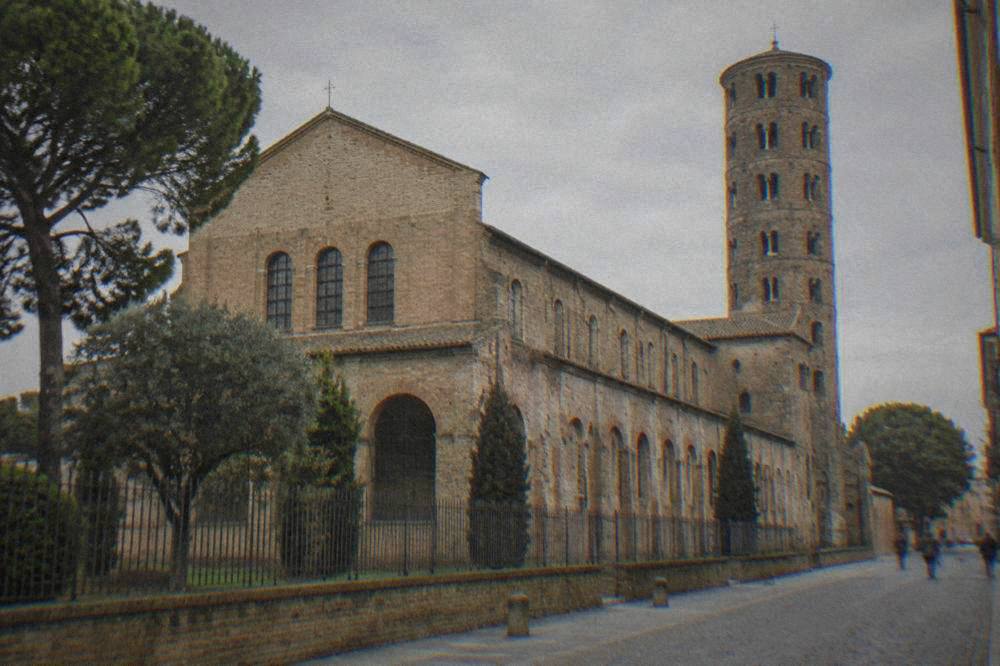
The Ravenna Mosaici combined ticket is a tiered bundle sold in three versions, a 2-monument, a 4-monument and a 5-monument option, covering the centrally clustered UNESCO mosaic monuments of Ravenna. The 2-monument version covers Sant'Apollinare Nuovo and San Vitale, the 4-monument version adds the Mausoleum of Galla Placidia and the Neonian Baptistery, and the 5-monument version adds the Archiepiscopal Museum with the Chapel of St Andrew, per the official Ravenna Mosaici prices page.
The logic of the tiers follows the physical layout. Sant'Apollinare Nuovo and San Vitale sit within a short walk of each other in the centre, and the two smallest timed-entry sites, Galla Placidia and the Neonian Baptistery, sit beside or near San Vitale. The Archiepiscopal Museum and its chapel close the cluster. Everything on the combined ticket is reachable on foot from Piazza del Popolo, which is why the combo works so well as a single purchase.
What the ticket does not do is cover the whole World Heritage inscription. The Mausoleum of Theodoric, the Arian Baptistery and Sant'Apollinare in Classe are UNESCO monuments with their own ticketing, handled through the state monument system rather than the Ravenna Mosaici bundle. Dante's tomb, which is not one of the eight, is free but separately administered. A visitor who wants all eight UNESCO monuments therefore buys the combined ticket plus at least two more tickets.
The combined ticket is also not a skip-everything pass. The Ravenna Mosaici terms of purchase state that the ticket is valid 7 days, allows one admission per monument, and requires an entry time to be booked for each monument. That booking requirement is the detail that trips up unplanned visits, and the timed-entry section below covers it in full.
How Much Does The Ravenna Combo Ticket Cost?
The Ravenna Mosaici prices page lists reduced fares starting at EUR 9.50 for the 2-monument combined ticket, EUR 11.50 for the 4-monument version and EUR 13.50 for the 5-monument version. The full, non-reduced prices are not reproduced here: the official Ravenna Mosaici entrance-and-prices page holds the live full fares, and it is the page to check before buying.
Reduced eligibility is defined on the same page. Reduced fares apply to students, non-accredited journalists and paying groups over 20. Free entry applies to children aged 0 to 10, residents of Ravenna, ICOM members, licensed guides, and visitors with a disability plus one companion. If none of those categories fits, the fare is the full one, and the official page is the only source for that number.
| Combined ticket tier | Monuments covered | Reduced fare (official page) | Full fare |
|---|---|---|---|
| 2 monuments | Sant'Apollinare Nuovo, San Vitale | EUR 9.50 | On the official page |
| 4 monuments | Adds Mausoleum of Galla Placidia, Neonian Baptistery | EUR 11.50 | On the official page |
| 5 monuments | Adds Archiepiscopal Museum and Chapel of St Andrew | EUR 13.50 | On the official page |
Compare that with the separate state tickets a complete UNESCO itinerary needs, using only the figures the official pages carry.
| Separate ticket | Price on the official listing | Notes |
|---|---|---|
| Mausoleum of Theodoric | EUR 6, concession EUR 5, EUR 2 ages 18 to 25 | Combined ticket at EUR 7 adds the Arian Baptistery and Theodoric's Palace |
| Arian Baptistery alone | EUR 3 | No reduced fare listed |
| Sant'Apollinare in Classe | EUR 6 full, EUR 2 reduced | In Classe, outside the centre, reached by bus, bike or car |
| Dante's tomb | Free | Hours 10:00 to 18:00 November to March, 10:00 to 19:00 April to October |
The state museums and monuments are also reported free on the first Sunday of the month, a concession repeated across the state culture pages, so a first-Sunday visit changes the arithmetic in the combo's disfavour for the state sites. The Ravenna Mosaici bundle is not a state monument ticket, so the free-first-Sunday rule does not apply to it.
Which Monuments Are On The Ravenna Combo Ticket, And Which Are Not?
Five of Ravenna's eight UNESCO monuments are on the combined ticket: San Vitale, Sant'Apollinare Nuovo, the Mausoleum of Galla Placidia, the Neonian Baptistery, and the Archiepiscopal Museum with the Chapel of St Andrew. The three outside it are the Mausoleum of Theodoric, the Arian Baptistery and Sant'Apollinare in Classe, each ticketed separately through the state monument system.
The split is worth memorising because it follows geography as much as administration. Everything on the combo is inside the walkable core. Sant'Apollinare in Classe stands in the Classe area outside the centre, and the Mausoleum of Theodoric and the Arian Baptistery sit a step away from the main cluster in the other direction. The basilica guide at Sant'Apollinare in Classe covers that trip in detail.
| Monument | On the combo? | Ticket situation | Timed entry |
|---|---|---|---|
| San Vitale | Yes | 2-, 4- and 5-monument tiers | Admits in slots |
| Sant'Apollinare Nuovo | Yes | All tiers | No mandatory time listed |
| Mausoleum of Galla Placidia | Yes | 4- and 5-monument tiers | Mandatory, about 5-minute stay |
| Neonian Baptistery | Yes | 4- and 5-monument tiers | Mandatory, about 5-minute stay |
| Archiepiscopal Museum and Chapel of St Andrew | Yes | 5-monument tier | Entry time booked |
| Mausoleum of Theodoric | No | EUR 6, or EUR 7 combined with Arian Baptistery and Theodoric's Palace | Last admission 30 minutes before closing |
| Arian Baptistery | No | EUR 3, or part of the EUR 7 Theodoric combined ticket | No |
| Sant'Apollinare in Classe | No | EUR 6, EUR 2 reduced | Last admission 30 minutes before closing |
A guided option also dissolves part of the ticketing puzzle: a walk with a licensed guide moves through the monuments with the logistics handled, and the guided-walk choices are compared on Ravenna mosaic tours. For visitors who prefer to buy the combined ticket and go alone, the timed-entry rules are the next thing to understand.
How Does Timed Entry Work At Galla Placidia And The Neonian Baptistery?
The Ravenna Mosaici terms state that an entry time must be booked for each monument on the combined ticket, and at the Mausoleum of Galla Placidia and the Neonian Baptistery the timed entry is mandatory with short stays of about 5 minutes, while San Vitale admits visitors in slots. The ticket stays valid 7 days with one admission per monument, so the times can be spread across the whole week.
The 5-minute stay is not a suggestion at the two smallest monuments. Both are compact domed spaces, and the flow through them is managed in tightly sequenced groups. Visitors who want to linger over the mosaics inside San Vitale, which is a full basilica with no equivalent time cap, should plan the order accordingly: book Galla Placidia and the Neonian Baptistery as short punctual appointments and give San Vitale the long stretch either before or after.
The seven-day validity rewards spreading the itinerary. A two-day plan can put the 2-monument core on the first morning and the timed pair on the second, which is roughly the structure of the two days in Ravenna itinerary. Booking the entry times when buying the ticket, rather than on the day, avoids the situation where the only remaining Galla Placidia slots clash with a booked lunch or a train.
Opening hours frame the whole system. The Ravenna Mosaici page lists summer hours from 8 March to 2 November 2026, 9:00 to 19:00, and winter hours from 3 November 2026 to 6 March 2027, 10:00 to 17:00, with last admissions 30 or 45 minutes before closing depending on the monument, and closure on 25 December and 1 January.
| Season | Dates on the official page | Hours | Last admission |
|---|---|---|---|
| Summer | 8 March to 2 November 2026 | 9:00 to 19:00 | 18:30 for San Vitale, Sant'Apollinare Nuovo and the Archiepiscopal Museum, 18:45 for Galla Placidia and the Neonian Baptistery |
| Winter | 3 November 2026 to 6 March 2027 | 10:00 to 17:00 | 16:30, or 16:45 for Galla Placidia and the Neonian Baptistery |
| Closed days | 25 December and 1 January | Closed | Applies to the combo monuments |
Where Can You Buy The Ravenna Combo Ticket?
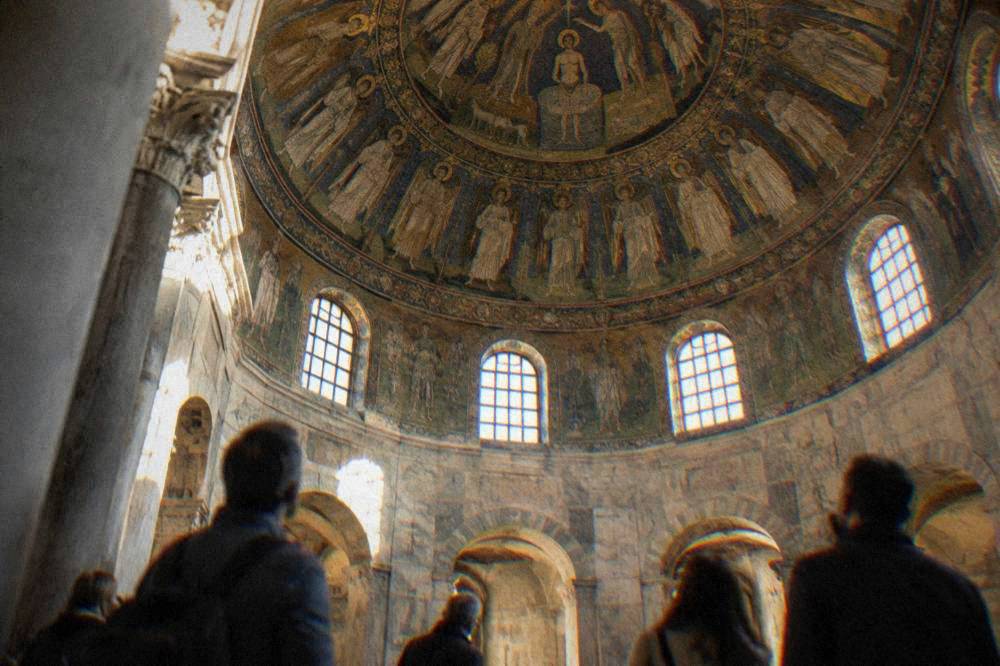
The Ravenna Mosaici combined ticket is sold through the official Ravenna Mosaici website, which also holds the entry-time booking system for each monument, and the ticket can equally be folded into a guided tour that includes admission. The official entrance-and-prices page is the canonical place to buy, and every entry time must be booked there regardless of how the ticket was obtained.
Buying direct is straightforward and puts the booking tool in the same place as the purchase. The alternative is an accompanied visit: several guided products in the city bundle the monuments with a licensed guide, so the entry logistics sit with the operator. The listing for the UNESCO monuments walk shows what a guided version covers, and there is a focused alternative built around the mosaic interiors themselves.
Prefer someone else to handle the entry logistics and the guiding? Book a guided mosaic tour here.
For visitors arriving on a cruise, timing compresses the decision. The shore-day guide at the Ravenna cruise port explains the transfer from Porto Corsini into the centre and how a half-day visit fits the monument cluster, where the combined ticket's single walkable footprint is the main advantage.
There is no city pass that wraps the Ravenna Mosaici combo together with the state monuments, the museums and transport, so any "Ravenna pass" phrasing on third-party pages deserves a careful read of what is actually included. The combo, the Theodoric combined ticket at EUR 7 and the Sant'Apollinare in Classe ticket are three separate purchases. Visitors building a full week around the city can chain them with the day-trip options collected under things to do in Ravenna.
Is The Ravenna Combo Ticket Worth It Compared To Separate Tickets?
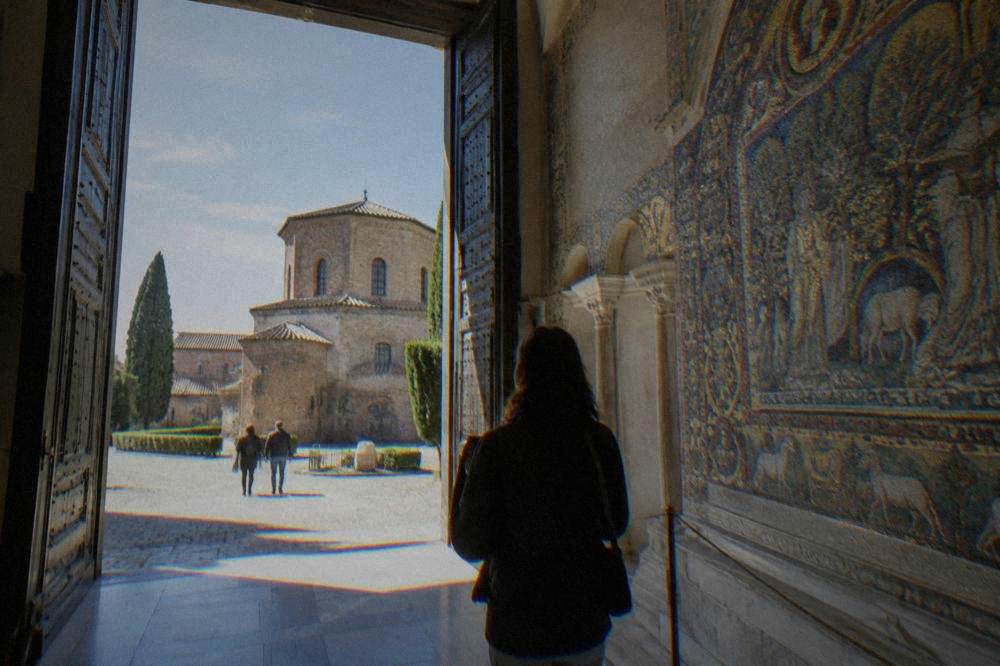
For the five centrally clustered monuments the combined ticket is the only way in, since these sites are not sold as individual Ravenna Mosaici admissions, so the comparison is really between tiers: the price step from the 2-monument to the 5-monument reduced tier is EUR 4.00, from EUR 9.50 to EUR 13.50, which adds three more monuments to one purchase.
That framing answers the worth question more honestly than a per-monument breakdown. The bundle is not a discount against list-price singles for the combo sites, because singles in that cluster do not exist. The genuine decision is how many tiers to buy, and the marginal cost of the 5-monument tier over the 2-monument tier is small enough that the 5-monument version is the default for anyone spending a full day or more among the mosaics.
The separate-ticket maths applies to the state sites. The Visit Ravenna page for the Mausoleum of Theodoric lists EUR 6 standard, EUR 5 concession and EUR 2 for ages 18 to 25, with a EUR 7 combined ticket adding the Arian Baptistery and Theodoric's Palace. Sant'Apollinare in Classe lists EUR 6 full and EUR 2 reduced on the state culture page. Add those to a 5-monument combo and the full eight-UNESCO-monument set is covered, spread across three purchases.
| Visitor plan | Tickets needed | Prices shown on official pages |
|---|---|---|
| Half-day, central cluster only | 2-monument combo | EUR 9.50 reduced |
| Full day, central cluster | 5-monument combo | EUR 13.50 reduced |
| All eight UNESCO monuments | 5-monument combo + Theodoric EUR 7 combined + Sant'Apollinare in Classe EUR 6 | EUR 13.50 reduced, EUR 7 and EUR 6, three separate purchases |
| One afternoon, mosaics only | 2-monument combo + Dante's tomb (free) | EUR 9.50 reduced |
Eligibility can tip the balance. Students get the reduced fares on the combo, ages 18 to 25 get EUR 2 entry at the Mausoleum of Theodoric, children 0 to 10 enter the combo sites free, and Ravenna residents enter free across the bundle. The free-first-Sunday rule at the state monuments, reported on the state culture pages, makes a first-Sunday visit the cheapest possible day for the Theodoric group, though not for the combo sites.
How Many Days Does The Ravenna Combo Ticket Stay Valid?
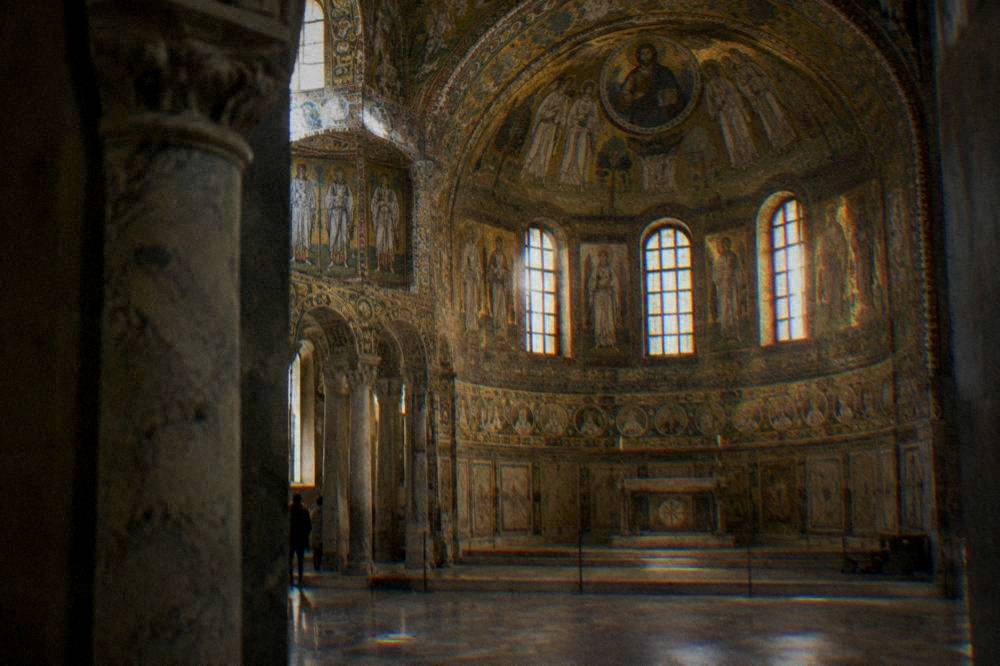
The combined ticket is valid 7 days from purchase, allows one admission per monument, and every entry time must be booked in advance, so a ticket bought on a Monday can carry monument visits across a full week in Ravenna. One admission per monument means a revisit to San Vitale later in the week needs a second ticket, not a re-entry.
The seven-day window pairs well with Ravenna's rhythm. A weekend plan can use one day for the combo cluster and one for Classe and the coast, and the ticket still covers a midweek return for anything missed. The Ravenna weekend itinerary is built around exactly that spread, and the best time to visit Ravenna guide adds the seasonal dimension, since winter hours cut the last-admission times by more than an hour compared with summer.
Practical consequences follow from the one-admission rule. Photographers who want San Vitale at different light angles, or visitors who fall for the Galla Placidia vaults and want a second 5-minute turn, are buying again. Planning the single admission for the part of the day when the site is quietest is the better move, and midweek mornings in the off-season are the structural low point for crowd pressure simply because the cruise shuttle and the coach groups thin out then.
Can You Combine The Ravenna Combo Ticket With A Day At The Coast?
The combined ticket covers only the inland monuments, but Ravenna's beach resorts, Marina di Ravenna, Punta Marina, Lido Adriano, Lido di Classe and Lido di Savio, lie about 8 km or more from the centre and are reached by Start Romagna bus, bike or car, so a coast day runs alongside the ticket rather than through it.
The pairing works because the ticket's seven-day validity absorbs a beach day without wasting anything. A morning among the mosaics, a bus out to the coast for the afternoon, and the remaining monuments on another day is a shape the combo supports natively. The full picture of the lidos and their access routes is on Ravenna beaches.
There is also a product that fuses the two halves into one booked day: a private tour from Ravenna that pairs the UNESCO history with lunch on the beach, with the details on the operator's listing.
For visitors who would rather assemble the day themselves, the practical order is the combo cluster first, before the timed slots slip, then the bus to the coast, then, on a separate day, Classe with its basilica and the Classis Ravenna museum, whose own page lists EUR 8 full and EUR 6 reduced. The Ravenna and the coast guide sequences the whole arc.

What Do Cruise Passengers Need To Know About The Ravenna Combo Ticket?
Cruise passengers docking at Porto Corsini, about 15 km from the centre, need the Visit Ravenna shuttle of about 30 minutes or a private transfer before any monument visit, and the combined ticket's walkable cluster makes the 5-monument tier realistic only on a long port day, with the 2-monument tier the safer choice on short calls.
The arithmetic is unforgiving. A shuttle each way, the 5-minute timed stays at two monuments, and the longer visits at San Vitale and Sant'Apollinare Nuovo together fill a full day ashore. The dedicated Ravenna cruise port day itinerary shows what fits, and the Venice-bound alternatives are compared at Ravenna cruise port to Venice. For 2026 the port plans 111 calls and about 390,000 passengers, and the new terminal's inauguration is reported for spring 2027, so the current terminal and shuttle arrangement holds for this season.
Booking the entry times before the ship sails is the step that saves the day. Same-morning slots for Galla Placidia can be scarce when several thousand passengers are ashore, and the official booking tool is open regardless of where the traveller is. A licensed-guide walk with admission handled is the other route, and this one is the most booked version in the city.
Common Questions About The Ravenna Combo Ticket
Does the Ravenna combo ticket cover all eight UNESCO monuments?
No. It covers five: San Vitale, Sant'Apollinare Nuovo, the Mausoleum of Galla Placidia, the Neonian Baptistery, and the Archiepiscopal Museum with the Chapel of St Andrew. The Mausoleum of Theodoric, the Arian Baptistery and Sant'Apollinare in Classe need separate tickets.
How much is the Ravenna combo ticket?
The Ravenna Mosaici prices page lists reduced fares of EUR 9.50 for 2 monuments, EUR 11.50 for 4 and EUR 13.50 for 5. Full fares are on the official page, which holds the live figures.
How long is the Ravenna combo ticket valid?
Seven days, with one admission per monument and a booked entry time required for each monument on the ticket.
Do I need to book a time slot for the monuments?
Yes, an entry time must be booked for each monument. At the Mausoleum of Galla Placidia and the Neonian Baptistery timed entry is mandatory with stays of about 5 minutes, and San Vitale admits in slots.
Who gets reduced or free entry with the Ravenna combo ticket?
Reduced fares apply to students, non-accredited journalists and paying groups over 20. Free entry applies to children 0 to 10, residents of Ravenna, ICOM members, licensed guides, and disability plus companion.
Is Dante's tomb included in the Ravenna combo ticket?
No, Dante's tomb is free to enter and separately administered, open 10:00 to 18:00 from November to March and 10:00 to 19:00 from April to October, closed 25 December.
The combined ticket is the backbone of a Ravenna visit, but it is only the backbone. Buy the tier that matches the days available, book every entry time at purchase, add the EUR 7 Theodoric combined ticket and the Classe basilica if the full UNESCO set is the goal, and check the official Ravenna Mosaici page for the full fares and any seasonal change before travelling. Visitors pairing the mosaics with the coast, a cruise call or a longer Emilia-Romagna loop will find the wider planning pages on this site, starting with the Ravenna mosaics overview from the editorial desk at Ravenna Travel Guide.