Lido Di Savio
Lido Di Savio is the southernmost of the five beach resorts on Ravenna's stretch of Adriatic coast, reached by Start Romagna bus from Ravenna's train station. This guide covers what the resort is, how the coast changes in winter, and how to pair a beach day with the UNESCO mosaics in the city.
Short answer
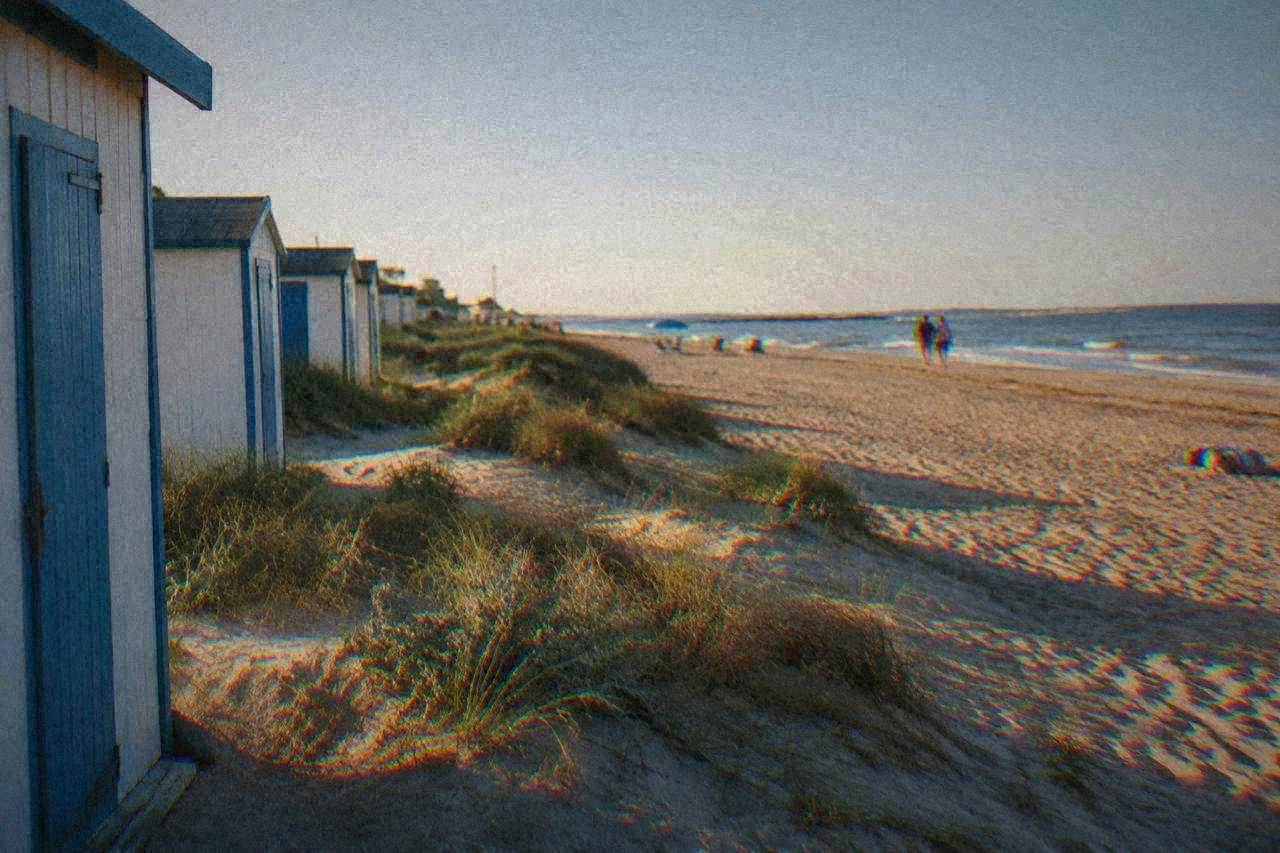
Lido Di Savio is a beach resort on Ravenna's coast, the southernmost of five resorts spread along about 35 km of shoreline. It sits well south of the historic centre, which is inland, and is reached by Start Romagna bus from Ravenna station or by car. In winter a sand barrier reshapes the beach until spring 2027.
Lido Di Savio is the southernmost of the five beach resorts that line Ravenna's roughly 35 km of Adriatic coast, and it belongs to the Ravenna area of Emilia-Romagna, Italy. The historic centre of Ravenna itself is an inland, flat Po-plain city about 8 km from the sea, so nothing on this page assumes you can see the water from a piazza. What Lido Di Savio offers instead is the quiet southern end of that long littoral: sand, pinewood, a family resort rhythm in summer, and, from this autumn, a protective sand barrier that reshapes the beach until spring 2027.
Where Is Lido Di Savio And What Kind Of Resort Is It?
Lido Di Savio is the last of Ravenna's five seaside resorts before the coast hands over to Cervia and Cesenatico to the south, and it is a family-oriented summer resort rather than a town of monuments. The five resorts, listed from north to south, are Marina di Ravenna, Punta Marina, Lido Adriano, Lido di Classe and Lido Di Savio, strung along about 35 km of shoreline. All of them sit 8 km or more from Ravenna's inland historic centre.
The resort takes its name from the Savio river, the watercourse that reaches the sea just south of the built-up area and marks the border between the Ravenna coastline and the Cervia stretch beyond it. Behind the beach lies part of the same coastal pinewood belt that runs up through Lido di Classe, planted originally to stabilise the dunes and now one of the greenest backdrops on this coast. The built fabric is what you find across the Ravenna littoral: low apartment blocks, seasonal hotels, campsites, bike lanes and a seafront promenade, rather than a historic core.
That seasonal character matters for planning. The resort's economy runs on the summer months, when bathing establishments, family hotels and campsites are fully open. Out of season the population thins, some businesses close entirely, and the beach itself is physically altered, because each autumn the municipality builds a protective sand barrier along this stretch. A visit in November looks and feels nothing like one in July, and the sections below treat the two seasons separately for exactly that reason.
For context, here is how the five Ravenna resorts sit in relation to one another and what each is broadly known for:
| Resort | Position on the coast | Character |
|---|---|---|
| Marina di Ravenna | Northernmost, by the canal port | The busiest resort, with the port area and nightlife |
| Punta Marina | Second, south of the port | Family resort, spa tradition, quieter than Marina |
| Lido Adriano | Middle of the littoral | Residential and family-oriented, heavy on campsites |
| Lido di Classe | South of Lido Adriano | Resort with direct access to the coastal pinewood |
| Lido Di Savio | Southernmost, by the Savio river mouth | Small family resort, pinewood and river, near Cervia |
If you are comparing resorts before booking, the Marina di Ravenna page covers the northern, livelier end of the coast, and Punta Marina the family and spa middle ground.
How Do You Get From Ravenna To Lido Di Savio?
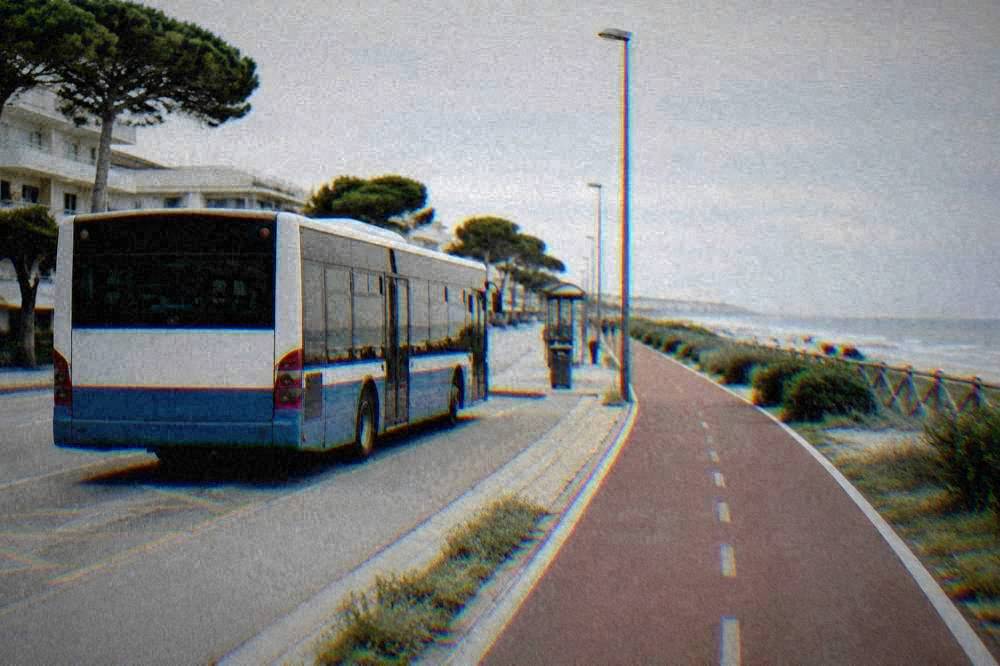
Lido Di Savio is reached from Ravenna by Start Romagna bus, with services running from Ravenna's train station down the coastal strip, or by car along the littoral road. The winter timetable booklet in force runs from 15 September 2026 to about 6 June 2027. There is no train to any of the five Ravenna beach resorts, and the historic centre itself is about 8 km inland from the nearest sand.
The train station is the practical hub for the whole coast. Start Romagna, the regional bus operator, runs the services that string the resorts together from north to south, and its winter 2026-2027 booklet covers the period through to early June 2027. In summer the frequency rises for the bathing season, and in the shoulder months services thin out along with the resort population, so an early check of the day's timetable saves a long wait at a seafront stop.
Cyclists have the flattest possible terrain.
Arriving from further afield changes the calculation. Bologna's airport has no direct bus to Ravenna; the standard route is the Marconi Express people mover to Bologna Centrale and then a regional train to Ravenna, about 2 to 2.5 hours door to door. From Ravenna station the bus down the coast completes the journey. Cruise passengers docking at Porto Corsini should read the Porto Corsini page, since the terminal sits about 15 km from the centre at the northern end of this same coastline.
A beach day pairs naturally with a food experience back in the city, and the piadina, the flatbread of this whole coast, is the one to try making yourself. The Emilia-Romagna piadina cooking class runs in Ravenna and covers the dough, the griddle and the traditional fillings, and it can anchor a morning before an afternoon on the sand.
Read more about the class on its piadina cooking class page, or see the full things to do in Ravenna list for city options on a cloudy day.
What Can You Do At Lido Di Savio In Summer?
Summer at Lido Di Savio is bathing-establishment life: sunbeds and umbrellas on managed beaches, shallow water behind the sandbars, bike rides through the coastal pinewood, and evening promenade routines with gelato and market stalls. The resort is small and family-run compared with Marina di Ravenna, and its pinewood and river mouth set it apart from the other four Ravenna resorts.
The beach itself is wide, sandy and managed in summer by bathing establishments that rent equipment by the day or week, with free stretches of public sand between them. Ask at your hotel or at the establishment's desk for the current season's rates, because they are not published centrally and they change between resorts and rows. The sea here is shallow for a long way out, which is the physical reason this end of the coast built its family reputation.
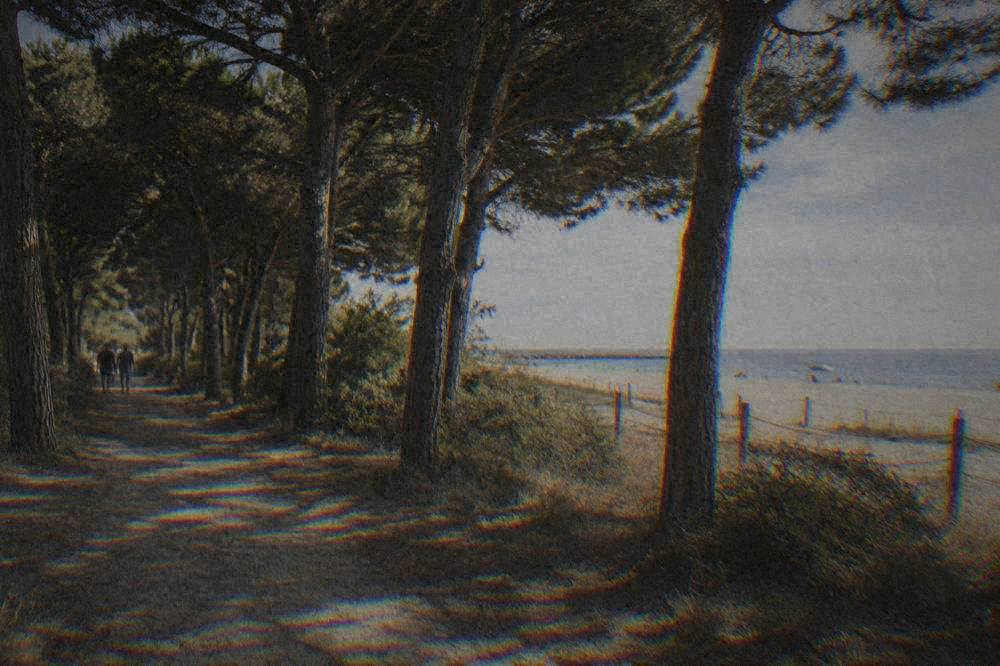
Behind the beach, the pinewood is the resort's second asset. The same pine belt that shelters Lido di Classe and the Pineta di Classe attraction area runs down to the Savio side, with shaded paths used by walkers and cyclists all summer. The river mouth at the southern edge adds a quieter natural corner where the fresh water meets the dune system, popular with birdwatchers in the cooler months.
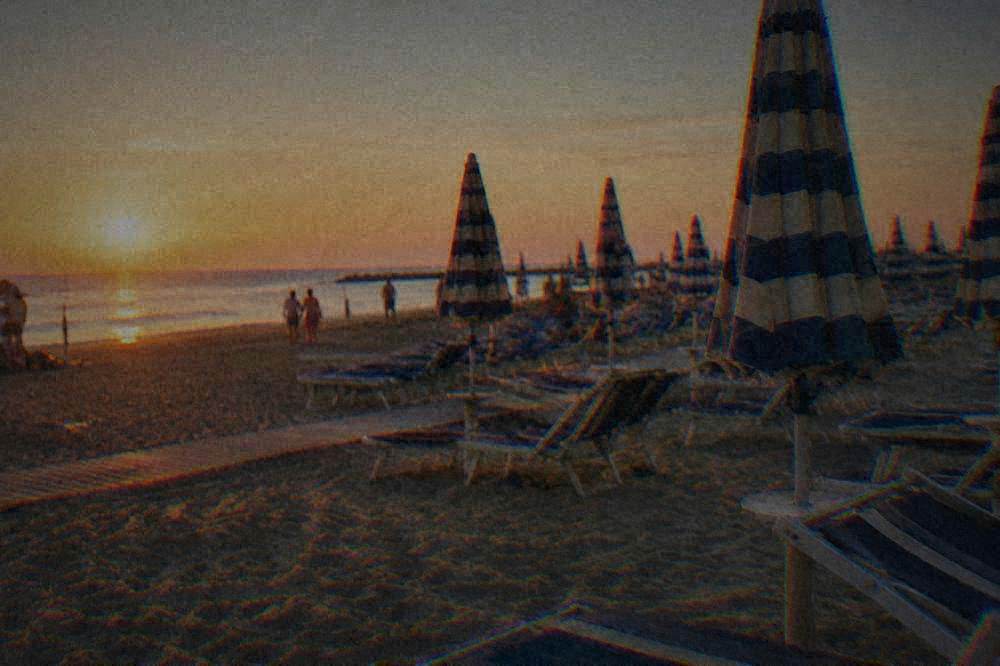
Evenings follow the Romagna resort script: passeggiata along the seafront, gelato, small funfairs for children and market nights. For a bigger evening out, Marina di Ravenna's port area holds the coast's nightlife, reachable along the same coastal road and bus route. A cover charge, the coperto, is legal in restaurants when printed on the menu, and tipping is not obligatory anywhere in Italy.
If rain interrupts a beach week, Ravenna's UNESCO monuments are the obvious refuge, and the combined Ravenna Mosaici ticket is the economical way into them, with reduced fares starting at EUR 9.50 for two monuments. The Ravenna combo ticket page explains how the multi-monument versions work.
What Happens To The Lido Di Savio Beach In Winter?
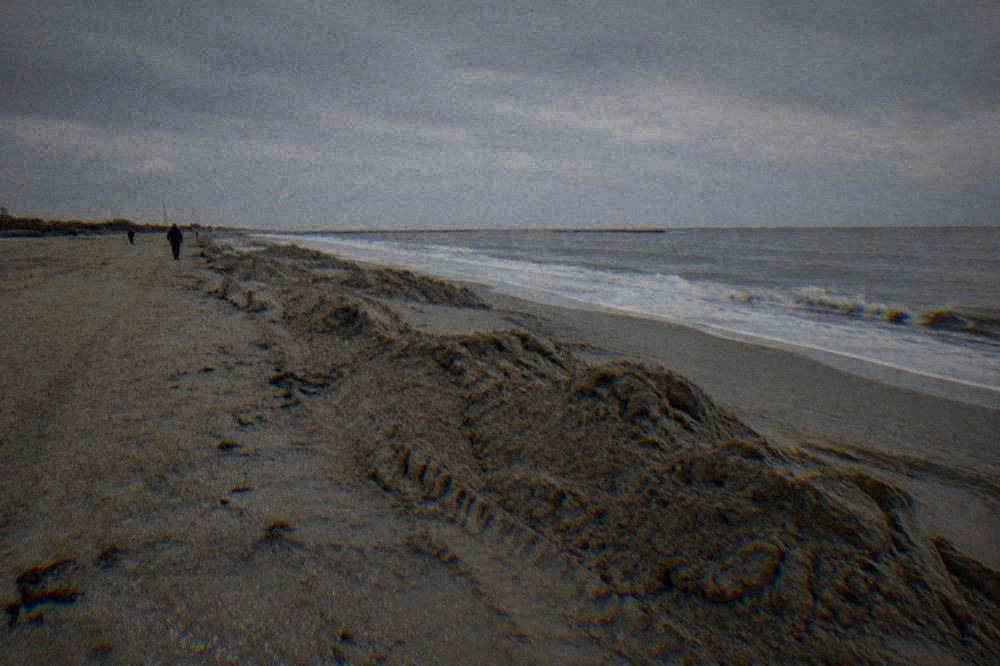
Each autumn a winter sand barrier of 25,000 cubic metres is built along this coast at Punta Marina, Marina di Ravenna Sud and Lido Di Savio, and it stays in place until spring 2027, according to the Comune di Ravenna press release of August 2026. The barrier protects the shoreline from winter storms, and it means the beach at Lido Di Savio is physically reshaped, narrower and differently profiled, for the whole cold half of the year.
This is a real coastal-defence project rather than a cosmetic one. The municipality approves it annually, the works start after the summer season ends, and the sand is returned to the beach in a renourishment phase in spring. For a winter or early-spring visitor the practical consequences are simple: the dune you see is engineered, access to the water's edge can be limited in places, and the classic long summer beach walk may be interrupted by the barrier's profile at the southern end of the Ravenna littoral.
Winter visitors should not expect the summer resort to be running. Bathing establishments close, many hotels and restaurants shut for the season, and the bus service continues on the winter timetable but with fewer runs. What the winter coast offers instead is open-air quiet: the pinewood, the river mouth, cycling on empty paths, and birdlife, since flamingos are present year-round in the nearby Cervia salt pans and herons and other species pass through the wetlands of the Po Delta area through the cold months.
What Is The Weather Like At Lido Di Savio?
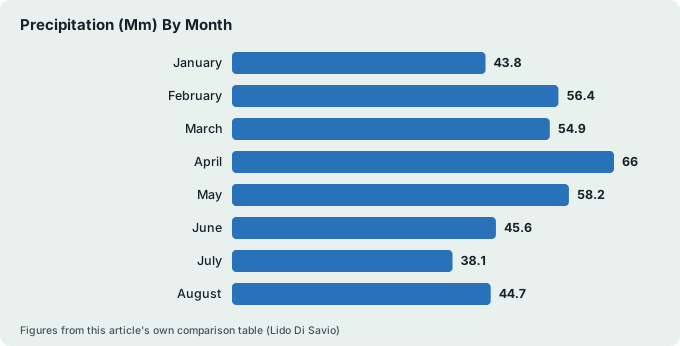
The Ravenna area's modelled 1991-2020 normals show July as the warmest month at a mean of 25.2 C, January the coldest at 5.1 C, November the wettest month at 78.3 mm of rain and July the driest at 38.1 mm, with about 674 mm across the year. These figures come from ERA5 modelled reanalysis normals for 1991 to 2020, not from a station record, and they describe the Ravenna area as a whole, since the coast and the city share the same flat plain.
The pattern that matters for a beach holiday is the summer one: July and August means sit at 25.2 C and 25.0 C, with rainfall dropping to its annual minimum in July. Late spring and early autumn are the shoulder choices, May at a mean of 17.9 C and September at 20.3 C, both with more rain than midsummer. No sea-temperature figure and no sunshine-hours figure is published on this site, since neither is held from a sourced record.
| Month | Mean temperature (C) | Precipitation (mm) |
|---|---|---|
| January | 5.1 | 43.8 |
| February | 5.8 | 56.4 |
| March | 9.4 | 54.9 |
| April | 13.1 | 66.0 |
| May | 17.9 | 58.2 |
| June | 22.6 | 45.6 |
| July | 25.2 | 38.1 |
| August | 25.0 | 44.7 |
| September | 20.3 | 57.9 |
| October | 15.7 | 66.0 |
| November | 10.6 | 78.3 |
| December | 6.1 | 63.7 |
The beach season at this latitude is therefore really June through early September, with July the driest window. October and November are the wet pair on the table, which lines up with the arrival of the winter sand barrier described above: the defence works and the wettest months arrive together.
What Is There To Do Near Lido Di Savio?
The resort sits within short reach of three distinct day-out destinations: the coastal pinewood and the Basilica of Sant'Apollinare in Classe to the north, the Cervia salt pans and the town of Cervia to the south, and the Po Delta wetlands beyond. Each is close enough for a half-day, and none requires passing back through Ravenna's centre first, which makes Lido Di Savio a workable base for nature as well as sand.
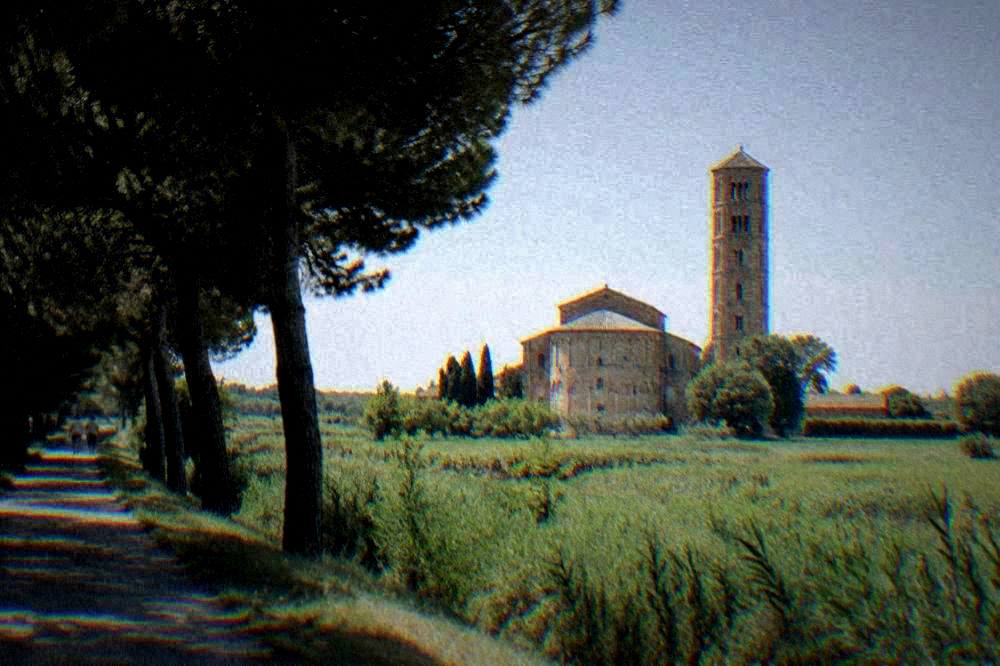
To the north, the Classe area holds two of the region's headline sights. The Basilica of Sant'Apollinare in Classe, one of Ravenna's eight UNESCO Early Christian monuments, stands among the remains of the ancient port city, with an entry of EUR 6 full and EUR 2 reduced on the cultura.gov.it listing, open Monday to Saturday 8:30 to 19:00 and Sunday 13:30 to 19:00. Next to it the Classis Ravenna museum, in the former sugar factory, tells the city's story from Roman port to Byzantine capital; the museum's own pages show EUR 8 full and EUR 6 reduced, daily 10:00 to 17:00 with the last entry 50 minutes before closing. The Sant'Apollinare in Classe and Classis Ravenna pages carry the details.
To the south, Cervia is the nearest town of size, and its salt pans are the natural attraction. The visitor centre at Via Bova 61 opens on weekends and holidays, from September to November on Saturdays, Sundays and holidays from 10:00 to 12:30 and 14:30 to sunset, and flamingos are present there in every season. Further south still, the Comacchio lagoons and the Po Delta park hold the region's largest birdlife spectacle; the Po Delta National Park guide covers it.
Here is the near-Lido Di Savio menu in summary:
| Nearby destination | Direction from Lido Di Savio | What it offers | Key figure |
|---|---|---|---|
| Pineta di Classe | North, immediately | Coastal pinewood, cycling and walking trails | Open woodland, free access |
| Basilica of Sant'Apollinare in Classe | North, at Classe | UNESCO monument, Byzantine mosaics | EUR 6 full, EUR 2 reduced |
| Classis Ravenna museum | North, at Classe | City and territory museum in the old sugar factory | EUR 8 full, EUR 6 reduced |
| Cervia salt pans | South | Salt-pan visitor centre, flamingos year-round | Weekends and holidays opening |
| Ravenna historic centre | Inland | Eight UNESCO monuments, Dante's tomb, mosaics | Combo from EUR 9.50 reduced |
Back in the city, the mosaic walks are the natural companion to a beach stay, and a sunrise or sunset visit among the ancient mosaics is the option built around light, which is the whole point of gold-ground glass mosaic. Details and availability are on the operator's live listing.
Is Lido Di Savio Good For Families?
Lido Di Savio is built around the family market: shallow Adriatic bathing, car-free cycle paths through the pinewood, small-scale evening entertainment and campsites geared to children define the resort, and its position at the quiet southern end of the Ravenna coast keeps the pace lower than at Marina di Ravenna. The historic centre's attractions, from Dante's free-entry tomb to the mosaic monuments, sit one bus-and-walk away for a culture half-day.
The physical setting does a lot of the work. The beach shelves gently, the seafront is flat and strollable with pushchairs, and the pinewood paths give shade options that open beaches lack. Campsites and family hotels dominate the accommodation stock, with apartments for self-catering weeks. No hotel is named or priced on this site; check booking listings for live rates, and remember the city's tourist tax, about EUR 1.50 per night at a B&B or rooms-style property and about EUR 2 at a 3-star hotel under the tariff in force from 1 January 2023, always to be confirmed at booking since tariffs change.
For a rainy or rest day, Ravenna city centre is compact and walkable, and the mosaic circuit works for children in short doses. Dante's tomb is free and open 10:00 to 18:00 from November to March and 10:00 to 19:00 from April to October. Galla Placidia and the Neonian Baptistery admit on timed entries with stays of a few minutes each, which is roughly a child's attention span anyway. The Ravenna with kids guide develops the idea.
Safety on this coast is unremarkable in the good sense: petty crime such as pickpocketing around tourist sites and on public transport is the standard precaution anywhere in the region, so keep bags closed and in front on crowded buses. Emergency services anywhere in Italy answer on 112.
How Does A Beach Stay Combine With Ravenna's Mosaics?
The standard pattern is a split-base or single-base trip: stay on the coast at Lido Di Savio and bus into Ravenna for one or two mosaic mornings, since the eight UNESCO monuments cluster walkably in the historic centre and the Ravenna Mosaici combo ticket is valid for one week with one admission per monument and a booked entry time for each. That week-long validity is what makes a beach-plus-mosaics holiday work without rushing.
The eight UNESCO Early Christian monuments of Ravenna are the Mausoleum of Galla Placidia, the Neonian Baptistery, Sant'Apollinare Nuovo, the Arian Baptistery, the Archiepiscopal Chapel, the Mausoleum of Theodoric, San Vitale and Sant'Apollinare in Classe. Seven sit in or near the centre; Sant'Apollinare in Classe is out at Classe, on the Lido Di Savio side of the map, so a coast-based visitor can tick it off almost next door. The Ravenna UNESCO sites guide maps all eight.
| Ticket | What it covers | Reduced price |
|---|---|---|
| Combo, 2 monuments | Sant'Apollinare Nuovo and San Vitale | EUR 9.50 |
| Combo, 4 monuments | Adds Galla Placidia and the Neonian Baptistery | EUR 11.50 |
| Combo, 5 monuments | Adds the Archiepiscopal Museum and Chapel of St Andrew | EUR 13.50 |
| Mausoleum of Theodoric | Single monument, state-run | EUR 6, concession EUR 5, ages 18 to 25 EUR 2 |
| Arian Baptistery | Single monument | EUR 3 |
Reduced rates apply to students, non-accredited journalists and paying groups over 20; children 0 to 10, Ravenna residents, ICOM members, licensed guides, and visitors with a disability plus companion enter free. Winter hours, from 3 November 2026 to 6 March 2027, run 10:00 to 17:00 for the combo monuments, closed on 25 December and 1 January. A one-day or two-day version of the city visit is sketched in the one day in Ravenna itinerary.
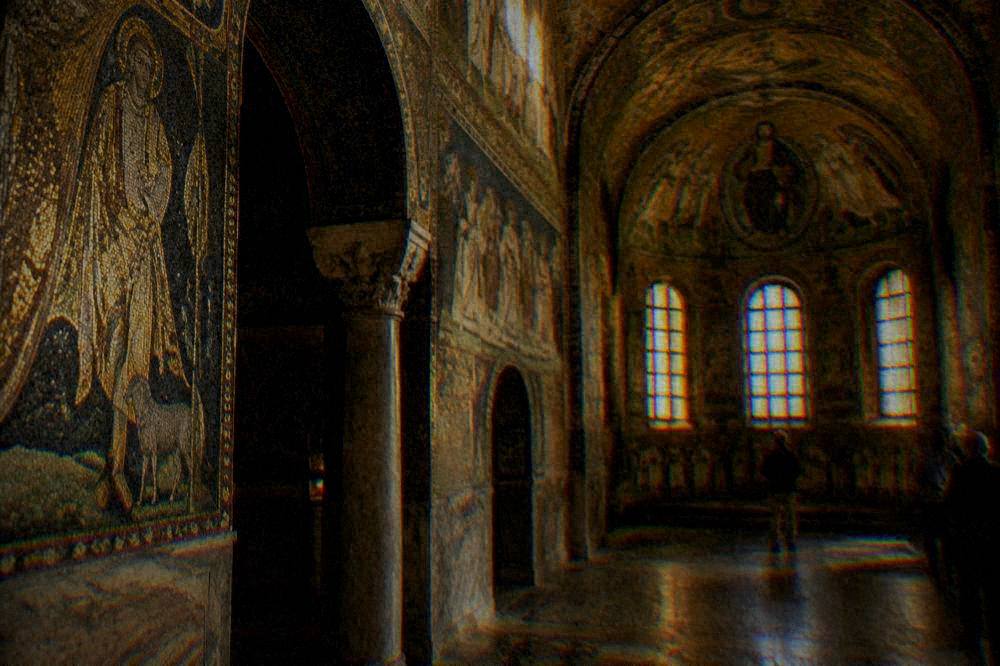
A guided walk turns the mosaics from decoration into reading matter, since the gold-ground panels carry imperial and biblical programmes that a guide can unpack panel by panel. The city highlights walk covers the core sights with a guide, and the focused mosaic walks go deeper on single buildings. Availability and current pricing render from the operator's live listing.
The pairing works in both directions, too. Visitors based in Ravenna city for the mosaics can bus down to Lido Di Savio for an afternoon of sand and pinewood without changing accommodation, and the flat terrain makes the whole excursion low-effort. The Ravenna and the coast guide treats the full littoral as one itinerary.
Where To Stay And Eat Around Lido Di Savio
Accommodation at Lido Di Savio is seasonal and family-oriented, spanning beachfront hotels, apartment blocks and large campsites, with the full weight of supply open in summer and a large share closed from late autumn to spring; no property is named or priced here, since rates live on booking platforms. Eating follows the Romagna coast template: piadina stands, seafood trattorie and hotel half-board, with a legal coperto when printed on the menu and no obligation to tip.
Sorting out where to sleep. Book a hotel in Ravenna here.
Timing drives everything. Book summer weeks early, because the family market fills the resort in July and August, and check closure dates if travelling in October or before Easter, when the seasonal economy pauses. The tourist tax applies per night: about EUR 2 at 3-star hotels, about EUR 3 at 4-star, about EUR 4 at 5-star and about EUR 1.50 at B&B and rooms-style accommodation under the tariff from 1 January 2023, figures to confirm at booking since tariffs may have changed.
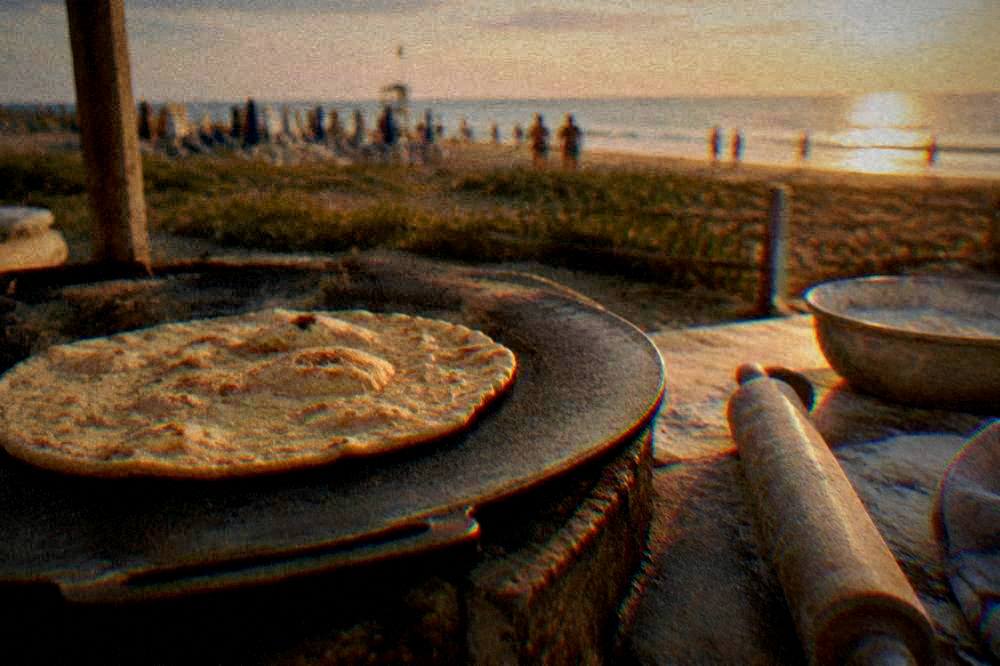
The food of this coast is the food of Romagna. Piadina, the flatbread cooked on a terracotta or modern griddle and filled with squacquerone cheese and cured meats, is sold from stands all along the littoral and is described dish by dish, with no price, on the piadina romagnola page. Cappelletti, the filled pasta served in brodo, and grilled Adriatic fish complete the picture, and the Ravenna restaurants guide covers where the eating is concentrated in the city.
Learning the flatbread itself is a half-day that suits a beach week, since the class runs in Ravenna and finishes with what you cook. The piadina cooking class page carries the current from-price and the operator's cancellation terms.
Common Questions About The Ravenna Coast
Is Lido Di Savio part of Ravenna?
Yes, Lido Di Savio is the southernmost of the five beach resorts on Ravenna's roughly 35 km of coast, alongside Marina di Ravenna, Punta Marina, Lido Adriano and Lido di Classe. Ravenna's historic centre is inland, about 8 km from the nearest sand, so the resorts are separate places linked by bus.
How far is Lido Di Savio from Ravenna's centre?
Lido Di Savio lies at the southern end of the Ravenna littoral, and all five resorts sit 8 km or more from the historic centre. The connection is the Start Romagna bus from Ravenna's train station, whose winter timetable runs to about 6 June 2027, or the coastal road by car or bike.
Can you swim at Lido Di Savio in winter?
Swimming is not the winter activity here. Each autumn a 25,000 cubic metre sand barrier is built at Punta Marina, Marina di Ravenna Sud and Lido Di Savio and remains until spring 2027, reshaping the beach, and bathing establishments close for the season. Winter brings walking, cycling and birdwatching instead.
Do you need a car at Lido Di Savio?
No. The resort is served by Start Romagna buses along the coast, the terrain is flat with cycle paths through the pinewood, and Ravenna's station links the whole system. A car helps for reaching the Po Delta or Cervia's salt pans on a tight schedule, but a car-free week is workable.
What is the best time of year for Lido Di Savio?
July and August are the warm months, at modelled means of 25.2 C and 25.0 C, with July the driest at 38.1 mm of rain in the 1991 to 2020 normals. June and September are quieter shoulder options at 22.6 C and 20.3 C. From late autumn the sand barrier and seasonal closures change the resort's character entirely.
Are there UNESCO sites near Lido Di Savio?
Yes, the Basilica of Sant'Apollinare in Classe, one of Ravenna's eight UNESCO Early Christian monuments, stands at Classe a short way up the coast road, with entry at EUR 6 full and EUR 2 reduced. The other seven monuments cluster in Ravenna's historic centre, reachable by bus and a short walk.
The southern end of the Ravenna coast rewards exactly the kind of visitor who wants sand and pinewood without the bustle of the northern resorts, and the same bus route that brings you there connects everything from Marina di Ravenna to the mosaics in the centre, so Lido Di Savio works both as a base and as one stop on a wider Ravenna itinerary described across this Ravenna Travel Guide site.