Classe Ravenna
Classe is the area a few kilometres south of Ravenna that holds the Basilica of Sant'Apollinare in Classe, the Classis Ravenna museum and a large coastal pine forest, and it was once the Roman port city Ravenna grew out of.
Short answer
Classe is reached from central Ravenna by bike, bus or car in minutes, holds two of the city's headline sights in the Basilica of Sant'Apollinare in Classe and the Classis Ravenna museum, and its ticket prices start at EUR 6 for the basilica and EUR 8 for the museum.
Classe is the flat, quiet stretch of countryside and pine forest a few kilometres south of Ravenna, in Emilia-Romagna, Italy, and it carries a double weight of history. The ancient Roman port city of Classis stood here, the sea harbour from which Ravenna first grew rich, and today the area holds two of the region's headline sights: the Basilica of Sant'Apollinare in Classe, one of the eight UNESCO Early Christian monuments of Ravenna, and the Classis Ravenna museum built beside it on the footprint of the old port. Between them runs the Pineta di Classe, a pine forest that reaches toward the coast at Lido di Classe, where the beach resorts begin. Ravenna itself is an inland city, about 8 km from the Adriatic, and Classe sits on the road that links the mosaics to the sea.
This page covers what Classe is, what there is to see there, how the basilica and museum work in practice, and how the area fits into a wider Ravenna itinerary. The basilica's mosaics sit inside a brick basilica whose interior green marble and mosaic apse reward the short trip out of the centre, and the museum tells the story of the port city that predates everything in town. For the full picture of the city's eight monuments, start with the guide to Ravenna UNESCO sites or the wider things to do in Ravenna page.
What Is Classe Ravenna, And Why Does It Matter?
Classe is the settlement area immediately south of Ravenna, and it matters because it brings together the Roman port city of Classis, the UNESCO-listed Basilica of Sant'Apollinare in Classe, the Classis Ravenna museum and the Pineta di Classe pine forest, making it a concentrated cluster of ancient, religious and natural attractions. The name survives in the basilica, the museum, the modern beach resort of Lido di Classe and the surrounding parish, and the area sits between the historic centre and the Adriatic coast. Ravenna is an inland city on the flat Po plain, and the coast resorts start about 8 km out, so Classe is the first stop on the way from mosaics to sea.
The port of Classis is the reason Ravenna exists as a city of monuments at all. Roman power projected itself through this harbour, and when the imperial and then the archiepiscopal city rose inland, Classe kept its basilica. UNESCO inscribed the Early Christian Monuments of Ravenna on the World Heritage List in 1996, and eight monuments carry that status: the Mausoleum of Galla Placidia, the Neonian Baptistery, Sant'Apollinare Nuovo, the Arian Baptistery, the Archiepiscopal Chapel, the Mausoleum of Theodoric, San Vitale and Sant'Apollinare in Classe. Only the last of those eight stands outside the centre, in Classe itself.
That geography shapes every visit. The seven central monuments cluster within a walkable core described in the historic centre guide, while Classe demands a bike, a bus or a car, and rewards the trip with an apse mosaic of paradise greenery, a museum of the ancient port and, beyond the railway line, pine woods and the beaches described in the Lido di Classe guide.
What Is There To See In Classe Ravenna?
There are four main things to see in Classe Ravenna: the Basilica of Sant'Apollinare in Classe, the Classis Ravenna museum, the pine forest that runs toward Lido di Classe, and the remains and landscape of the ancient Roman port. The selection spans a historic church, a museum, a natural landscape, and an archaeological site, so the visit appeals to a range of interests. Two of those are ticketed indoor sights, one is free open landscape, and together they fill a half day comfortably, or a full day at a slow pace with the coast added. The basilica and museum sit beside each other, so the practical visit is one stop, while the pine forest spreads south and east toward the sea.
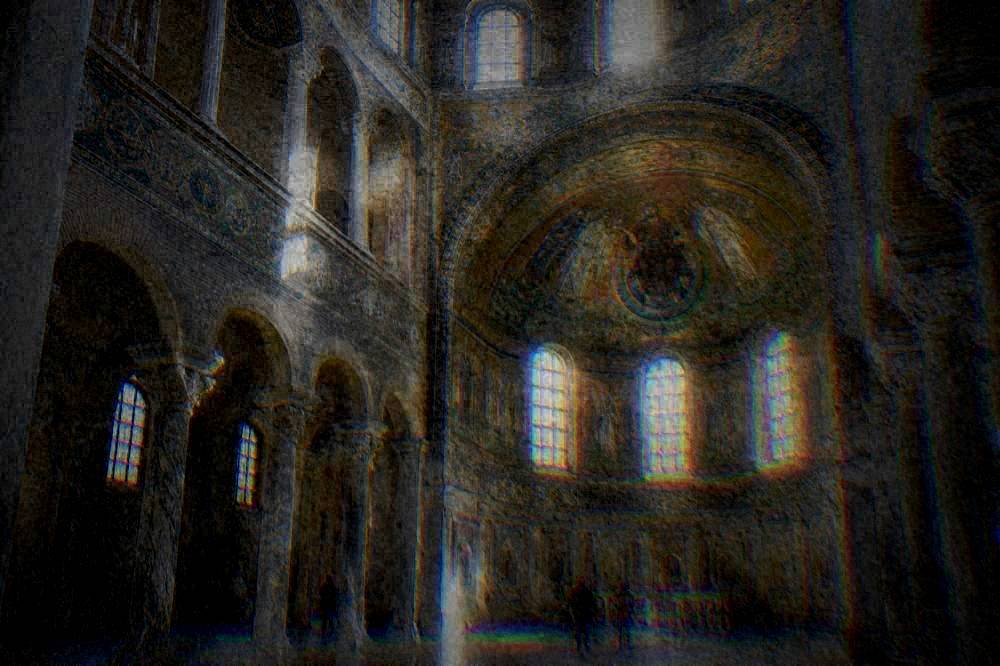
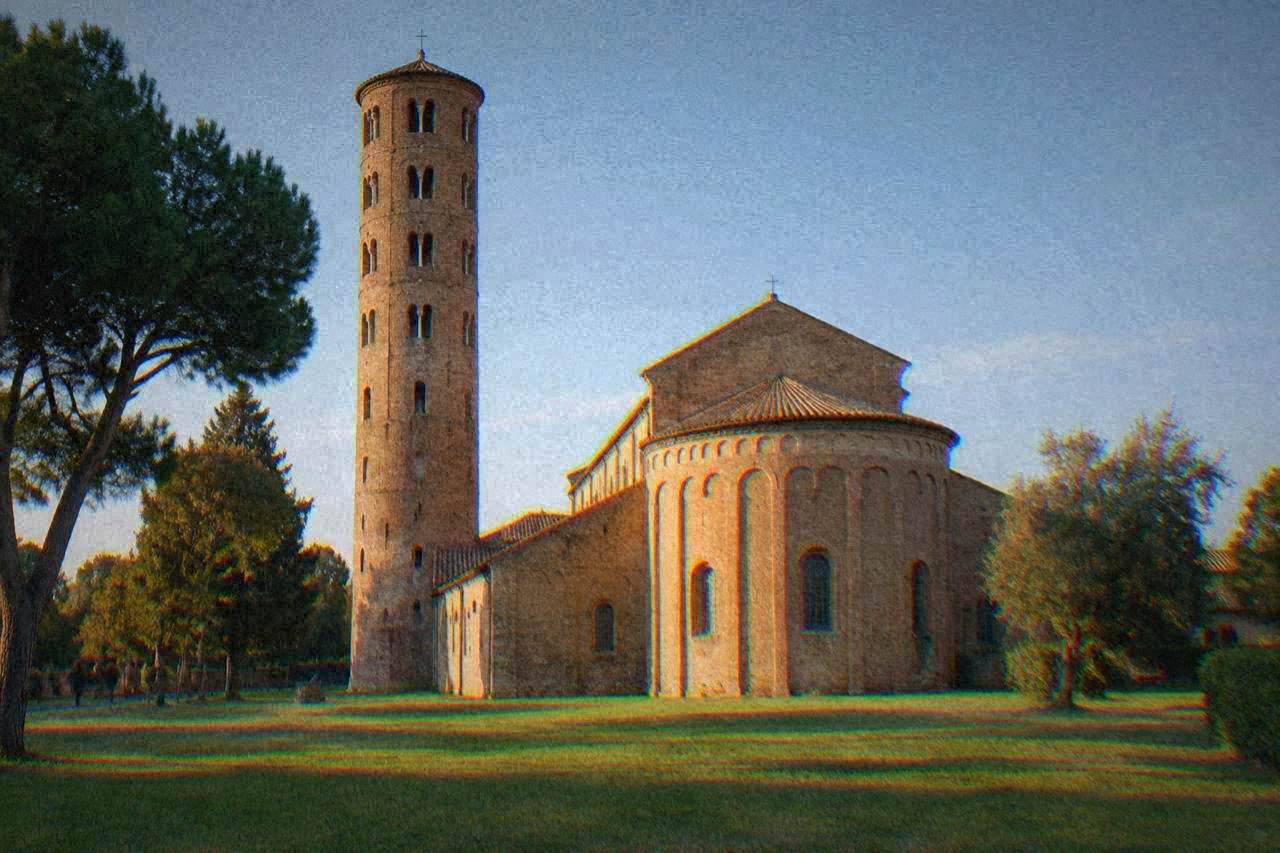
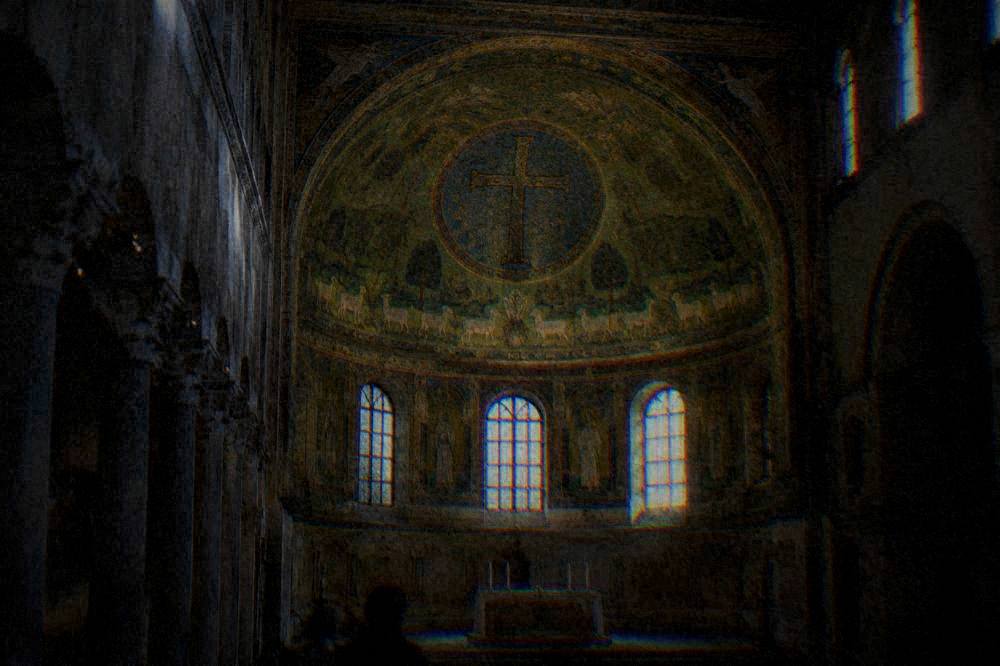
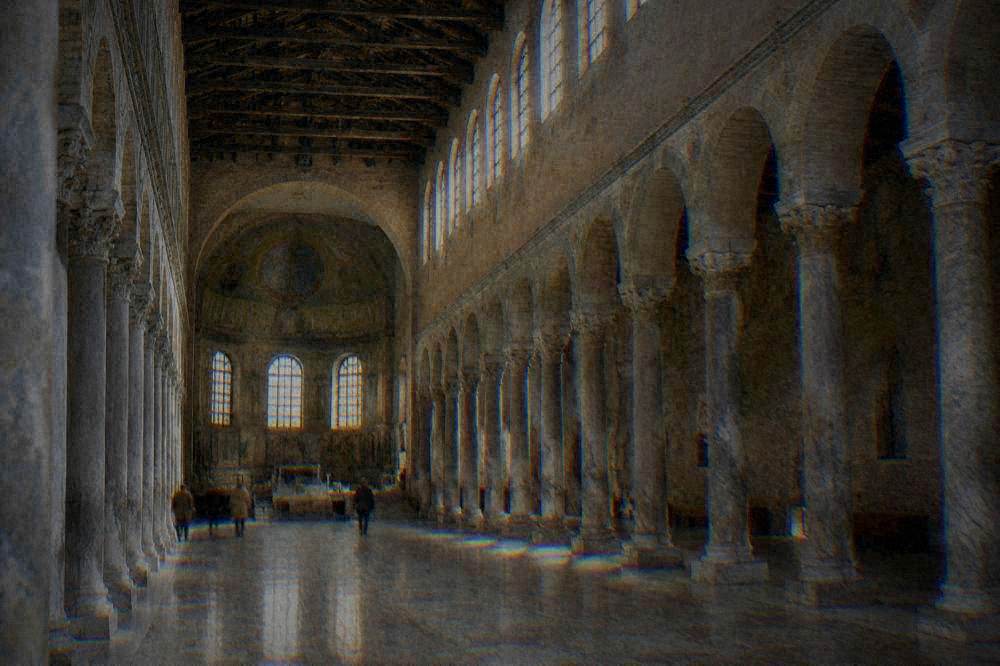
The basilica is the reason to come. It is a tall brick building with a round bell tower, a marble-colonnaded nave and, at the far end, a mosaic apse the Ravenna tourist pages describe as one of the great green spaces in mosaic art: a garden paradise with sheep, palm-like trees and a jewelled cross. The basilica has its own detailed page, Basilica of Sant'Apollinare in Classe, covering the interior in depth.
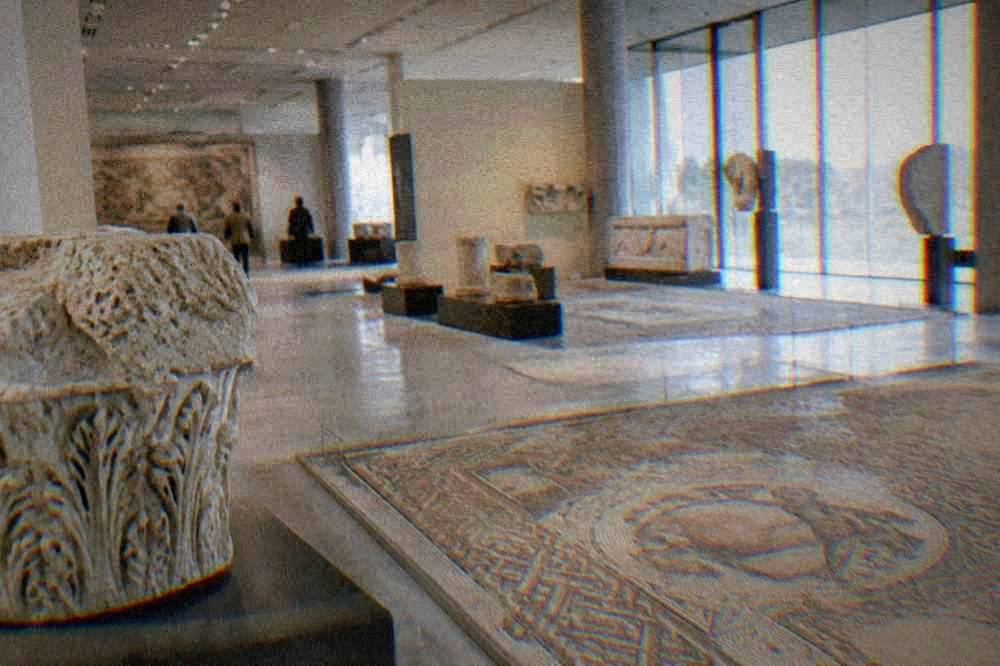
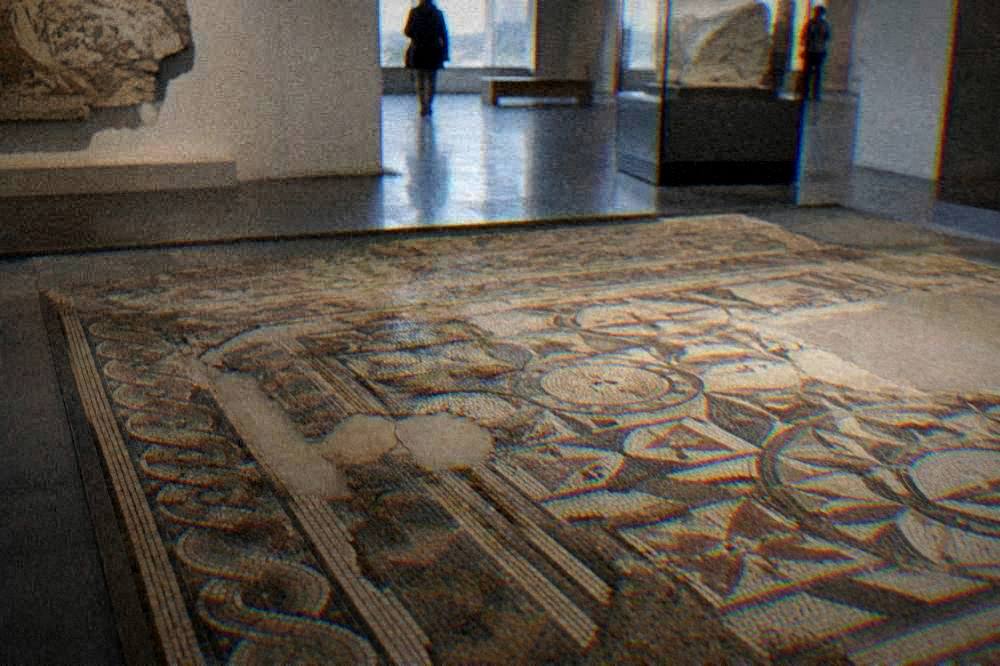
The Classis Ravenna museum stands beside the basilica on the archaeological footprint of the port city. Its galleries hold the story of Classis from harbour to decline, with mosaics, stone inscriptions and finds from the surrounding excavations, and it absorbed the collection of the former TAMO mosaic museum when TAMO closed permanently in 2023. The Classis Ravenna museum page covers what is inside.
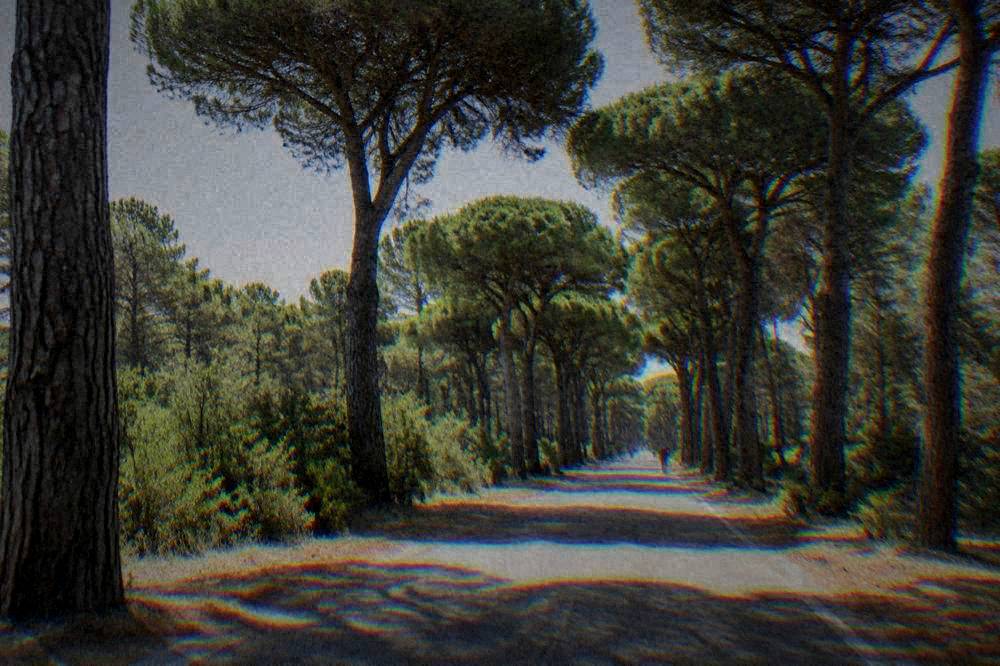
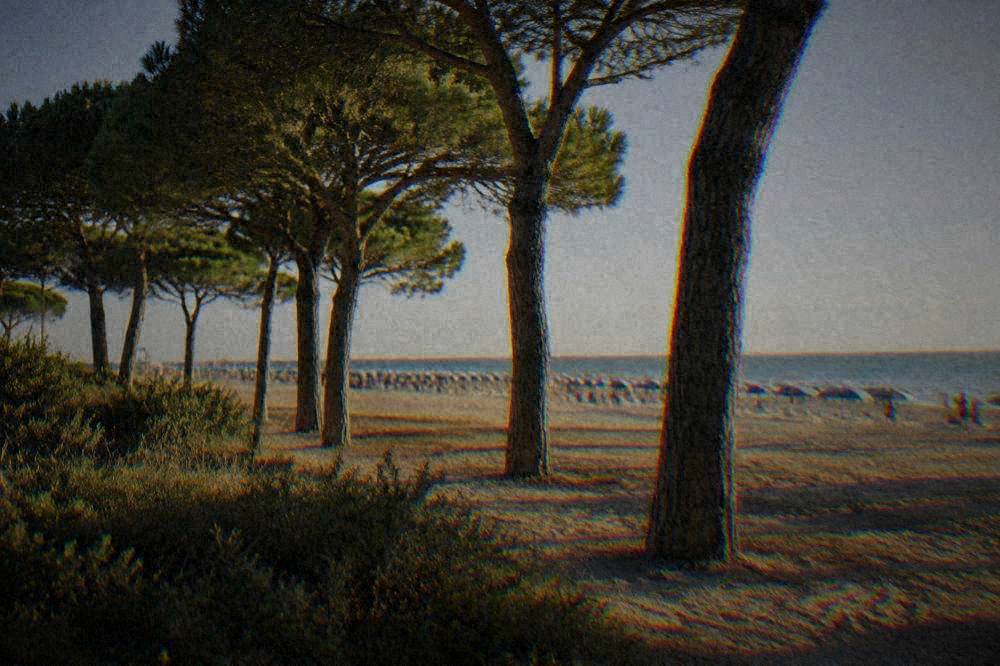
Beyond the two buildings, the Pineta di Classe is a working coastal forest of stone pines threaded with footpaths and cycling tracks, part of the belt of pinewoods that runs down this coast from Ravenna to Cervia. Birdlife moves between the pines and the wetlands inland, and the forest is the green corridor that links the basilica area to the beach at Lido di Classe. The table below sets out the four sights.
| Sight | Type | Ticket | In the UNESCO list |
|---|---|---|---|
| Basilica of Sant'Apollinare in Classe | Early Christian basilica | EUR 6 full, EUR 2 reduced | Yes, one of the eight |
| Classis Ravenna museum | City and territory museum | EUR 8 full, EUR 6 reduced | No |
| Pineta di Classe | Coastal pine forest | Free access | No |
| Ancient port landscape | Archaeological area around the museum | Visible from public ground | No |
Wine and food also belong to this side of Ravenna. The countryside around Classe and the city is Romagna farm land, and a winery visit with wine and food tasting near Ravenna pairs an afternoon glass of Sangiovese with the produce of the same plain the port city once shipped from. The listing shows the current price and availability.
How Much Do Tickets To The Classe Ravenna Sights Cost?
The Basilica of Sant'Apollinare in Classe costs EUR 6 full and EUR 2 reduced, and the Classis Ravenna museum costs EUR 8 full and EUR 6 reduced, per the cultura.gov.it listing for the basilica and the Classis Ravenna site for the museum. The basilica is a state monument, so the first-Sunday-of-the-month free entry that applies to the state museums and monuments applies here too. The museum is closed on 25 December, and the basilica keeps the hours further down this page.
These are separate tickets, not part of the Ravenna Mosaici combined ticket sold for the five central church monuments. That combo covers Sant'Apollinare Nuovo, San Vitale, Galla Placidia, the Neonian Baptistery and the Archiepiscopal Museum, with reduced fares starting at EUR 9.50, and Classe sits outside it, which surprises people who assume one ticket covers all eight UNESCO monuments. The full price list for the central combo is on the Ravenna Mosaici ticket page.
If you'd like the timed entries handled in advance, book a mosaics entry ticket here.
The wider museum landscape around Ravenna adds a few more figures worth knowing before a trip. The table below gathers what the official pages list for the museums reachable on a Classe-and-city itinerary. The Domus dei Tappeti di Pietra is included for completeness, but its hours vary by season and its price is best confirmed on the official page.
| Sight | Full price | Reduced | Source page |
|---|---|---|---|
| Basilica of Sant'Apollinare in Classe | EUR 6 | EUR 2 | cultura.gov.it |
| Classis Ravenna museum | EUR 8 | EUR 6 | Classis Ravenna site |
| Museo Nazionale di Ravenna | EUR 7 | EUR 2 | cultura.gov.it |
| MAR art museum | EUR 8 | EUR 6, students EUR 3 | MAR ticket office |
| Museo Dante | EUR 5 | EUR 3.50 | vivadante.it |
| Dante's tomb | Free | Free | Comune di Ravenna |
A practical pairing is a morning in Classe followed by an afternoon in the centre, or the reverse. The one day in Ravenna itinerary shows how the basilica slots into a single-day plan without losing the central monuments.
When Is The Basilica Of Sant'Apollinare In Classe Open?
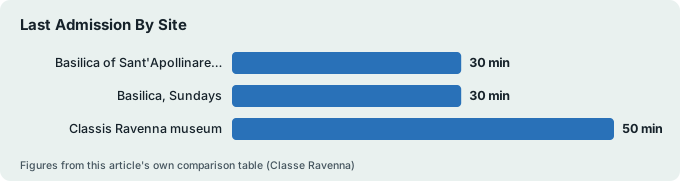
The Basilica of Sant'Apollinare in Classe is open Monday through Saturday from 8:30 to 19:00, and on Sundays it opens in the afternoon, from 13:30 to 19:00, according to the cultura.gov.it listing. Visitors should note that the last admission takes place 30 minutes before closing time. The Classis Ravenna museum beside it is open daily 10:00 to 17:00, with last entry 50 minutes before closing, and it closes on 25 December. The basilica's Sunday-morning closure for worship is the single most important timing detail, because it inverts the obvious plan of visiting on a quiet Sunday morning.
Plan around it. On a Sunday, the museum fills the morning and the basilica takes the afternoon, which works well since they stand a short walk apart. On any weekday, the basilica opens early enough that the nave can be quiet before 10:00, and the museum opens as the basilica's first hour ends. The state-run monuments in Ravenna close on 25 December and 1 January, and the basilica follows that pattern. Everything else covered here is indexed on Ravenna Travel Guide.
| Site | Days and hours | Last admission | Closed |
|---|---|---|---|
| Basilica of Sant'Apollinare in Classe | Mon to Sat 8:30 to 19:00 | 30 minutes before closing | 25 December, 1 January |
| Basilica, Sundays | Sunday 13:30 to 19:00 | 30 minutes before closing | Same |
| Classis Ravenna museum | Daily 10:00 to 17:00 | 50 minutes before closing | 25 December |
| Ravenna Mosaici sites, winter 2026 to 2027 | Daily 10:00 to 17:00 from 3 November 2026 | 16:30, or 16:45 at two sites | 25 December, 1 January |
For comparison, the seven central UNESCO sites switch to winter hours of 10:00 to 17:00 from 3 November 2026 to 6 March 2027, per the Ravenna Mosaici page, while the basilica in Classe keeps its own state-monument schedule year round. Anyone visiting in late autumn or winter should still check the basilica's page close to the date, because state monument hours can adjust seasonally.
How Do You Get To Classe Ravenna From The City Centre?
Classe is reached from central Ravenna by bike, by bus or by car along the straight road south toward the coast, with the basilica and museum sitting just beyond the railway line, and Ravenna's train station is a short walk from the historic centre. The area is flat Po-plain ground, which makes the bicycle the natural instrument here, and the pine-forest tracks continue the same flat riding all the way to the sea. The regional rail line between Ravenna and Rimini also stops at Classe, though the station is a distance from the basilica, so check the walking connection before relying on it.
By car, the route south out of Ravenna passes through farmland and former port land, and parking near the basilica and museum is on open ground beside the sites. Drivers should remember that Ravenna's historic centre has a camera-enforced limited traffic zone, with gates that differ, some active 7:30 to 20:30 and some around the clock, so the centre and Classe are better treated as two separate parking decisions than one continuous drive. The full rules, including the daily permit bought at the 24-hour parcometers and hotel guest authorisation, are on the Ravenna parking and ZTL page.
For travellers arriving from further away, Ravenna's station connects by direct regional train to Bologna Centrale, about 84 km away, with journeys of about 1 hour to 1 hour 20. Cruise passengers docking at Porto Corsini, about 15 km from the centre, have a Visit Ravenna shuttle that runs about 30 minutes between the terminal, the station and the centre during the cruise season, and the details are in the Ravenna cruise port guide.
| From | To Classe | Best option |
|---|---|---|
| Ravenna historic centre | Basilica and museum | Bike along the flat south road |
| Ravenna train station | Basilica and museum | Bus or bike, car outside rush hours |
| Bologna | Ravenna, then Classe | Direct regional train, about 1 hour to 1 hour 20 |
| Porto Corsini cruise terminal | Centre, then Classe | Shuttle bus, about 30 minutes, then bike or bus |
| Lido di Classe beach | Basilica | Pine forest track by bike or the coast road |
Is The Basilica Of Sant'Apollinare In Classe Worth The Trip Out Of Ravenna?
The basilica is worth the trip for its apse mosaic alone, a green garden paradise with a jewelled cross that no photograph reproduces at scale, and for the intact brick basilica that houses it, which the UNESCO listing counts among the eight monuments that earned Ravenna World Heritage status in 1996. The nave of marble columns, the round campanile and the quiet surroundings give it a different mood from the crowded central sites, where the Ravenna Mosaici rules keep visits to Galla Placidia and the Neonian Baptistery to a few minutes inside a booked time slot.
That contrast is the honest case for Classe. In the centre, the 4-monument and 5-monument itineraries run on booked entry times, and the two smallest monuments allow only a brief stay, all under the combo ticket valid one week with one admission per monument. At Sant'Apollinare in Classe there is no such pressure: the ticket is bought at a state monument, the nave is long, and visitors move at their own pace. The trade is the journey, which costs a bike ride or a short drive.
The mosaics themselves are a separate study, and the site's overview of Ravenna mosaics places the Classe apse beside the San Vitale panels and the Galla Placidia vault. A guided walk is one way to carry that context, and a small-group market tour and cooking class in Ravenna adds the market and kitchen side of the same Romagna territory; the listing carries the current price and dates.
What Is The Classis Ravenna Museum, And What Happened To TAMO?
The Classis Ravenna museum is the city-and-territory museum of Ravenna, built beside the basilica on the site of the Roman port. TAMO, the city's dedicated mosaic museum, closed permanently in 2023, and Classis Ravenna absorbed its entire collection, so those mosaics are now part of the Classis Ravenna displays. It is open daily 10:00 to 17:00 with last entry 50 minutes before closing, costs EUR 8 full and EUR 6 reduced, and closes on 25 December. Anyone who read an older guide recommending TAMO should treat that museum as gone and route the visit here instead.
The museum's galleries carry the long arc of the port city: the harbour that served the Roman fleet, the trade that passed through it, the basilicas that rose as the port silted and declined, and the excavations that recovered the mosaics and inscriptions now under its roof. For mosaic visitors, it is the place where the story starts, several centuries before the UNESCO monuments in town were decorated. The building sits within walking distance of the basilica, so the pair works as a single stop.
A temporary technical closure on 12 October 2026, reported in local news with a reopening the next day, is the kind of short-notice change that justifies checking the official page before a dedicated trip. Maintenance closures in the January to February window are also flagged in the museum's own FAQ, so winter travellers should confirm opening days closer to the date.
Can You Combine Classe Ravenna With The Beach Or The Pine Forest?
Yes, and the combination is the area's best full day: the basilica and museum in the morning, the Pineta di Classe tracks by bike through the afternoon, and the beach at Lido di Classe at the end of the road, with the whole route flat from end to end. The beach resorts of this coast, Lido di Classe among them, string along about 35 km of shore, and Ravenna's centre is inland, so the sea is always a deliberate trip rather than a stroll. Bus services from the station run the coast road, and the winter timetable runs to early June.
The pine forest deserves more than a pass-through. It is part of the same green belt that shelters the wetlands north of the city, where the Punte Alberete reserve, Valle Mandriole and the Pineta di San Vitale form the birding country described in the Po Delta National Park guide, and the forest's tracks are walkable or cyclable in loops. Birdlife includes herons and, in the salt pans further south toward Cervia, flamingos present year round.
One seasonal note matters for beach plans in the colder half of the year. A sand barrier of 25,000 cubic metres is built each autumn at Punta Marina, Marina di Ravenna Sud and Lido di Savio and stays until spring 2027, per a Comune di Ravenna press release, so the winter beach takes a different shape from the summer one. The neighbouring resort guides, Marina di Ravenna and Punta Marina, describe the coast further north.
How Does Classe Ravenna Fit Into A Ravenna Itinerary?
Classe fits best as a half-day block attached to a morning or afternoon in the centre: the basilica and museum take two to three unhurried hours together, and the area pairs naturally with a beach afternoon in summer or a museum afternoon in winter. The two days in Ravenna itinerary puts the centre on the first day and Classe plus the coast on the second, which is the shape that leaves nothing rushed. With one day only, the basilica is the Classe sight to keep and the museum becomes a second-visit item.
Cruise passengers are the one group that needs to calculate. A call at Porto Corsini gives a day in which the shuttle, the centre and Classe all compete for hours, and the Ravenna cruise port day plan weighs the basilica against the central combo on timing. The shuttle runs about 30 minutes from the terminal to the station area, and from the station Classe is the same bike-or-bus decision as for everyone else.
The table below offers three sample shapes for a Classe visit.
| Itinerary shape | Morning | Afternoon | Best season |
|---|---|---|---|
| Half day | Basilica of Sant'Apollinare in Classe | Classis Ravenna museum | Year round |
| Full day with coast | Basilica and museum | Pine forest and Lido di Classe beach | May to September |
| Cruise day | Central monuments on the combo ticket | Basilica, timed against the shuttle | Cruise season, May to October |
What Food And Drink Should You Look For Around Classe Ravenna?
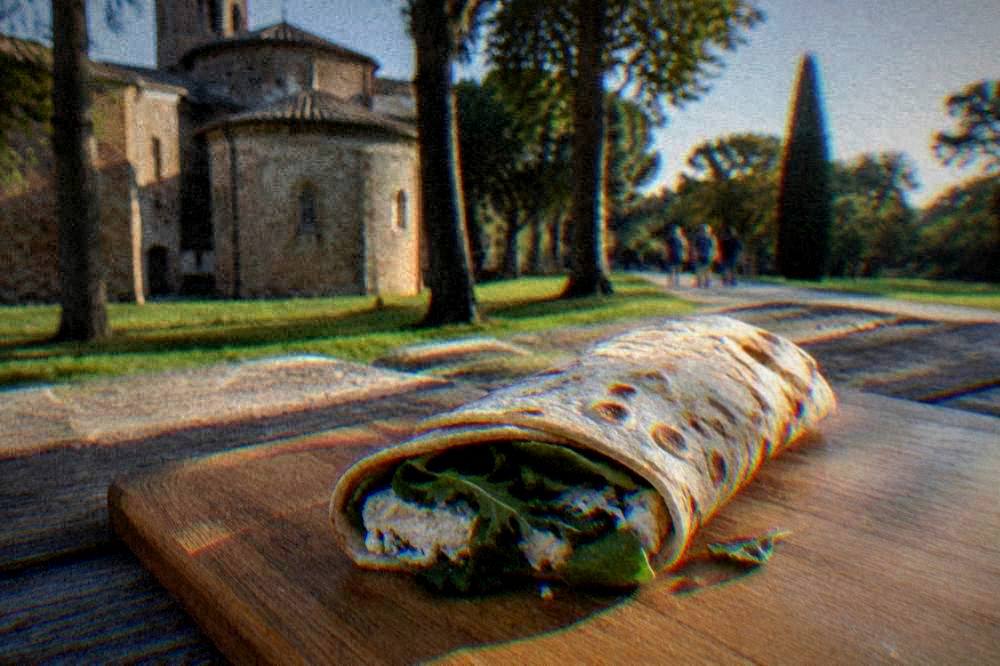
Around Classe, look for hearty Romagna farm food: piadina flatbread, cappelletti pasta served in broth, and simple grilled meats, all matched with Sangiovese wine from the hills and plain just inland. This is the same local produce the area's wineries pour at their tastings, so the food and drink around Classe reflect the surrounding countryside. No restaurant is named here, because the honest recommendation is to eat by dish rather than by venue: a piadina stuffed with squacquerone cheese, a plate of cappelletti, and a glass of local red covers the territory. A cover charge, the coperto, is legal when printed on the menu, and tipping is not obligatory.
The cooking-class route goes deeper than the table. A piadina cooking class teaches the flatbread that defines this coast, and the site's Ravenna food tours and cooking classes guide lists the full range, from market visits to gelato making. The dish-by-dish background sits in the Ravenna food guide and the piadina romagnola page.
Wine completes it. Romagna's Sangiovese comes from the hills a short drive inland, and the winery visit listed at the top of this page runs tastings with food in the countryside near Ravenna. Bookings and live prices sit on the operator's listing, and the countryside drive from Classe toward the hills passes the same farmland the port once fed.
After dark, the centre rather than Classe holds the evening, and a darker walking route through the city's crimes and vendettas is one way to spend it; the listing shows what the walk covers. For the calmer evening, Piazza del Popolo and the streets around it stay lively late, and everything is a flat walk from the station end of town.
Common Questions About Classe Ravenna
What is Classe Ravenna?
Classe is the area south of Ravenna that holds the ancient Roman port city of Classis, the UNESCO-listed Basilica of Sant'Apollinare in Classe, the Classis Ravenna museum and the Pineta di Classe pine forest.
How much does the Basilica of Sant'Apollinare in Classe cost?
The basilica costs EUR 6 full and EUR 2 reduced, per the cultura.gov.it listing, and the state monuments are free on the first Sunday of the month.
Can you get from Ravenna to Classe by bus or bike?
Yes. The area is flat Po-plain ground a few kilometres south of the centre, reached by bike, bus or car, and the coast road continues to Lido di Classe.
Is the Basilica of Sant'Apollinare in Classe part of the Ravenna Mosaici combo ticket?
No. The combo covers the five central church monuments, while the basilica is a separate state monument with its own EUR 6 ticket.
What happened to the TAMO museum in Ravenna?
TAMO closed permanently in 2023 and its collection moved to the Classis Ravenna museum beside the basilica in Classe.
When is the Basilica of Sant'Apollinare in Classe open?
Monday to Saturday 8:30 to 19:00 and Sunday 13:30 to 19:00, with last admission 30 minutes before closing, per the cultura.gov.it listing.
Classe is the half of Ravenna that the port built, and the basilica's green apse is the single image that survives the trip in memory: book the morning or the Sunday afternoon around it, add the museum while the feet are still fresh, and let the pine forest carry the day the rest of the way to the sea.