Ravenna Cathedral
Ravenna Cathedral stands at the heart of the inland city of Ravenna, in Emilia-Romagna, surrounded by the Neonian Baptistery, the Archiepiscopal Museum and its chapel, and some of the finest Byzantine mosaics in the world. This guide covers what the cathedral is, what a visitor sees inside, and how tickets and hours work for the surrounding UNESCO monuments.
Short answer
Ravenna Cathedral is the metropolitan cathedral of the Archdiocese of Ravenna, standing in the historic centre next to the Neonian Baptistery and the Archiepiscopal Museum. Entry details and hours should be confirmed on the official diocesan pages, while the surrounding monuments are covered by the Ravenna Mosaici combo ticket, reduced fares from EUR 9.50, valid one week with one admission per monument.
Ravenna Cathedral, the Metropolitan Cathedral of the Resurrection of Our Lord Jesus Christ, is the seat of the Archbishop of Ravenna and one of the anchor points of the city's historic centre. Ravenna itself is an inland city on the flat Po plain of Emilia-Romagna, about 8 km from the Adriatic coast, and it is famous above all for its eight UNESCO Early Christian monuments with their Byzantine mosaics. The cathedral stands in the middle of that heritage cluster: the Neonian Baptistery is a few steps away, the Archiepiscopal Museum and its Chapel of St Andrew open off the same complex, and the great mosaic basilicas of San Vitale and Sant'Apollinare Nuovo sit a short walk from its doors. This page explains what the cathedral is, what a visitor sees inside and around it, and how tickets, hours and a day's planning fit together.
What Is Ravenna Cathedral?
Ravenna Cathedral is the mother church of the Archdiocese of Ravenna, the city's metropolitan cathedral, rebuilt in its present baroque form after a collapse destroyed the earlier building on the site, and it stands today in Piazza Duomo at the centre of Ravenna's compact historic core, a short walk from the railway station and surrounded by monuments from the UNESCO Early Christian listing. The UNESCO listing, inscribed in 1996, names eight monuments: the Mausoleum of Galla Placidia, the Neonian Baptistery, Sant'Apollinare Nuovo, the Arian Baptistery, the Archiepiscopal Chapel, the Mausoleum of Theodoric, San Vitale and Sant'Apollinare in Classe. The cathedral itself is not one of the eight, which surprises readers who assume it must be. Its neighbour, the Neonian Baptistery, is.
That relationship shapes every visit. The baptistery, with its remarkable dome mosaic, sits beside the cathedral the way baptisteries were placed beside cathedrals in the early Christian city. The Archiepiscopal Museum, entered from the same complex, holds the Archiepiscopal Chapel, which is one of the eight UNESCO monuments. A visitor walking into Piazza Duomo therefore touches one UNESCO monument directly and stands beside a second, before walking ten quiet streets to San Vitale and the Mausoleum of Galla Placidia.
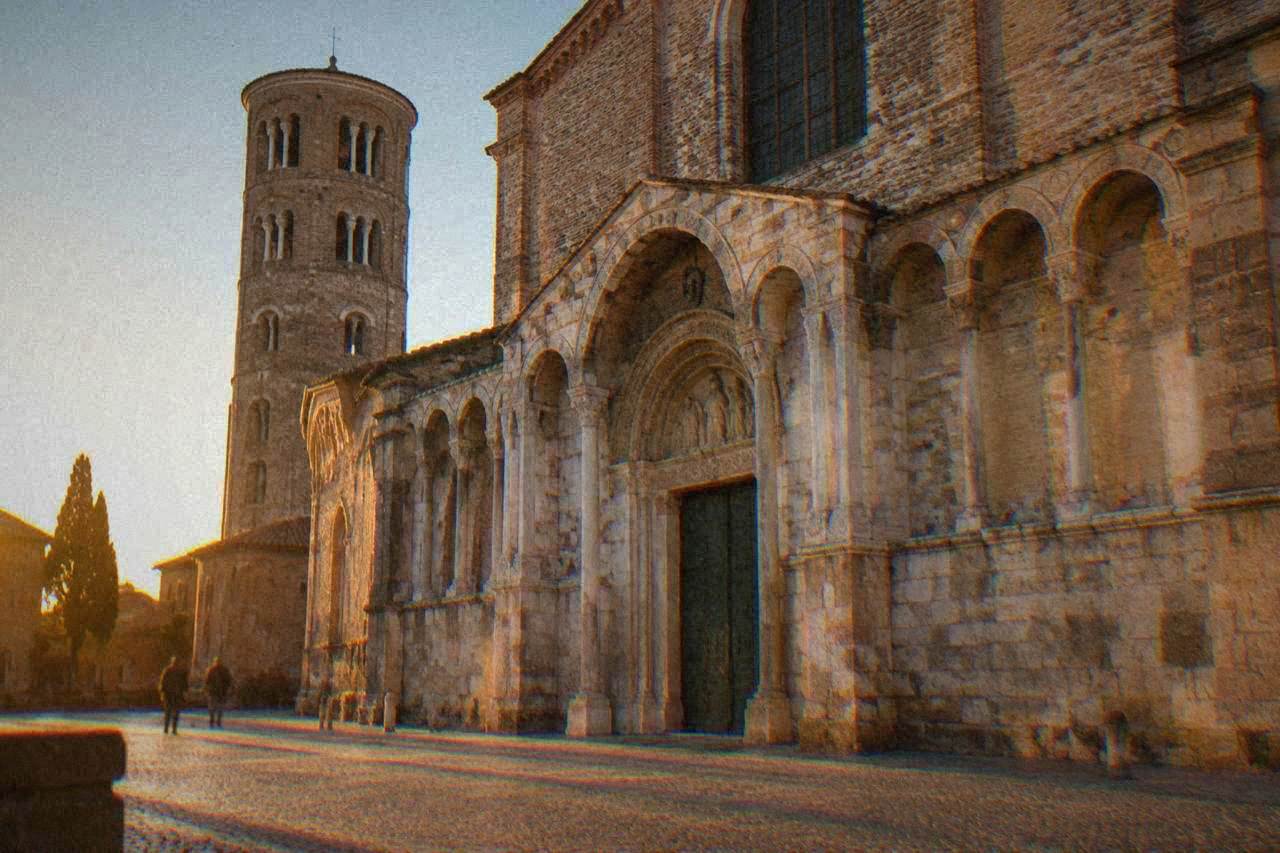
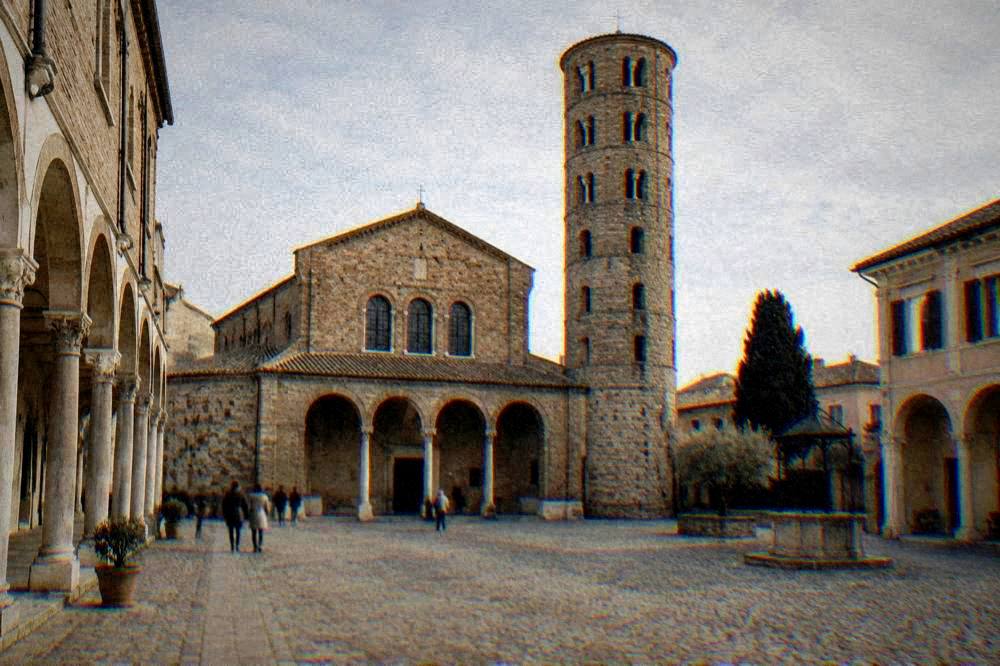
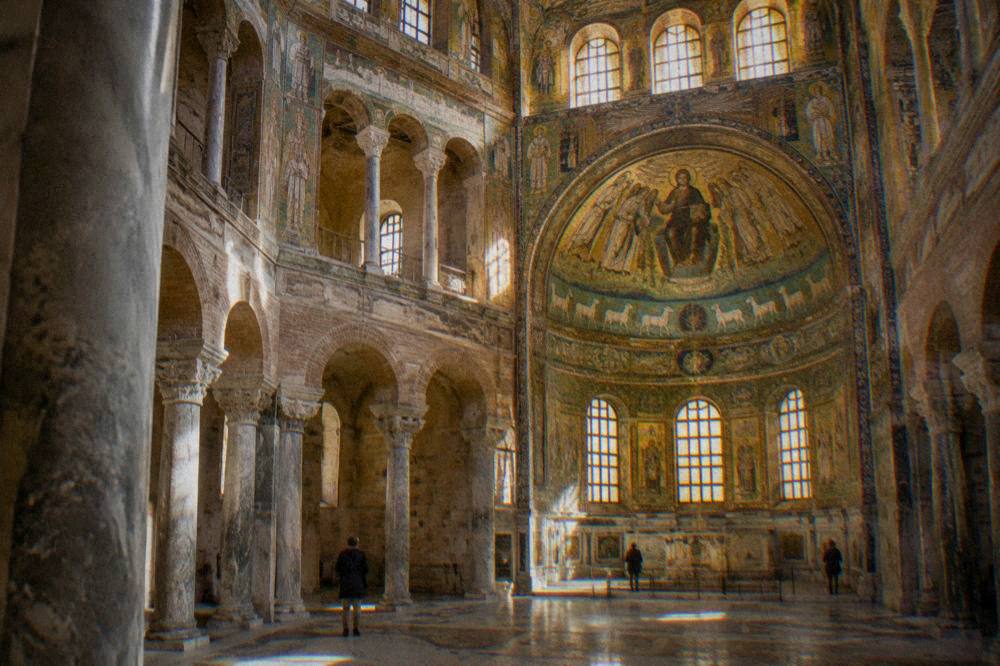
What the visitor sees is a dignified baroque interior of columns, side chapels and a domed crossing, with a tall brick bell tower rising alongside. The earlier cathedral on the site was one of the great early Christian buildings of the city, and fragments of that history survive in the museum next door. The site of Dante's tomb, the small funerary monument where the poet is buried, lies a few minutes away toward the centre, and entry there is free. Ravenna is that kind of city: the cathedral is a hub, not an outpost, and everything else in this guide is within an easy flat walk of it.
| Quick Fact | Detail For Ravenna Cathedral |
|---|---|
| City | Ravenna, Emilia-Romagna, inland on the Po plain |
| Distance from the Adriatic coast | About 8 km from the centre to the nearest resorts |
| Status | Metropolitan cathedral, seat of the Archbishop of Ravenna |
| Part of the UNESCO list of eight? | No, but the Neonian Baptistery and Archiepiscopal Chapel beside it are |
| Nearest UNESCO monuments | Neonian Baptistery and Archiepiscopal Chapel, both in the same complex |
| Currency and emergency number | Euro (EUR), 112 |
Ravenna's centre is small and flat, which matters for planning. The railway station sits a short walk from the historic core, the beaches at Marina di Ravenna and Punta Marina are reached by Start Romagna bus rather than on foot, and the whole cathedral quarter can be covered on foot without effort. For a wider picture of the city's sights, the site's overview at Ravenna Travel Guide and the Ravenna things to do overview collect the full range, from Ravenna's Piazza del Popolo to the pine woods of the coast.
What Can You See Inside Ravenna Cathedral?
Inside Ravenna Cathedral a visitor finds a baroque nave with columns and side chapels, a domed crossing, works of painting and marble from the rebuild onward, and the brick bell tower beside the church, while the mosaics that made the city famous sit in the neighbouring monuments rather than here, so the cathedral visit works best as one stop in a circuit that includes the Neonian Baptistery and the Archiepiscopal Museum with its chapel. The interior is a working cathedral space, used for worship, and visitors should dress and behave accordingly, shoulders covered, quiet inside, and photography checked against posted signs rather than assumed.
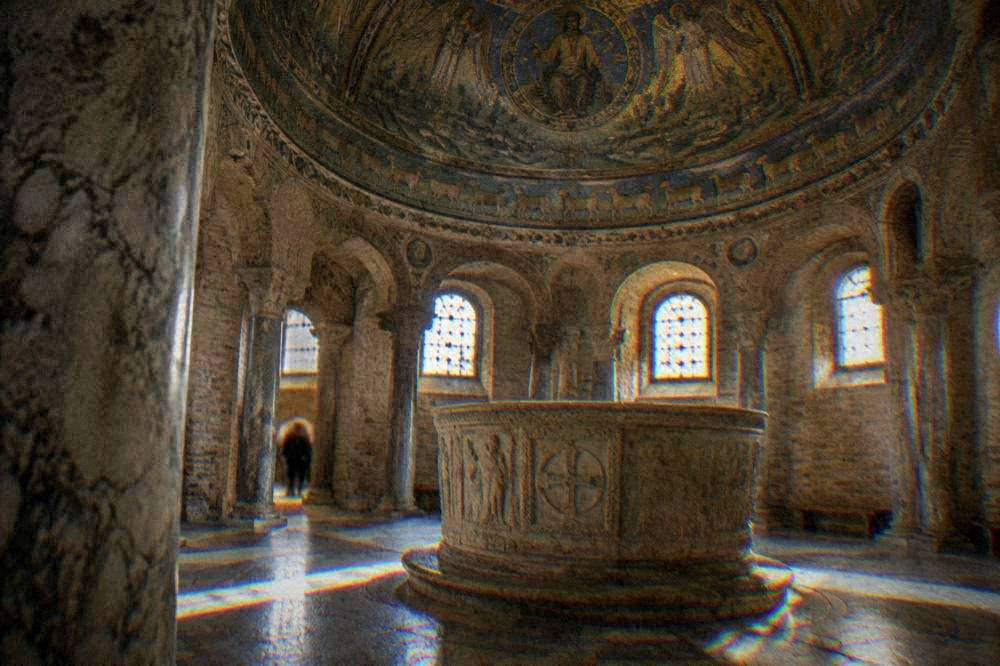
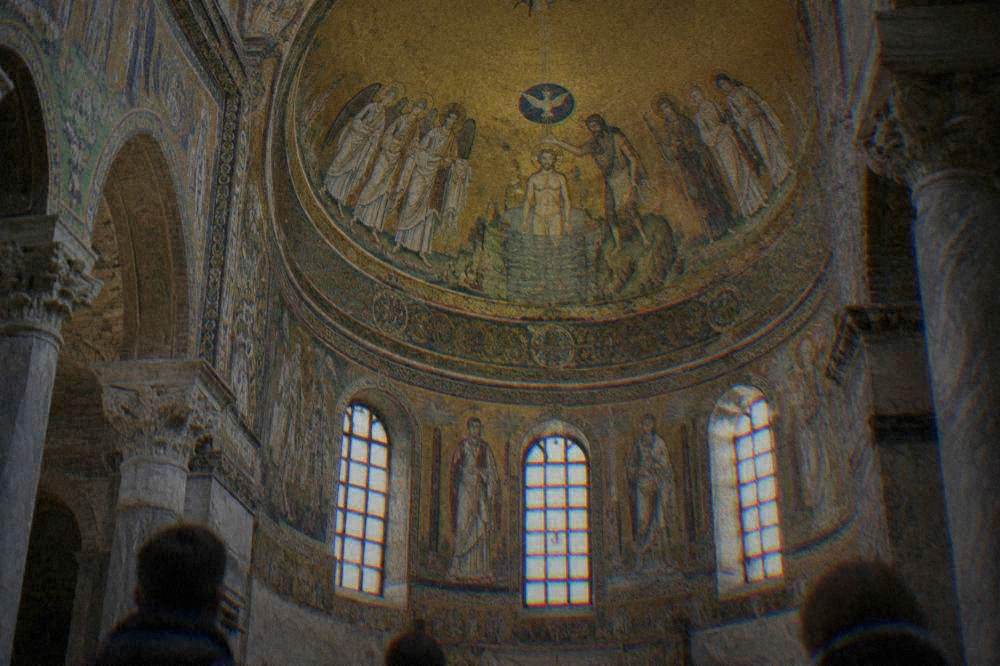
The neighbouring Neonian Baptistery is the mosaic highlight of the immediate complex. Its dome carries one of the celebrated early Christian mosaic schemes, a baptismal scene in gold-ground glass tesserae, and it is one of the eight UNESCO monuments. The Neonian Baptistery guide on this site covers it in detail. Because the baptistery is part of the Ravenna Mosaici circuit, entry works through the same combo ticket as San Vitale, and the visit itself is brief: the monument keeps visits short to protect the floor and manage flow, a few minutes inside rather than a leisurely stop.
The Archiepiscopal Museum, also entered from the cathedral complex, holds the Archiepiscopal Chapel of St Andrew, another of the eight. The chapel's mosaics and the museum's collection of early Christian fragments sit within the 5-monument combo ticket, which adds them to San Vitale, Sant'Apollinare Nuovo, Galla Placidia and the Neonian Baptistery. The Archiepiscopal Chapel page explains what the ticket covers and how entry times are booked, since each monument on the combo needs a reserved slot and the ticket is valid one week with one admission per monument.
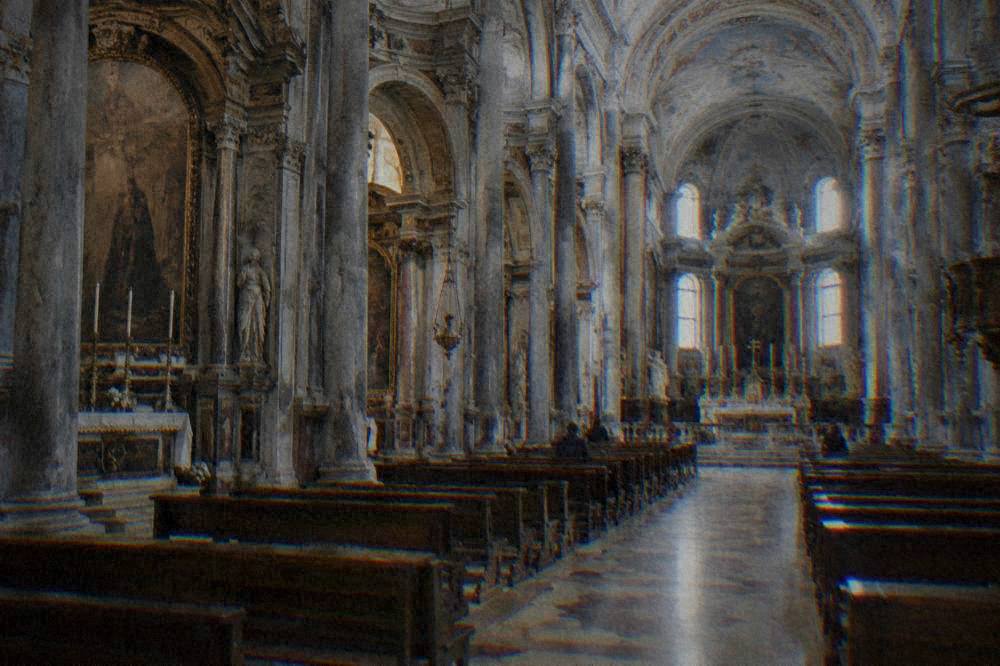
Around the cathedral the rest of the centre unfolds in a compact ring. Dante's tomb, free to enter, lies a short walk away, and the Dante's Tomb guide lists the opening pattern: 10:00 to 18:00 from November to March and 10:00 to 19:00 from April to October, closed on 25 December. San Vitale and the Mausoleum of Galla Placidia, the two monuments every visitor to the city seeks out, are a few minutes further. The point is that the cathedral is not a half-day destination on its own. It is the first stop of a walking morning, and its piazza is the natural place to begin.
A guided walk ties this cluster together well, and the site's featured pick for this page is the Mosaics and Highlights Guided Tour with Admission Ticket, which covers the great mosaic monuments with entry included, a sensible fit for a first visit built around the cathedral quarter.
How Do Ravenna Cathedral Tickets And Opening Hours Work?
Ravenna Cathedral itself is a working church and its access conditions should be confirmed on the official diocesan or Visit Ravenna pages before a visit, while every surrounding mosaic monument sells entry through the Ravenna Mosaici ticket system, where reduced combo fares start at EUR 9.50 for two monuments, EUR 11.50 for four and EUR 13.50 for five, valid one week with one admission per monument and a booked entry time for each. The combo prices the site prints are the reduced fares from the official Ravenna Mosaici page; full fares and any seasonal changes are on that page, and it is the right place to check before buying.
The combo structure matters more here than the single ticket prices. The 2-monument combo covers Sant'Apollinare Nuovo and San Vitale. The 4-monument combo adds the Mausoleum of Galla Placidia and the Neonian Baptistery, the two that need booked entry times and short stays of a few minutes. The 5-monument combo adds the Archiepiscopal Museum and the Chapel of St Andrew, completing the circuit around the cathedral. Reduced fares apply to students, non-accredited journalists and paying groups over 20; children 0 to 10, residents of Ravenna, ICOM members, licensed guides, and visitors with a disability plus companion enter free.
Opening hours for the mosaic monuments run on two seasons, per the official page. Summer hours, 8 March to 2 November 2026, run 9:00 to 19:00. Winter hours, 3 November 2026 to 6 March 2027, run 10:00 to 17:00, with last admissions 30 minutes before closing, and 16:45 for Galla Placidia and the Neonian Baptistery. The monuments close on 25 December and 1 January. The state monuments outside the combo system keep their own hours: the Mausoleum of Theodoric is open 8:30 to 17:30, and Sant'Apollinare in Classe runs Monday to Saturday 8:30 to 19:00 and Sunday 13:30 to 19:00. The state museums and monuments are free on the first Sunday of the month.
| Ticket | Monuments Covered | Reduced Fare (Official Page) |
|---|---|---|
| 2-monument combo | Sant'Apollinare Nuovo, San Vitale | EUR 9.50 |
| 4-monument combo | Adds Mausoleum of Galla Placidia, Neonian Baptistery | EUR 11.50 |
| 5-monument combo | Adds Archiepiscopal Museum, Chapel of St Andrew | EUR 13.50 |
| Mausoleum of Theodoric (separate) | Mausoleum of Theodoric | EUR 6, concession EUR 5, EUR 2 ages 18 to 25 |
| Theodoric combined | Mausoleum, Arian Baptistery, Theodoric's Palace | EUR 7 |
| Sant'Apollinare in Classe (separate) | Basilica in Classe | EUR 6, EUR 2 reduced |
Two planning notes from the ticket terms deserve attention. First, the combo is valid one week, so it does not force a single frantic day; a visitor can spread the five monuments across two mornings. Second, an entry time must be booked for each monument, and Galla Placidia and the Neonian Baptistery in particular run short timed stays, so building slack into the schedule around them is wise. San Vitale admits in slots as well. Booking ahead in the summer season, and on the free first Sundays when the state monuments draw queues, is the practical move.
For visitors who prefer a walk that handles the tickets, the site's featured tour for this page includes admission; check its live listing for current availability. Check availability
How Does Ravenna Cathedral Compare With San Vitale And Sant'Apollinare?
Ravenna Cathedral is a later rebuild in baroque form and is not one of the eight UNESCO monuments, whereas San Vitale, a short walk away, and Sant'Apollinare Nuovo are both on the list, and their Byzantine mosaics are the reason the city holds World Heritage status, so visitors with limited time should treat the cathedral as the administrative and spiritual centre and San Vitale as the artistic climax of the walk. The comparison is worth making plainly, because the names confuse people. A cathedral sounds like the main sight. In Ravenna the mosaic basilicas are.
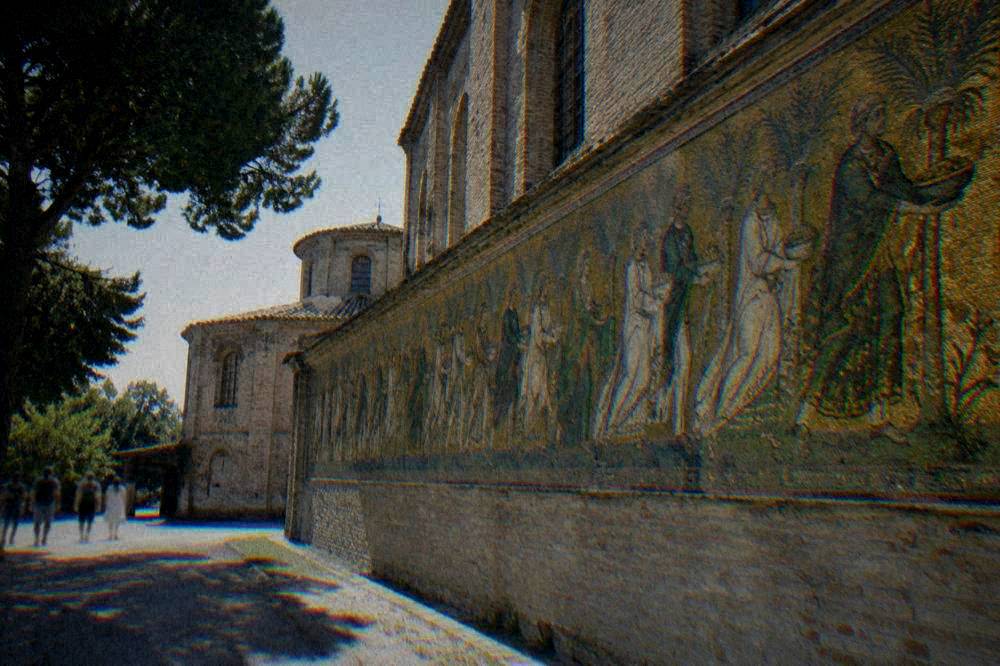
San Vitale, covered in the site's Basilica of San Vitale guide, carries the celebrated gold-ground mosaic schemes of the imperial court, and the Mausoleum of Galla Placidia sits in the same grounds with its blue-starred vault. Sant'Apollinare Nuovo, a short walk from the cathedral in the other direction, lines its nave with processional mosaics, and the Sant'Apollinare Nuovo page details what to look for. Sant'Apollinare in Classe, the eighth monument, stands outside the centre in the Classe area beside the Classis Ravenna museum, reachable by car, bus or bike rather than on foot.
The cathedral's role is different. It is the working seat of the archdiocese, the church around which the UNESCO complex of baptistery and Archiepiscopal Chapel grew, and the doorway to the museum that preserves fragments of the earlier building. A visitor who skips it misses the context; a visitor who spends the whole morning inside it misses the mosaics. The practical route is to start at the cathedral piazza, visit the baptistery and the museum, then walk to San Vitale and Galla Placidia, and finish at Sant'Apollinare Nuovo or reserve Classe for a second morning.
For a deeper mosaic-focused visit, the Most Beautiful Mosaics in the City of Paradise walk concentrates on the mosaic art itself, and its live listing carries the current price and dates.
What Is Near Ravenna Cathedral?
Within a short flat walk of Ravenna Cathedral a visitor reaches the Neonian Baptistery and Archiepiscopal Chapel in the same complex, Dante's tomb and the adjoining Museo Dante, the Basilica of San Francesco with its flooded crypt, Piazza del Popolo with the city's civic life, San Vitale and the Mausoleum of Galla Placidia, Sant'Apollinare Nuovo, and the National Museum of Ravenna, so the cathedral quarter is effectively the whole historic centre under another name. This density is the city's practical gift: no buses, no hills, no planning gymnastics.
The table below gathers the printable ticket and hours facts for the immediate neighbours, drawn from the official pages cited throughout this site.
| Sight Near The Cathedral | Entry | Printable Details |
|---|---|---|
| Neonian Baptistery | Ravenna Mosaici combo | 4- and 5-monument combos; short timed stays |
| Archiepiscopal Museum and Chapel | Ravenna Mosaici combo | 5-monument combo; winter 10:00 to 17:00 |
| Dante's Tomb | Free | Nov to Mar 10:00 to 18:00, Apr to Oct 10:00 to 19:00, closed 25 Dec |
| Museo Dante | Ticket EUR 5, reduced EUR 3.50 | Tue to Sun, closed Monday and 25 Dec |
| National Museum of Ravenna | EUR 7, EUR 2 reduced | Closed Monday; free first Sunday of the month |
| Mausoleum of Theodoric | EUR 6, concession EUR 5, EUR 2 ages 18 to 25 | Daily 8:30 to 17:30 |
| MAR city art museum | EUR 8, reduced EUR 6, students EUR 3 | Tue to Sat 9:00 to 18:00, Sun 15:00 to 19:00, closed Monday |
Two near neighbours deserve a special word. The Basilica of San Francesco, beside Dante's tomb, holds a crypt whose floor sits below the water table, so goldfish swim over the ancient mosaic floor, a detail children remember long after the great basilicas blur together. The Basilica of San Francesco page covers it. The Domus dei Tappeti di Pietra, a buried domestic mosaic floor opened to visitors in the centre, keeps hours that vary by season, and its ticket arrangements are best confirmed on the official page rather than assumed. TAMO, the former mosaic museum, closed permanently in 2023 and its collection moved to Classis Ravenna, so any older guide pointing you there is out of date.
For cruise visitors the cathedral quarter is the natural focus of a port day, since the shuttle from Porto Corsini terminal, about 15 km from the centre, runs about 30 minutes and the whole cluster is walkable from the drop-off. The site's Ravenna cruise port guide planning notes cover that route in detail, and for travellers coming from Venice the deluxe boat-and-gondola excursion runs from the port; its live listing shows what is included.
When Is The Best Time Of Year To Visit Ravenna Cathedral?
The climate table for Ravenna shows modelled 1991 to 2020 normals with July the warmest month at a 25.2 C mean and January the coldest at 5.1 C, November the wettest month at 78.3 mm and July the driest at 38.1 mm, so the comfortable visiting windows are spring and autumn, and the winter season, from 3 November 2026 to 6 March 2027, brings shorter monument hours of 10:00 to 17:00 alongside thinner crowds. Summer keeps the long 9:00 to 19:00 opening window, which matters for a one-day visit, but the flat Po plain heats up and the busiest mosaic rooms are small.
| Month | Mean C | Precipitation mm |
|---|---|---|
| Jan | 5.1 | 43.8 |
| Feb | 5.8 | 56.4 |
| Mar | 9.4 | 54.9 |
| Apr | 13.1 | 66.0 |
| May | 17.9 | 58.2 |
| Jun | 22.6 | 45.6 |
| Jul | 25.2 | 38.1 |
| Aug | 25.0 | 44.7 |
| Sep | 20.3 | 57.9 |
| Oct | 15.7 | 66.0 |
| Nov | 10.6 | 78.3 |
| Dec | 6.1 | 63.7 |
These are modelled ERA5 normals for 1991 to 2020, not a station record, and the site prints no sunshine or sea-temperature figures because none are sourced. What the table supports is straightforward: shoulder months sit in the mid-teens with moderate rain, and November carries the highest rainfall of the year at 78.3 mm, so an umbrella earns its place in the bag. The city's Ravenna in the rain itinerary is one planning fallback for wet days, though the mosaic interiors themselves are an all-weather destination, which is part of their appeal.
Events give the calendar some texture around the cathedral quarter. The Ravenna Festival's autumn trilogy "Mozart 1791" runs 13 to 17 November 2026 at Teatro Alighieri, and each October the Notte d'Oro evening opens palaces and monuments free. Winter brings the Christmas village to Piazza del Popolo on an indicative late-November to early-January pattern, with the Comune confirming final dates each year. None of these change the cathedral's own schedule, but they change how lively the surrounding streets feel.
How Does A Guided Tour Fit Ravenna Cathedral Into A Day?
A guided mosaic walk fits Ravenna Cathedral into a half-day or full-day circuit by pairing the cathedral quarter's baptistery and Archiepiscopal Chapel with San Vitale, Galla Placidia and Sant'Apollinare Nuovo, with admission handled by the tour on ticket-included options, leaving the visitor free to add Dante's tomb, which is free, and a Classe visit on a second morning. The decision between a guided walk and independent combo tickets comes down to interpretation: the mosaics reward explanation, and the monuments are close enough that a tour loses no time in transit.
The site's featured pick for this page, the Mosaics and Highlights Guided Tour with Admission Ticket, covers the highlights with entry included and free cancellation up to 24 hours in advance, which suits a first visit or a cruise day with a fixed window. Independent travellers can buy the 5-monument combo directly on the official Ravenna Mosaici page and follow the same walking order, reserving each monument's entry time as the ticket terms require. Both approaches work; the guided route simply removes the booking puzzle.
For a second day, the options fan out. Sant'Apollinare in Classe and the Classis Ravenna museum, where the TAMO collection now lives, sit in the Classe area south of the centre. The Mausoleum of Theodoric and the Arian Baptistery, covered by the EUR 7 combined ticket, complete the UNESCO eight on the edge of the centre. Beyond the city, Bologna lies about 84 km away by direct regional train with a journey of about 1 hour to 1 hour 20, and day trips to Ferrara, Comacchio and the Po Delta start from the same station. The beaches at Marina di Ravenna are a Start Romagna bus ride away, worth remembering that Ravenna's centre is inland and the sea is not visible from the cathedral piazza.
A final note on money and safety. Italy uses the euro, the emergency number is 112, and Ravenna charges a tourist tax per night, about EUR 2 at 3-star hotels and EUR 3 at 4-star hotels under the tariff in force from 1 January 2023, always to be confirmed at booking since tariffs change. A cover charge, the coperto, is legal when printed on the menu, and tipping is not obligatory. Petty crime such as pickpocketing around tourist sites and on public transport is the sensible caution anywhere, a zipped bag held in front on a crowded bus being the practical check a visitor can make.
Common Questions About Ravenna Cathedral
Is Ravenna Cathedral one of the eight UNESCO monuments?
No. The UNESCO Early Christian listing of 1996 covers the Mausoleum of Galla Placidia, the Neonian Baptistery, Sant'Apollinare Nuovo, the Arian Baptistery, the Archiepiscopal Chapel, the Mausoleum of Theodoric, San Vitale and Sant'Apollinare in Classe. The Neonian Baptistery and the Archiepiscopal Chapel stand in the cathedral's own complex, which is why the piazza is still the natural starting point.
Do I need a ticket for Ravenna Cathedral?
The cathedral is a working church, and its access conditions should be confirmed on the official diocesan or Visit Ravenna pages before a visit. The surrounding monuments use the Ravenna Mosaici combo ticket, with reduced fares from EUR 9.50 for two monuments up to EUR 13.50 for five, valid one week with one admission per monument and a booked entry time for each.
How long does a visit to the cathedral quarter take?
The cathedral, the Neonian Baptistery and the Archiepiscopal Museum with its chapel can be covered in a morning, with short timed stays at the baptistery. Adding San Vitale, Galla Placidia, Dante's tomb and Sant'Apollinare Nuovo fills a full day at a comfortable pace, since the whole historic centre is flat and compact.
What are the opening hours around Ravenna Cathedral?
The Ravenna Mosaici monuments run 9:00 to 19:00 in the summer season, 8 March to 2 November 2026, and 10:00 to 17:00 in winter, 3 November 2026 to 6 March 2027, closing on 25 December and 1 January. Dante's tomb runs 10:00 to 18:00 from November to March and 10:00 to 19:00 from April to October, and entry is free.
Can I see Ravenna Cathedral on a cruise port day?
Yes. The Porto Corsini cruise terminal is about 15 km from the centre, and the Visit Ravenna shuttle covers the distance in about 30 minutes. The cathedral quarter and the main mosaic monuments are all within a short walk of the city drop-off, which is why the cluster suits a fixed port window.
Is Ravenna Cathedral close to the sea?
Ravenna's historic centre is inland on the Po plain, about 8 km from the nearest Adriatic resorts, and no sea view exists from the cathedral piazza. The beaches at Marina di Ravenna and Punta Marina are reached by Start Romagna bus from the station.
Ravenna Cathedral rewards the visitor who treats it as a doorway rather than a destination: the baroque interior, the baptistery dome beside it, and the UNESCO monuments scattered within a short walk together make one of the densest heritage circuits in Emilia-Romagna, all reachable on foot from a single piazza.
Before you go, the pick for this guide:
Guided Mosaics, Admission Included
★ 4.9 110 reviews · From $67
Check availability →