Ravenna Mosaics
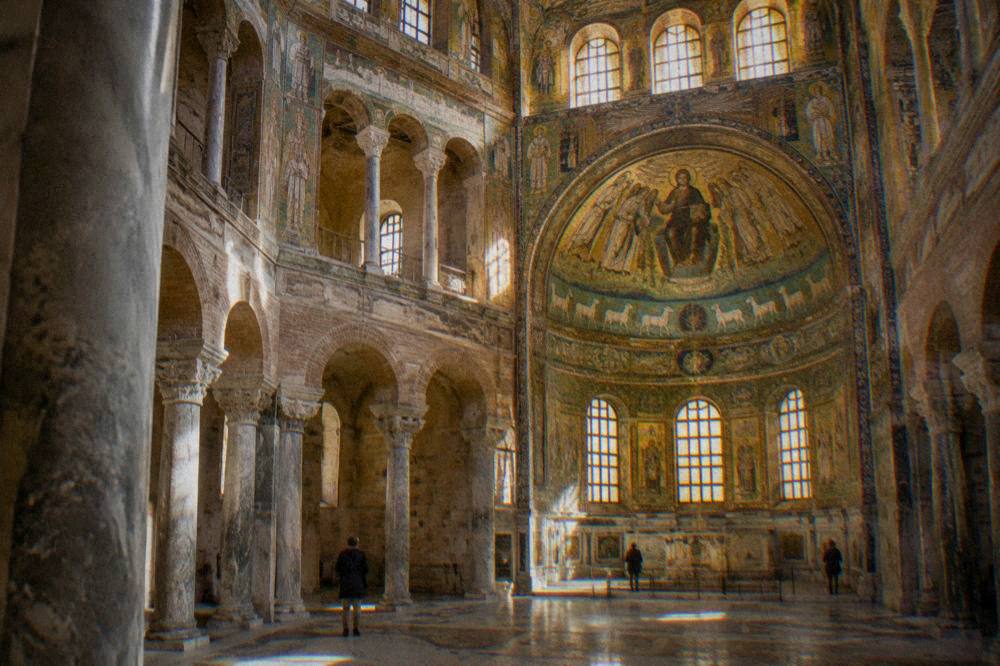
Ravenna holds eight UNESCO-listed Early Christian monuments decorated with Byzantine mosaics, more late antique mosaic in one small inland city than almost anywhere in Europe. This guide covers the buildings, the ticket, the hours and the practical route.
Short answer
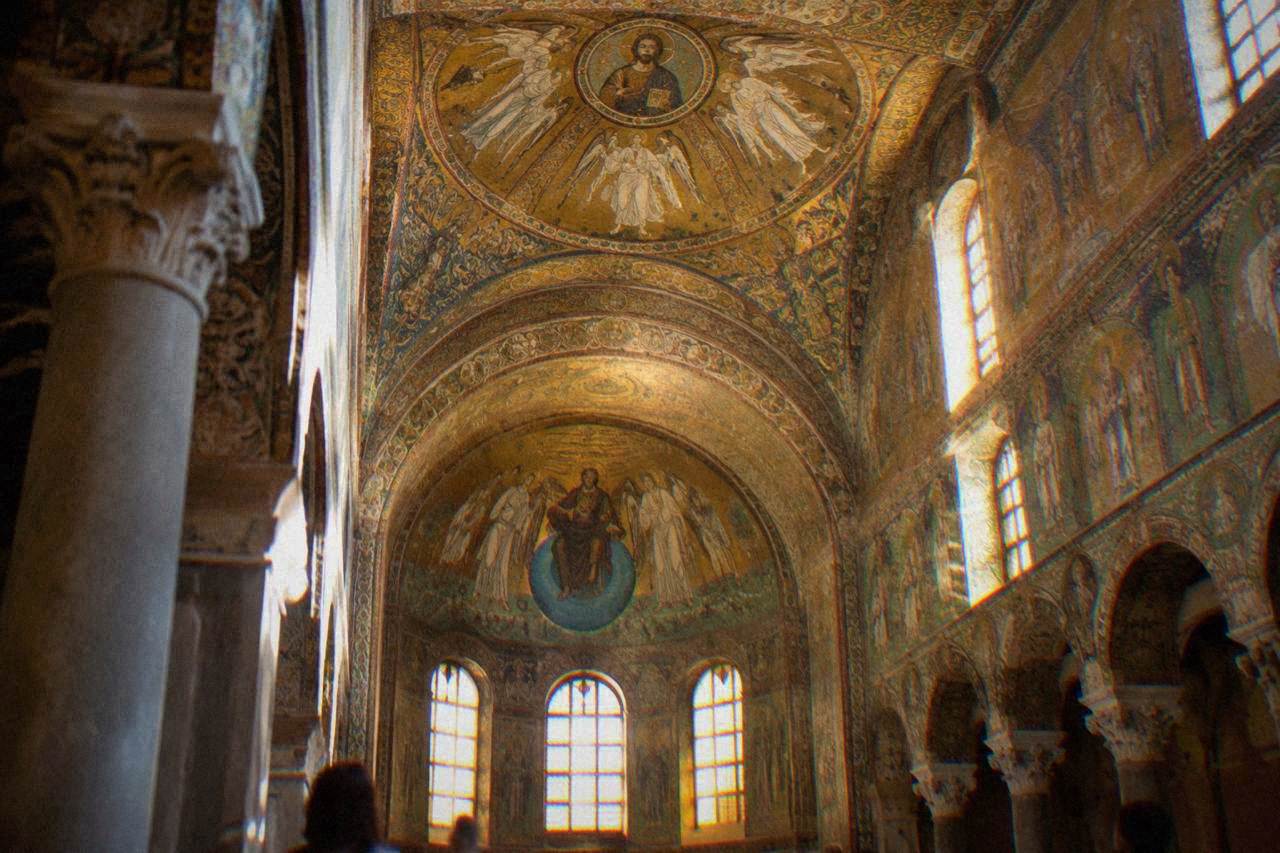
The Ravenna mosaics are spread across eight UNESCO monuments in and around the historic centre. A combined Ravenna Mosaici ticket, valid one week with one admission per monument, covers five of them, with reduced fares from EUR 9.50, and Galla Placidia and the Neonian Baptistery require a booked entry time.
Ravenna, an inland city on the flat Po plain of Emilia-Romagna about 8 km from the Adriatic coast, holds the densest group of late antique mosaics in one small centre anywhere in Europe. UNESCO inscribed the Early Christian Monuments of Ravenna on the World Heritage List in 1996, naming eight buildings: the Mausoleum of Galla Placidia, the Neonian Baptistery, the Basilica of Sant'Apollinare Nuovo, the Arian Baptistery, the Archiepiscopal Chapel, the Mausoleum of Theodoric, the Basilica of San Vitale and the Basilica of Sant'Apollinare in Classe. The historic centre is compact and walkable, the railway station sits a short walk from the main cluster, and every one of the eight can be reached on foot or with one short bus ride to Classe. This page on Ravenna Travel Guide lays out what each monument holds, what the ticket covers, when the doors are open and how to order the day.
Why Does Ravenna Have So Many Mosaics?
Ravenna collected its mosaics because the city served as a capital while the workshops that made gold-ground glass mosaic were at their height, and the buildings that housed them survived later centuries largely intact. UNESCO's 1996 inscription recognises eight Early Christian monuments whose decoration shows Byzantine mosaic artistry at an exceptional level of preservation. The visitor sees the result today: a walkable inland centre where five of the eight stand within a few hundred metres of each other.
The UNESCO listing itself frames the group as evidence of a specific artistic tradition, and the site's own pages describe the mosaics as the reason Ravenna is on the World Heritage List at all. The marble and glass tesserae were set directly onto the curved surfaces of domes, apses and barrel vaults, which is why the decoration climbs the architecture rather than hanging flat on walls. Gold leaf sandwiched inside glass cubes catches light at different angles, and the effect changes as the viewer moves under a dome. The why does Ravenna have so many mosaics answer page unpacks the historical chain in more detail.
What surprises many first-time readers is how small the individual monuments are. Galla Placidia and the two baptisteries are compact chambers, and the Ravenna Mosaici pages note that visits to Galla Placidia and the Neonian Baptistery are limited to a few minutes because the rooms hold so few people at a time. San Vitale and Sant'Apollinare in Classe are the two large-scale interiors, and both reward slow circuits. The full monument list, with what stands where, is on the Ravenna UNESCO sites guide.
What Are The Most Famous Mosaics In Ravenna?
The best-known mosaics are the imperial panels flanking the apse of San Vitale, the star vault of the Mausoleum of Galla Placidia, the processions of martyrs and virgins along the walls of Sant'Apollinare Nuovo, and the cross-lit dome of the Neonian Baptistery. UNESCO names all four buildings in its 1996 inscription, and each holds decoration that appears in every standard survey of early medieval art.
San Vitale carries the two panels visitors come specifically to stand in front of: a courtly procession on each side of the apse, with the figures named by inscription and rendered in flat gold. The apse itself is a green meadow under a gold sky. Galla Placidia, a low brick cruciform chamber, holds a deep blue vault scattered with gold stars, the effect the listing describes and the single most photographed interior in the city. The basilica of San Vitale and mausoleum of Galla Placidia guides cover both buildings room by room.
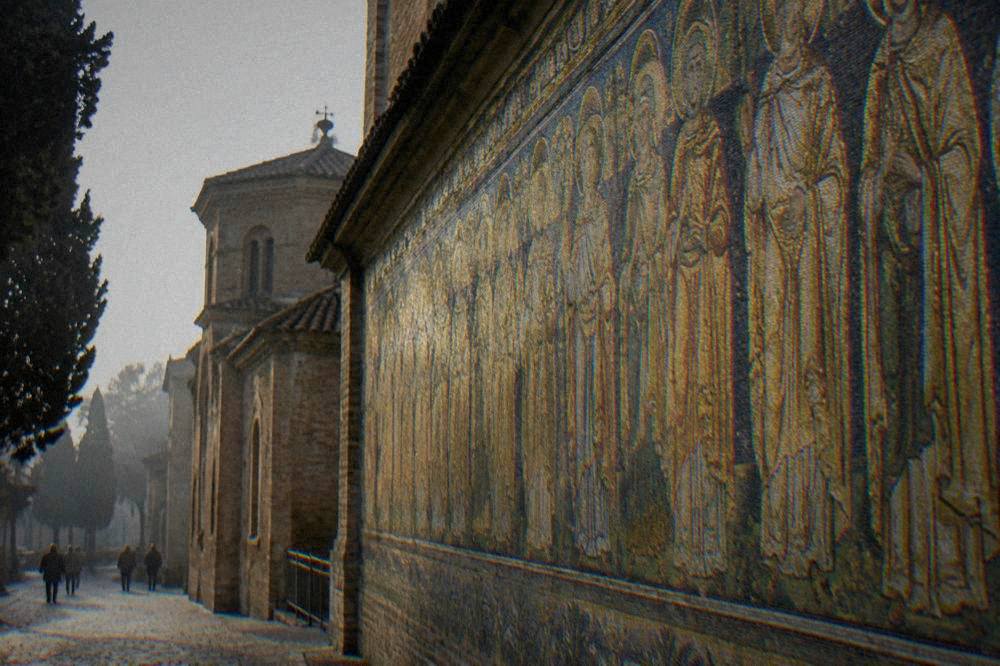
Sant'Apollinare Nuovo lines its nave walls with two processions moving toward the apse, one of male figures and one of female, above a band of scenes. The Neonian Baptistery's dome hides a figure until the viewer stands in exactly the right spot, a perspective trick the monument pages describe in detail. Further out at Classe, Sant'Apollinare in Classe fills its apse with a green paradise landscape and a cross of gold stars, the largest single composition among the eight. The most famous mosaics in Ravenna answer page ranks them, and the where are the best mosaics in Ravenna page maps them by district.
How Much Do Ravenna Mosaics Tickets Cost?
The combined Ravenna Mosaici ticket is sold in three sizes, and the official page lists reduced fares starting at EUR 9.50 for two monuments, EUR 11.50 for four and EUR 13.50 for five, with the full prices shown on the official ticket page. The ticket is valid one week, allows one admission per monument, and an entry time must be booked for each monument separately.
The two-monument combination covers Sant'Apollinare Nuovo and San Vitale. The four-monument version adds the Mausoleum of Galla Placidia and the Neonian Baptistery, and the five-monument version adds the Archiepiscopal Museum with the Chapel of St Andrew. Reduced fares apply to students, non-accredited journalists and paying groups over 20, and entry is free for children aged 0 to 10, residents of Ravenna, ICOM members, licensed guides, and visitors with a disability plus one companion. Galla Placidia and the Neonian Baptistery require a booked entry time and allow only a few minutes inside; San Vitale admits visitors in scheduled slots. The Ravenna combo ticket guide works through every permutation, and the where can I buy tickets for the Ravenna mosaics answer page covers purchase channels.
Three of the eight UNESCO monuments sit outside the combo. Sant'Apollinare in Classe costs EUR 6 full, EUR 2 reduced. The Mausoleum of Theodoric costs EUR 6, EUR 5 concession, EUR 2 for ages 18 to 25, or EUR 7 combined with the Arian Baptistery and Theodoric's Palace. The Arian Baptistery alone is EUR 3. Dante's tomb, though it is not mosaic-decorated, is free. The table below gathers the printed figures.
| Ticket | What It Covers | Printed Price |
|---|---|---|
| Combo, 2 monuments | Sant'Apollinare Nuovo, San Vitale | from EUR 9.50 reduced |
| Combo, 4 monuments | Adds Galla Placidia, Neonian Baptistery | from EUR 11.50 reduced |
| Combo, 5 monuments | Adds Archiepiscopal Museum and Chapel of St Andrew | from EUR 13.50 reduced |
| Sant'Apollinare in Classe | Single monument, at Classe | EUR 6 full, EUR 2 reduced |
| Mausoleum of Theodoric | Single monument | EUR 6, EUR 5 concession, EUR 2 ages 18 to 25 |
| Theodoric combined | Mausoleum, Arian Baptistery, Theodoric's Palace | EUR 7 |
| Arian Baptistery | Single monument | EUR 3 |
| Dante's tomb | Single site, not mosaic | free |
Reduced fares and the free categories above come from the official Ravenna Mosaici pages. Full-price combo figures and any seasonal variation should be read on the official page before travel, since the site does not reprint them here.
A guided option suits readers who want the iconography explained rather than deciphered alone. The Mosaics Day Trip from Bologna covers the principal mosaic interiors with a guide, and works both from Bologna and from Ravenna itself; Check availability for live dates.
How Long Does It Take To See The Mosaics In Ravenna?
The five centre monuments on the combined ticket can be seen in one focused day, since the Ravenna Mosaici ticket is valid one week but the buildings cluster inside a walkable quarter. A half day covers San Vitale, Galla Placidia and the Neonian Baptistery. Adding Sant'Apollinare in Classe requires a short bus or car trip out of the centre, so the full eight monuments realistically need a second half day.
The pacing is driven by the timed entries. Galla Placidia and the Neonian Baptistery admit in booked windows and permit only a few minutes inside, so those two visits are short by design. San Vitale admits in slots and rewards a longer stay, and Sant'Apollinare Nuovo's long nave walls are read at walking pace. The Archiepiscopal Museum, part of the five-monument ticket, sits beside the cathedral and closes the loop on foot. The how long does it take to see the mosaics in Ravenna answer page gives hour-by-hour plans, and the mosaics in half a day itinerary works for cruise arrivals and tight connections.
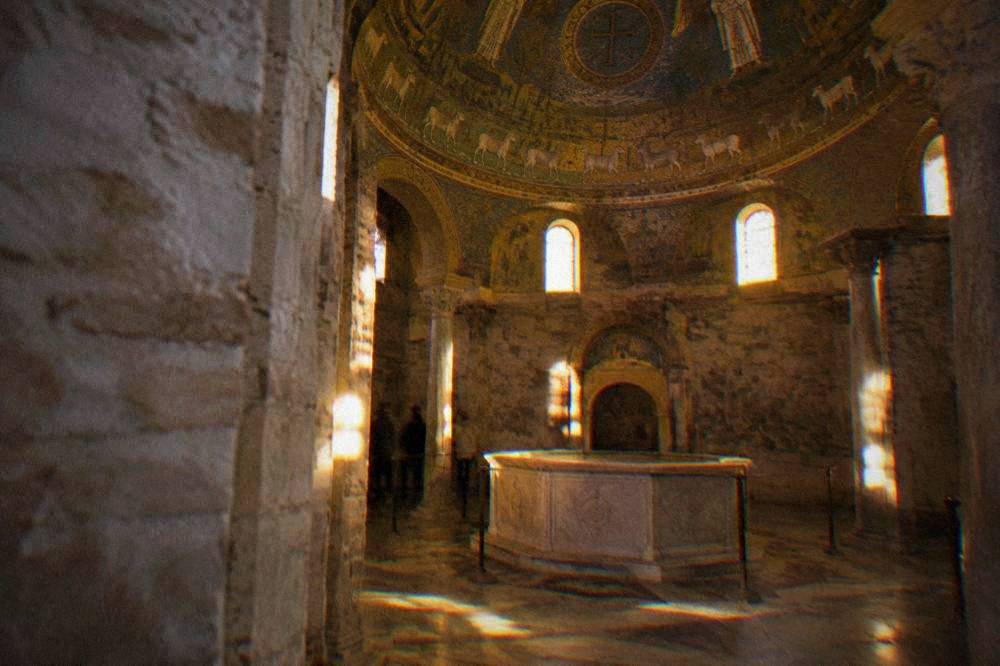
For readers spreading the visit over two days, the second day is the natural moment for Classe: the basilica there, the Classis Ravenna museum in the same area, and the pine woodland of the Pineta di Classe. The museum is open daily 10:00 to 17:00 with last entry 50 minutes before closing, closed 25 December, and is listed at EUR 8 full, EUR 6 reduced. Note that it is not one of the eight UNESCO monuments; TAMO, the former mosaic museum inside San Nicolò, closed permanently in 2023 and its collection moved to Classis Ravenna.
| Monument | Location | Time Needed | Ticket |
|---|---|---|---|
| San Vitale | Centre | Longest stay of the group | 4 or 5 combo |
| Galla Placidia | Centre, beside San Vitale | A few minutes, timed entry | 4 or 5 combo |
| Neonian Baptistery | Centre | A few minutes, timed entry | 4 or 5 combo |
| Sant'Apollinare Nuovo | Centre | Medium, nave walls read slowly | 2, 4 or 5 combo |
| Archiepiscopal Museum and Chapel | Centre, by the cathedral | Medium | 5 combo |
| Arian Baptistery | Centre | Short | EUR 3 single, or EUR 7 combined |
| Mausoleum of Theodoric | Edge of centre | Short to medium | EUR 6 single, or EUR 7 combined |
| Sant'Apollinare in Classe | Classe, outside centre | Medium, plus travel | EUR 6, EUR 2 reduced |
What Do The Opening Hours Say?
The Ravenna Mosaici page gives summer hours of 9:00 to 19:00 from 8 March to 2 November 2026 for all combo monuments, and winter hours of 10:00 to 17:00 from 3 November 2026 to 6 March 2027, with last admission 30 minutes before closing in general and 16:30 or 16:45 in winter. Every combo monument closes on 25 December and 1 January, and there is no weekly closing day for the group.
The non-combo monuments run on their own schedules. Sant'Apollinare in Classe is listed Monday to Saturday 8:30 to 19:00 and Sunday 13:30 to 19:00. The Mausoleum of Theodoric is listed daily 8:30 to 17:30, closed 25 December and 1 January. The Arian Baptistery is listed Monday to Thursday 9:00 to 12:00 and Friday to Sunday 9:00 to 12:00 and 14:00 to 17:00. Dante's tomb keeps 10:00 to 18:00 from November to March and 10:00 to 19:00 from April to October, opening from 13:00 on 1 January and closed 25 December. Hours for the Domus dei Tappeti di Pietra vary by season and should be confirmed on its official page, and the Classis Ravenna museum keeps the daily 10:00 to 17:00 schedule noted above.
| Site | Hours (Listed) | Winter Note |
|---|---|---|
| Combo monuments (San Vitale, Sant'Apollinare Nuovo, Archiepiscopal Museum) | 9:00 to 19:00 to 2 Nov 2026; 10:00 to 17:00 from 3 Nov 2026 | Last admission 16:30 in winter |
| Galla Placidia, Neonian Baptistery | Same days, timed entry | Last admission 16:45 in winter |
| Sant'Apollinare in Classe | Mon to Sat 8:30 to 19:00, Sun 13:30 to 19:00 | No seasonal change listed |
| Mausoleum of Theodoric | Daily 8:30 to 17:30 | Closed 25 Dec and 1 Jan |
| Arian Baptistery | Mon to Thu 9:00 to 12:00; Fri to Sun also 14:00 to 17:00 | No seasonal change listed |
| Dante's tomb | 10:00 to 18:00 Nov to Mar | Opens 13:00 on 1 Jan |
| Classis Ravenna | Daily 10:00 to 17:00, last entry 16:10 | Closed 25 Dec |
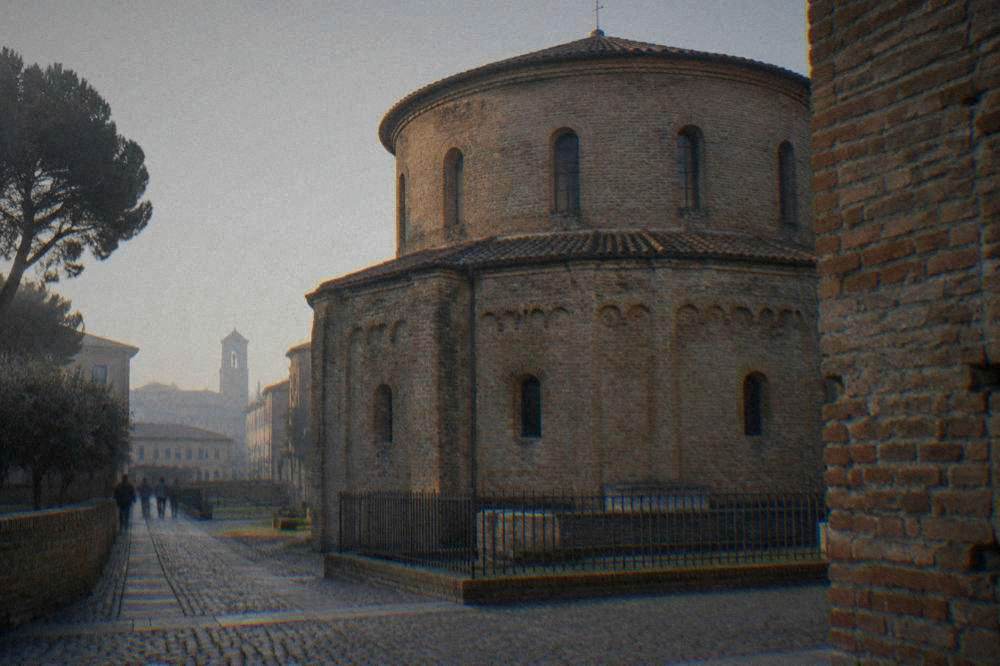
The practical takeaway from the hours table is that winter visitors lose the evening but gain quiet: a 10:00 opening with a 16:30 last admission still leaves a full day for five centre monuments, and November's 78.3 mm of rain, the wettest month in the modelled 1991 to 2020 ERA5 normals with July driest at 38.1 mm, matters little when the mosaics are indoors. The best time to visit Ravenna and Ravenna weather guides carry the full climate picture.
Can You See The Ravenna Mosaics Without A Guide?
Yes, all eight monuments admit independent visitors with ordinary tickets, and the official panels inside each building explain the main scenes in Italian and English. A guide adds the layer the panels do not: who the named figures are, why the two baptisteries differ, and how the Classe apse composition is structured. Readers who prefer independence can buy the combo ticket, book the timed entries and follow a fixed walking order.
The self-guided order that matches the ticket logistics starts at Sant'Apollinare Nuovo, moves to the Neonian Baptistery and the cathedral quarter, then San Vitale with Galla Placidia beside it, and finishes at the Archiepiscopal Museum. The Arian Baptistery and Theodoric's Mausoleum sit a little apart and can close the day. For orientation, the historic centre guide maps the walking distances, and the Ravenna cruise port day guide compresses the same route for shore visitors with limited hours.
To run this order with your entries in place, book a mosaics entry ticket here.
Guided walks suit readers arriving without background. Beyond the city walks, a food-paired version pairs the monuments with local tastings, described on the Ravenna food tours and cooking classes page.
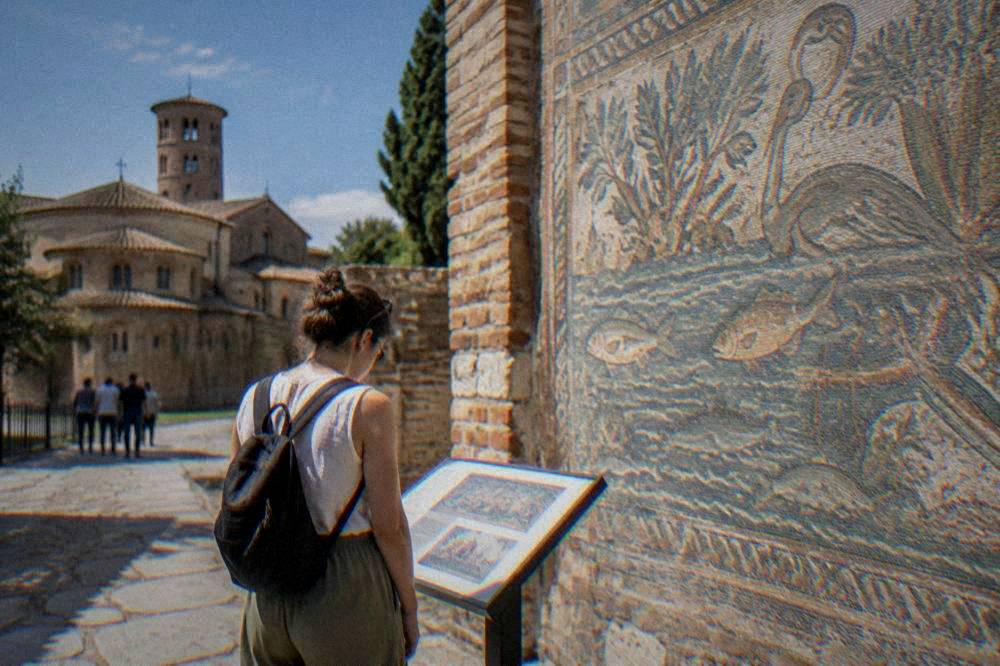
How Do You Get To Ravenna For The Mosaics?
Ravenna sits on the regional rail network with direct trains to Bologna Centrale, a journey of about 1 hour to 1 hour 20 by regional train over about 84 km, and the station is a short walk from the historic centre where the mosaics stand. From Bologna airport the route is the Marconi Express to Bologna Centrale and then a regional train, about 2 to 2.5 hours door to door. No direct airport bus to Ravenna is listed.
The city is inland and flat, and the historic centre's limited traffic zone is camera-enforced, so arriving by train and walking is the simplest plan. Cruise passengers arrive at the Porto Corsini terminal about 15 km away, where the Visit Ravenna shuttle runs about 30 minutes to the centre; the 2026 shuttle page covers 3 May to 26 October. The how to get to Ravenna, Bologna to Ravenna and Bologna airport to Ravenna guides carry the full route detail, including the rail works and strike calendar that can affect autumn travel.
For visitors planning a wider stay, the day-trip ring from Ravenna includes Bologna, Ferrara, Comacchio, the Po Delta and the coast resorts, which the things to do in Ravenna page summarises. The coast itself, Marina di Ravenna and the other lidi, is covered on Ravenna beaches and pairs naturally with the Classe basilica on a Ravenna and the coast itinerary, since both lie in the same direction.
| Route | Mode | Listed Time |
|---|---|---|
| Ravenna to Bologna Centrale | Direct regional train | about 1 hour to 1 hour 20 |
| Bologna airport to Ravenna | Marconi Express plus regional train | about 2 to 2.5 hours door to door |
| Ravenna centre to cruise terminal | Visit Ravenna shuttle | about 30 minutes |
| Ravenna centre to Classe basilica | Start Romagna bus or short drive | short hop, see bus page |
Where Should You Stay And Eat Around The Mosaics?
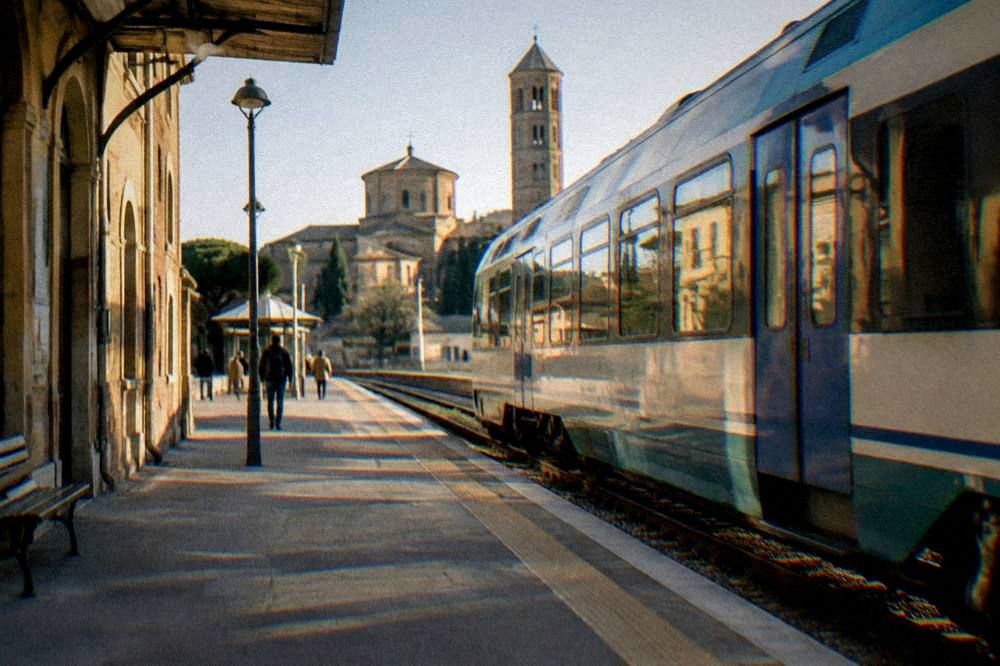
The practical base is the historic centre itself, where the five combo monuments, the cathedral quarter and the main museums sit inside a walkable grid, and the station is a short walk from the edge of it. Staying in the centre removes the timed-entry pressure entirely, since a booked window at Galla Placidia becomes a two-minute walk from most addresses. The where to stay in Ravenna guide compares the centre, the station area and the coast.
Food in Ravenna runs on Romagna staples: piadina flatbread, cappelletti in brodo, and local Sangiovese-based wines, all described dish by dish on the Ravenna food guide and Ravenna restaurants pages. A cover charge, the coperto, is legal when printed on the menu, and tipping is not obligatory, so the itemised bill is the thing to read. Accommodation carries a city tourist tax, about EUR 2 per night at 3-star hotels and EUR 3 at 4-star under the tariff in force from 1 January 2023, always to be confirmed at booking since the tariff may have changed.
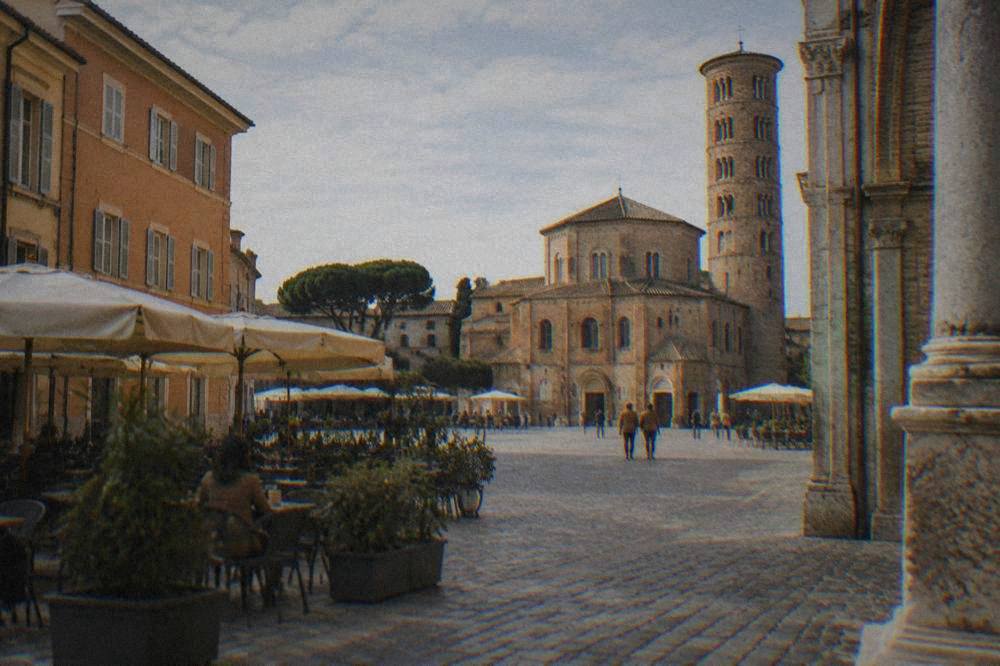
What Else Is There Beyond The Mosaics?
Ravenna's non-mosaic list is short but real: Dante's tomb, free and open daily except 25 December; the MAR art museum at EUR 8 full, EUR 6 reduced, EUR 3 students; the Museo Nazionale at EUR 7, EUR 2 reduced, closed Mondays; the Museo Dante at EUR 5 combined; and the Classis Ravenna museum at EUR 8, EUR 6 reduced, out at Classe beside the basilica. State museums and monuments are free on the first Sunday of the month.
The MAR hosts contemporary exhibitions alongside its permanent collection, and the Classis Ravenna museum tells the city and territory story in a former sugar factory at Classe, making it the natural pairing with Sant'Apollinare in Classe on a second day. Dante's tomb, near the Basilica of San Francesco, is the city's other pilgrimage site, and the Dante museum beside it fills in the poet's Ravenna years. The Ravenna museums guide covers the full list with hours.
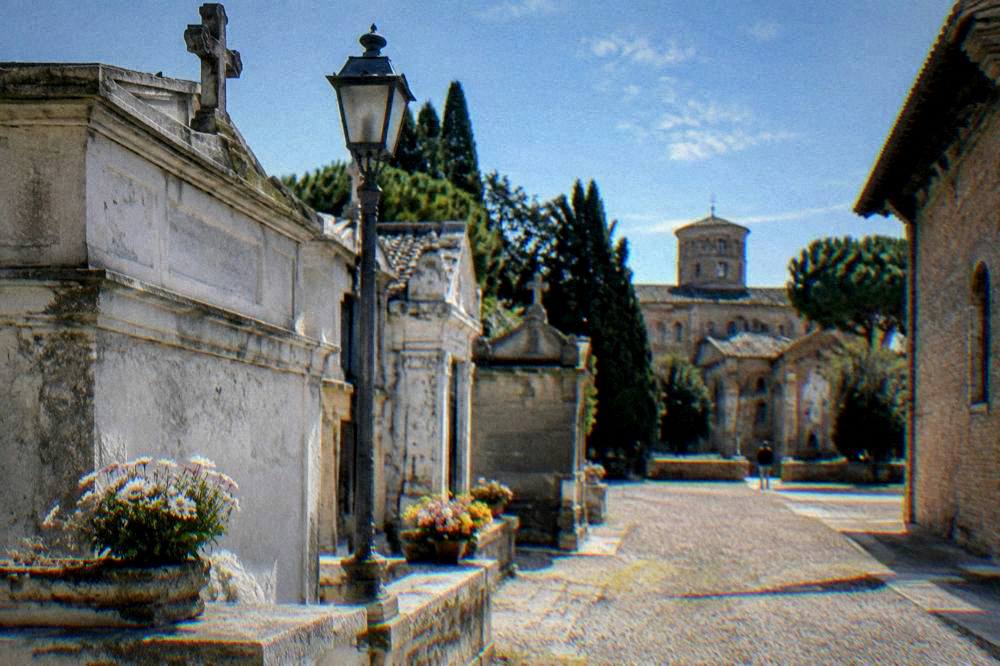
For visitors with extra days, the autumn 2026 calendar adds reasons to linger: the Ravenna Festival autumn trilogy "Mozart 1791" at Teatro Alighieri from 13 to 17 November 2026, and Notte d'Oro each October, which in 2026 fell on 17 October and opened monuments free in the evening. Whether the mosaics alone justify the trip is a fair question, and the is Ravenna worth visiting guide answers it with the full evidence.
Common Questions About Ravenna Mosaics
How much are Ravenna mosaic tickets?
Reduced combo fares start at EUR 9.50 for two monuments, EUR 11.50 for four and EUR 13.50 for five; full prices are shown on the official Ravenna Mosaici page. Sant'Apollinare in Classe is EUR 6, the Mausoleum of Theodoric EUR 6, and the Arian Baptistery EUR 3.
How long does it take to see the Ravenna mosaics?
The five centre monuments fit in one day, or a half day at pace, since the ticket is valid one week and the buildings cluster together. Sant'Apollinare in Classe needs a separate short trip and adds a second half day for the full eight.
Which Ravenna mosaics are the best?
San Vitale's imperial panels, the star vault of Galla Placidia, the processions of Sant'Apollinare Nuovo and the dome of the Neonian Baptistery are the four most reproduced interiors, and the Classe basilica apse is the largest single composition.
Do you need to book Ravenna mosaic entry in advance?
Entry times must be booked for each monument on the combo ticket, and Galla Placidia and the Neonian Baptistery require mandatory timed entry with only a few minutes inside, per the official terms.
Are the Ravenna mosaics open in winter?
Yes. From 3 November 2026 to 6 March 2027 the combo monuments open 10:00 to 17:00 daily, closed only 25 December and 1 January, per the Ravenna Mosaici hours page.
The mosaics are the reason Ravenna is on the UNESCO list, and the practical machinery around them, one ticket, booked times, a walkable centre, makes the visit straightforward to plan with the figures above.