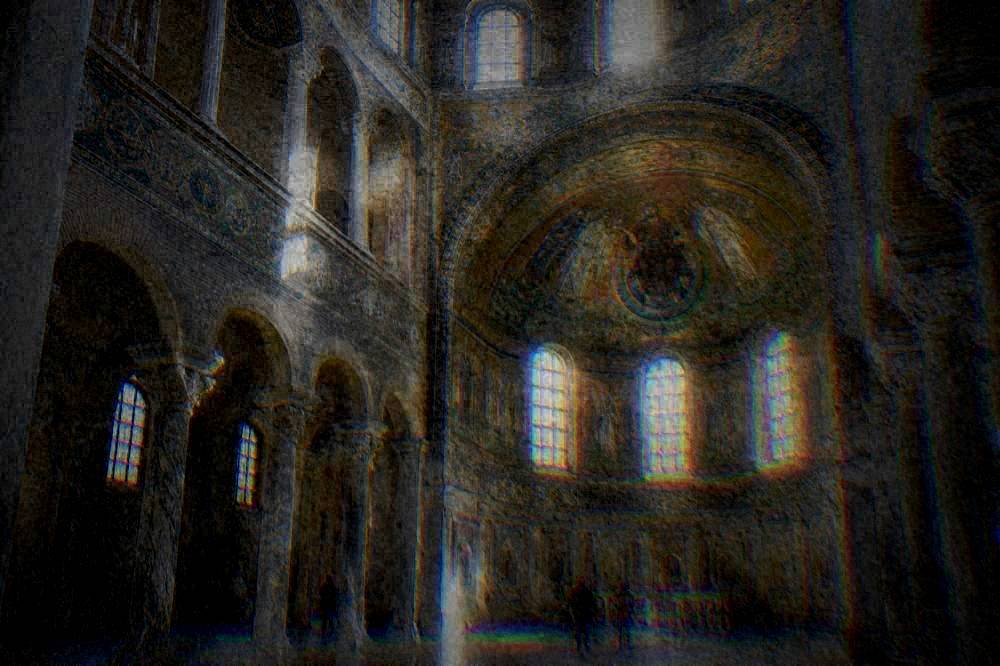
National Museum Of Ravenna
The National Museum of Ravenna sits beside the cathedral in the historic centre of Ravenna, an inland city in Emilia-Romagna, and holds the collections that surround the eight UNESCO monuments. This guide sets out the ticket, the hours and how to fit it into a mosaic itinerary.
Short answer
The National Museum of Ravenna costs EUR 7 full price and EUR 2 reduced, is closed on Mondays, and its hours vary by day and season, so the official cultura.gov.it page holds the live schedule. State museums and monuments in Ravenna are free on the first Sunday of the month.
Ravenna, in Emilia-Romagna, Italy, is a flat Po-valley city whose historic centre sits inland about 8 km from the Adriatic coast, and it is known for its eight UNESCO Early Christian monuments with Byzantine mosaics and for Dante's tomb. The National Museum of Ravenna, in the cloisters beside the cathedral in the heart of that centre, is the state collection that gathers sculpture, ivories, ceramics and archaeological material from the monuments around it. The cultura.gov.it listing gives its ticket as EUR 7 full price and EUR 2 reduced, with a Monday closure and hours that shift by day and season. This guide reports what the official pages say, sets the museum beside the other collections in the city, and shows where it fits in a visit built around the mosaics.
What Is The National Museum Of Ravenna?
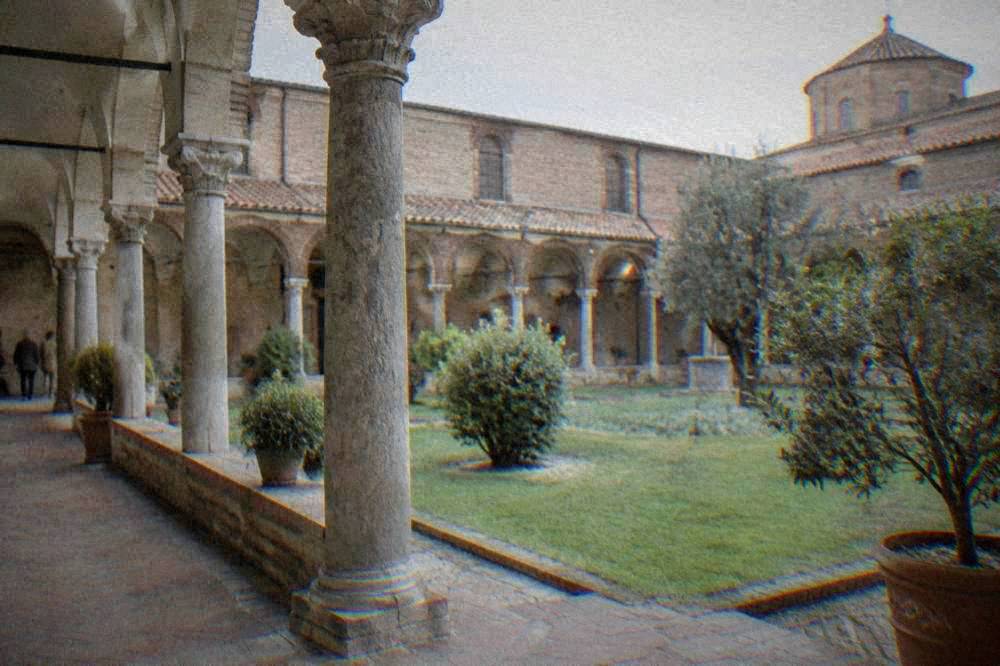
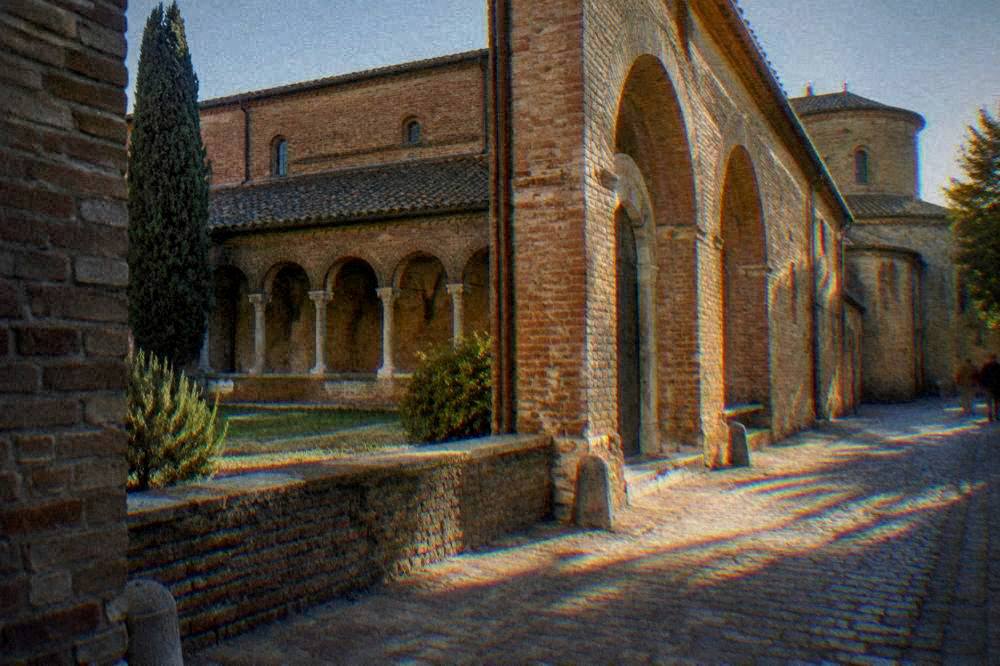
The National Museum of Ravenna is the state museum housed in the former Benedictine cloisters adjoining the cathedral in Ravenna's historic centre, and it displays sculpture, sarcophagi, ivories, ceramics and archaeological finds connected to the city's Early Christian monuments. The cultura.gov.it page lists it with a EUR 7 full ticket, a EUR 2 reduced rate and a Monday closure. It stands a short walk from the Neonian Baptistery and the cathedral, inside the same block of narrow streets.
The museum's role in the city is best understood as a companion to the monuments rather than a substitute for them. Ravenna's eight UNESCO monuments, inscribed by UNESCO in 1996, are the Mausoleum of Galla Placidia, the Neonian Baptistery, Sant'Apollinare Nuovo, the Arian Baptistery, the Archiepiscopal Chapel, the Mausoleum of Theodoric, San Vitale and Sant'Apollinare in Classe. The National Museum holds material excavated from and around those sites, so a visit after the mosaics puts fragments, capitals and liturgical objects into a frame the monument interiors themselves cannot always provide.
The setting matters as much as the collection. The cloister building, with its calm arcades, sits directly beside the cathedral complex, and the municipal tourism pages route visitors through it as part of the cathedral quarter. The historic centre of Ravenna is small and flat, and the museum lies within an easy walk of the station side of town as well as of Piazza del Popolo.
For orientation, the museum sits close to the cathedral of Ravenna and the Neonian Baptistery, and a short walk separates it from the basilica of Sant'Apollinare Nuovo. Visitors planning the whole mosaic circuit can follow the Ravenna combo ticket guide for how the five-monument itinerary works.
What Does A Ticket To The National Museum Of Ravenna Cost?
A ticket to the National Museum of Ravenna is EUR 7 full price, with a reduced rate of EUR 2, on the cultura.gov.it listing. The reduced rate applies to visitors aged 18 to 25. The museum is closed on Mondays, and the state museums and monuments in Ravenna are free on the first Sunday of the month, a concession worth timing a short stay around if the calendar allows it.
The ticket is separate from the Ravenna Mosaici combined ticket that covers the five centre monuments, so budget for it as its own line. The combined ticket covers Sant'Apollinare Nuovo, San Vitale, the Mausoleum of Galla Placidia, the Neonian Baptistery and the Archiepiscopal Museum with its Chapel of St Andrew, and the Ravenna Mosaici prices page shows reduced fares starting at EUR 9.50 for two monuments. The National Museum does not belong to that itinerary, and neither do the MAR, the Classis Ravenna museum or the Museo Dante.
Adding the mosaic circuit to your museum day. Book an UNESCO mosaics entry ticket here.
| Museum or monument | Ticket | Reduced | Notes |
|---|---|---|---|
| National Museum of Ravenna | EUR 7 | EUR 2 | Closed Monday; free first Sunday of the month |
| MAR, city art museum | EUR 8 | EUR 6, EUR 3 students | Closed Monday and 25 December |
| Classis Ravenna | EUR 8 | EUR 6 | In the Classe area, daily 10:00 to 17:00 |
| Museo Dante | EUR 5 | EUR 3.50 | Combined with Casa Dante; closed Monday |
| Mausoleum of Theodoric | EUR 6 | EUR 5, EUR 2 ages 18 to 25 | Combined with Arian Baptistery and Palace EUR 7 |
| Sant'Apollinare in Classe | EUR 6 | EUR 2 | In Classe, outside the centre |
Every figure above comes from the official listing named in this site's research file, and prices can change, so confirm at the ticket desk or on the operator's page before travelling. The museum ticket desk is the place to ask about any temporary exhibition supplement, since the listing carries no exhibition surcharge and none should be assumed.
For travellers who want the museum explained rather than simply entered, a private guide changes the character of the visit, and there are several ways to book one.
The featured pick among those is the private walk that ends in a working mosaic workshop, where the craft behind the gold-ground glass surfaces is demonstrated rather than described. It pairs naturally with a museum hour, and the full tour page carries what the listing shows on price and availability.
When Is The National Museum Of Ravenna Open?
The National Museum of Ravenna is closed on Mondays, and its opening hours vary by day and by season, so the official cultura.gov.it page holds the live schedule. The listing as read shows morning openings on Tuesday, Wednesday, Saturday and Sunday and afternoon openings on Thursday and Friday, with a post-3 November adjusted schedule reported for the winter period. Always check the official page on the day of a visit.
That split-day pattern is the single most important planning detail on this page, because a traveller who assumes a standard 9:00 to 19:00 museum day can arrive to find the doors shut until the afternoon. The winter season from 3 November 2026 to 6 March 2027 brings adjusted hours across the state sites in the city, and the Ravenna Mosaici monuments shift to 10:00 to 17:00 in the same window, so a winter itinerary should be built around earlier, shorter days.
| Site in Ravenna | Winter hours basis | Weekly closure | Source note |
|---|---|---|---|
| National Museum | Varies by day, adjusted from 3 Nov | Monday | cultura.gov.it listing |
| San Vitale, Sant'Apollinare Nuovo, Archiepiscopal Museum | 10:00 to 17:00 | None | Ravenna Mosaici page |
| Galla Placidia, Neonian Baptistery | 10:00 to 17:00, last entry 16:45 | None | Ravenna Mosaici page |
| MAR | Tue to Sat 9:00 to 18:00, Sun 15:00 to 19:00 | Monday | MAR ticket office page |
| Classis Ravenna | Daily 10:00 to 17:00 | 25 December only | Classis site |
| Dante's tomb | 10:00 to 18:00 November to March | 25 December | Comune page |
All the UNESCO monuments and the museum close on 25 December, and 1 January is a closure day for the Ravenna Mosaici circuit as well. November is the wettest month in the modelled 1991 to 2020 climate normals at 78.3 mm, which makes museum-heavy days an easy trade for wet afternoons, and the indoor cluster around the cathedral, the Neonian Baptistery and the Archiepiscopal Museum sits within a few streets of one another.
What Will You See Inside The National Museum Of Ravenna?
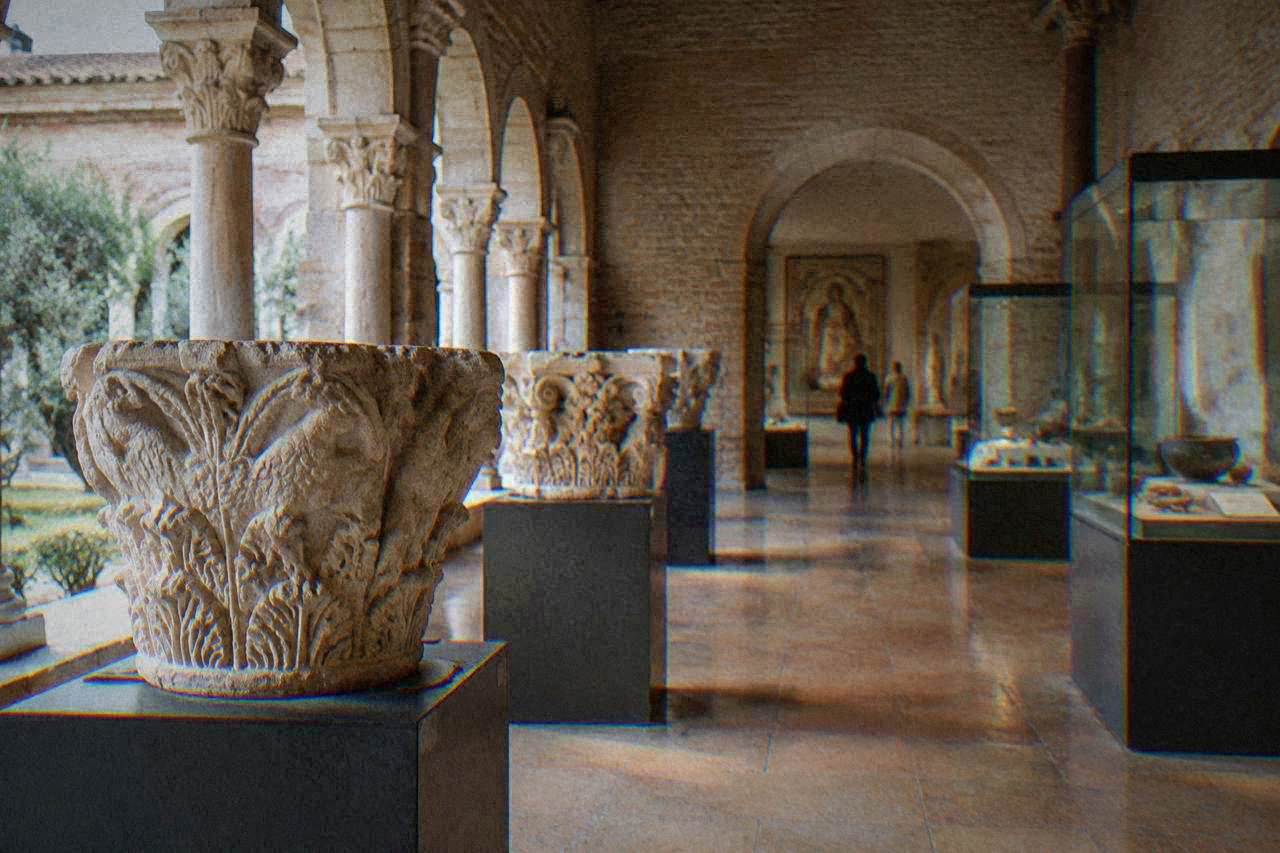
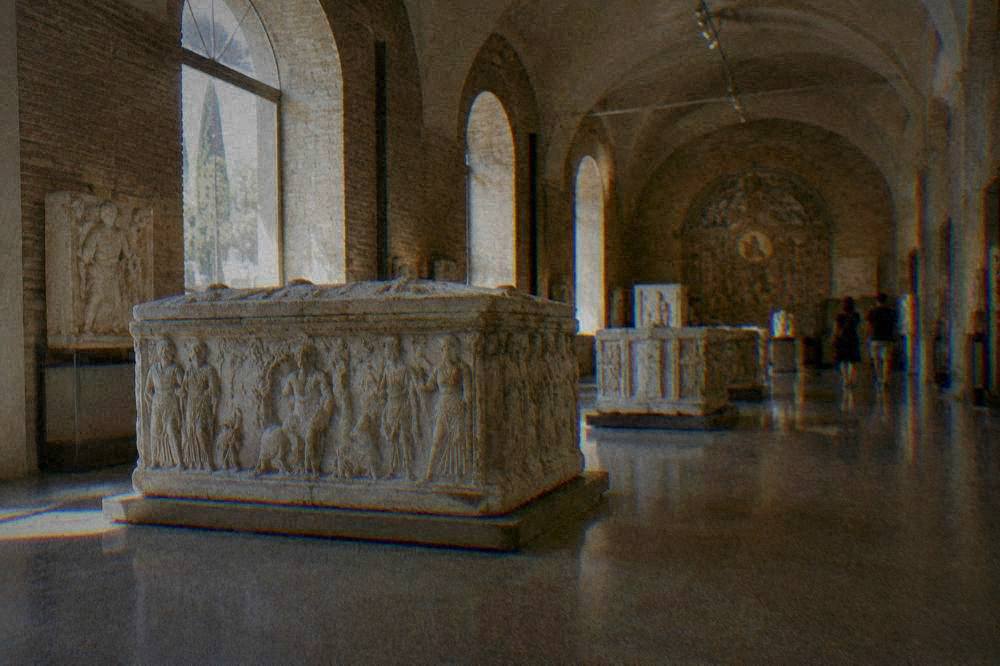
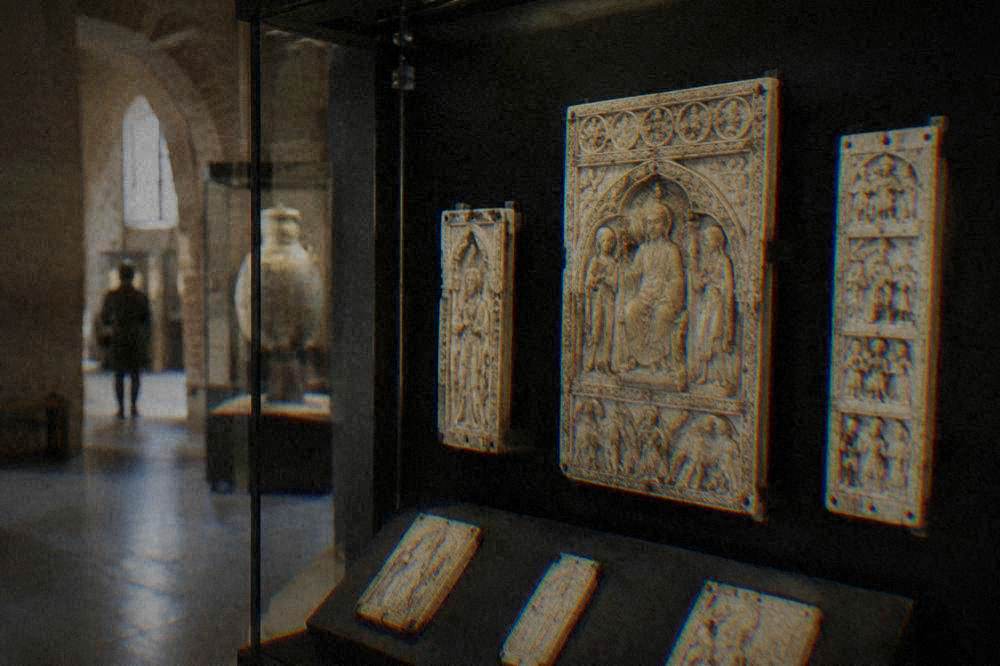
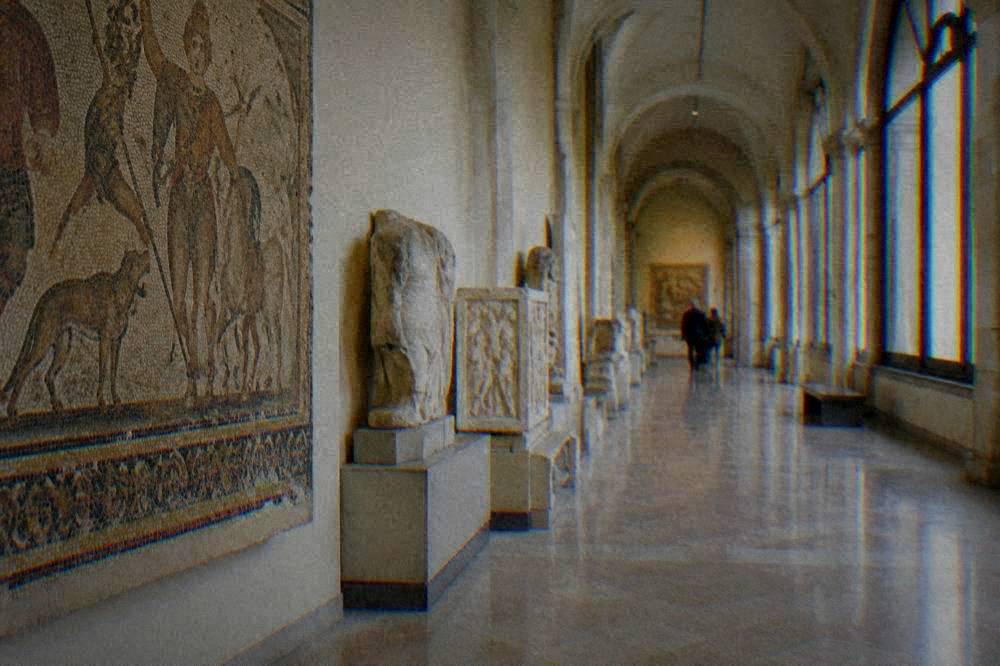
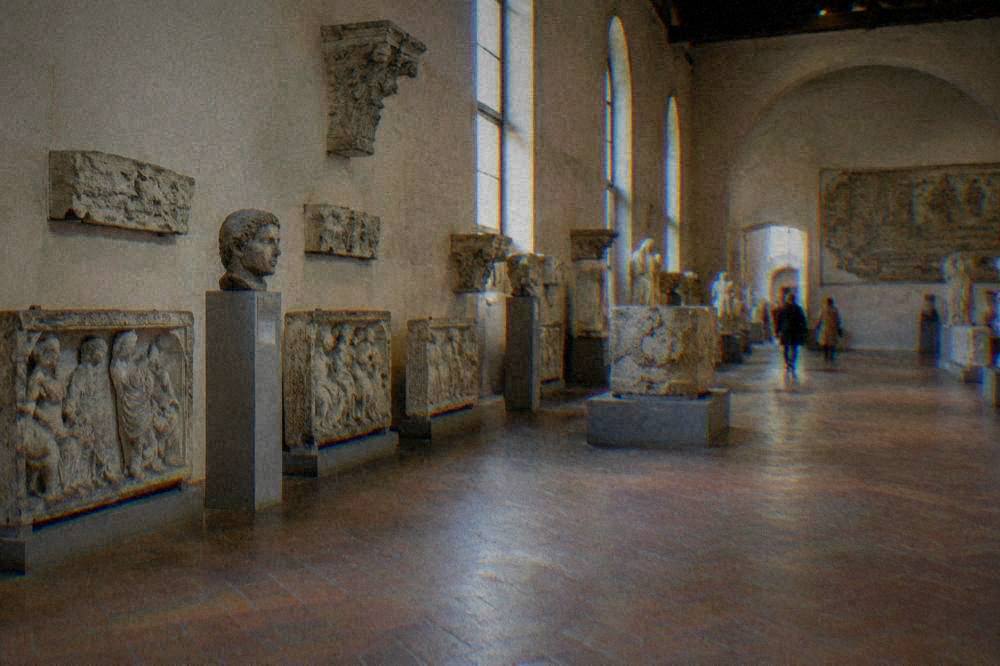
The National Museum of Ravenna displays Early Christian and Byzantine-period stone sculpture, sarcophagi, capitals, ivories, liturgical objects, ceramics and archaeological finds from Ravenna and its surroundings, arranged across the cloister galleries beside the cathedral. The collection document the material world around the city's mosaic monuments. Descriptive labels and room order should be confirmed on site, as displays rotate.
What a visitor actually meets, floor by floor, is a sequence that moves from monumental stone to small objects. The cloister level carries the heaviest pieces, including sarcophagi and architectural fragments recovered from the city's churches, while the upper galleries hold the smaller material: carved ivories, glazed ceramics, textiles and coins. The collection's connection to the monuments is its point, and the museum's own pages describe it as the state collection for the city's archaeological and artistic heritage.
Because the museum does not form part of the Ravenna Mosaici combined itinerary, its audience is travellers with a second or third day in the city, or those with a specific interest in the period. The three-day itinerary in the three days in Ravenna guide makes room for it on the day devoted to the cathedral quarter, after San Vitale and the Mausoleum of Galla Placidia have been seen.
| Gallery theme | Typical material | Connection to the monuments |
|---|---|---|
| Stone sculpture | Sarcophagi, capitals, pilasters | Recovered from church sites across the city |
| Ivories and small objects | Carved panels, reliquaries | Liturgical use in the Early Christian basilicas |
| Ceramics and glass | Glazed wares, vessels | Domestic and trade life of the period |
| Archaeology | Excavated finds, coins | Stratigraphy of the city and the Classe port area |
| Textiles and miscellany | Fragments, applied arts | Church and court furnishings |
The table summarises what the official description of the collection supports, and it is a summary rather than a floor plan. Room closures and rotations happen, and the ticket desk posts the current arrangement.
How Does The National Museum Compare With Ravenna's Other Museums?
Ravenna has four main museum collections besides the National Museum, and each answers a different question. Classis Ravenna in the Classe area tells the city and port story at EUR 8 full price, the MAR holds the city's art collection at EUR 8, the Museo Dante covers the poet's Ravenna at EUR 5 combined, and the Domus dei Tappeti di Pietra is a below-street archaeological site whose price is not stated here. TAMO closed permanently in 2023 and its collection moved to Classis Ravenna.
Choosing between them is a matter of itinerary shape rather than ranking. The National Museum suits a cathedral-quarter day, since it sits beside the cathedral. Classis Ravenna belongs to the half-day in Classe that also takes in the basilica of Sant'Apollinare in Classe, reached by regional transport towards the coast, though the basilica itself is inland at Classe and not a beach stop. The MAR sits near Piazza del Popolo and can carry a wet afternoon on its own.
| Museum | Where it sits | Best paired with | Closed |
|---|---|---|---|
| National Museum | Cathedral cloisters | Neonian Baptistery, Archiepiscopal Museum | Monday |
| Classis Ravenna | Classe area | Sant'Apollinare in Classe | 25 December |
| MAR | Near Piazza del Popolo | Historic-centre walk, shopping streets | Monday, 25 December |
| Museo Dante | Near Dante's tomb | Quiet-hour circuit of the centre | Monday, 25 December |
| Domus dei Tappeti di Pietra | Below street level off Via di Roma | Cathedral-quarter morning | Varies by season |
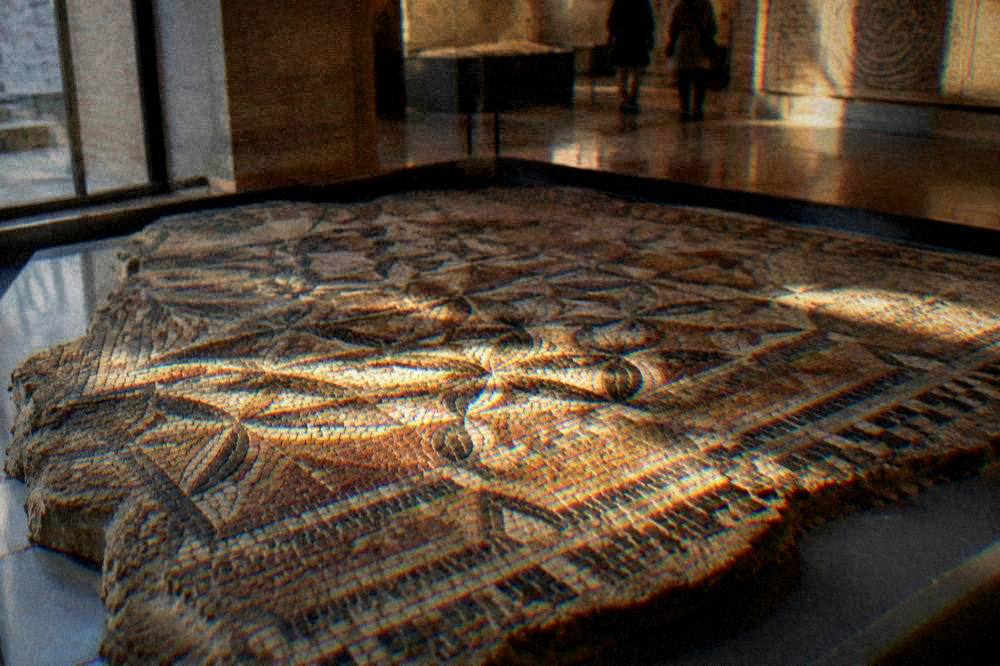
The Domus dei Tappeti di Pietra needs a specific caution: sources conflict on its hours and price, with the Comune page and ticket listings disagreeing, so hours vary by season and the official page holds the current arrangement. The site itself, a mosaic-paved domestic complex under the street, rewards the short detour when it is open.
Is The National Museum Of Ravenna Free On Any Day?
Yes. The state museums and monuments in Ravenna, which include the National Museum, are free on the first Sunday of the month, a concession reported across the state culture pages. No booking surcharge or special exhibition rule attaches to that Sunday in the listing. The concession does not apply to the civic museums, so the MAR and the Museo Dante keep their normal tickets on those days.
Timing a visit around a first Sunday works well for budget itiners, and the Ravenna on a budget guide folds it into a wider money-saving plan, alongside Dante's tomb, which is free every day. The tomb, open 10:00 to 18:00 from November to March and 10:00 to 19:00 from April to October, is a short walk from the museum, and the free things to do in Ravenna guide lists what else carries no ticket.
The free Sundays can draw queues at the most popular monuments, particularly in the summer window when the Ravenna Mosaici sites run 9:00 to 19:00 hours. Galla Placidia and the Neonian Baptistery require a booked entry time on the combined ticket, with stays of a few minutes inside each, so plan the free Sunday around those slots rather than the museum, which turns over visitors more steadily.
How Long Should You Spend At The National Museum Of Ravenna?
A visit to the National Museum of Ravenna fits comfortably inside a cathedral-quarter half-day that also takes in the Neonian Baptistery, the Archiepiscopal Museum and Dante's tomb, because all four sit within a few streets of one another. The museum itself rewards a slow hour or two rather than a full morning, and its split opening hours decide whether it lands before or after the monuments.
The practical sequence depends on the day of the week. On the listing's morning days, the museum works as a first stop before the Ravenna Mosaici circuit, since the combined ticket's monuments run longer hours and take timed entries later into the day. On Thursday and Friday, when the listing shows afternoon openings, the order reverses and the museum closes the day.
| Plan | Morning | Afternoon | Notes |
|---|---|---|---|
| Cathedral-quarter day | National Museum, Neonian Baptistery | Archiepiscopal Museum, Dante's tomb | Check museum day pattern first |
| Mosaic-circuit day | San Vitale, Galla Placidia | Sant'Apollinare Nuovo, museum if open | Timed entries on the combo ticket |
| Classe half-day | Sant'Apollinare in Classe | Classis Ravenna museum | Regional transport from the station |
| Wet-day plan | Museum, MAR | Domus dei Tappeti di Pietra if open | November is the wettest month in the normals |
The one day in Ravenna guide treats the museum as an optional stop rather than a core one, which is the right call for a single-day visit built around the UNESCO monuments. With two days, the weekend guide finds space for it without cutting the mosaics short.
What Is Near The National Museum Of Ravenna?
The National Museum of Ravenna sits inside the cathedral quarter, a short walk from the Neonian Baptistery, the Archiepiscopal Museum and Chapel, Dante's tomb, the basilica of San Francesco and Piazza del Popolo. The railway station is also a short walk away on the flat streets of the historic centre, so the museum works as a first or last stop before a train. Nothing on this circuit involves the coast, which begins about 8 km away at the beach resorts.
The walkable cluster around the museum makes the cathedral quarter the densest sightseeing block in the city. The Piazza del Popolo holds the town hall and the café life of the centre, while the basilica of San Francesco stands beside Dante's tomb. The Arian Baptistery, at EUR 3 with a 9:00 to 17:00 day, and the Mausoleum of Theodoric, at EUR 6 with hours 8:30 to 17:30, sit slightly further out and combine at EUR 7 with the Palace of Theodoric.
For eating, the Ravenna food pages describe piadina, cappelletti and the Romagna wines by dish, and the Ravenna restaurants guide covers where the centre's kitchen streets sit relative to the museum quarter. A cover charge, the coperto, is legal when printed on the menu, and tipping is not obligatory.
For visitors who would rather taste than look, the city's food experiences fill an afternoon the museum cannot, and the same operators run the small-group formats that suit couples and families.
Is The National Museum Of Ravenna Worth Visiting With Kids?
The National Museum of Ravenna suits older children with an interest in carved stone, sarcophagi and treasure-like small objects, and the cloister courtyard gives a rest point between galleries, but the museum is a quiet-state collection rather than a hands-on one. Families with younger children usually do better splitting the day, giving the morning to the mosaics and the museum hour to whoever still has attention left.
The practicalities of a family visit in Ravenna are covered in the Ravenna with kids guide, which balances the monument circuit against the flatter entertainments of the centre and the coast. Children 0 to 10 enter the Ravenna Mosaici monuments free, which shapes the economics of a family itinerary even though the National Museum's own concessions are the EUR 2 reduced band described above.
Accessibility and facilities inside the museum should be confirmed directly, since the listing carries no accessibility detail and a cloister building can involve steps and level changes. The ticket desk answers questions on arrival, and the official cultura.gov.it page holds the contact route for anything that needs arranging ahead.
Common Questions About The National Museum Of Ravenna
How much does the National Museum of Ravenna cost?
The cultura.gov.it listing gives EUR 7 full price and EUR 2 reduced, with the reduced rate applying to visitors aged 18 to 25. The state museums and monuments in Ravenna are free on the first Sunday of the month.
Is the National Museum of Ravenna open on Monday?
No. The museum is closed on Mondays, and the MAR and the Museo Dante also close on Mondays, so Monday is the weakest museum day in the city. The Ravenna Mosaici monuments keep their normal schedule on Mondays.
What are the opening hours of the National Museum of Ravenna?
Hours vary by day and season, with the listing showing morning openings on Tuesday, Wednesday, Saturday and Sunday and afternoon openings on Thursday and Friday, plus an adjusted schedule from 3 November 2026. The official cultura.gov.it page holds the live timetable.
Is the National Museum of Ravenna included in the Ravenna combo ticket?
No. The Ravenna Mosaici combined ticket covers Sant'Apollinare Nuovo, San Vitale, the Mausoleum of Galla Placidia, the Neonian Baptistery and the Archiepiscopal Museum, and the National Museum sells its own ticket at EUR 7 full price.
How long does a visit to the National Museum of Ravenna take?
The museum rewards a slow hour or two, and it fits inside a cathedral-quarter half-day that also takes in the Neonian Baptistery, the Archiepiscopal Museum and Dante's tomb, all within a few streets.
Is the National Museum of Ravenna free?
It is free on the first Sunday of the month, like the other state museums and monuments in the city. On every other day the ticket is EUR 7 full price and EUR 2 reduced, and Dante's tomb remains free every day of the year.
The National Museum of Ravenna holds its place in the city's offer as the state collection beside the cathedral, best visited on a second day or a wet afternoon with the official page checked for that day's hours. This Ravenna Travel Guide page will keep reporting the listing figures as the state pages publish them.