Ravenna Train Station
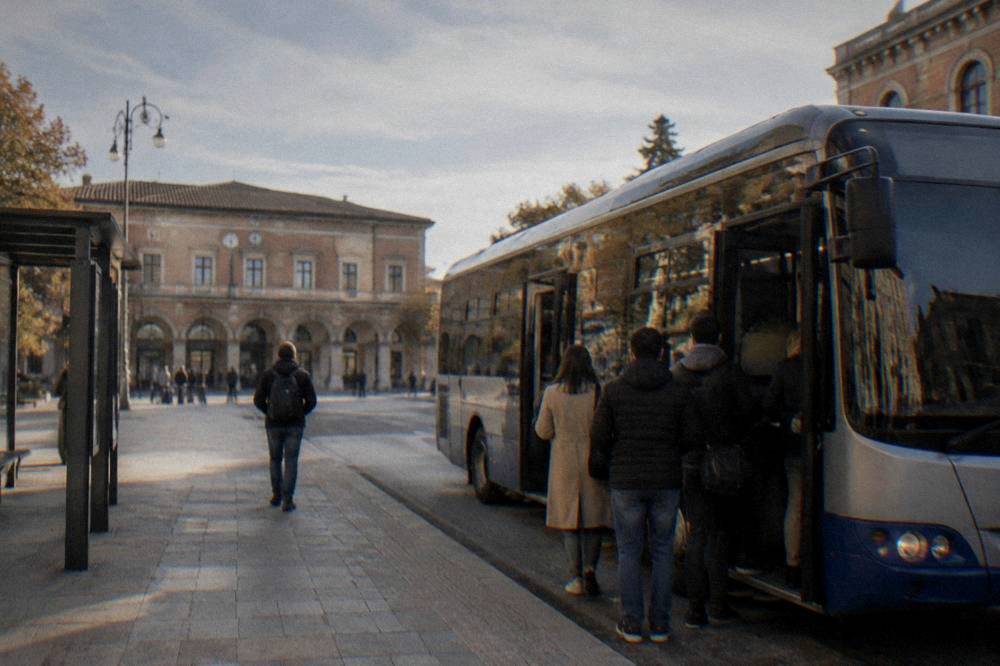
Ravenna Train Station sits a short walk from the historic centre of Ravenna, an inland city in Emilia-Romagna, Italy, about 8 km from the Adriatic coast. This guide covers the rail links, the walk to the UNESCO monuments, the buses to the coast and the shuttle to the cruise terminal.
Short answer
Ravenna Train Station is a compact terminus a short walk from the historic centre. Direct regional trains run to Bologna Centrale, about 84 km away, in about 1 hour to 1 hour 20, and to Rimini in about 42 to 58 minutes. Start Romagna buses leave from the station for the beach resorts, and the cruise terminal shuttle picks up nearby.
Ravenna, in Emilia-Romagna, Italy, is a flat Po-valley city whose historic centre sits inland, about 8 km from the Adriatic coast, and its railway station is one of the most convenient arrival points in the region for the city's eight UNESCO Early Christian monuments. The station is a terminus, small by the standards of Bologna Centrale or Rimini, and the whole mosaic quarter opens up on foot within a few blocks of the exit. This guide from the Ravenna Travel Guide editorial desk sets out what the timetables, the municipal tourism pages and the transport operator publish about arriving, changing and departing by rail: the train links from Bologna and Rimini, the walk into the centre, the buses to the beach resorts of Marina di Ravenna and the rest of the coast, and the shuttle that connects the station area to the cruise terminal at Porto Corsini.
Where Is Ravenna Train Station And How Far Is It From The Centre?
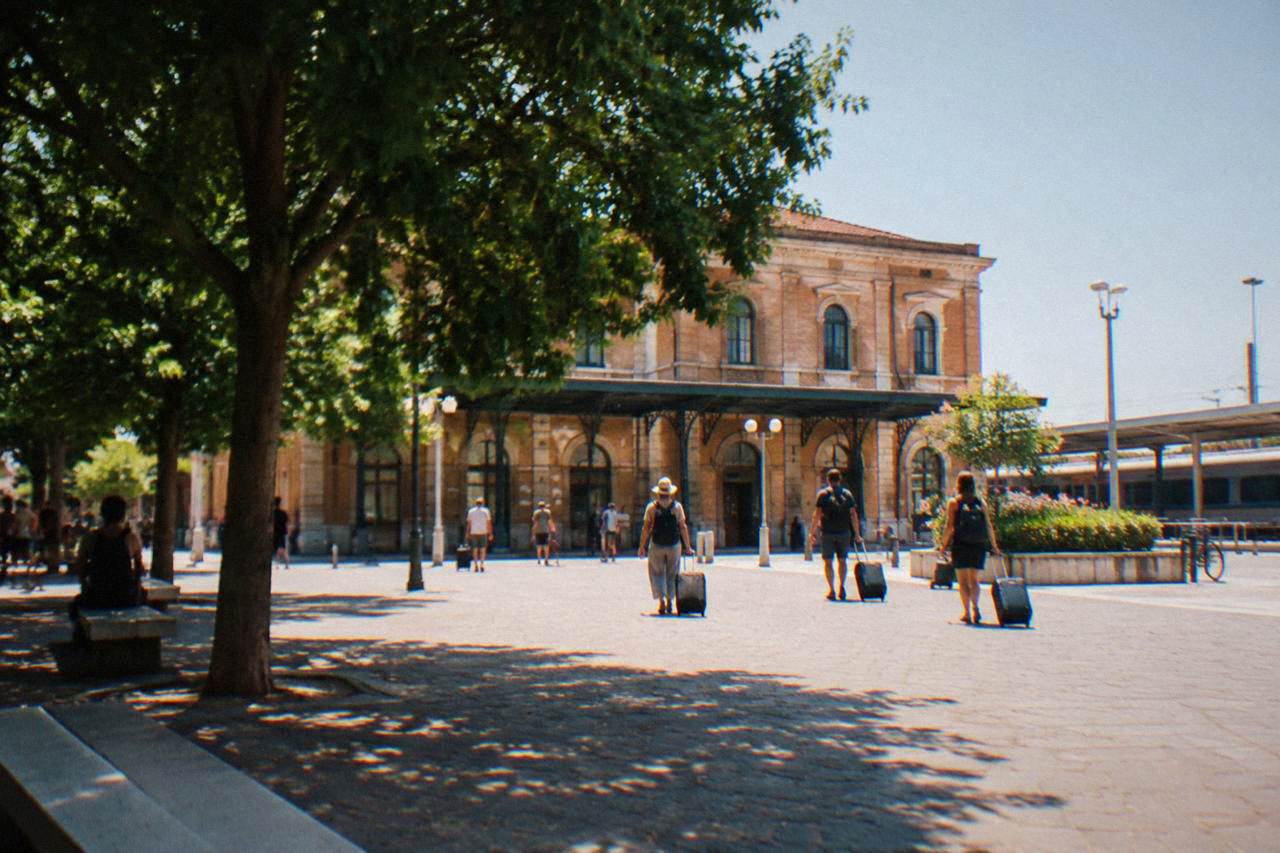
Ravenna Train Station stands at the northern edge of the historic centre, and the municipal tourism pages describe the centre as small and walkable, with the station a short walk from it. The station is a terminus, so every train arrives facing the city rather than passing through it. Piazza del Popolo, the main square, and the first UNESCO monuments sit within an easy flat stroll. Ravenna is not a coastal city: the sea is about 8 km away.
That short walk is the single most useful fact about arriving by rail. The historic centre of Ravenna is compact and flat, on the Po plain, and the station's position means a visitor with a suitcase and a hotel booking in the centre has no need of a taxi for the first leg of the trip. The editorial desk points readers to the guide to getting around Ravenna for the wider picture, and to the one day in Ravenna itinerary for how the walk from the station shapes a first day.
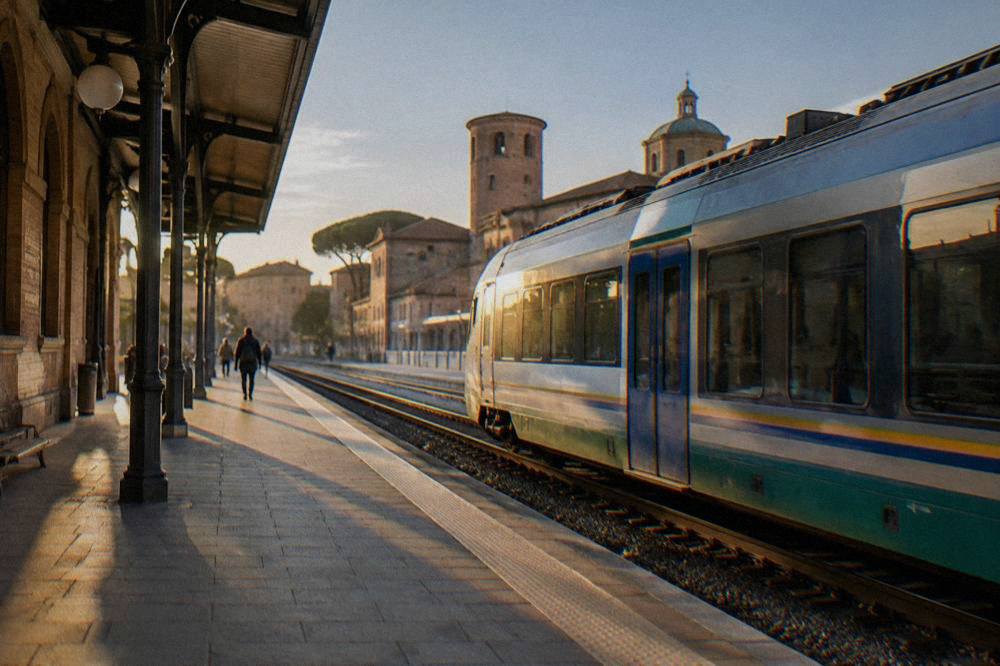
Because the station is a terminus, platform layout is simple: trains pull in, unload, and depart the way they came. Departure boards are the place to check, and the regional operator's own timetable documents are the authoritative source for any specific service. For the question many readers ask first, the answer to does Ravenna have a train station is yes, and it is the rail hub for the whole province, including the Classe area where Sant'Apollinare in Classe stands.
Which Trains Run To And From Ravenna Station?
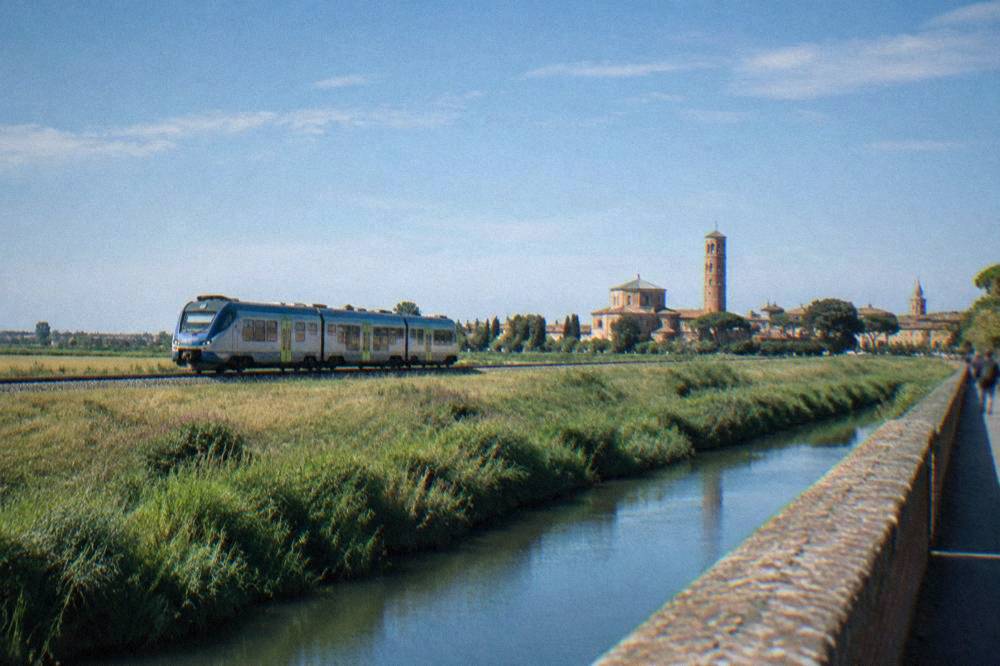
Ravenna is served by direct regional trains. The route to Bologna Centrale runs via Castelbolognese, about 84 km, with the fastest journeys about 57 to 60 minutes and typical journeys about 1 hour to 1 hour 20. The route to Rimini takes about 42 to 58 minutes on a direct regional train. The regional timetable gives the live picture; fares are shown at booking.
The timings above come from the operator's regional timetable and aggregator summaries, and the editorial desk reports them with that attribution rather than as a promise: engineering works and seasonal adjustments can shift a specific departure. For the full picture of the corridor, read the companion pages on Bologna to Ravenna and how to get to Ravenna.
The Rimini link runs down the Adriatic side and connects with services toward the Marche. The same caution applies: durations of about 42 to 58 minutes are timetable summaries, and the live schedule is the authority. For readers heading the other way, the pages on getting a train from Rimini to Ravenna and a train ride from Bologna to Ravenna carry the detail.
| Route | Type | Distance or duration (as published) | Notes |
|---|---|---|---|
| Ravenna to Bologna Centrale | Direct regional, via Castelbolognese | about 84 km; fastest about 57 to 60 min, typically 1 h to 1 h 20 | Timetable and aggregator summaries; fare at booking |
| Ravenna to Rimini | Direct regional | about 42 to 58 min | Timetable summaries; fare at booking |
| Ravenna to the coast resorts | Start Romagna bus from the station | about 35 km of coast served | Winter timetable booklet published by the operator |
| Ravenna station to the cruise terminal | Visit Ravenna shuttle | about 15 km, about 30 min | 3 May to 26 October in the 2026 page |
For visitors who want the mosaic city unpacked by a guide rather than pieced together from departure boards, a tour with a Ravenna or Bologna start is one way to fix the first afternoon. The Mosaics Day Trip from Bologna option runs from either start point:
Want the mosaic city unpacked by a guide? Book a monuments and mosaics guided tour here.
How Do You Walk From The Station To The Mosaics And Dante's Tomb?
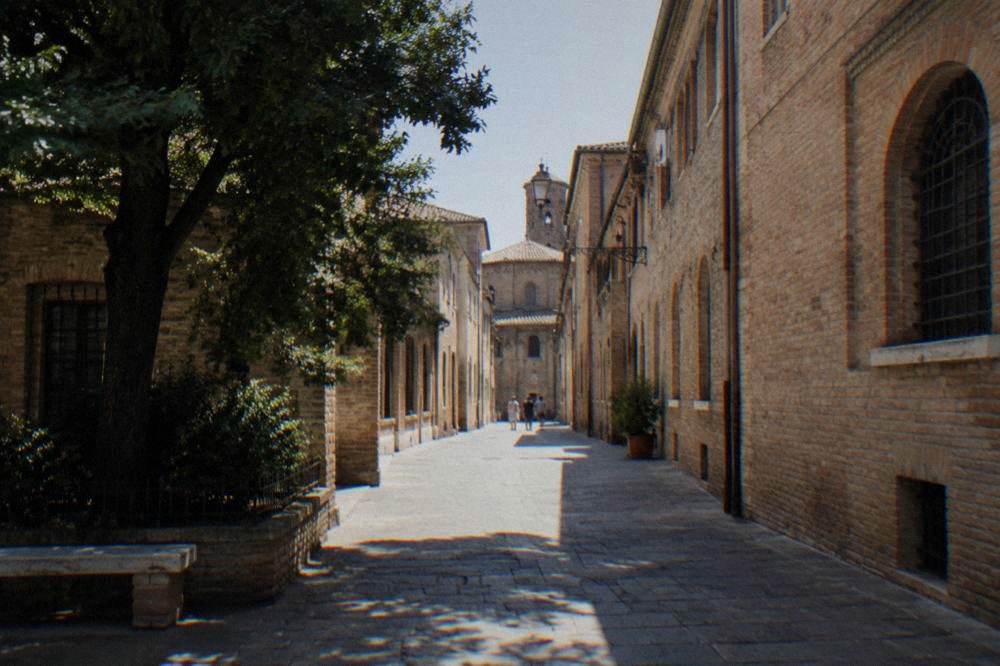
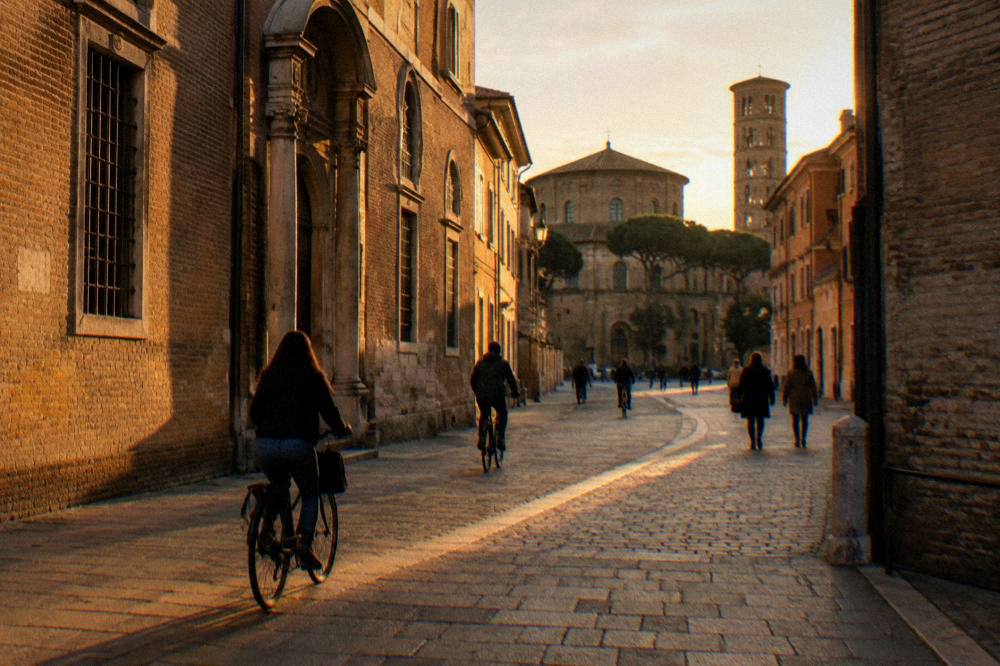
The walk from Ravenna Station into the mosaic quarter is flat and short, and no transport is needed for it. The eight UNESCO monuments, the Mausoleum of Galla Placidia, the Neonian Baptistery, Sant'Apollinare Nuovo, the Arian Baptistery, the Archiepiscopal Chapel, the Mausoleum of Theodoric, San Vitale and Sant'Apollinare in Classe, all sit in or beside the walkable centre, except Sant'Apollinare in Classe, which is in the Classe area outside it.
Seven of the eight monuments cluster in the historic centre. The Ravenna Mosaici ticket page sets the hours: from 8 March to 2 November 2026 the sites keep summer hours of 9:00 to 19:00, and from 3 November 2026 to 6 March 2027 they run 10:00 to 17:00, closed 25 December and 1 January. Galla Placidia and the Neonian Baptistery require a booked entry time and allow a stay of a few minutes, so the ticket page's slot system shapes the walking order more than distance does.
Dante's tomb, free to enter, lies in the centre too, with hours of 10:00 to 18:00 from November to March and 10:00 to 19:00 from April to October on the municipal page. A visitor arriving at the station, dropping bags, and setting out on foot can reach the tomb, San Vitale and the Archiepiscopal Museum in one loop. The full detail sits in the guides to the UNESCO sites of Ravenna and the Ravenna mosaics.
| Monument | Location relative to the centre | Ticket situation (from the official pages) |
|---|---|---|
| Mausoleum of Galla Placidia | Centre | Combo ticket; timed entry, stay of a few minutes |
| Neonian Baptistery | Centre | Combo ticket; timed entry, stay of a few minutes |
| Sant'Apollinare Nuovo | Centre | Covered by the 2-monument combo with San Vitale |
| San Vitale | Centre | Combo ticket; admission in slots |
| Arian Baptistery | Centre | EUR 3 individual, or the EUR 7 combined with Theodoric sites |
| Archiepiscopal Chapel and Museum | Centre | Part of the 5-monument combo |
| Mausoleum of Theodoric | Centre edge | EUR 6, EUR 5 concession, EUR 2 ages 18 to 25; open 8:30 to 17:30 |
| Sant'Apollinare in Classe | Classe area, outside the centre | EUR 6, EUR 2 reduced; Mon to Sat 8:30 to 19:00, Sun 13:30 to 19:00 |
Reduced combo fares start at EUR 9.50 for two monuments, EUR 11.50 for four and EUR 13.50 for five, with full prices on the Ravenna Mosaici page. The combo is valid one week, one admission per monument, with an entry time booked for each. Everything a ticket decision needs is in the Ravenna combo ticket guide.
Can You Reach The Beaches From Ravenna Station?
Yes, the beach resorts are reached by Start Romagna bus from the station. Ravenna is not on the sea: the historic centre is inland, about 8 km from the coast, and the resorts of Marina di Ravenna, Punta Marina, Lido Adriano, Lido di Classe and Lido di Savio are strung along about 35 km of shoreline. The operator's winter timetable booklet lists the routes; bus fares are shown at purchase.
This is the point where arriving visitors miscalculate. The rail journey ends in the city, not at the seaside, and the beaches are a separate leg. Start Romagna is the regional bus operator, its network covers the coast, and its published winter timetable booklet is the document to check for a specific route and time. The Ravenna beaches guide and the page on Marina di Ravenna cover what each resort is like.
One seasonal note from the municipal press releases: a sand barrier of 25,000 cubic metres is built each autumn at Punta Marina, Marina di Ravenna Sud and Lido di Savio to protect the coast over the winter, and it stays in place until spring 2027. It changes the shape of those beaches in the off-season, which matters to anyone planning a winter rail-and-bus trip to the shore.
How Do You Get From The Station To The Cruise Terminal?
The Visit Ravenna shuttle connects the centre and the station area to the cruise terminal at Porto Corsini, about 15 km away, and the 2026 page gives a journey of about 30 minutes with a pick-up 300 m from the station. The 2026 shuttle page covers 3 May to 26 October. The terminal handled 111 calls and about 390,000 passengers planned for 2026, with the new terminal's inauguration reported for spring 2027.
Cruise passengers and cruise-embarkation travellers use the same station, and the shuttle is the documented link. The Porto Corsini terminal is industrial-port territory, not a walkable extension of the city, so the shuttle or a pre-booked transfer is the practical answer. The dedicated pages on the Ravenna cruise port and the transfer question how far is the Ravenna train station from the cruise port carry the detail, and the cruise port day itinerary covers the reverse journey for callers.
Do You Need A Car If You Arrive At Ravenna Station?
For the city itself, no: the centre is small, flat and walkable, and the station, the monuments and Dante's tomb sit within one walking zone. A car becomes useful for the Classe area, the Po Delta and some day trips, but the historic centre has a camera-enforced limited traffic zone, the ZTL, with gates active either 7:30 to 20:30 or 24 hours, and a daily permit of about EUR 8 bought at the 24-hour parcometers.
The ZTL rules come from the municipal tourism page, which also notes that hotels can issue a guest authorisation. Visitors who rent a car at Bologna or Rimini and drive in should read the Ravenna parking and ZTL guide before deciding where to leave the vehicle. For everything reachable by rail, the train plus feet combination covers Ravenna, Bologna, Rimini and Ferrara without a car at all.
The day-trip menu is wide: Bologna, Rimini, San Marino, Ferrara, Faenza, Cervia, Brisighella, Comacchio and the Po Delta, Florence and Venice all work as rail or rail-plus-bus excursions, and the site's day-trip guides cover each one. Rail-based planning is quieter in the shoulder season, and the best time to visit Ravenna page sets out how the seasons differ.
| Need | Rail-and-feet answer | Where the detail lives |
|---|---|---|
| The eight UNESCO monuments | Walk from the station; Sant'Apollinare in Classe by bus or car | Ravenna Mosaici pages |
| The beaches | Start Romagna bus from the station | Operator's timetable booklet |
| The cruise terminal | Visit Ravenna shuttle, about 30 minutes | The 2026 shuttle page |
| Bologna and beyond | Direct regional train, about 84 km | Regional timetable |
| Classe, Po Delta, hill towns | Bus or car; the ZTL governs the centre | Municipal ZTL page |
Where Should You Stay, Near The Station Or In The Centre?
The centre is the answer for a short visit, because every major monument except Sant'Apollinare in Classe is inside one walkable zone and the station is a short walk from its edge. Staying near the station saves a few minutes on arrival day but adds distance to the mosaics, the restaurants and the evening passeggiata. Hotel rates are never quoted on this site; the booking platform shows the live figure.
The where to stay in Ravenna page maps the neighbourhoods, and the hotel and restaurant guides cover the rest. One recurring cost to confirm at booking is the tourist tax, a per-night charge the municipality applies to overnight stays, with published tariff bands of about EUR 1 to EUR 4 per night depending on the property category from 1 January 2023; the desk always advises confirming the current amount at booking, as the tariff may have changed.
Food is another reason the centre wins. Piadina, cappelletti and the Romagna wine list are all within the walking zone, as the Ravenna restaurants and Ravenna food guide pages set out. A cover charge, the coperto, is legal when printed on the menu, and tipping is not obligatory.
What Can A Guide Add To A Station-First Visit?
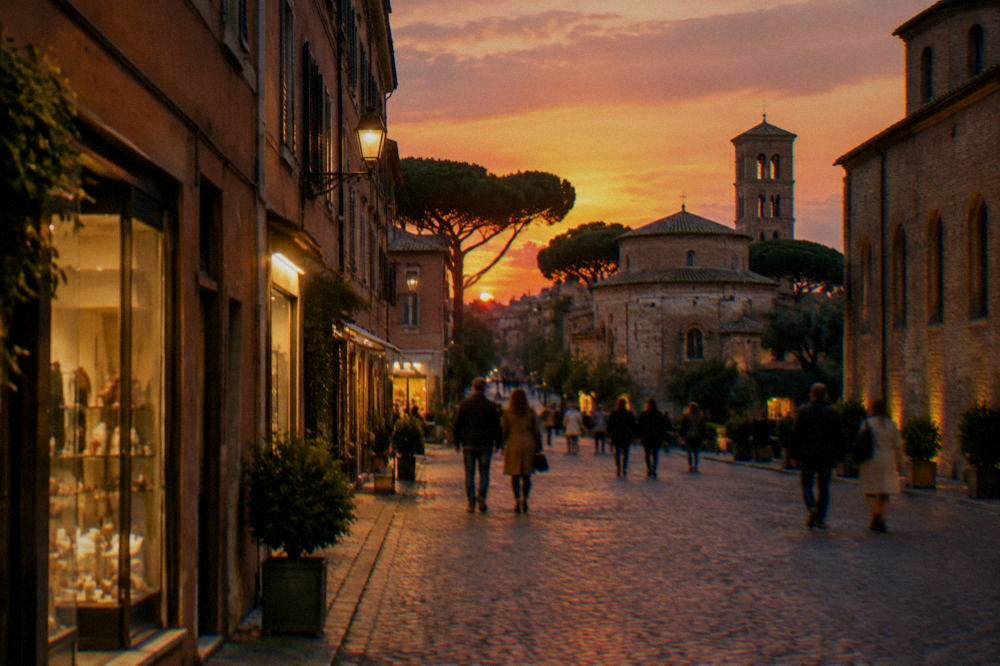
A guided walk adds ordering and context that a departure board cannot: the mosaic floors, the brick drums and the gold-ground glass read differently with someone who can name what the visitor is looking at. The site's roster includes a day-trip mosaic tour that starts in Bologna or Ravenna, a private art tour that adds crypts, and a private top-sights walk, each bookable with a free-cancellation window on the operator's live listing.
Readers who arrive by train and want the first hours structured can compare the options below, or read the Ravenna mosaic tours page for the full field. The internal tour pages carry what each walk covers; prices, ratings and durations render from the listings themselves and are never typed here.
The three tours that pair most naturally with a station-first trip:
For a privately guided deep cut, the art tour with crypt access is the one the roster lists for visitors who have already seen the headline mosaics:
And for a straightforward first-day orientation on foot, the private top-sights walk covers the monuments cluster:
You can also read the internal page for the Mosaics Day Trip from Bologna and Check availability if the Bologna start suits your rail plans.
Common Questions About Ravenna Train Station
Is Ravenna Train Station close to the historic centre?
Yes. The station stands at the northern edge of the centre, which the municipal tourism pages describe as small, flat and walkable, with the station a short walk from it. Dante's tomb, San Vitale and the other central UNESCO monuments are reached on foot.
How long is the train from Bologna to Ravenna?
The direct regional train runs about 84 km via Castelbolognese, with the fastest journeys about 57 to 60 minutes and typical journeys about 1 hour to 1 hour 20, according to the regional timetable and aggregator summaries. Fares are shown at booking.
Can you get a train from Bologna airport to Ravenna?
Not directly. The route is the Marconi Express people mover from Bologna airport to Bologna Centrale, then a regional train to Ravenna, about 2 to 2.5 hours door to door. The full route is on the Bologna airport to Ravenna page.
Does Ravenna Station connect to the beaches?
Yes, by Start Romagna bus. The centre is inland, about 8 km from the coast, and buses from the station serve Marina di Ravenna, Punta Marina, Lido Adriano, Lido di Classe and Lido di Savio along about 35 km of shoreline. Check the operator's timetable booklet for routes and times.
How do you get from Ravenna Station to the cruise port?
The Visit Ravenna shuttle runs from the centre and from a pick-up 300 m from the station to the Porto Corsini terminal, about 15 km away, in about 30 minutes, on the page covering 3 May to 26 October 2026. Outside that window, a pre-booked transfer is the practical option.
Can you take a train from Ravenna to Florence or Venice?
There is no direct high-speed service from Ravenna; the standard route changes at Bologna Centrale for Florence, and Venice involves regional connections. The pages on a train from Ravenna to Florence and the train journey from Venice to Ravenna give the corridor detail.
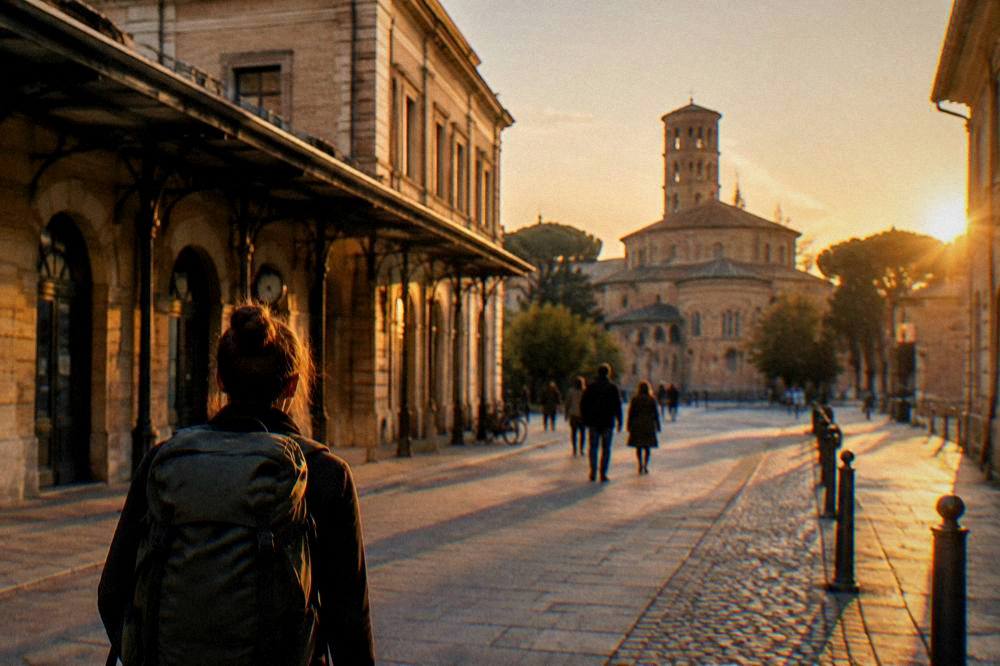
Ravenna Train Station is a small terminus that behaves like a gateway: step off the regional from Bologna or Rimini, and the mosaic city opens on foot, the coast opens by bus, and the cruise terminal opens by shuttle. Plan around the published hours of the monuments, book the timed entries the ticket page requires, and the rail arrival does the rest.