Ravenna Churches
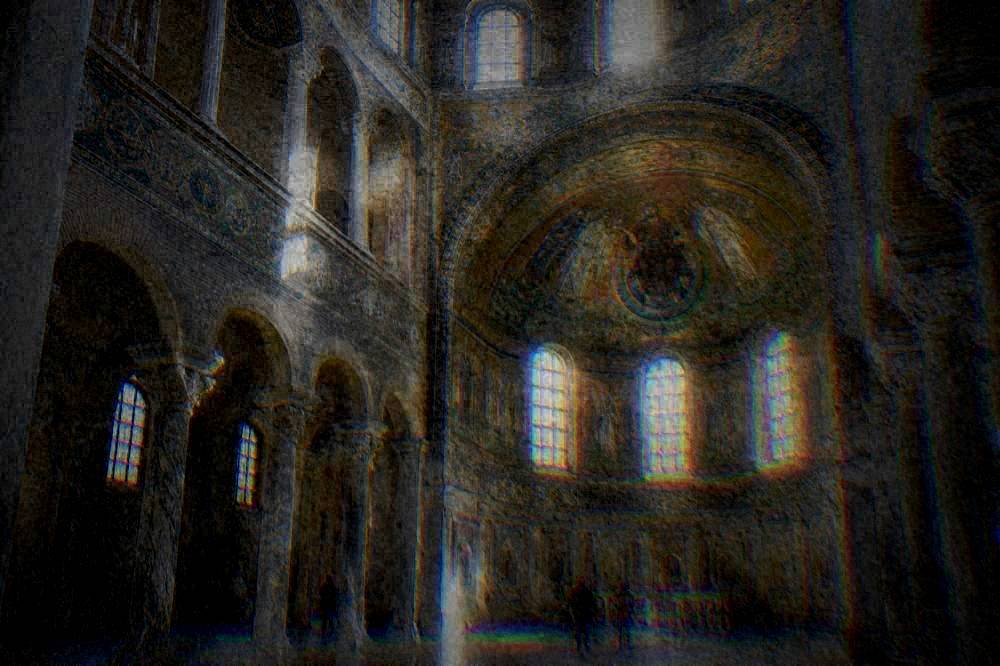
Ravenna's churches hold the largest body of surviving early Byzantine mosaics anywhere, spread across eight UNESCO monuments in and around a small, walkable inland centre. This guide sets out what each church holds, what the tickets cover and how the hours work.
Short answer
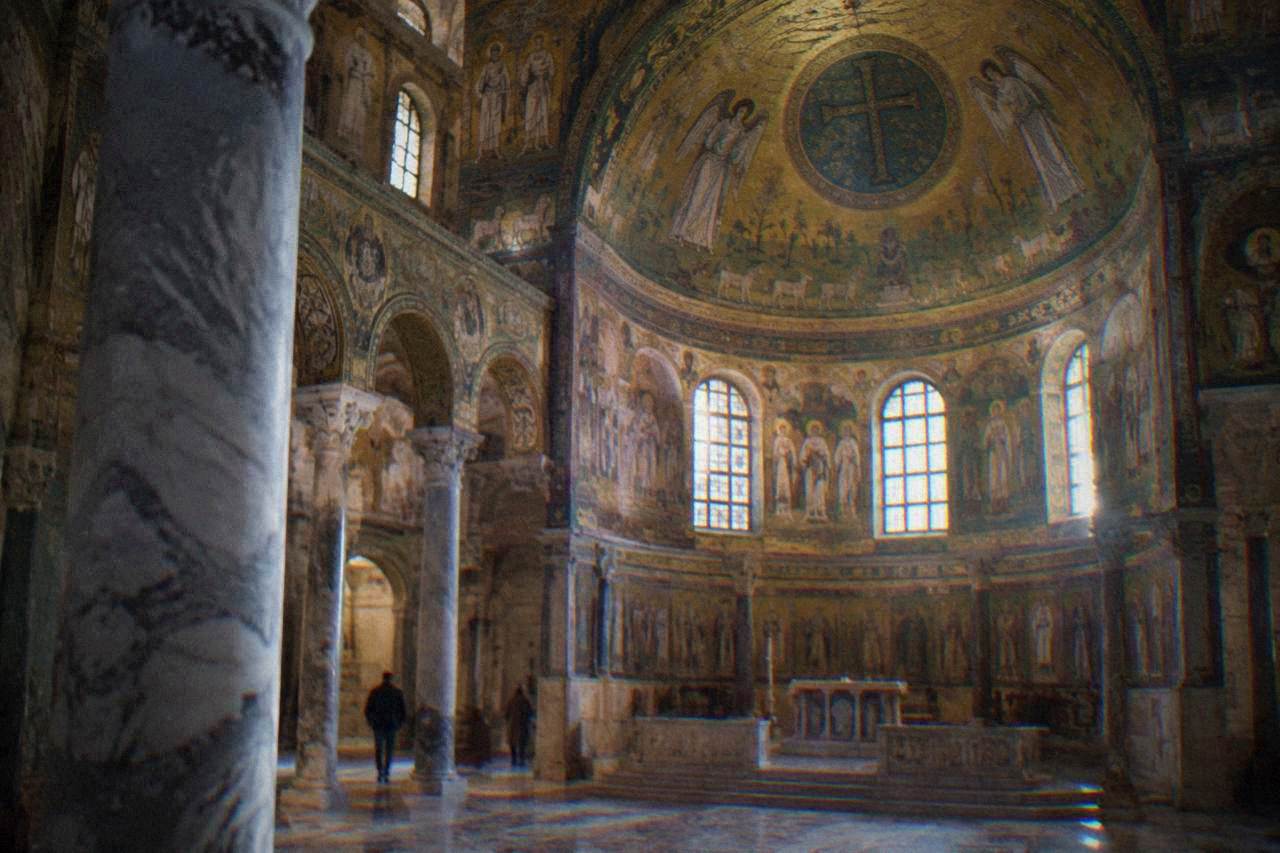
Ravenna has eight UNESCO-listed early Christian monuments, including San Vitale, the Mausoleum of Galla Placidia, the Neonian Baptistery, Sant'Apollinare Nuovo, the Arian Baptistery, the Archiepiscopal Chapel, Sant'Apollinare in Classe and the Mausoleum of Theodoric. Reduced combo fares from EUR 9.50 cover two to five of them, valid one week with one admission per monument.
Ravenna, an inland city on the flat Po plain of Emilia-Romagna about 8 km from the Adriatic coast, holds one of the densest concentrations of early Christian church architecture in Europe. UNESCO inscribed eight of its monuments as a single World Heritage listing in 1996, and the gold-ground glass mosaics inside them are the reason the city appears on nearly every serious art-history itinerary in Italy. This guide from the Ravenna Travel Guide editorial desk walks through the churches one by one, explains what the Ravenna Mosaici combo ticket covers, lists the hours the official pages publish, and points to the free churches and the ones outside the centre, so a visit can be planned around facts rather than guesswork.
Which Churches And Monuments Make Up The Ravenna UNESCO List?
The eight UNESCO early Christian monuments of Ravenna are the Mausoleum of Galla Placidia, the Neonian Baptistery, the Basilica of Sant'Apollinare Nuovo, the Arian Baptistery, the Archiepiscopal Chapel, the Mausoleum of Theodoric, the Basilica of San Vitale and the Basilica of Sant'Apollinare in Classe. UNESCO inscribed them together in 1996, and the listing's own wording describes their Byzantine mosaics and Early Christian character. Seven sit in or beside the historic centre, while Sant'Apollinare in Classe stands in the Classe area outside it.
Six of the eight are within a few minutes' walk of one another in the compact centre, clustered around Via di Roma and the streets off Piazza del Popolo. Sant'Apollinare in Classe and the Mausoleum of Theodoric are the outliers, both reachable by a short bus or car ride, and the Basilica of Sant'Apollinare in Classe is covered in detail on the Sant'Apollinare in Classe guide. The list matters practically because the ticketing system follows it, and because a day planned around the cluster of central monuments leaves the two outliers for a second morning.
The listing is a single ensemble rather than eight separate entries, which is why guidebooks treat Ravenna's churches as one integrated visit. What a visitor actually sees varies widely between them: a domed octagonal baptistery with a figure mosaic at the centre of its ceiling, a small cross-shaped mausoleum lined with gold-ground glass, and a vast basilica whose nave walls carry processions of figures against a gold field. The Ravenna Mosaici network that sells the combined ticket publishes the full list and prices on its official page.
| Monument | Location | What The Mosaics Show |
|---|---|---|
| Mausoleum of Galla Placidia | Central, beside San Vitale | Gold-ground vault mosaics, the Good Shepherd, starry sky |
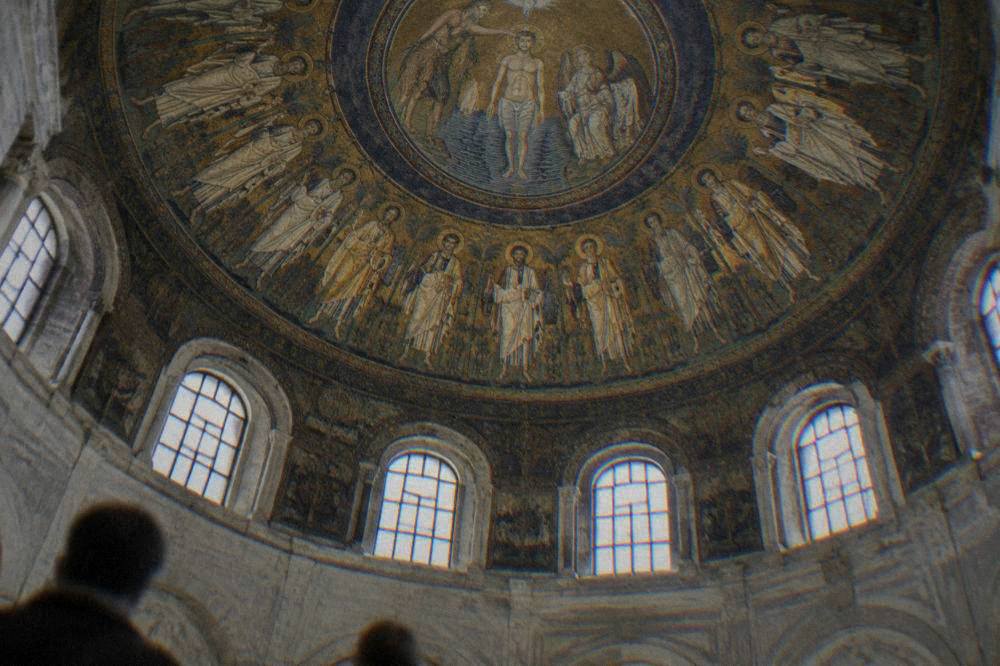
| Neonian Baptistery | Central | Ceiling dome with the baptism of Christ and apostles |
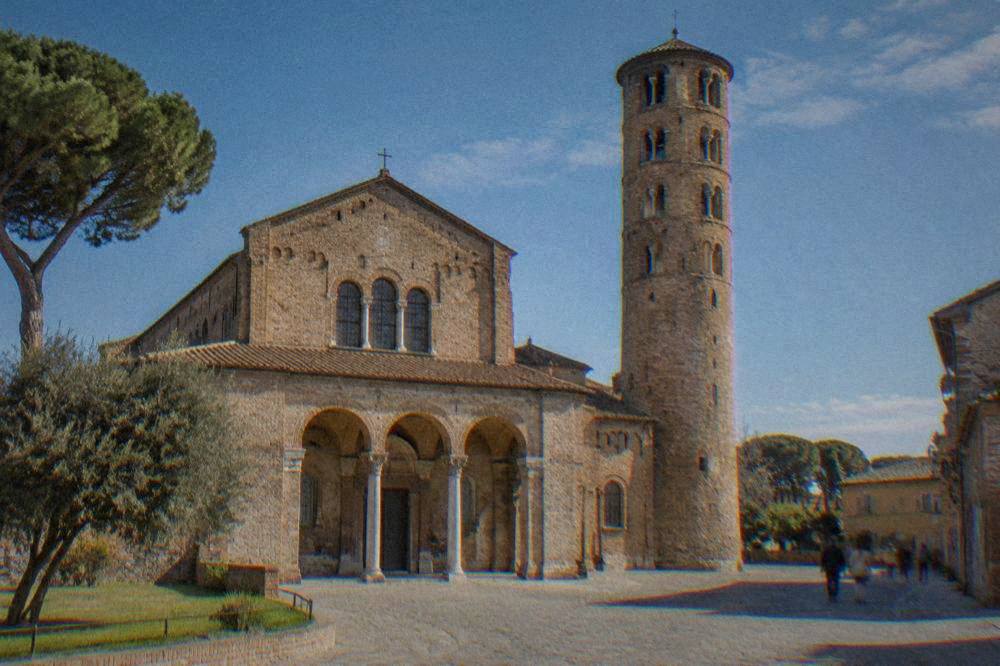
| Sant'Apollinare Nuovo | Central, on Via di Roma | Nave-wall processions of martyrs and virgins, gold ground |
| Arian Baptistery | Central, near the cathedral | Dome with the baptism of Christ, simpler programme |
| Archiepiscopal Chapel | Central, in the Archiepiscopal Museum | Small chapel mosaics of Christ and saints |
| Mausoleum of Theodoric | Outside the centre, on Via delle Industrie | A two-storey brick drum monument of Theodoric |
| San Vitale | Central | Imperial panels of Justinian and Theodora, apse mosaic |
| Sant'Apollinare in Classe | Classe area, outside the centre | Apse mosaic of Sant'Apollinare in a green paradise meadow |
How Does The Ravenna Mosaici Combo Ticket Work For Church Visits?
The Ravenna Mosaici combo ticket has three tiers, with reduced fares starting at EUR 9.50 for two monuments, EUR 11.50 for four and EUR 13.50 for five, according to the official ticket page. It is valid one week, allows one admission per monument, and an entry time must be booked for each one. The two-monument tier covers Sant'Apollinare Nuovo and San Vitale, the four adds Galla Placidia and the Neonian Baptistery, the five adds the Archiepiscopal Museum and Chapel of St Andrew.
To sort your monument entries before you arrive, book a mosaics entry ticket here.
The structure rewards a decision made early. A visitor who wants the four mosaic high points buys the four-monument tier and books timed entries; one who wants the full listed sequence adds the Archiepiscopal Museum. The full, non-reduced prices are shown on the Ravenna Mosaici page itself, and the reduced fares apply to students, non-accredited journalists and paying groups over 20. Entry is free for children aged 0 to 10, residents of Ravenna, ICOM members, licensed guides, and visitors with a disability plus one companion, the terms page states.
Two details from the official terms change how a day runs. The Mausoleum of Galla Placidia and the Neonian Baptistery require a booked entry time and allow only a stay of a few minutes inside, because both are small enclosed spaces with a constant flow of visitors. San Vitale admits in scheduled slots. The combo ticket guide on this site works through the tiers in more detail.
A guided visit takes the slot-booking out of your hands, which matters in summer when the timed entries fill. The operators above run the monument circuit with a guide who holds the bookings. For travellers who prefer to move at their own pace, the ticket-only route works well too, and the mosaic tours guide compares both approaches.
| Combo Tier | Monuments Covered | Reduced Fare |
|---|---|---|
| 2 monuments | Sant'Apollinare Nuovo, San Vitale | EUR 9.50 |
| 4 monuments | The two above, plus Mausoleum of Galla Placidia and Neonian Baptistery | EUR 11.50 |
| 5 monuments | The four above, plus Archiepiscopal Museum and Chapel of St Andrew | EUR 13.50 |
| Validity | One week, one admission per monument, entry time booked per monument |
Which Ravenna Churches Charge Separately, And Which Are Free?
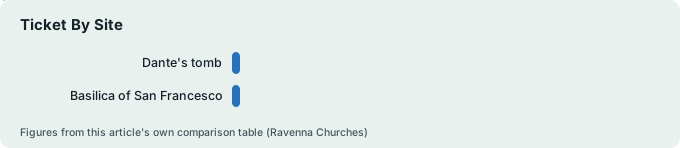
Dante's tomb is free to enter, the municipal page confirms, while the Mausoleum of Theodoric charges EUR 6 with a EUR 5 concession and EUR 2 for ages 18 to 25, and a EUR 7 combined ticket adds the Arian Baptistery and Theodoric's Palace, as the Visit Ravenna page lists. Sant'Apollinare in Classe costs EUR 6 full and EUR 2 reduced. The Arian Baptistery alone is EUR 3. The cathedral and the Basilica of San Francesco sit outside the paid network.
This is the layer of Ravenna church-going the combo ticket does not reach. The state-run monuments at Classe and the Theodoric sites sell their own tickets, and the visiting pattern that works is a morning in the centre on the Mosaici network followed by an afternoon trip to Classe for the basilica and its neighbour, the Classis Ravenna museum. The state museums and monuments are free on the first Sunday of the month, a concession worth building an itinerary around if the dates align.
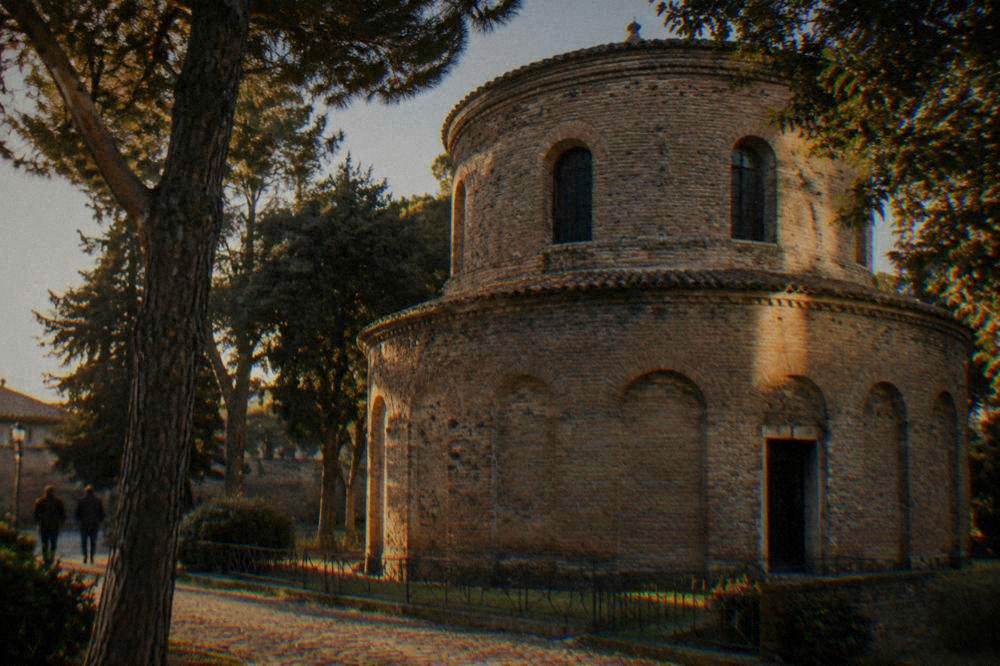
The free churches reward a wander. The Basilica of San Francesco, a short walk from Dante's tomb, is a working parish church where Dante's funeral was held, and the Ravenna Cathedral stands over the site the Arian Baptistery and the Neonian Baptistery once served in different eras. The free layer is covered more fully in the free things to do in Ravenna guide, and the Ravenna museums guide question of what to pair with what is easier once the paid and free layers are separated in your head.
| Site | Ticket | Notes |
|---|---|---|
| Dante's tomb | Free | Hours 10:00 to 18:00 November to March, 10:00 to 19:00 April to October |
| Mausoleum of Theodoric | EUR 6, EUR 5 concession, EUR 2 ages 18 to 25 | Combined with Arian Baptistery and Theodoric's Palace EUR 7 |
| Arian Baptistery alone | EUR 3 | No reduced fare listed |
| Sant'Apollinare in Classe | EUR 6, EUR 2 reduced | Values on the official listing |
| Ravenna Cathedral | No monument ticket listed | A working cathedral |
| Basilica of San Francesco | Free | Parish church near Dante's tomb |
What Are The Opening Hours For Ravenna's Churches And Monuments?
The Ravenna Mosaici page lists summer hours of 9:00 to 19:00 from 8 March to 2 November 2026 for its network, and winter hours of 10:00 to 17:00 from 3 November 2026 to 6 March 2027, with all sites closed on 25 December and 1 January. The Mausoleum of Theodoric runs 8:30 to 17:30 daily, and Sant'Apollinare in Classe opens Monday to Saturday 8:30 to 19:00 and Sunday 13:30 to 19:00.
Last admissions fall 30 minutes before closing at several sites.
The winter switch on 3 November is the pivot of an off-season visit. The shorter afternoon window means the two timed-entry spaces, Galla Placidia and the Neonian Baptistery, take last admissions at 16:45, and San Vitale at 16:30. A winter itinerary that starts at 10:00 still fits the whole central cluster, but the slack is gone by mid-afternoon. The best time to visit Ravenna guide weighs the crowd and weather trade-offs across the year.
Hours for the non-network sites shift with the seasons too. The Museo Nazionale closes on Mondays and splits its days between morning and afternoon openings, so a Monday in Ravenna should be planned around the Mosaici network, which runs daily. The MAR art museum, the Museo Dante and Classis Ravenna each carry their own schedules on their official pages, and the Domus dei Tappeti di Pietra varies its hours by season, so confirm before making it a fixed stop.
| Period | Mosaici Network Hours | Closed |
|---|---|---|
| 8 March to 2 November 2026 | 9:00 to 19:00 daily | 25 December and 1 January |
| 3 November 2026 to 6 March 2027 | 10:00 to 17:00 daily | 25 December and 1 January |
| Mausoleum of Theodoric | 8:30 to 17:30 daily | 25 December and 1 January |
| Sant'Apollinare in Classe | Mon to Sat 8:30 to 19:00, Sun 13:30 to 19:00 | 25 December and 1 January |
| Dante's tomb | 10:00 to 18:00 Nov to Mar, 10:00 to 19:00 Apr to Oct | 25 December |
What Will You Actually See Inside San Vitale And The Mausoleum Of Galla Placidia?
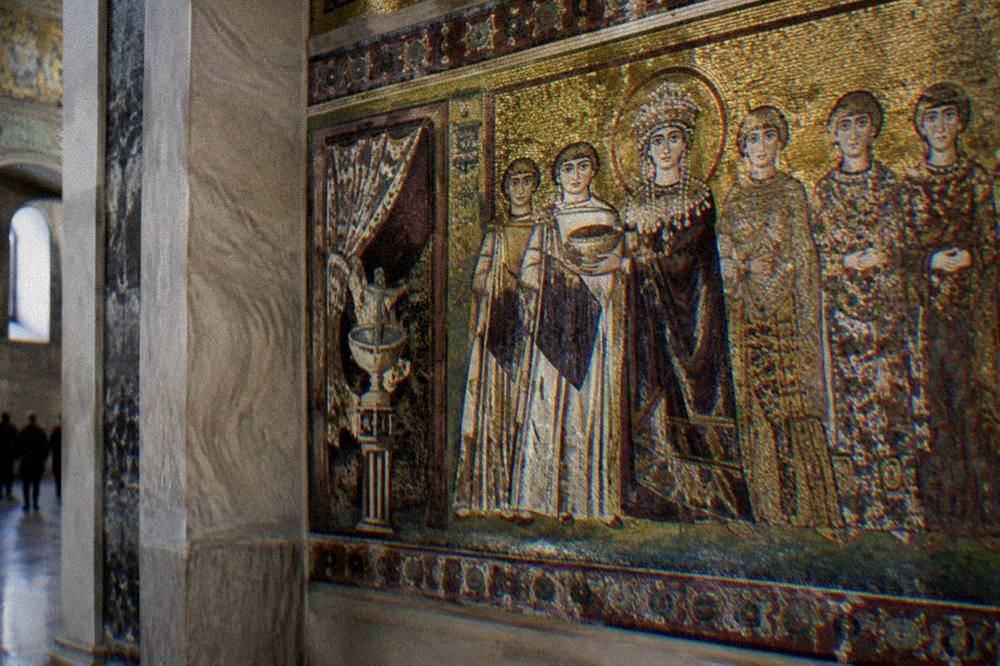
San Vitale is an octagonal brick church whose presbytery carries the two imperial mosaic panels of Justinian and Theodora with their courts, set against gold, while its apse shows Christ in a green paradise meadow. The Mausoleum of Galla Placidia, a small cross-shaped building beside it, holds gold-ground vault mosaics including the Good Shepherd and a sky of stars over its center. The Ravenna Mosaici terms require a booked entry time for the mausoleum and allow a stay of only a few minutes inside.
San Vitale is the church every visitor ends up standing in longest. The interior is lit so the gold-ground glass catches and moves, and the marble columns and inlaid floors carry the whole space even before you look up. The two imperial panels are the images that travel: Justinian with his clergy and soldiers on one wall, Theodora with her court and the three Magi embroidered on her hem on the other. The dedicated San Vitale guide covers the building room by room.
Galla Placidia works the opposite way. It is dim, small and intense, and the few minutes the ticket allows are enough because the mosaics sit close overhead. The Galla Placidia guide explains the timed entry and what the small space holds.
The pairing is why the two buildings stand in the same courtyard. A slot at San Vitale followed immediately by a timed slot at the mausoleum is the standard pattern, and the four-monument combo exists essentially to make that pairing bookable in one purchase. In the height of summer the mausoleum slots sell out first, so book it before anything else.
What Do The Baptistery, Sant'Apollinare Nuovo And The Archiepiscopal Chapel Hold?
The Neonian Baptistery is an octagonal brick building whose ceiling dome carries the baptism of Christ in the River Jordan surrounded by a ring of apostles, while the Arian Baptistery holds a second, simpler dome with the same subject. Sant'Apollinare Nuovo lines its nave walls with two processions, martyrs toward Christ and virgins toward the Madonna, on a gold ground. The Archiepiscopal Chapel inside the Archiepiscopal Museum is a small chapel with mosaics of Christ and saints, included only in the five-monument ticket.
The two baptisteries make an instructive pair. They stand a few streets apart, they treat the same scene, and seeing both shows how the Arian and Catholic communities of the same city pictured the same moment differently. The Neonian Baptistery's dome is the fuller and richer of the two, with a marble inlay floor that tilts visibly toward the centre, while the Arian Baptistery is plainer and quieter, usually with no queue at all. The Neonian Baptistery guide and the Arian Baptistery guide cover each in depth.
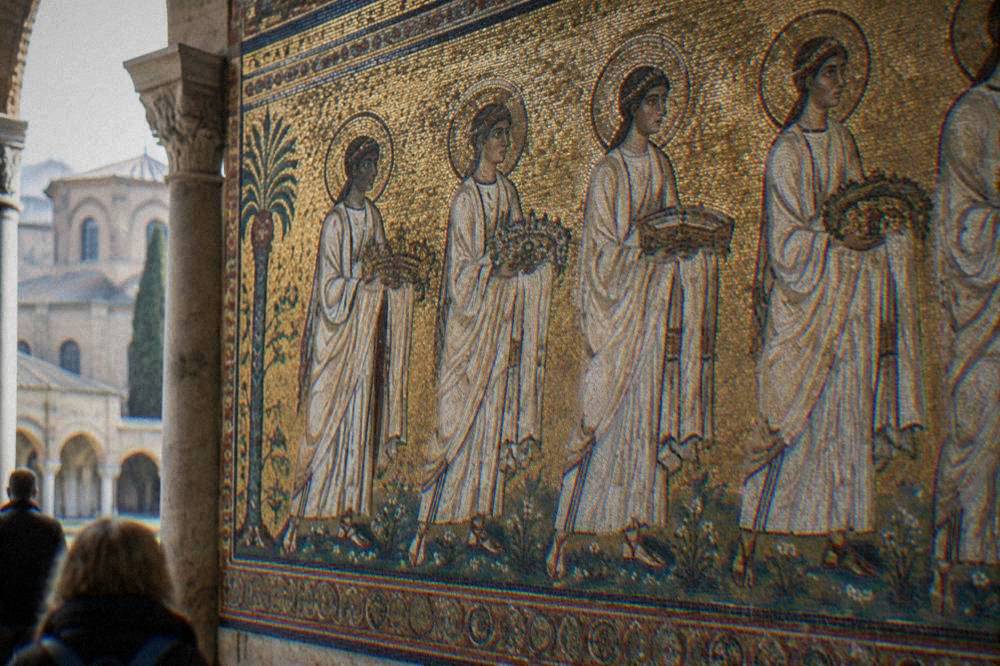
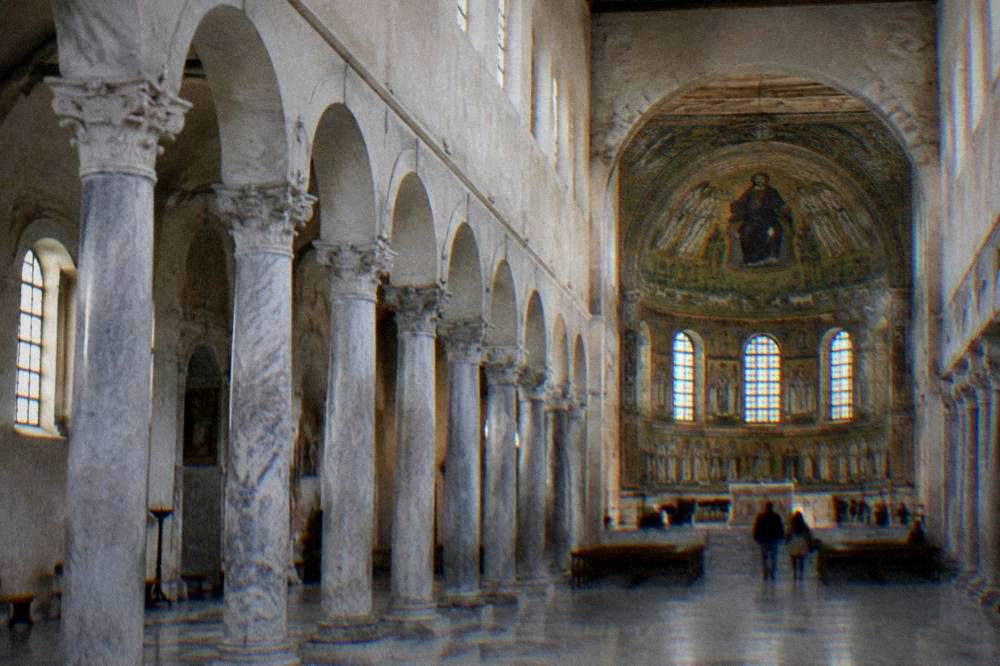
Sant'Apollinare Nuovo is the processional church. Its nave walls run the length of the building, one side carrying male martyrs leaving the palace of Theodoric, the other female virgins leaving the city of Classis, both converging on the figures of Christ and the Madonna at the east end. The three Magi appear in the virgins' procession, dressed in Phrygian caps, which is the detail guided tours stop on. The Sant'Apollinare Nuovo guide walks the full programme. The Archiepiscopal Chapel, last on the five-monument tier, is a working part of the museum rather than a standalone stop, and the Archiepiscopal Chapel guide describes its mosaics and its place in the ticket.
Which Important Ravenna Churches Sit Outside The Monument Network?
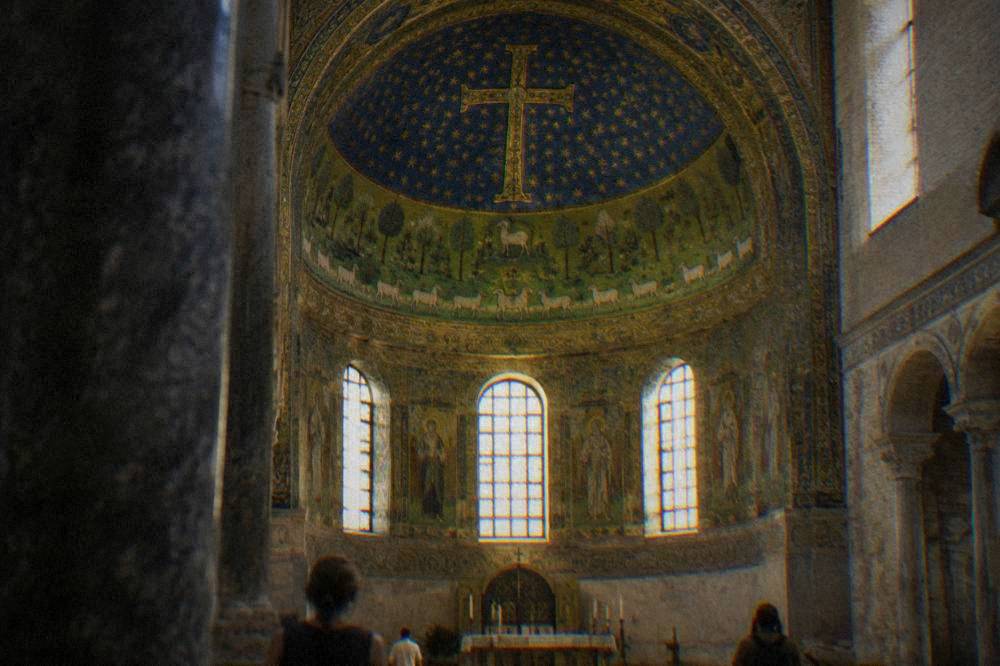
The Ravenna Cathedral and the Basilica of San Francesco, the parish church where Dante's funeral was held, both stand in the centre and hold no place on the Mosaici ticket. The Basilica of Sant'Apollinare in Classe sits in the Classe area outside the centre with its own EUR 6 ticket, and its apse mosaic of Sant'Apollinare among sheep in a green paradise meadow is one of the largest single mosaic surfaces in the city.
The Classe basilica is the one outlier worth building a half-day around. The interior is vast and pale, and the apse mosaic, with the saint standing in a green field under a starry cross, is a different register from the gold processions of the centre. The surrounding archaeological park includes the Classis Ravenna museum, which charges EUR 8 full and EUR 6 reduced, according to its own site, and holds the collection of the former TAMO museum, which closed in 2023. Getting there requires a bus or a car, and the Classe area guide covers the practical details.
In the centre itself, the two working churches cost nothing and ask little. San Francesco's floor sits below the waterline of the surrounding piazza, a visible reminder of the subsidence across the whole Po plain, and Dante's tomb stands in the streets just behind it. The tomb is free, open 10:00 to 18:00 in the November-to-March period and 10:00 to 19:00 from April to October, the municipal page states. The Dante's tomb guide gives the full picture, including the oil offering sent from Florence each second Sunday of September.
Can You See Ravenna's Churches In One Day, And Do You Need A Guide?
Yes, the central cluster of Ravenna churches fits in a single day, since the Mosaici network sites stand within a short walk of one another and a five-monument ticket with booked times covers them in one loop, but the Classe basilica and the Mausoleum of Theodoric need a second block of time outside the centre. A guide adds the most value on the mosaics themselves, whose programmes are dense with figures and inscriptions. Self-guided visits on the official ticket work equally well.
The standard one-day shape is a morning at San Vitale and Galla Placidia on booked slots, then the Neonian Baptistery, then Sant'Apollinare Nuovo, with the Archiepiscopal Museum slotted in if the five-monument ticket is held. An afternoon pair adds Dante's tomb and San Francesco for free, and a second day handles Classe and the Mausoleum of Theodoric. The one day in Ravenna itinerary and the how many days in Ravenna guide set out both shapes hour by hour.
A guided option removes the slot logistics entirely. The history-and-beach-lunch private day tour pairs the UNESCO monuments with lunch on the Adriatic coast, a pairing that suits travellers who want the mosaics and the sea in one booking, and it can be checked here: Check availability. In the city itself, a private walking tour of the top sights and monuments covers the central churches with a guide who holds the entries.
For cruise passengers the calculus differs, since the port lies about 15 km from the centre and the Visit Ravenna shuttle takes about 30 minutes. The cruise port day guide ranks the churches by what fits a ship's hours, and the port-to-Venice excursion below is the alternative that skips the city entirely.
For a longer stay, the things to do in Ravenna page collects everything beyond the churches, and the Ravenna museums guide covers the MAR, the Museo Nazionale and Classis Ravenna for the rainier hours the climate table predicts for November, the wettest month in the modelled 1991 to 2020 normals at 78.3 mm.
Common Questions About Ravenna Churches
How many UNESCO churches are there in Ravenna?
Eight monuments make up the UNESCO early Christian listing, inscribed in 1996: the Mausoleum of Galla Placidia, the Neonian Baptistery, Sant'Apollinare Nuovo, the Arian Baptistery, the Archiepiscopal Chapel, the Mausoleum of Theodoric, San Vitale and Sant'Apollinare in Classe.
Do I need a combined ticket for the Ravenna churches?
The Ravenna Mosaici combo is the practical route, with reduced fares from EUR 9.50 for two monuments up to EUR 13.50 for five, valid one week with one admission per monument and a booked entry time for each. The Mausoleum of Theodoric, Sant'Apollinare in Classe and the Arian Baptistery sell separate tickets.
Which Ravenna churches are free to enter?
Dante's tomb is free, the Basilica of San Francesco is a working parish church, and Ravenna Cathedral holds no monument ticket. State monuments are free on the first Sunday of the month.
How long should I allow for the Ravenna churches?
The central cluster fits in one full day with booked slots, while Sant'Apollinare in Classe and the Mausoleum of Theodoric need a second block of time outside the centre. Galla Placidia and the Neonian Baptistery allow only a stay of a few minutes on their timed entries.
Are Ravenna's churches open in winter?
Yes. The Mosaici network runs 10:00 to 17:00 daily from 3 November 2026 to 6 March 2027, closed only on 25 December and 1 January, and Dante's tomb keeps 10:00 to 18:00 through the winter period.
Can you visit Ravenna's churches on a guided tour?
Guided and private tours of the UNESCO monuments run year-round and hold the timed entries for you, and the operator's live listing shows current dates and prices. Self-guided visits on the official ticket are equally workable for independent travellers.