Ravenna Vs Rimini
Ravenna and Rimini sit about an hour apart by regional train in Emilia-Romagna, and they answer two different holiday questions: Ravenna holds eight UNESCO monuments with Byzantine mosaics and Dante's tomb, while Rimini is the seaside resort on the coast. This comparison lays out what each city offers, using only figures the official pages and timetables carry.
Short answer
Choose Ravenna for the eight UNESCO Early Christian monuments, the mosaics and Dante's tomb; choose Rimini for the beach. They are about 42 to 58 minutes apart by direct regional train, so a day trip between them is simple and many visitors do both.
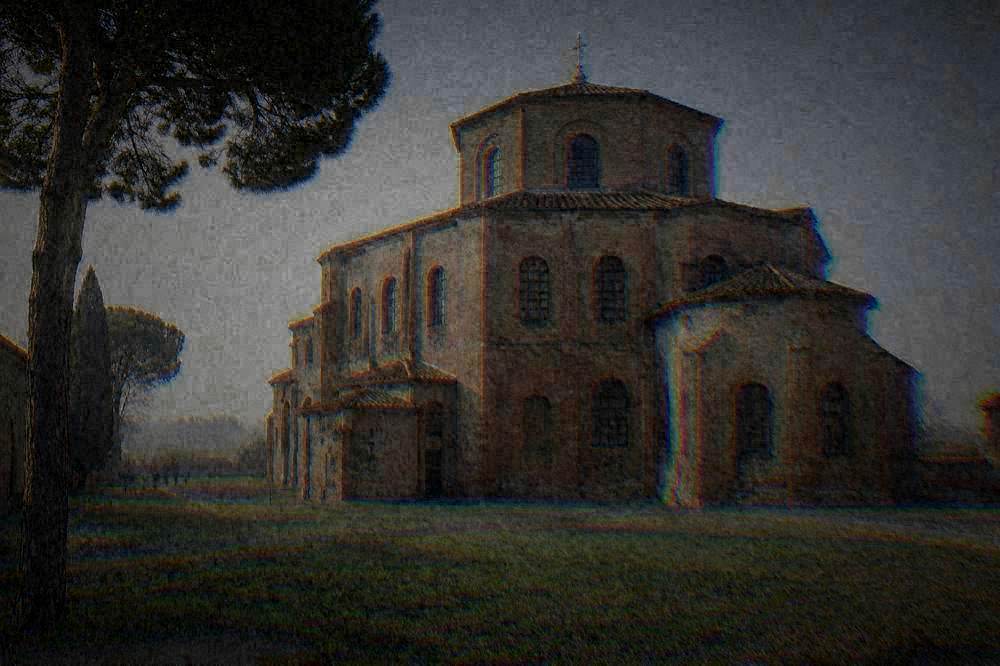
Ravenna and Rimini are two cities in Emilia-Romagna, in northern Italy, that often end up on the same shortlist and answer two completely different questions. Ravenna is an inland city on the flat Po plain, about 8 km from the Adriatic coast, and its claim is the eight UNESCO Early Christian monuments with their Byzantine mosaics, plus the tomb of Dante. Rimini is the seaside resort on that same coast. The regional timetable gives roughly 42 to 58 minutes of direct regional train between them, which makes the choice less dramatic than it looks: a visitor with three or four days can see both. This guide compares them on monuments, beaches, transport, prices and pace, and every figure below comes from an official page, a timetable summary or the climate table.
What Is The Difference Between Ravenna And Rimini?
Ravenna is an inland city of art about 8 km from the sea, holding eight UNESCO Early Christian monuments inscribed in 1996 and Dante's tomb, while Rimini is a coastal resort town built around its beach and its seaside promenade. The UNESCO listing names only Ravenna's monuments in this pair: the Mausoleum of Galla Placidia, the Neonian Baptistery, Sant'Apollinare Nuovo, the Arian Baptistery, the Archiepiscopal Chapel, the Mausoleum of Theodoric, San Vitale and Sant'Apollinare in Classe.
Ravenna's historic centre is small, flat and walkable, with the railway station a short walk from the centre. The mosaic sites sit inside a compact area, and the two hardest ones to reach, Sant'Apollinare in Classe and the Classis Ravenna museum, are in the Classe area outside the centre. The city's cultural weight comes from the UNESCO listing and from Dante, who died and is buried here; his tomb is free to enter.
Rimini plays a different role on this site: it appears as a day trip from Ravenna and as a rail junction on the coast. The day trip guide to Rimini covers what a visitor can reach from Ravenna in a day, and the answer page on which city is better takes the same question from the other direction. Neither city makes the other redundant. A common pattern is to base in Ravenna for the mosaics and ride the coast line for a beach afternoon.
Which City Is Better For Mosaics And UNESCO Monuments?
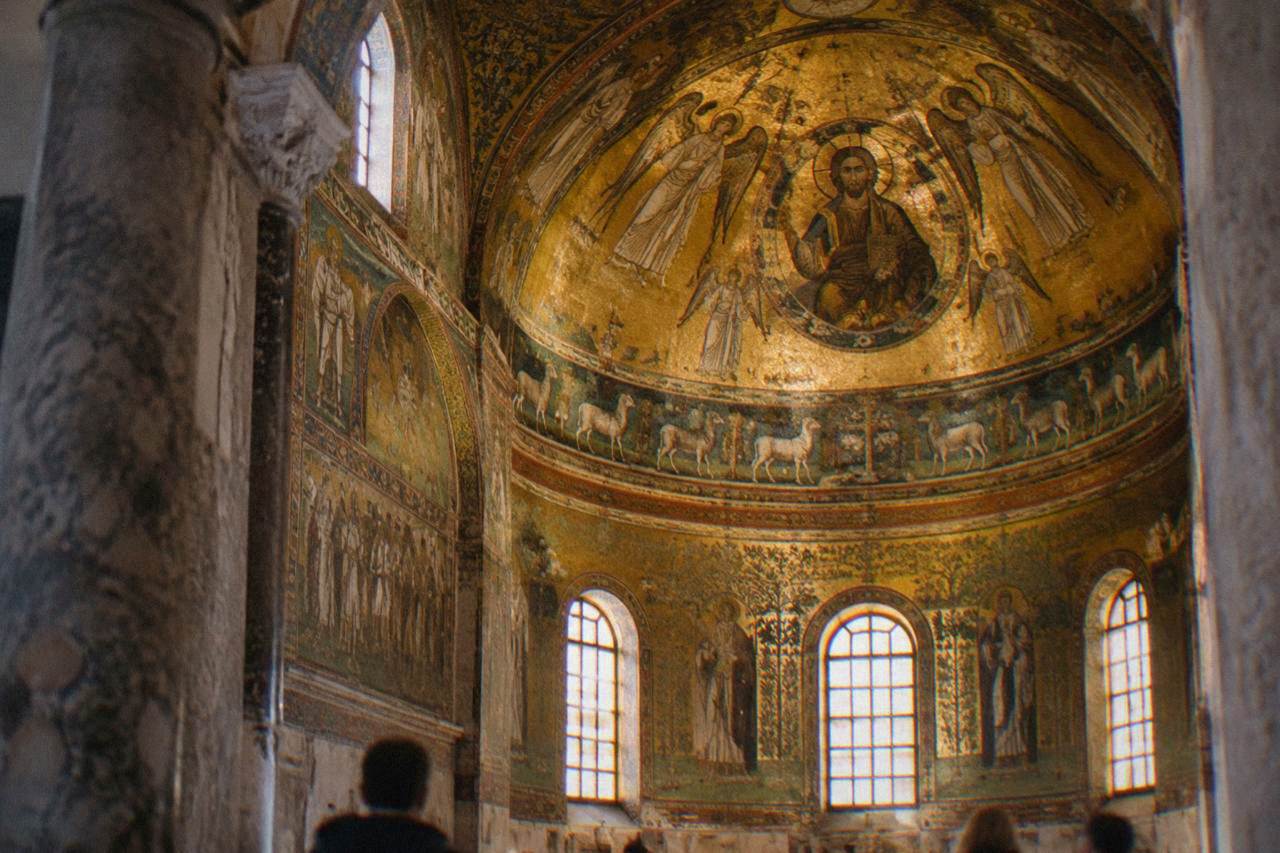
Ravenna wins this category outright, because Rimini holds none of the eight UNESCO Early Christian monuments: all eight are in Ravenna or its immediate area, inscribed by UNESCO in 1996. The Ravenna Mosaici network alone runs San Vitale, Sant'Apollinare Nuovo, the Archiepiscopal Museum, the Mausoleum of Galla Placidia and the Neonian Baptistery, and the reduced combo fares start at EUR 9.50 for two monuments on the official ticket page.
The comparison is really between mosaic cities in general, and Ravenna's position is unusual in Europe. The mosaics are gold-ground glass work set in early Christian buildings, and the listing's own wording, "Early Christian Monuments of Ravenna" with Byzantine mosaics, is the frame every guide uses. The UNESCO sites overview and the mosaics guide walk through each building in detail.
Rimini's heritage, by contrast, is not what brings the trains in. Visitors based on the coast who want the mosaics ride the regional line in for the day, and that single fact shapes how the two cities feel: Ravenna's visitor economy is built around monument tickets, Rimini's around the beach season. The combo ticket guide explains the one-week validity, the one admission per monument rule and the mandatory timed entry at Galla Placidia and the Neonian Baptistery, where stays are limited to a few minutes.
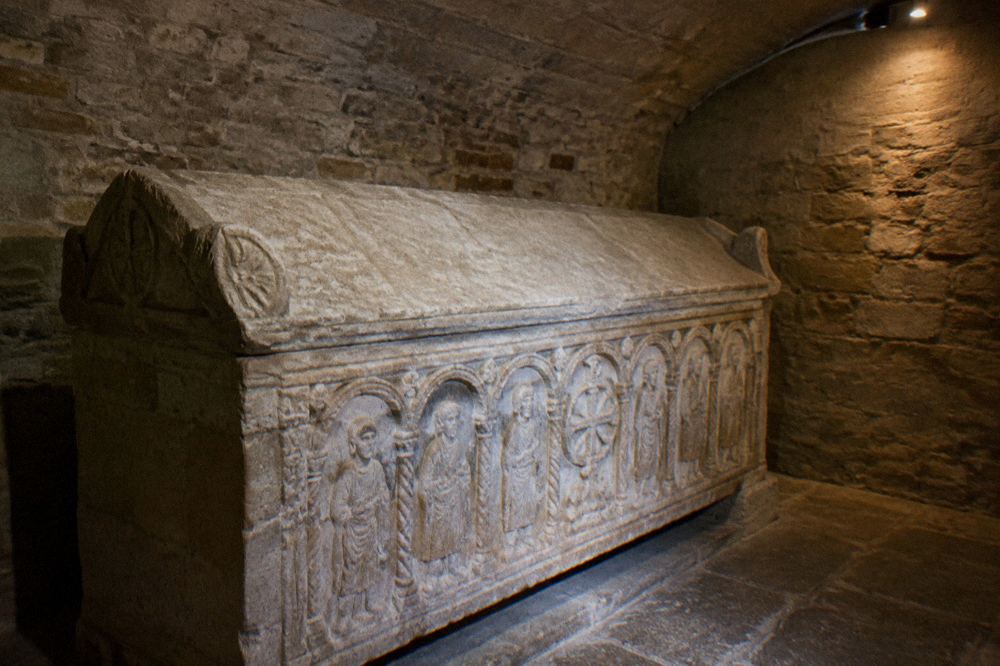
Dante settles the cultural comparison on his own. His tomb in central Ravenna is free, open 10:00 to 18:00 from November to March and 10:00 to 19:00 from April to October, closed 25 December, according to the municipal page. Every second Sunday of September, oil from the Tuscan hills arrives from the Comune di Firenze for the annual offering, a ceremony the city still keeps. Rimini has nothing comparable, and a comparison page can only compare what the sources carry.
How Do You Travel Between Ravenna And Rimini?
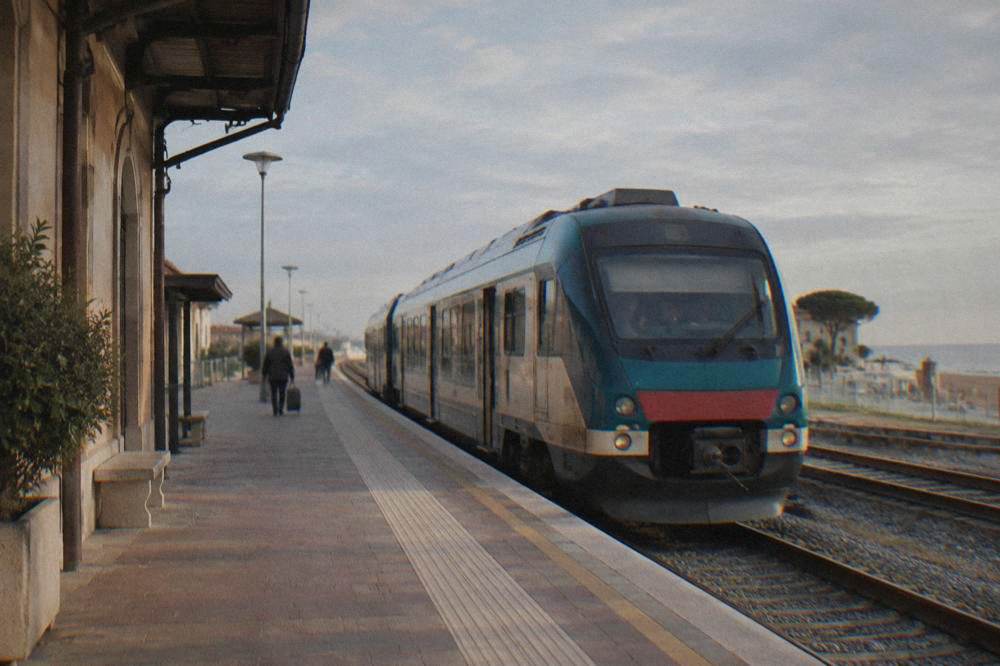
A direct regional train runs between Ravenna and Rimini in about 42 to 58 minutes, per timetable and aggregator summaries, and no other journey figure for this route appears in the sources. From Rimini the same coast line continues toward the Bologna and San Marino directions, while Ravenna's other main rail link is the direct regional train to Bologna Centrale, about 84 km via Castelbolognese, typically 1 hour to 1 hour 20.
What the sources do support is the shape of the network: Ravenna sits at the end of its branch with regular regional services to Bologna and Rimini, and the station is a short walk from the historic centre. The Rimini to Ravenna train answer and the Bologna to Ravenna guide carry the detail for each direction, and the how to get to Ravenna guide folds in the airport routes.
For cruise passengers the two ports sit on the same stretch of coast. Ravenna's cruise terminal at Porto Corsini is about 15 km from the centre, and the Visit Ravenna shuttle ran about 30 minutes from the centre and the station in the 2026 page, between 3 May and 26 October. The port expects 111 calls and about 390,000 passengers in 2026, and the new terminal's inauguration is reported for spring 2027. The cruise port guide covers the transfer in full.
| Route | Service | Typical time | Source type |
|---|---|---|---|
| Ravenna to Rimini | Direct regional train | About 42 to 58 minutes | Timetable and aggregator summaries |
| Ravenna to Bologna Centrale | Direct regional train via Castelbolognese | About 1 hour to 1 hour 20 | Timetable and aggregator summaries |
| Porto Corsini terminal to centre | Visit Ravenna shuttle | About 30 minutes | Visit Ravenna page, 2026 |
Which City Has The Beach?
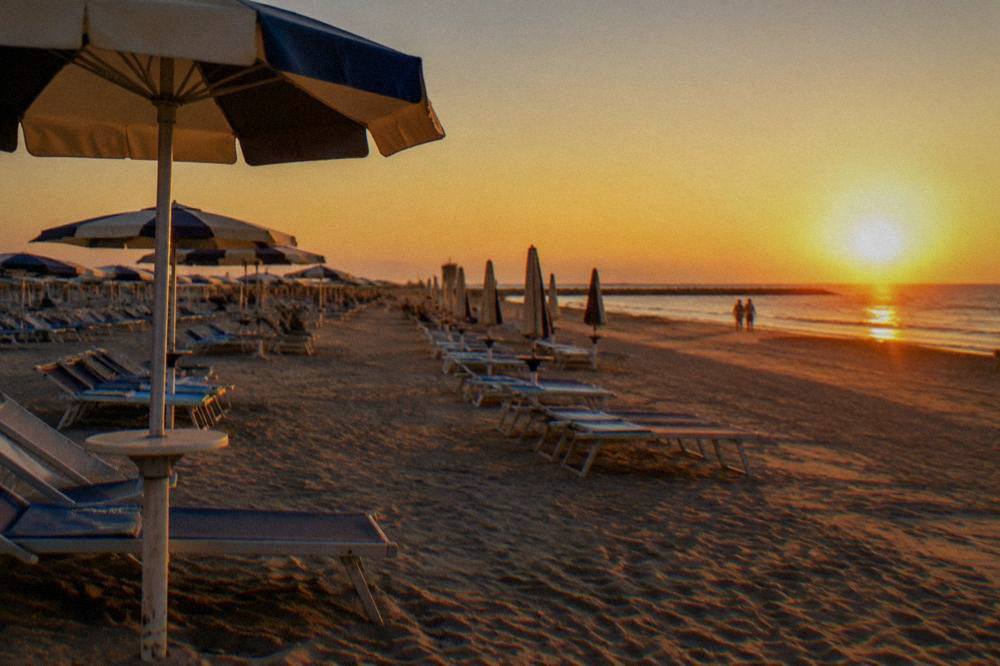
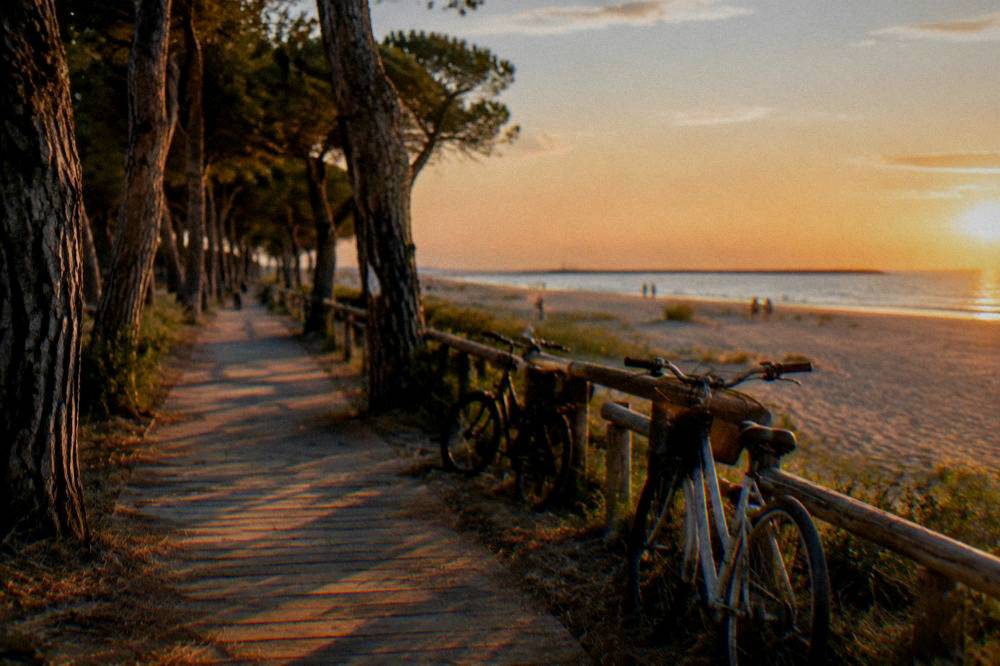
Rimini is the beach city of the pair; Ravenna is not a seaside city at all. Ravenna's historic centre is inland, about 8 km from the Adriatic, and its beaches, Marina di Ravenna, Punta Marina, Lido Adriano, Lido di Classe and Lido di Savio, are separate resorts strung along about 35 km of coast, reached by Start Romagna bus from the station, by bike or by car.
This is the single most common mix-up in searches about the two cities, and it matters for planning. A hotel in Ravenna's centre means a bus ride to the sand; a hotel in Marina di Ravenna or one of the lidi means the beach is at the door and the mosaics are a bus ride away. The Ravenna beaches guide lays out each resort, and the Marina di Ravenna guide covers the closest one to the city.
One detail from the municipal press releases changes the winter picture: each autumn a sand barrier of 25,000 cubic metres is built at Punta Marina, Marina di Ravenna Sud and Lido di Savio, and it stays until spring 2027. In the cold half of the year the coast near Ravenna is a walking and cycling coast, not a swimming one, and the climate table explains why: January averages 5.1 C and July 25.2 C, modelled 1991 to 2020 normals.
| Beach fact | Ravenna area | Rimini |
|---|---|---|
| Coast | About 35 km across five resorts | City beach on the Adriatic |
| Distance from centre | About 8 km to the nearest resort | The beach fronts the town |
| Access | Start Romagna bus, bike or car | On foot from the town |
| Season shape | Sand barrier in place until spring 2027 | Beach season |
How Do Tickets And Prices Compare In Ravenna And Rimini?
Ravenna's monument prices are fixed and published: reduced Ravenna Mosaici combo fares start at EUR 9.50 for two monuments, EUR 11.50 for four and EUR 13.50 for five, valid one week with one admission per monument; the Mausoleum of Theodoric is EUR 6, the Arian Baptistery EUR 3, and Dante's tomb is free. Rimini has no equivalent monument network in the sources, so no comparable ticket figures exist for it on this page.
The full, non-reduced combo prices belong to the official Ravenna Mosaici page, which is where a reader should check them before buying. The reduced fares apply to students, non-accredited journalists and paying groups over 20, and entry is free for children 0 to 10, residents of Ravenna, ICOM members, licensed guides, and visitors with a disability plus companion. Galla Placidia and the Neonian Baptistery require a booked entry time, with stays of a few minutes, and San Vitale admits in slots.
| Ravenna site | Ticket | Notes |
|---|---|---|
| Ravenna Mosaici combo, 2 monuments | From EUR 9.50 reduced | Sant'Apollinare Nuovo and San Vitale |
| Combo, 4 monuments | From EUR 11.50 reduced | Adds Galla Placidia and Neonian Baptistery |
| Combo, 5 monuments | From EUR 13.50 reduced | Adds Archiepiscopal Museum and Chapel |
| Mausoleum of Theodoric | EUR 6, EUR 5 concession, EUR 2 ages 18 to 25 | Combined with Arian Baptistery and Palace: EUR 7 |
| Sant'Apollinare in Classe | EUR 6, EUR 2 reduced | In Classe, outside the centre |
| Dante's tomb | Free | Closed 25 December |
Beyond the monuments, the recurring costs of a stay differ mostly by accommodation, and this site prints no hotel rates or nightly prices anywhere. Food in both cities runs on the Romagna table: piadina, cappelletti and the local wines, described dish by dish in the food guide.
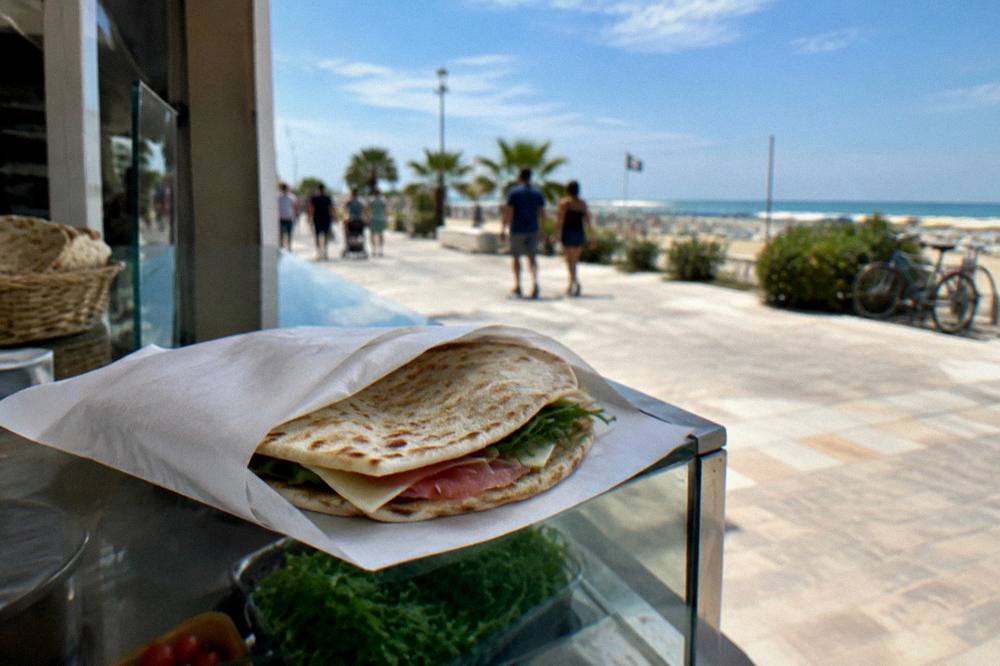
A cover charge, the coperto, is legal in Italy when it is printed on the menu, and tipping is not obligatory in either city. Those two rules cover the whole restaurant-money question this page can answer. For where to eat in Ravenna, the restaurants guide holds the detail.
How Many Days Should You Give Each City?
Ravenna rewards one to three days: one full day covers the five central monuments and Dante's tomb, a second adds Sant'Apollinare in Classe, the Classis Ravenna museum and the Archiepiscopal Museum, and a third opens the coast or a day trip. Rimini works as a beach afternoon or a single day trip from Ravenna on the 42 to 58 minute regional train, and the republic of San Marino is reachable from the Rimini side of the same coast line.
The pacing difference is the real answer to "which city". Ravenna's centre is consumed on foot at museum pace: you buy a combo ticket, book your entry times, and walk between buildings that sit minutes apart. Rimini's centre and beach are consumed at holiday pace, and nothing suggests a monument itinerary there. The one day in Ravenna, two days in Ravenna and how many days in Ravenna pages give hour-by-hour versions of the Ravenna side, and the Rimini to San Marino answer covers the excursion that anchors a Rimini stay.
| Trip shape | Base | What it looks like |
|---|---|---|
| Mosaics only | Ravenna | One day, five central monuments plus Dante's tomb |
| Mosaics plus Classe | Ravenna | Two days, add Sant'Apollinare in Classe and Classis Ravenna |
| Art plus beach | Ravenna | Two to three days, add a bus afternoon at Marina di Ravenna |
| Beach base, art day trip | Rimini | Beach stay with one regional train day in Ravenna |
| Coast and republic | Rimini | Beach plus the San Marino excursion from Rimini |
Families and mixed groups split the difference with Mirabilandia, the large theme park in the Ravenna area. Its 2026 season ends on Sunday 1 November 2026, with weekend-only openings through late autumn, and the Mirabilandia guide explains the access from both the Ravenna and the coast side.
When Is The Best Time To Visit Ravenna Or Rimini?
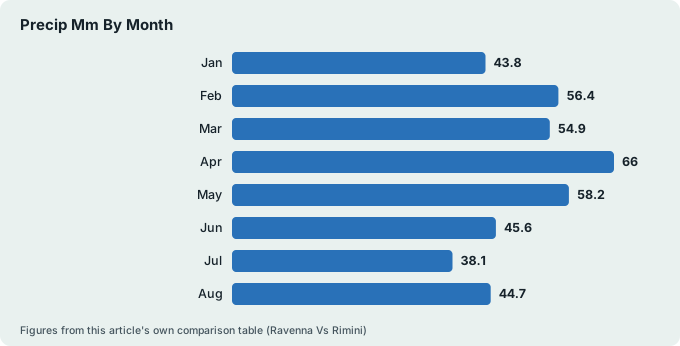
The climate table gives Ravenna July as the warmest month at a 25.2 C mean and January the coldest at 5.1 C, with November the wettest month at 78.3 mm and July the driest at 38.1 mm, modelled 1991 to 2020 normals; on that shape, late spring and early autumn serve both cities, summer serves the beach and the long monument hours, and winter serves Ravenna's indoor mosaics at reduced hours.
The hours shift on a fixed date. The Ravenna Mosaici network runs 9:00 to 19:00 in the summer period to 2 November 2026, then 10:00 to 17:00 from 3 November 2026 to 6 March 2027, closed 25 December and 1 January, per the official page. Winter visitors get shorter days but also the indoor advantage: the mosaics are inside, and the best time to visit guide and the weather guide work through the whole table month by month.
| Month | Mean C | Precip mm |
|---|---|---|
| Jan | 5.1 | 43.8 |
| Feb | 5.8 | 56.4 |
| Mar | 9.4 | 54.9 |
| Apr | 13.1 | 66 |
| May | 17.9 | 58.2 |
| Jun | 22.6 | 45.6 |
| Jul | 25.2 | 38.1 |
| Aug | 25 | 44.7 |
| Sep | 20.3 | 57.9 |
| Oct | 15.7 | 66 |
| Nov | 10.6 | 78.3 |
| Dec | 6.1 | 63.7 |
The event calendars also pull in opposite directions. Ravenna's autumn carries the Ravenna Festival trilogy "Mozart 1791" from 13 to 17 November 2026 at Teatro Alighieri, and each October the Notte d'Oro evening opens monuments for free. The beach season on the Romagna coast is the summer event on this pair of cities.
Should You Stay In Ravenna Or Rimini, Or Visit One From The Other?
Base in Ravenna if the mosaics, Dante and a walkable historic centre are the point of the trip, and base on the coast, Rimini included, if the beach is the point; the 42 to 58 minute regional train makes a day trip in either direction simple, so the wrong base costs a train ride, not the trip. The where-to-stay question in Ravenna comes down to centre versus seaside, and both bases reach everything the other offers within the hour.
The where to stay in Ravenna guide maps the centre, the station area and the seaside options, and the is Ravenna worth visiting guide tests the underlying question. Driving visitors should read the ZTL rules before choosing a base. Ravenna's historic centre is camera-enforced, with gates that differ, some 7:30 to 20:30 and some 24 hours; a daily permit is bought at the 24-hour parcometers, hotels can issue guest authorisation, and the permit costs about EUR 8. The parking and ZTL guide carries the full picture, and no fine amounts or parking tariffs appear anywhere on this site.
Visitors arriving from Bologna have a third pattern worth naming: the guided monuments day trip that starts in Bologna or Ravenna and covers the UNESCO sites with a guide, which the operator's live listing describes in full. It suits a coast-based traveller who wants the mosaics handled in one organised day. For everything the city holds beyond the comparison, the Ravenna Travel Guide homepage and the things to do in Ravenna page are the full catalogue.
Common Questions About Ravenna Vs Rimini
Which is better, Ravenna or Rimini?
Ravenna is better for art: all eight UNESCO Early Christian monuments with Byzantine mosaics are there, plus Dante's free tomb. Rimini is better for the beach, which fronts the town directly, while Ravenna's beaches are separate resorts about 8 km or more from the inland centre.
How far is Ravenna from Rimini by train?
A direct regional train covers Ravenna to Rimini in about 42 to 58 minutes, per timetable and aggregator summaries. The fare is shown at booking.
Can you do a day trip from Ravenna to Rimini or the other way round?
Yes, in both directions. The regional line links the two cities with a journey of about an hour, so Rimini works as a beach day trip from Ravenna and the mosaics work as a day trip from a Rimini base.
Does Ravenna have a beach?
Ravenna's historic centre is inland, about 8 km from the Adriatic. The beaches are the resorts of Marina di Ravenna, Punta Marina, Lido Adriano, Lido di Classe and Lido di Savio, reached by Start Romagna bus from the station, by bike or by car.
Is Ravenna or Rimini cheaper to visit?
The monument costs are published only for Ravenna: reduced combo fares from EUR 9.50, the Mausoleum of Theodoric at EUR 6 and Dante's tomb free. Hotel, taxi and transfer rates are never printed on this site; check the price at booking in either city, and confirm the nightly tourist tax, about EUR 1 to EUR 4 per person by hotel category in Ravenna, at your accommodation.
Can you combine Ravenna and Rimini in one trip?
Yes, and the regional train makes it easy. A common split is two or three nights in Ravenna for the mosaics and a coast stretch for the beach, or a single base in either city with one train day trip to the other.
The short version: Ravenna and Rimini are not rivals but neighbours on one rail line, one holding the mosaics and the other the sand, and the visitor who books both gets the whole Romagna coast and its inland capital in a single holiday.